
Natural Remedies for Anemia
IMPORTANT: Anemia should not be ignored. If you have persistent symptoms (marked fatigue, paleness, shortness of breath on light exertion, palpitations, dizziness), get a complete blood count and serum ferritin. Severe anemias, anemias with occult bleeding (digestive, urinary), anemias in men or in postmenopausal women require investigation to identify the cause. Natural remedies can support treatment but do not replace medical evaluation and proper treatment of the cause.
“You’re as yellow in the face as wax, and you’re tired from morning till night.” That’s what my grandmother used to tell my sister, that winter when we were both teenagers and I, the younger one, didn’t understand why my sister had no interest in anything. Grandmother made a simple cure: nettle juice in the morning, boiled beetroot at lunch, a glass of red wine with a spoonful of molasses in the evening. Within three weeks, my sister looked different.
Iron deficiency anemia is the most common form of anemia in the world, affecting mainly women of reproductive age, children, strict vegetarians, and people with chronic bleeding. The symptoms are insidious, setting in slowly: chronic fatigue, paleness, brittle nails, hair loss, a permanent feeling of being cold, shortness of breath on light exertion, palpitations. The good news is that once the cause is identified and the diet corrected, recovery can be rapid, and nature offers valuable helpers.
Remedy 1: Fresh nettle juice
Nettle (Urtica dioica) is probably the richest food-remedy for anemia in our flora. It contains impressive amounts of well-absorbable iron, vitamin C (which helps iron absorption), chlorophyll (which has a structure similar to hemoglobin), folate, B vitamins, calcium, magnesium, and vegetable protein. My grandmother used to say that “nettle is the blood of the earth” and made cures from it in spring, for the whole family.
How to make the juice
- Ingredients: A large handful of fresh young nettle leaves, 200 ml water
- Harvesting: Pick young nettles (only the tops) from early spring to early summer, from unpolluted places, away from roads. Wear gloves.
- Preparation: Wash the nettles well. Pass them through a juicer or blender with the water, then strain through cheesecloth. Contact with water and processing neutralizes the nettle sting.
- How to take: 100 ml in the morning on an empty stomach, 30 minutes before breakfast. Can be mixed with a little lemon juice to enhance iron absorption.
- Duration: 3-4 weeks in spring, as a revitalizing cure.
Alternative for winter: Dried nettle infusion. 2 teaspoons of dried herb to 250 ml of boiling water, steeped 10 minutes. Drink 2 cups per day. Or nettle powder (1 teaspoon in yogurt, smoothie, soup), daily.
Remedy 2: Classic beetroot, carrot, and apple cure
The beet-carrot-apple combination is probably the best-known “recipe” for anemia in Romanian folk medicine. Beetroot is rich in iron, folate, betanin (an antioxidant pigment), and nitrate (which improves circulation). Carrots bring beta-carotene and vitamin A, and apples add vitamin C and fiber.
How to prepare
- Ingredients: 1 medium beetroot, 2-3 carrots, 1 green apple
- Preparation: Clean the vegetables, cut into pieces, and pass through a juicer. Drink immediately, unsweetened.
- How to take: 200 ml per day, in the morning, on an empty stomach. Children: 100 ml. Drink through a straw (beetroot temporarily stains teeth).
- Duration: Minimum 4 consecutive weeks to see effects.
Variant for those without a juicer: Whole boiled beetroot (40 minutes), peeled and eaten as salad with olive oil, vinegar, and garlic. 150-200 g per day.
Note: Urine and stool may turn reddish after eating beetroot, it’s normal and harmless.
Remedy 3: Blackstrap molasses
Blackstrap molasses is the residue left after extracting sugar from sugar cane. It’s a true “mineral concentrate”: it contains iron (2.3 mg per tablespoon, about 14% of the daily requirement), calcium, potassium, magnesium, and B vitamins. For mild anemia, 2 tablespoons of molasses a day can work wonders, and children enjoy the taste (unlike nettles).
- Ingredients: Blackstrap molasses (not regular molasses, which is much poorer in minerals)
- How to take: 1 tablespoon in the morning and one in the evening, dissolved in a glass of warm water or warm milk, or mixed with yogurt. Can also be used in baking, over pancakes, in cakes.
- Duration: 4-6 weeks, then a break.
Where to find: Health food stores, online. Choose the “unsulphured” variety (sulfite-free).
Remedy 4: Calendula and dandelion tincture for liver and blood
The liver plays a central role in iron metabolism. In many women with chronic anemia, the problem is not necessarily lack of iron in the diet, but poor absorption and hepatic processing. Calendula (Calendula officinalis) and dandelion (Taraxacum officinale) gently stimulate liver function, improve bile secretion, and indirectly support iron and vitamin metabolism.
- Combined tincture preparation: You can buy calendula tincture and dandelion tincture separately, or a combined preparation
- Dose: 20 drops of one, 20 of the other, 2-3 times a day, diluted in water or tea, 15 minutes before meals
- Duration: 4-6 weeks
- Alternative: Infusion from calendula flowers (1 teaspoon per cup) and decoction from dandelion root (1 level teaspoon, boiled 5 minutes in 250 ml water), one cup of each per day
Note: Dandelion is not used in people with gallstones without a doctor’s approval (it stimulates bile secretion).
Remedy 5: Bee pollen, a complete superfood
Bee pollen is one of the most complete foods in nature. It contains amino acids, B vitamins (including B12), iron, zinc, copper, folate, and enzymes, all in an easily assimilable form. For anemia, pollen provides not just iron but also essential cofactors for hemoglobin synthesis.
- Form: Pollen granules from a trusted beekeeper (not pollen dried at high temperature, which loses its value)
- Adult dose: 1 level teaspoon in the morning, on an empty stomach, with a little water or on a slice of bread with honey. Can gradually be increased up to 2 teaspoons.
- Dose for children over 3: ½ teaspoon per day
- Duration: Cures of 4-6 weeks, with 2-week breaks
Caution: People allergic to pollen, hive products, or bee stings should not use pollen without prior testing. Start with a few granules and increase gradually.
Remedy 6: Liver, the forgotten food-medicine
Beef, chicken, or pork liver is probably the most concentrated food source of heme iron (the best-absorbed form), vitamin B12, folate, vitamin A, zinc, and copper. A 100 g portion of beef liver provides over 6 mg of heme iron, 70 mcg of B12 (over 1000% of the daily requirement), and 290 mcg of folate. In the past, doctors prescribed liver or liver preparations for anemia and it worked better than most modern supplements.
- How to prepare: Beef liver from naturally raised animals, ideally. Cut into cubes, quickly fry in butter with onion and garlic, 3-4 minutes per side. Don’t let it dry out. Add a splash of lemon at the end (increases iron absorption).
- Frequency: 1-2 times per week, 100-150 g portions for adults
- Alternatives: Homemade liver pate with fried onion, butter, and spices
- For those who can’t stand the taste: Chopped liver can be mixed with ground meat in stuffed cabbage or meatballs to “mask” the taste
Note: Liver is not eaten in large amounts during pregnancy (excess vitamin A can be harmful). Limit to a small portion per week.
Causes of anemia: why it occurs
Anemia is not a disease in itself, but a symptom. Identifying the cause is essential.
Iron deficiency (most common form)
- Insufficient intake: Strict vegetarian diets without supplementation, restrictive diets, unbalanced nutrition
- Decreased absorption: Chronic gastritis, celiac disease, Crohn’s disease, medications that reduce gastric acidity
- Increased losses: Heavy menstruation, digestive bleeding (ulcer, gastritis, hemorrhoids, polyps, colorectal cancer), urinary bleeding, repeated blood donations, intestinal parasitosis
- Increased demand: Pregnancy, breastfeeding, growing children, adolescents
Vitamin deficiencies
- Vitamin B12: Occurs in vegans, elderly (atrophic gastritis), after bariatric surgery, in Biermer anemia (autoimmune). Causes megaloblastic anemia.
- Folate: Diet poor in leafy greens, alcoholism, pregnancy
- Vitamin C: Rarely by itself, but its lack reduces iron absorption
Other causes
- Chronic diseases (infections, chronic inflammations, cancer)
- Kidney failure (decreases erythropoietin)
- Bone marrow diseases
- Hemolytic anemias (red blood cell destruction)
- Genetic anemias (thalassemia, sickle cell)
Preventive strategies: the anti-anemia diet
Foods rich in heme iron (well absorbed)
- Beef, chicken, pork liver
- Red meat (beef, lamb)
- Fish (sardines, tuna)
- Seafood (clams, mussels, oysters)
- Egg yolk
Foods rich in non-heme iron (lower absorption, but important for vegetarians)
- Lentils, beans, chickpeas, peas
- Tofu, tempeh
- Spinach, nettles, wild garlic, sorrel
- Pumpkin seeds, sesame, hemp
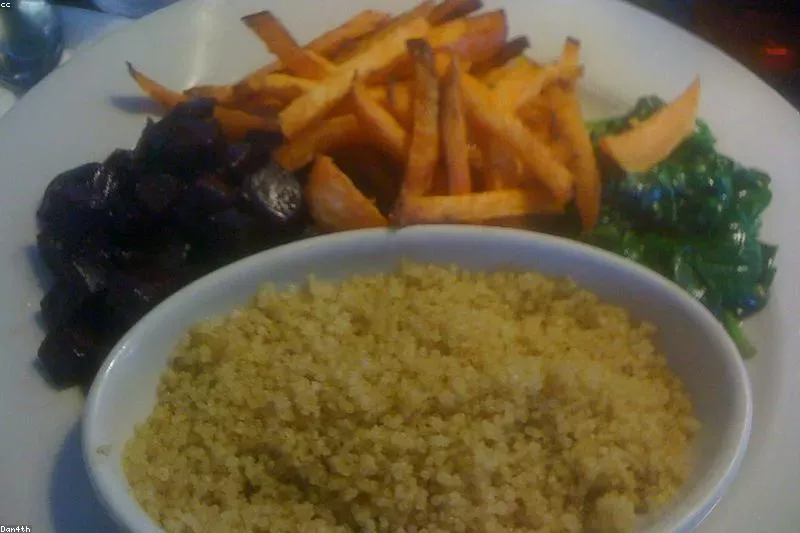
- Quinoa, oats, buckwheat
- Dried fruit (apricots, prunes, raisins, figs)
- Dark chocolate (over 70% cocoa)
Combinations that increase absorption
- Iron + vitamin C: Spinach with lemon juice, lentils with red pepper, liver with tomato salad
- Iron + animal protein: Meat with leafy greens
- Avoid: Black tea, coffee, dairy during iron-rich meals (they reduce absorption by up to 60%)
Supplements, when appropriate
- Iron as gluconate or bisglycinate (better digestively tolerated) only with doctor’s recommendation, after tests
- Vitamin C 500 mg per day, increases iron absorption
- B complex with folate and B12
- Copper (100 mcg-2 mg per day), an essential cofactor for hemoglobin synthesis
When to see a doctor
- Unexplained chronic fatigue, persistent paleness
- Shortness of breath on light exertion, palpitations
- Brittle, spoon-shaped nails
- Heavy hair loss
- “Restless legs” at night
- Strange cravings (pica): need to eat ice, dirt, paper
- Unusual bleeding
- Anemia in a man or postmenopausal woman (requires investigation for bleeding source)
- Neurological symptoms (numbness, tingling) that may indicate B12 deficiency
The doctor will do a complete blood count, ferritin, serum iron, transferrin saturation, vitamin B12, folate, and possibly additional investigations (endoscopy, colonoscopy, pelvic ultrasound) to find the cause.
Remember: Anemia is like a house with windows open that you keep trying to heat, you’ll never manage to warm it up if you don’t close the windows. Treat the cause, not just the consequence. Herbs, traditional foods, and spring nettle cures are valuable allies, but they must be combined with a correct diagnosis. Listen to your body’s signals, get annual blood tests, and treat any anemia, no matter how mild. Health begins at the cell level, and red cells need food, rest, and attention.