 Photo: Elements Of This World, CC BY 2.0, via Wikimedia Commons
A Baker’s cyst (popliteal cyst) is a sac of joint fluid that forms behind the knee, usually as a result of a problem inside the joint: osteoarthritis, a meniscus tear or arthritis. It feels like a soft, sometimes painful lump that tightens when your leg is straight. Treatment means, above all, treating the cause inside the knee; ice, compression, elevation, gentle exercise and local anti-inflammatory remedies ease symptoms, and small cysts often disappear on their own.
The name comes from the British surgeon William Morrant Baker, who described it in the 19th century. The cyst itself is rarely dangerous, but there is one situation you must know about: a rupture can closely mimic a deep vein thrombosis in the calf, and the two can only be told apart by ultrasound.
Key takeaways
- A Baker’s cyst forms when the knee produces too much fluid, which collects in a bursa behind the joint.
- In adults it is almost always linked to osteoarthritis, meniscus injuries or rheumatoid arthritis.
- Symptoms: a lump behind the knee, a feeling of tightness, pain on full bending.
- Ice, elastic compression, raising the leg and low-impact exercise help.
- Sudden calf pain with swelling and redness needs an urgent ultrasound to rule out a blood clot.
Why it forms
The knee is lined by a synovial membrane that produces lubricating fluid. When the joint is irritated, by osteoarthritis, a torn meniscus or inflammation, fluid production increases. Behind the knee, between the tendons of the calf (gastrocnemius) and semimembranosus muscles, there is a bursa connected to the joint by a small opening. Excess fluid is pushed into this bursa, often through a one-way valve effect: it gets in easily but struggles to get out. The sac swells and becomes a cyst.
Common causes
- Knee osteoarthritis: the most common cause after 50.
- Meniscus tears, especially of the medial meniscus.
- Rheumatoid arthritis and other inflammatory arthritis.
- Gout and pseudogout.
- Knee injuries.
In children, a Baker’s cyst sometimes appears without any joint problem and usually goes away by itself.
Symptoms
- a soft or rubbery lump behind the knee, more visible when standing;
- a feeling of tightness or fullness, especially on fully bending the knee;
- pain that increases after activity or long periods of standing;
- knee stiffness;
- sometimes symptoms of the underlying problem: a swollen knee, locking, clicking.
Small cysts may cause no symptoms and are found by chance on ultrasound or MRI.
Ruptured cyst or blood clot? Be careful
When a cyst ruptures, fluid leaks between the calf muscles and causes sudden pain, swelling and sometimes redness or bruising at the ankle, which looks strikingly like deep vein thrombosis. A clot is an emergency because it can travel to the lungs. If your calf suddenly swells and hurts, see a doctor the same day for a Doppler ultrasound. Do not massage the calf or use home remedies until a clot has been ruled out. For prevention, see our article on thrombosis prevention.
Home remedies
1. Ice
Ice wrapped in a towel, applied behind the knee for 15 minutes, 2-3 times a day, especially after activity. It reduces inflammation and pain.
2. Compression
An elastic knee sleeve or bandage applied without excessive tightness limits fluid build-up. If you get tingling, numbness or bluish toes, loosen it.
3. Elevation
In the evening, lie down with the leg on a pillow above heart level for 20-30 minutes. It helps the fluid drain back.
4. Adapted activity
Temporarily avoid deep squats, running on hard ground, jumping, kneeling and repeatedly climbing stairs with loads. Walking on flat ground, a stationary bike with low resistance and swimming (not breaststroke) are usually well tolerated.
5. Clay compresses
Green clay mixed with cold water into a paste, spread 1 cm thick behind the knee, covered with gauze, for 30-40 minutes. Cooling and soothing. Not for broken skin.
6. Cabbage leaf wraps
A traditional Romanian remedy: a white cabbage leaf with the central rib crushed with a rolling pin, slightly warmed, placed on the knee and held with a bandage for 1-2 hours or overnight. There are no studies on Baker’s cyst, but a small trial in people with knee osteoarthritis showed pain relief comparable to an analgesic gel. It is safe for most people.
7. Herbal ointments
- Arnica: the EMA recognises traditional use for bruises, sprains and local muscle pain.
- Comfrey (Symphytum): ointments with root extract have clinical trials for knee pain in osteoarthritis and for sprains. Unbroken skin only, for short periods.
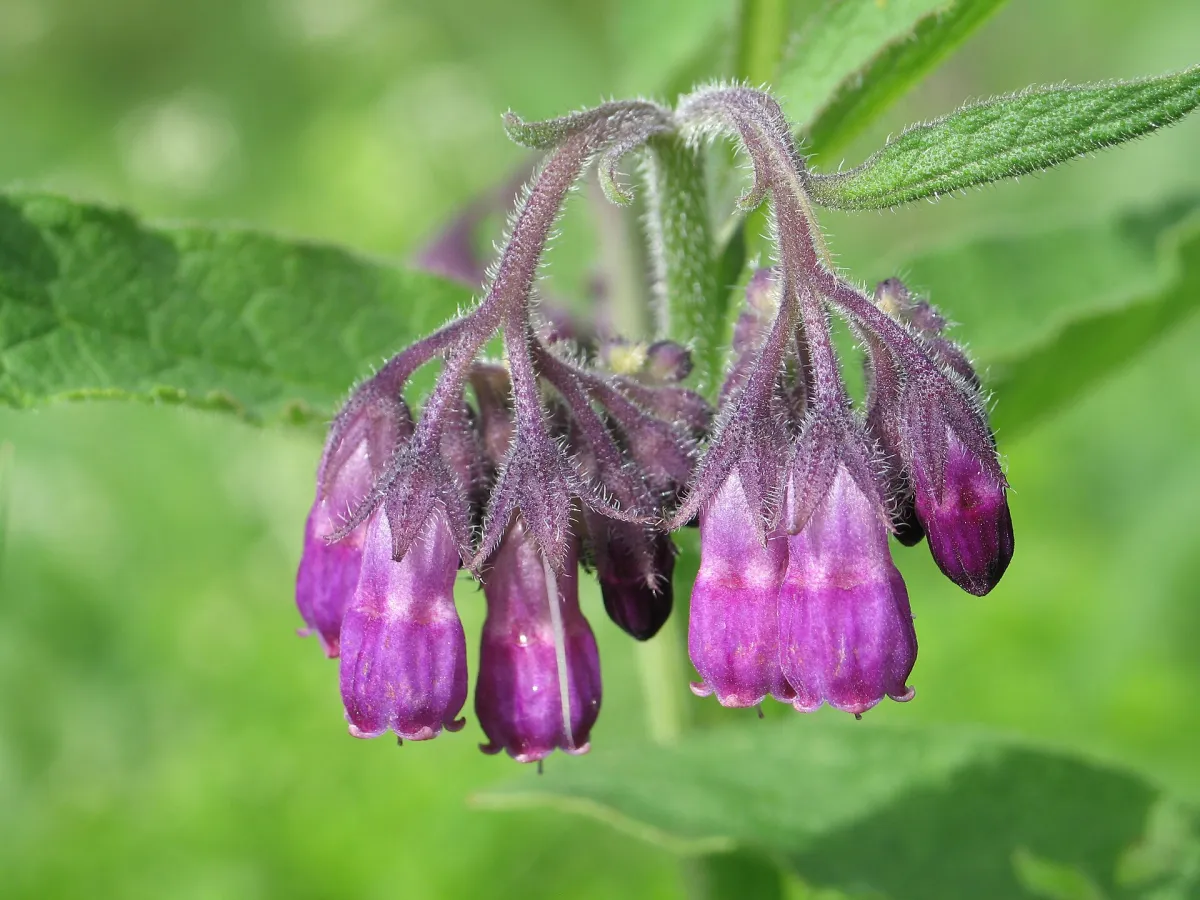 Photo: Robert Flogaus-Faust, CC BY 4.0, via Wikimedia Commons
Gentle exercises
The aim is to keep mobility and strengthen the muscles that protect the knee without raising pressure inside the joint. Do them daily, pain-free.
- Quad sets: lying with the leg straight, press the back of the knee into the bed, hold 5 seconds. 10-15 reps.
- Straight leg raise: lying down with the other knee bent, lift the straight leg 30 cm, hold 3 seconds. 10 reps.
- Heel slides: lying down, slowly bend the knee by sliding the heel along the bed as far as is pain-free, then straighten. 10 reps.
- Hamstring stretch: sitting on the edge of a chair with the leg straight and heel on the floor, lean forward gently with a straight back, 20-30 seconds, 3 times.
- Calf stretch: hands on a wall, affected leg straight behind you, heel down, 20-30 seconds, 3 times.
- Stationary bike with low resistance, 10-15 minutes.
Diet and weight
Every extra kilogram puts several times its weight on the knee when walking. Losing even 5-10% of body weight reduces pain in osteoarthritis and therefore the stimulus for excess fluid. A Mediterranean-style diet rich in vegetables, oily fish, olive oil and legumes supports low levels of inflammation.
Medical treatments
| Option | Role |
|---|---|
| Ultrasound, MRI | confirm the cyst, rule out a clot, show the cause in the knee |
| Anti-inflammatories (gel or short course of tablets) | reduce pain and inflammation |
| Needle aspiration of the fluid | quick relief; the cyst may return if the cause remains |
| Corticosteroid injection into the knee | reduces the joint inflammation feeding the cyst |
| Physiotherapy | mobility, muscle strength |
| Arthroscopy (meniscus) or treating arthritis | treats the cause; the cyst often shrinks |
| Surgical removal of the cyst | rarely, for large, persistent cysts |
Contraindications and precautions
- Never apply ice directly to the skin, and avoid it with Raynaud’s or reduced sensation.
- Do not put arnica or comfrey on wounds, and do not take them by mouth.
- A bandage that is too tight can impair circulation.
- Anti-inflammatory tablets need caution with ulcers, kidney disease or anticoagulant therapy.
When to see a doctor
- sudden swelling and pain in the calf, redness, warmth: emergency, Doppler ultrasound;
- fever and a hot, red knee: possible infection;
- a lump that grows quickly, is hard or irregular, especially without known knee problems (to rule out other masses);
- numbness or a cold foot below the knee;
- the knee locking or not straightening fully.
Common mistakes
- Massaging the cyst hard “to burst it”.
- Ignoring the cause in the knee and treating only the lump.
- Complete rest for weeks, which weakens the muscles.
- Mistaking a blood clot for a ruptured cyst and treating it with compresses.
Conclusion
A Baker’s cyst is a sign that the knee is making too much fluid, usually because of osteoarthritis or a meniscus injury. Ice, compression, elevation, gentle exercise, weight control and local remedies with clay, cabbage or arnica can reduce discomfort, and many small cysts disappear on their own. For large or persistent cysts, treating the cause inside the knee is key. And, very importantly, a suddenly swollen, painful calf must be checked immediately with ultrasound.
Frequently asked questions
Does a Baker’s cyst go away on its own? Small cysts, especially in children or when the knee problem improves, can disappear within months. In adults with osteoarthritis the cyst may persist or fluctuate, growing when the knee is inflamed.
Is a Baker’s cyst dangerous? Usually not. The risks are rupture, which causes calf pain and swelling, and rarely compression of the blood vessels or nerves behind the knee. The main concern is not to confuse it with a blood clot.
Can I walk with a Baker’s cyst? Yes, walking on flat ground is usually recommended. Avoid running, jumping and deep squats during painful periods.
Which exercises should I avoid? Deep squats, lunges, jumping, kneeling and heavy leg weights raise pressure in the joint and can enlarge the cyst.
Do cabbage leaf wraps help? They may reduce pain and tightness, and a small trial in knee osteoarthritis showed a benefit. They are safe, but they will not make the cyst disappear if the cause remains.
Does it need to be drained? Only if the cyst is large and painful. Aspiration brings quick relief, but fluid can build up again if the knee problem is not treated.
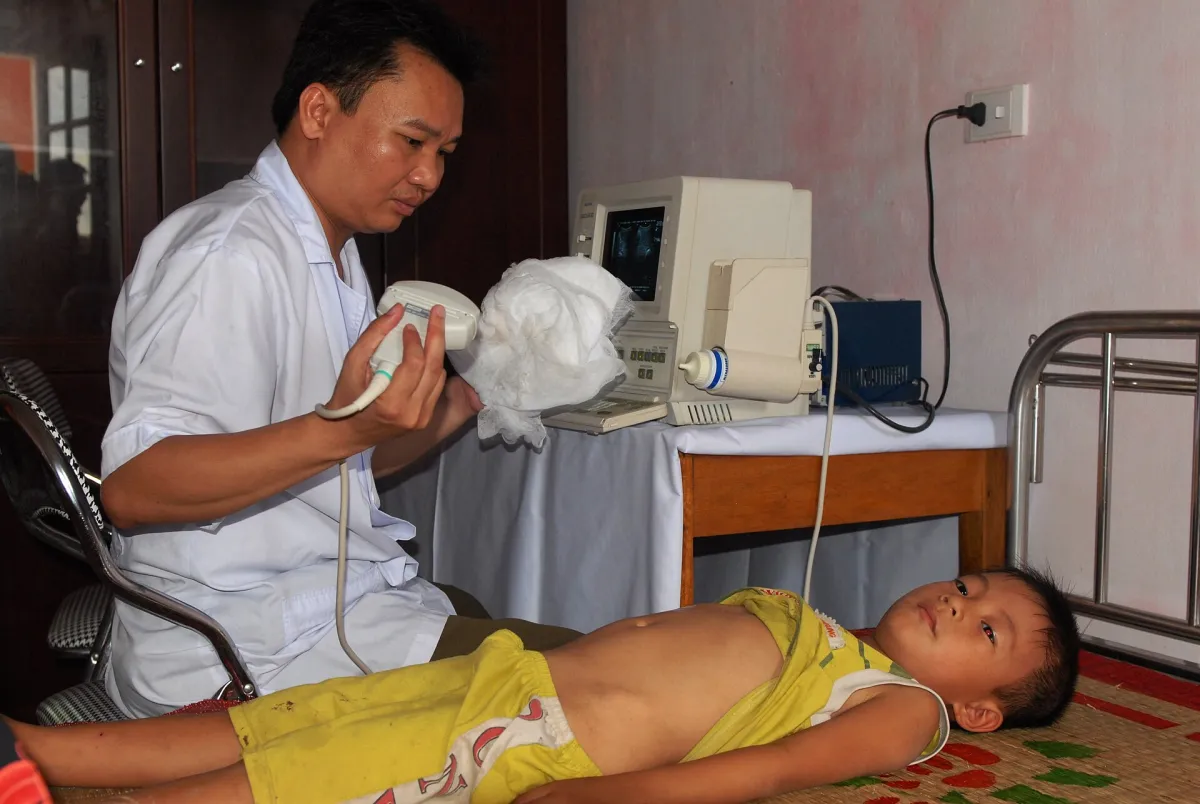
Which test confirms a Baker’s cyst? Ultrasound is the basic test: it shows the cyst, its size and can rule out a clot. MRI additionally shows the cause inside the knee (meniscus, cartilage).
Sources
- NHS: information page “Baker’s cyst”.
- American Academy of Orthopaedic Surgeons (OrthoInfo): materials on knee osteoarthritis and meniscus tears.
- EMA/HMPC: community herbal monographs on Arnicae flos and Symphyti radix.
- Reviews indexed in PubMed on the diagnosis and management of popliteal cysts.
This content is for information only and does not replace medical advice. See an orthopaedic specialist for diagnosis and treatment.