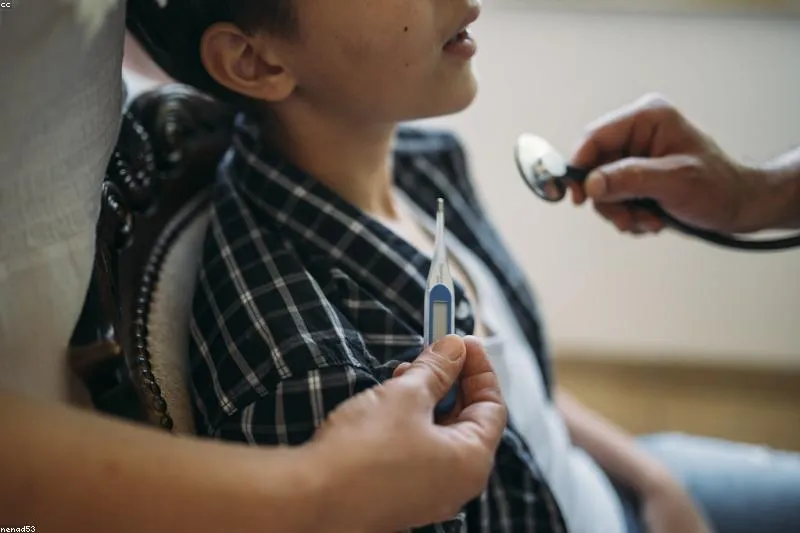

Children’s Fever: A Practical Guide for Parents
There is no parent who hasn’t known that moment at two in the morning, when you put your hand on your child’s forehead and feel the heat radiating off them. Your heart tightens a little, you hunt for the thermometer in a drawer, and your mind is already cycling through possibilities. Is it the flu? Something worse? Should we go to the ER? Did I give them enough to drink? Fever in children is probably the most common domestic emergency and at the same time one of the most misunderstood, surrounded by myths, fear, and half-remembered advice from well-meaning relatives.
Fever is not a disease. It is a symptom. It is the correct response of the body to an aggression, most often a viral one. The immune system raises the body’s temperature because many microorganisms cannot reproduce above 38 degrees Celsius, and immune cell activity is enhanced at higher temperatures. In other words, fever is an ally, not an enemy. The real issue is rarely the fever itself, but its cause and the child’s overall condition.
Before any practical information, understand this clearly: this article does NOT replace a pediatrician. Every child with fever, especially if they are a young infant, have persistent fever, look unwell between febrile episodes, refuse fluids, or show any alarming signs, must be evaluated by a doctor. What follows is general information, not personalized treatment advice. Your child’s pediatrician is the one who decides which medication, which dose, which investigations are needed.
Contents
- What fever is and why it happens
- How to measure temperature accurately
- Fever classification
- When to seek urgent medical care
- Antipyretics: paracetamol and ibuprofen
- Hydration and feeding during fever
- Physical cooling methods
- Febrile seizures
- Common myths about fever
- When no medication is needed
- Home monitoring steps
- Frequently asked questions
What fever is and why it happens
Fever is a rise in body temperature above normal limits. Under normal circumstances, core body temperature ranges between 36.5 and 37.5 degrees Celsius, with small variations depending on time of day (lower in the morning, higher in the evening), activity level, clothing, and environment.
Fever is defined as:
- Rectal: above 38 degrees Celsius
- Axillary (under the arm): above 37.5 degrees
- Oral: above 37.8 degrees
- Tympanic (in the ear): above 38 degrees
Most common causes:
- Respiratory viral infections (colds, flu, laryngitis, bronchiolitis)
- ENT infections (otitis, tonsillitis, sinusitis)
- Urinary tract infections
- Gastrointestinal infections
- Teething (only mild, transient low-grade fever)
- Post-vaccination reaction
- Bacterial illnesses (pneumonia, meningitis, sepsis): rarer but serious
- Autoimmune or inflammatory disorders (rarer in children)
Critical point: in infants under 3 months, any fever above 38 degrees Celsius warrants IMMEDIATE medical evaluation, even if the baby looks well.
How to measure temperature accurately
A digital thermometer is the most practical home tool, and the recommended method depends on the child’s age:
Under 4 years: rectal (most accurate) or axillary measurement with a modern digital thermometer Over 4 years: oral, axillary, or tympanic measurement
Rules for accurate measurement:
- Child should be calm, not immediately after a bath, crying, or running
- Armpit or mouth should be dry
- Hold the thermometer long enough (digital: until the beep, usually 30-60 seconds)
- Use the same thermometer each time for comparable readings
- Log the time and value in a simple journal
Non-contact infrared forehead thermometers are convenient but have greater variability. Do not rely solely on them in young infants.
Fever classification
- Low-grade fever: 37.5-38 degrees (axillary)
- Moderate fever: 38-39 degrees
- High fever: 39-40 degrees
- Hyperpyrexia: above 40 degrees (increased risk, requires evaluation)
More important than the numerical value is the child’s BEHAVIOR. A child with 39 degrees who is playing, drinking fluids, and responsive is generally in a better place than a child with 38.5 who is listless, limp, and refusing water. That is why pediatricians always say: “Treat the child, not the thermometer.”
When to seek urgent medical care
Go to the pediatric ER or call emergency services if:
- Infant under 3 months with a fever above 38 degrees
- Infant 3-6 months with fever above 39 degrees
- Child not responding to stimuli, crying weakly, moaning continuously
- Seizures (rhythmic movements, eye rolling, loss of consciousness)
- Difficulty breathing (rapid or noisy breathing, rib retractions, bluish lips)
- Purple rash (dark red spots that do not fade under pressure: watch for meningitis)
- Stiff neck
- Repeated vomiting, severe dehydration (no urine for 8+ hours, dry lips, sunken fontanelle)
- Severe pain (abdominal, headache, earache)
- Fever lasting more than 3 days or recurring
- History of febrile seizures
- Child with chronic conditions (cardiac, renal, neurological, immunodeficiencies)
Antipyretics: paracetamol and ibuprofen
Only two antipyretics are considered safe in children: paracetamol (acetaminophen) and ibuprofen. Aspirin is FORBIDDEN under 16 years (risk of Reye syndrome).
Paracetamol:
- Can be given from birth (with appropriate dosing)
- Administered every 4-6 hours, maximum 4 doses per day
- Usual dose: 10-15 mg/kg/dose (the pediatrician sets the exact amount)
- Available as syrup, suppositories, tablets
Ibuprofen:
- Can be given from 3 months (often from 6 months per local prescribing information)
- Administered every 6-8 hours, maximum 3 doses per day
- Usual dose: 7-10 mg/kg/dose
- Has anti-inflammatory effect too, useful in otitis, sore throats
Golden rules:
- Dose by kilogram of body weight, not rough age
- Weigh the child periodically, especially during growth spurts
- DO NOT alternate paracetamol and ibuprofen on your own initiative. If the pediatrician recommends alternation, follow the schedule strictly
- DO NOT exceed daily maximum doses
- Read the product leaflet carefully (concentrations differ between brands)
- Do not give ibuprofen to a dehydrated child, a child vomiting, with chickenpox, or with kidney problems
- Do not give antipyretics “preventively” without fever
The purpose of the antipyretic is not to bring the temperature to 36.5, but to reduce it enough that the child feels better. A drop of 1-1.5 degrees is usually sufficient.
Hydration and feeding during fever
Fever increases fluid loss through sweat and breathing. Dehydration can develop quickly, especially in infants and toddlers, and can be more dangerous than the fever itself.
Recommended fluids:
- Room-temperature still water
- Mild herbal teas (chamomile, linden) with little or no sugar
- Clear broths, vegetable soups
- Breast milk or formula (for infants), on demand, more often than usual
- Oral rehydration solutions (as advised by the doctor) in case of vomiting or diarrhea
- Diluted natural juices (from age 1)
To avoid:
- Carbonated drinks
- Caffeinated beverages
- Overly sweet teas
Feeding:
- Do not force the child to eat. Reduced appetite is normal during fever.
- Offer small, frequent, light meals: rice, chicken soup, plain crackers, bananas, baked apple, toast, yogurt.
- Avoid heavy, fatty, fried foods.
- For breastfed babies: nurse on demand, more often than usual.
Physical cooling methods
Physical methods are useful but do NOT replace antipyretics. Use them ALONGSIDE the medication, not instead of it.
What you can do:
- Remove heavy clothing; keep the child in a light cotton layer
- Air out the room (ideal 20-22 degrees Celsius)
- Cover with a thin sheet, not a heavy comforter
- Apply lukewarm (NOT cold, NOT alcohol, NOT vinegar) compresses to the forehead, armpits, nape, groin
- A lukewarm bath (32-34 degrees Celsius, about 1 degree below the child’s temperature) can help; never cold water
What is DANGEROUS:
- Alcohol compresses (absorption through the skin can cause intoxication)
- Vinegar rubs in large quantities (irritating, ineffective)
- Cold water bath (produces vasoconstriction, raises core temperature)
- Ice rubs
Febrile seizures
Febrile seizures affect 2-5% of children, typically between 6 months and 5 years of age. They are triggered by rapid rises in temperature, not by the absolute value.
What they look like:
- Child becomes rigid, then shakes rhythmically
- Eyes roll back, saliva drools
- Brief loss of consciousness
- Usually lasts under 5 minutes
- After the episode, the child is drowsy, limp, confused
What to do:
- STAY CALM
- Lay the child on their side in a safe spot, away from hard objects
- Do NOT put anything in the mouth (no object, no finger)
- Do NOT restrain the limbs
- Time the seizure (check the clock)
- Call emergency services or go to the ER, even if the seizure has ended
A first febrile seizure requires medical evaluation. Most febrile seizures are benign and leave no consequences, but other causes (meningitis, epilepsy) must be excluded.
Common myths about fever
“Fever burns the brain”: False. Ordinary fevers, even above 40 degrees, do not damage the brain. Brain damage occurs in specific diseases (meningitis, encephalitis), not from fever itself.
“I must give an antipyretic at 37.5”: Not necessarily. If the child feels fine, no medication is needed. Low-grade fever can often be tolerated.
“The lower I push the fever, the better”: False. The goal is the child’s comfort, not a normal thermometer reading.
“I should bundle them up so they sweat it out”: Dangerous. Overheating prevents heat loss and may worsen fever.
“Teething causes high fever”: Teething can cause at most a low-grade fever. High fever during teething has ANOTHER cause that must be identified.
“Antibiotics lower fever”: False. Antibiotics treat bacteria, not fever. If the fever is viral, antibiotics do nothing. Only the pediatrician decides.
“Homeopathy treats fever”: No scientific evidence. Risk of missing real treatment when needed.
When no medication is needed
Not every fever requires an antipyretic. If:
- The child has less than 38.5 degrees axillary
- They are playing, drinking, responsive
- No history of febrile seizures
- No chronic conditions
… you can wait, dress them lightly, offer fluids, and simply observe. Fever is a useful defense mechanism; aggressive suppression may prolong the infection.
Home monitoring steps
- Measure and log the temperature with the time
- Observe behavior: active, lethargic, drowsy, irritable
- Check hydration: wet diapers, urine, moist tongue, tears when crying
- Dress lightly, ventilate the room
- Offer fluids frequently, light small meals
- Give antipyretic only if indicated, at the correct dose
- Call the doctor at any warning sign
- Keep a log of temperatures, doses, symptoms
Conclusion
Fever in children is a topic that frightens parents greatly, but when understood correctly can be managed with calm. The number on the thermometer is less important than how your child looks and feels. Know your child, learn to recognize danger signs, and never hesitate to call the pediatrician for any concern. Home comfort measures and traditional advice can help, but antipyretic medication and above all medical consultation remain the gold standard when fever runs high or the child looks unwell. A well-informed parent is the pediatrician’s first ally.
Frequently asked questions
1. At what value should I give an antipyretic? There is no magic number. Usually above 38.5 axillary if the child is uncomfortable. More important is how the child feels, not the reading alone.
2. Can I alternate paracetamol with ibuprofen? Only if the pediatrician explicitly recommends a clear schedule. Never on your own, to avoid overdose.
3. How many days can fever last? With viral illnesses, 2-5 days. If fever persists more than 3 days without improvement or recurs, see the doctor.
4. Should I bathe them in cold water? NO. Use lukewarm water, about 1-2 degrees below the child’s temperature. Cold water causes vasoconstriction and raises internal temperature.
5. Can high fever cause brain damage? No. Ordinary fevers (even above 40) do not harm the brain. Brain injury appears only in serious diseases (meningitis), not from fever itself.
6. Can I give tea with honey? After age 1, yes, in moderation. Honey soothes the throat. Under 1 year, honey is NOT given.
7. How long should I wait for the antipyretic to work? Effect starts in 30-60 minutes and peaks at 2 hours. If fever does not drop at all after 2 hours, contact the pediatrician.