
Chronic venous insufficiency: daily natural support
IMPORTANT: Chronic venous insufficiency is a progressive disease that, left untreated, evolves toward complications such as stasis dermatitis, thrombophlebitis, and venous ulcers. Diagnosis and treatment plan are established by the phlebologist or vascular surgeon, based on Doppler ultrasound and clinical examination. Everything that follows is adjunctive support, information for the patient. It does not replace medical compression, prescribed venotonics, or minimally invasive and surgical procedures. Consult the doctor before starting any treatment on your own, especially if you take anticoagulants.
Chronic venous insufficiency is one of those conditions many people live with without naming it. The feeling of heavy legs by evening, slightly swollen ankles, visible veins multiplying over the years, itching on the calf, night cramps, all these belong to the same picture. It is a slow disease, settling in over years, and if left neglected it leads to pigment changes, ulceration, and real losses in quality of life.
The good news is that chronic venous insufficiency responds very well to classic treatment, especially when detected in early stages. The compression stocking, a handful of daily habits, prescribed venotonics, regular movement, hydration, all of these set things on a good path. The surgeon or phlebologist steps in when needed. The patient enters a monitoring path, where progress is tracked through regular check-ups.
In this article you will find an overview of the disease, its signs, its stages by CEAP classification, and the ways you can support medical treatment with what you do at home, at the table, and at your desk.
Contents
- What chronic venous insufficiency is
- Why it appears, who is predisposed
- Signs and symptoms, stages
- Diagnosis and investigations
- Medical treatment
- Compression stockings, the basics
- Natural adjunctive support
- Nutrition, movement, posture
- Practical tips
- Frequently asked questions
What chronic venous insufficiency is
The veins of the lower limbs carry the rather difficult responsibility of returning blood to the heart against gravity. For this, they have valves, one-way gates that prevent blood from falling back. When these valves fail, when vein walls weaken, or when circulation was disrupted by a previous thrombosis, chronic venous insufficiency develops. Blood stagnates, pressure in the veins rises, fluids leak into tissues, and over time the skin changes its appearance.
It is a disease without a specific age, but it becomes more common after 40. Women are more often affected, due to hormones and pregnancies. The modern sedentary lifestyle, desk work, poor dietary habits, all contribute to rising incidence.
CEAP classification
Medicine uses the CEAP classification (Clinical, Etiological, Anatomical, Pathophysiological) to describe disease stage.
- C0: no visible or palpable signs
- C1: telangiectasias (thread veins), reticular veins
- C2: varicose veins
- C3: edema (leg swelling)
- C4: skin changes (brown pigmentation, eczema, lipodermatosclerosis)
- C5: healed venous ulcer
- C6: active venous ulcer
A patient may skip stages or progress slowly over years from C1 to C6. Treatment differs by stage.
Why it appears, who is predisposed
The main mechanism is venous reflux: blood flows opposite to normal. This happens because valves no longer close completely. Each reflux increases local pressure, dilates the vein further, and so the cycle closes.
Factors that favor the disease
- Family history, fundamental
- Female sex
- Age
- Pregnancies, especially multiple
- Obesity
- Prolonged standing or sitting
- Sedentary lifestyle
- Chronic constipation
- Frequent use of very high heels
- Smoking
- Combined oral contraceptives
- Hormone replacement therapy
- History of thrombosis
Sometimes the disease appears without obvious factors, on purely genetic ground. At other times several factors add up and the disease progresses rapidly.
Signs and symptoms, stages
Symptoms do not always match objective disease severity. Some patients with many visible veins have few symptoms, others with seemingly discreet veins have troublesome complaints. Here are the most frequent complaints:
Frequent symptoms
- Heavy legs by evening
- Swollen ankles (evening edema)
- Night cramps in the calf
- Itching on the calf
- Dull, diffuse, unlocalized pain
- Burning sensation
- Numbness, tingling
- Restless legs syndrome
- Worse with heat, better with cold
- Brown pigmentation around the ankle
- Dry, flaking skin on the calf
Complications
- Stasis dermatitis (venous eczema)
- Lipodermatosclerosis (thick, hard skin, bound to deep tissue)
- Superficial thrombophlebitis
- Venous ulcer, especially at the ankle, medial side
- Bleeding from a traumatized superficial varicose vein
A venous ulcer heals more slowly than other wounds, and heals only when venous hypertension is corrected by compression.
Diagnosis and investigations
Clinical exam combines with venous Doppler ultrasound, the standard investigation. The doctor sees blood flow, measures reflux, identifies involved veins, measures their diameter.
What is done
- Detailed history
- Inspection and palpation
- Doppler ultrasound in standing position
- Photographs for monitoring
- Blood tests if needed
- Other investigations only in complex cases
Medical treatment
The treatment plan is built on several levels, and the doctor chooses what and when to apply, based on stage and severity.
Conservative measures
- Medical compression, the cornerstone
- Oral venotonics (diosmin-hesperidin, escin, ruscogenin)
- Leg elevation at rest
- Movement and weight control
- Skin care
Procedures
- Sclerotherapy for thread and small veins
- Thermal ablation, endovenous laser or radiofrequency
- Acrylic glue
- Ambulatory phlebectomy for collaterals
- Classic stripping, rarely today
The decision belongs to the doctor, based on ultrasound. A combined plan is often used.
Modern dressing for venous ulcers
A venous ulcer requires specialized dressings (hydrocolloids, foam, alginate) and compression. Specialized units for chronic wound care exist in large hospitals. Healing is possible, though it takes months.
Compression stockings, the basics
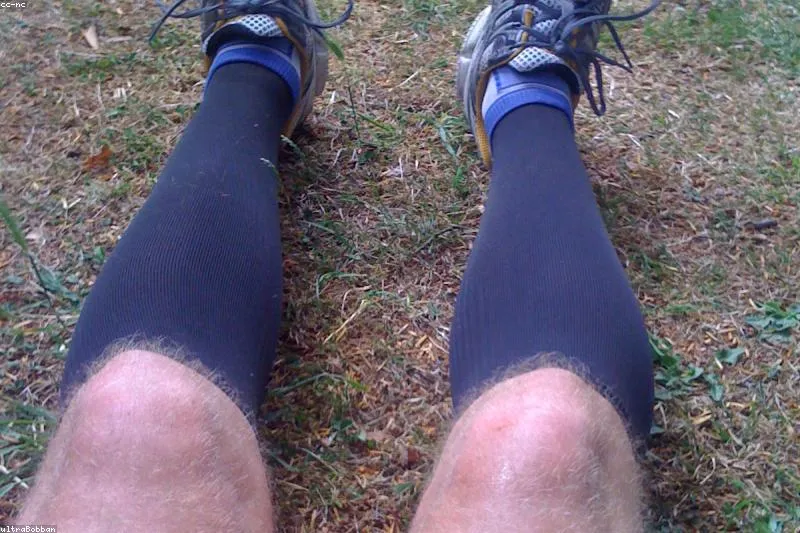
For chronic venous insufficiency, compression is gold.
Basic rules
- Chosen after measurement, by a specialist
- Put on in the morning, upon waking
- Removed in the evening before sleep
- Hand-washed with mild detergent
- Replaced every 6 months
- Class set by the doctor
Compression classes
- Class I (15-20 mmHg) for prevention and early stages
- Class II (20-30 mmHg) for varicose veins, edema, moderate insufficiency
- Class III (30-40 mmHg) for severe cases, ulcer
- Class IV (above 40 mmHg) for significant edema, special indications
Some patients say they cannot tolerate the stockings. Most often it is a question of wrong size, material, or lack of habit. After two weeks, most people adjust.
Natural adjunctive support
There are folk traditions and partial scientific evidence for several useful herbs in chronic venous insufficiency.
Venotonic herbs
- Horse chestnut (Aesculus hippocastanum), the best documented, contains escin
- Butcher’s broom (Ruscus aculeatus), rich in ruscogenin
- Bilberry (Vaccinium myrtillus), for protective anthocyanins
- Red vine leaf (Vitis vinifera), for flavonoids
- Centella asiatica, for collagen synthesis
- Witch hazel (Hamamelis virginiana), for topical use
Topical applications
- Cold gel with menthol and horse chestnut extract
- Witch hazel water for cold compresses
- Massage oil with cypress, lavender, lemon, applied upward
- Alternating warm-cold foot baths
- Cold water jet shower on the calf, 1-2 minutes, at night
Teas that may help
- Yarrow tea
- Red vine leaf tea
- Nettle tea (mild diuretic)
- Knotgrass tea, for microcirculation
Watch for interactions. If you take anticoagulants, antiplatelet agents, or other medications, consult the doctor before starting any herbs.
Nutrition, movement, posture
Three routine pillars that make the difference in venous insufficiency.
Nutrition
- Fiber, to avoid constipation (which worsens the disease)
- Water, at least 1.5-2 liters a day
- Colorful fruits and vegetables, for flavonoids
- Fatty fish, for omega 3
- Less salt, which retains water
- Small, frequent meals to avoid heavy digestion
Movement
- Daily walking, 30-60 minutes
- Swimming, ideal for veins
- Cycling, if no contraindications
- Ankle gymnastics (rotations, flexion, extension)
- Tiptoe raises, for the calf pump
- Avoid heavy lifting with breath holding
Posture
- Do not cross your legs
- At the desk, take 5-minute breaks every hour
- Raise the foot of the bed 10-15 cm for sleep
- Avoid prolonged sitting on low couches
- Comfortable shoes with low or medium heel
Practical tips
- Do not sit in hot water more than 10 minutes
- Avoid prolonged sauna
- Massage the calf upward, never downward
- If you feel heaviness in the legs, elevate them to heart level for 10 minutes
- Drink a glass of water before you leave in the morning
- Wear compression stockings whenever you stand for long periods
- See a phlebologist every 1-2 years
- Care for the skin on your calf, moisturize daily
- If a wound does not heal, see the doctor urgently
- On long trips, wear compression stockings
Frequently asked questions
Can chronic venous insufficiency be cured? It cannot be fully cured, but it can be very well controlled. Modern treatments stop progression and prevent complications.
Can I run with varicose veins? Yes, with compression stockings. Running on soft ground with good shoes does not worsen the disease. On the contrary, it activates the calf pump.
Do anti-cellulite creams help with varicose veins? No. The two problems are different. Some creams contain horse chestnut extract and may give a pleasant, cooling feeling, but they do not treat the disease.
I have night pains. What should I do? Elevate the leg, hydrate, wear the stocking in the morning. If pains do not ease or new signs appear, see the doctor. Cramps may also indicate magnesium or potassium deficiency.
When is surgery recommended? The decision belongs to the phlebologist based on ultrasound. Usually it is done when there is significant reflux, bulging veins, complications, or failure of conservative treatment.
Can I sit in the sun in summer? Yes, in moderation. Extreme heat worsens symptoms, so avoid beaches at noon, long saunas, and hot tubs.
Is the compression stocking worn in winter too? Certainly. In fact, it is useful in any season. There are winter and thinner summer models.
Chronic venous insufficiency does not stop you from living, but it asks for attention. A few daily minutes for the stocking, a bit of walking, a decent diet, timely check-ups. If you stick to this pattern, the veins stay calm, your calves feel better, and the risk of serious complications drops considerably. In the end, it is not about miracles but about gentle, consistent discipline.