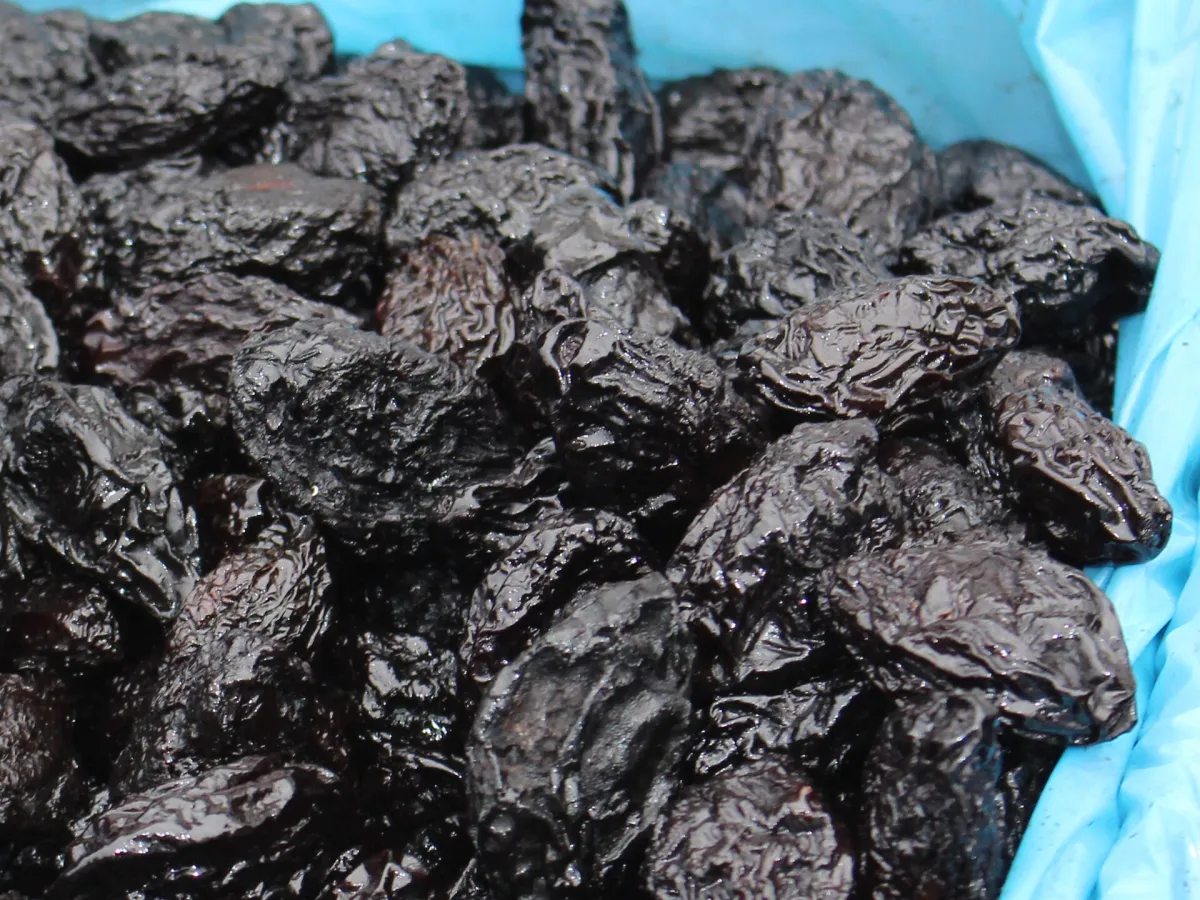
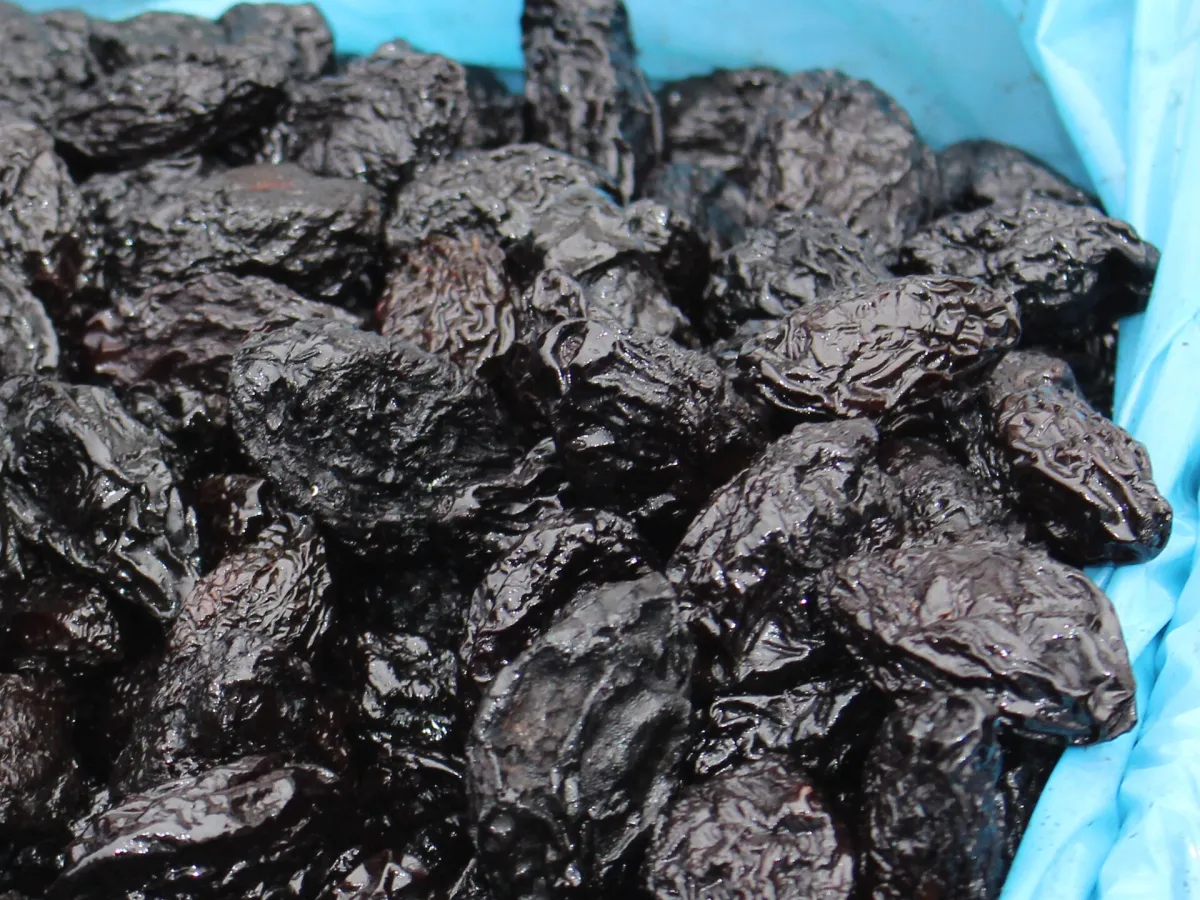
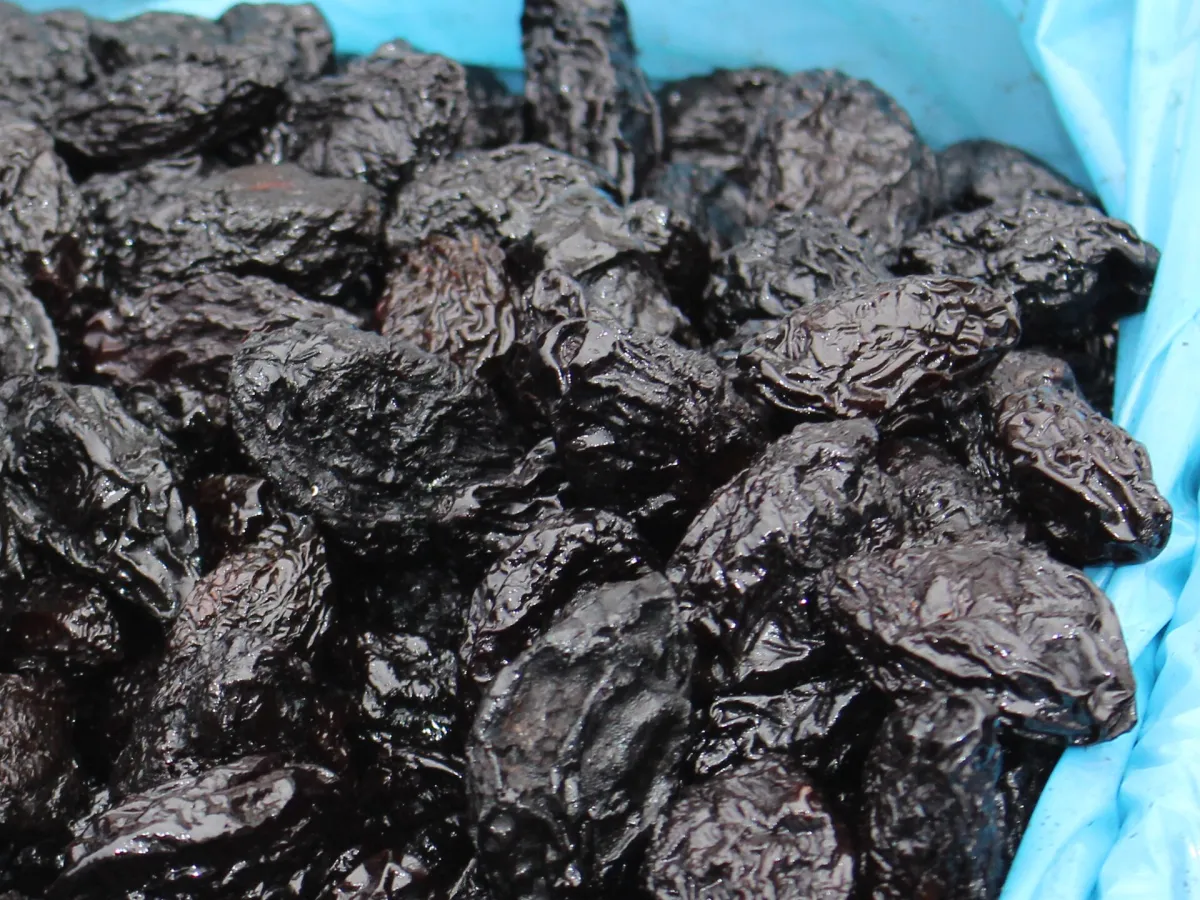
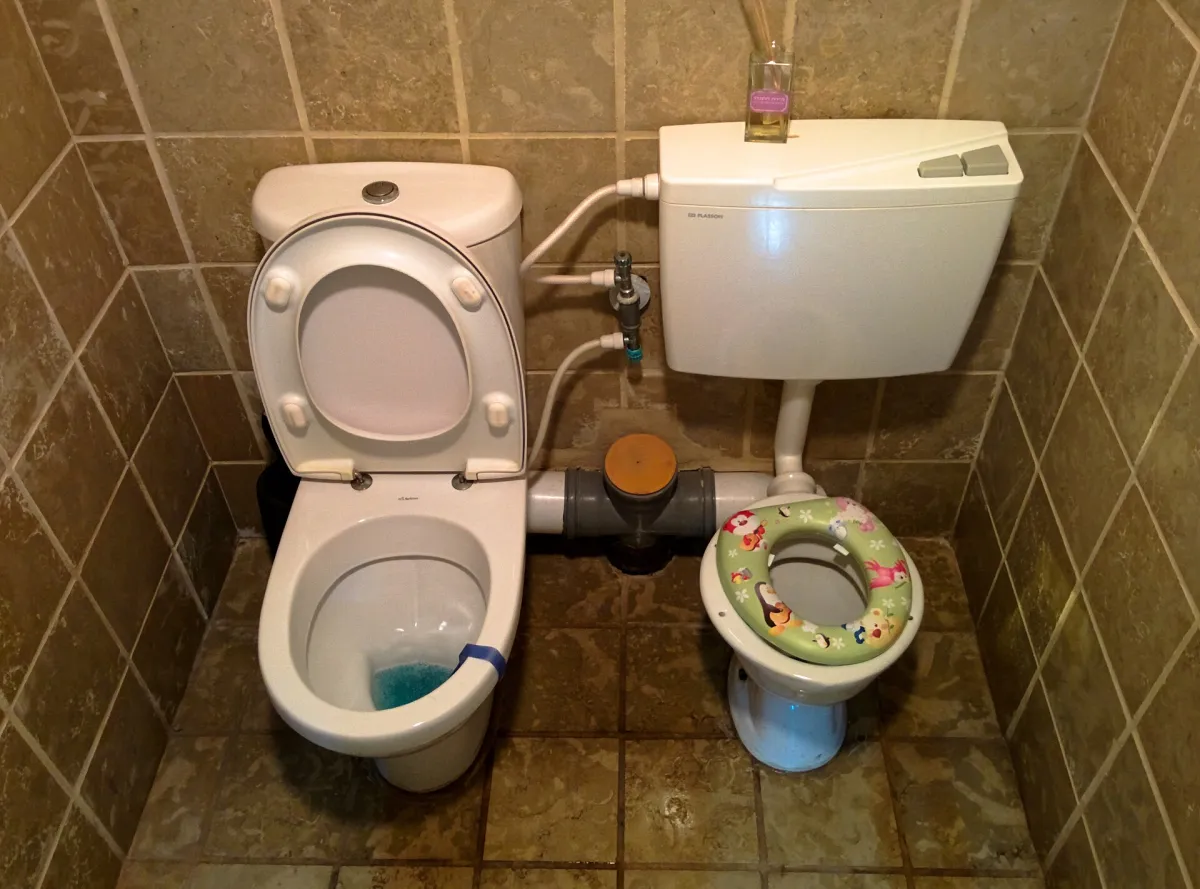
 Photo: Etan J. Tal, CC BY-SA 3.0, via Wikimedia Commons
Constipation in children means infrequent stools (fewer than three a week) that are hard, painful or difficult to pass. In more than 90% of cases there is no underlying disease: it is “functional”, driven by a child holding in stool for fear of pain, and the most effective remedies are water, sorbitol-rich fruit (prunes, pears, peaches), fibre and a calm toilet routine.
It is one of the most common reasons parents see a paediatrician, especially at three moments: when solids are introduced, when moving from nappies to the potty, and when a child starts nursery or school. The good news is that it can usually be sorted out at home with patience and a few simple changes.
Key takeaways
- Normal varies a lot: a breastfed baby may poop several times a day or once every few days, as long as the stool is soft.
- Functional constipation feeds a vicious circle: painful stool, holding, even harder stool.
- The “P” fruits (prunes, pears, peaches), water and fibre are the first line, from the right age.
- A toilet routine after meals, with the feet supported, matters as much as diet.
- No stimulant laxatives, oils or enemas on your own initiative; fever, vomiting, blood or a swollen tummy need a doctor.
How often should a child poop
| Age | Usual frequency | When it is constipation |
|---|---|---|
| Breastfed baby, 0-6 months | from several times a day to once every 5-7 days | hard, pellet-like stool, crying when passing it |
| Formula-fed baby | 1-3 stools a day | fewer than 3 a week or hard stools |
| Starting solids, 6-12 months | 1-2 a day | hard stools after solids are introduced |
| Child 1-4 years | 3 a day to 3 a week | pain, holding, soiling in pants |
| School-age child | similar to adults | fewer than 3 a week, large stools that block the toilet |
In an exclusively breastfed baby, a few days without a stool can be normal because breast milk is almost fully absorbed. Consistency matters, not the count. A baby straining and going red in the face while passing a soft stool (infant dyschezia) is not constipated.
Why children get constipated
- Withholding: one painful stool becomes a reason to be afraid. The child clenches the buttocks, stands on tiptoes, hides behind the sofa. The stool sits in the rectum, loses water and gets even harder.
- Diet changes: moving from milk to solids, a lot of cow’s milk (over 500 ml a day in toddlers), few vegetables and fruit, many refined foods (biscuits, white bread, white rice, unripe bananas).
- Not enough water, especially in summer or during illness.
- Pushed or too-early potty training.
- Nursery and school: unfamiliar toilets, embarrassment, short breaks.
- Too little movement, long screen time.
- Rare medical causes: Hirschsprung’s disease (delayed first stool after birth), hypothyroidism, coeliac disease, cow’s milk protein allergy, some medicines (iron preparations).
For adults the approach is different; see our general guide to constipation.
Natural remedies by age
Babies under 6 months
No teas, sugar water, honey or juices without your paediatrician’s advice. Honey is off-limits under one year because of the risk of botulism. What you can do:
- tummy massage clockwise with a warm palm, 3-5 minutes, 2-3 times a day;
- “bicycle legs”, gently bringing the knees towards the tummy;
- a warm bath, which relaxes the muscles;
- for formula-fed babies, checking that the formula is made up correctly (too much powder for too little water thickens stools).
If your baby seems to have colic rather than constipation, read our guide to infant colic.
6-12 months, starting solids
- Prune, pear or peach purée: they contain sorbitol and fibre, which draw water into the bowel. Start with 2-4 teaspoons a day, then adjust.
- Diluted prune juice for babies over 6 months, on medical advice: about 30 ml per month of age per day, up to 120 ml, diluted half and half with water.
- Water: an extra 100-200 ml a day on top of milk, from a cup or bottle.
- Temporarily cut back on rice, green bananas and large amounts of cooked carrot.
Children over 1 year
- Fibre: a handy rule is the child’s age plus 5 grams of fibre a day (a 4-year-old: about 9-10 g). Sources: oats, wholemeal bread, lentils, beans, peas, vegetables, fruit with the skin on.
- Soaked prunes: 2-4 prunes soaked overnight in warm water, eaten in the morning together with the water.
- Kiwi fruit: 1-2 a day for older children; adult studies show a good effect on stool frequency.
- Ground flaxseed: 1 teaspoon a day in yoghurt or porridge, from age 2-3, with plenty of water.
- Cow’s milk: no more than 400-500 ml a day.
- Daily activity: running, cycling, at least an hour of outdoor play.
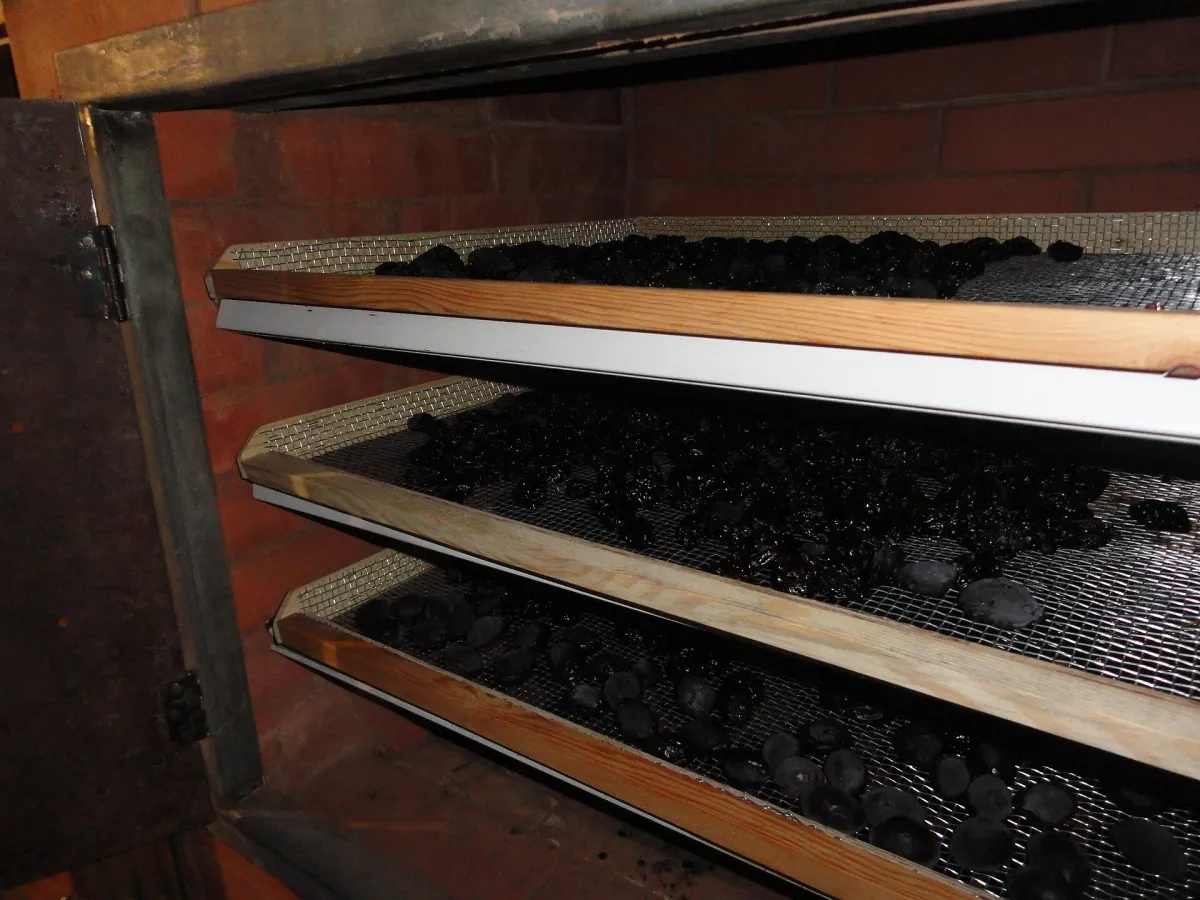 Photo: Андрей Перцев, CC0, via Wikimedia Commons
Simple recipes
Pear and prune purée (from 6-7 months)
One ripe peeled pear and 4 pitted prunes. Simmer for 8-10 minutes in 100 ml water, then blend together with the liquid. Keep in the fridge for up to 48 hours. Offer 2-4 teaspoons per meal.
Oat porridge with prunes (from 1 year)
3 tablespoons of rolled oats cooked for 5 minutes in 150 ml water or milk, 2 finely chopped prunes, 1 teaspoon ground flaxseed (from age 2). Serve lukewarm at breakfast.
A stewed fruit drink that “works”
200 g prunes, 1 pear, 1 litre of water. Simmer for 15 minutes without sugar. An older child can drink 1-2 glasses a day and eat the fruit.
The toilet routine: half the treatment
The bowel has a natural urge to empty 15-30 minutes after a meal (the gastrocolic reflex). Use it:
- After breakfast and dinner, the child sits on the potty or toilet for 5-10 minutes, with no rush and no screens.
- Feet on a footstool, knees higher than the hips. This straightens the angle of the rectum and makes passing stool easier.
- Praise the effort, not just the result. A sticker chart works brilliantly at ages 3-6.
- No punishment or blame for accidents: shame increases withholding.
- If potty training started with pain, a few weeks’ break back in nappies can break the fear cycle.
What you can use and what to watch
| Remedy | From what age | Caution |
|---|---|---|
| Tummy massage, bicycle legs | from birth | gentle, no strong pressure |
| Prune, pear, peach purée | from 6 months | introduce gradually |
| Diluted prune juice | from 6 months, with medical advice | max 120 ml/day |
| Fibre and legumes | from weaning | increase water along with fibre |
| Ground flaxseed | from 2-3 years | 1 teaspoon/day, plenty of water |
| Mineral oil (paraffin) | not without a doctor | risk of aspiration in young children |
| Laxative teas (senna, buckthorn) | not for children | cramps, dependence, salt imbalances |
| Glycerin suppositories, enemas | only occasionally, on medical advice | repeated use feeds the fear |
The medicine paediatricians use most for functional constipation is macrogol (polyethylene glycol), which is safe and effective, but the dose must be set by a doctor. Natural remedies work well in mild cases and as maintenance after treatment.
When to see a paediatrician
See a doctor without waiting if:
- a newborn has not passed meconium within the first 48 hours, or constipation has been present since birth;
- the child has fever, vomiting, a swollen hard tummy or refuses food;
- there is more blood in the stool than a streak on the surface;
- the child is not growing or is losing weight;
- there is frequent soiling in the pants (encopresis) in a child who was already toilet trained;
- constipation lasts more than 2 weeks despite home measures;
- tummy pain is severe or wakes the child at night.
Common mistakes
- Too many bananas, rice and biscuits “because they like them”.
- Lots of fibre without water, which can make stools even harder.
- Forcing the child on the potty and arguments in the bathroom.
- Repeated enemas or suppositories without medical advice.
- Stopping prescribed treatment as soon as stools soften. A stretched bowel needs months to recover; relapses are very common when treatment stops too early.
- Olive or castor oil given to a toddler by the spoonful.
Conclusion
Constipation in children is common but rarely serious. The combination that works is simple: sorbitol-rich fruit, water, age-appropriate fibre, movement and a stress-free toilet routine. The most important thing is to break the pain-fear-withholding cycle. When warning signs appear or the problem persists, a paediatrician can prescribe safe treatment and rule out rare causes. A healthy gut also supports immunity; see how to support children’s immunity. And if the problem starts after a tummy bug, our article on the stomach flu explains how to restart eating.
Frequently asked questions
How many days can a child go without pooping? A breastfed baby may sometimes go 5-7 days without a stool, as long as it is soft and the baby is calm and feeding well. In older children, fewer than three stools a week or hard, painful stools mean constipation.
Which fruits help most with constipation in children? Prunes, pears, peaches, apricots and kiwi. They contain sorbitol and fibre that draw water into the bowel. Raw apples with the skin help too, while grated or baked apples and green bananas can firm stools up.
Can I give my child a tea for constipation? Laxative teas (senna, buckthorn, rhubarb root) should not be given to children. A weak fennel or chamomile tea may ease cramps in an older child, but it does not treat constipation; plain water is more useful.
Is it fine to use glycerin suppositories? Occasionally, for a very hard stool that will not come out, they can be used on medical advice. Frequent use does not solve the cause and can increase the child’s fear of passing stool.
Why does my constipated child soil their pants? When hard stool sits in the rectum for a long time, looser stool from higher up leaks around it without the child feeling it. It is not carelessness but a sign of chronic constipation that needs medical treatment.
How much cow’s milk can a child drink without getting constipated? For children aged 1-5, around 400-500 ml of milk and dairy a day. Larger amounts crowd out fibre-rich foods and are linked to constipation.
Do yoghurt or probiotics help? Some studies show modest effects for certain probiotic strains, but results are inconsistent. Yoghurt is part of a balanced diet, but it does not replace fibre, water and a toilet routine.
Sources
- ESPGHAN/NASPGHAN: guideline on the evaluation and treatment of functional constipation in infants and children.
- NICE: “Constipation in children and young people: diagnosis and management”.
- Rome IV criteria for paediatric functional gastrointestinal disorders.
- World Health Organization: recommendations on infant feeding and complementary foods.
This content is for information only and does not replace your paediatrician’s advice. See a qualified professional for diagnosis and treatment.