
Natural Remedies for Diastasis Recti in New Mothers
IMPORTANT: Diastasis recti over 4 to 5 cm, an associated umbilical or epigastric hernia, persistent abdominal pain, severe digestive symptoms (reflux, stubborn constipation), pelvic organ prolapse, or significant urinary incontinence, all need medical evaluation and a physiotherapist specialized in women’s health (pelvic floor therapist). In some cases, surgery is recommended (abdominoplasty with diastasis repair). Not every diastasis fully closes with exercise alone. Avoid contraindicated exercises (classic crunches, full plank in the beginning, straight leg raises) which worsen separation. Start with diaphragmatic breathing and transverse activation; do not skip stages.
After her second birth, when her younger daughter was 3 months old, Laura told me “I no longer look like a mom, I look like a 5-month pregnant woman”. Her belly “stood out” when she lay on her back, and when she did sit-ups a “cone” rose in the middle. I asked if she had checked for diastasis. She had not. I explained that the crunches she was doing to get rid of her belly were actually making the problem worse. She went to a perinatal physiotherapist, who confirmed a 3 cm diastasis at the umbilicus. A 12-week program followed: diaphragmatic breathing, transverse abdominis activation, progressive exercises, posture, Kegels, hydration, collagen, gentle movement. In 4 months the separation dropped to 1.5 cm, enough for the belly to become functionally normal. The cone, back pain, constipation and ache from lifting the baby disappeared. Today she exercises without restrictions.
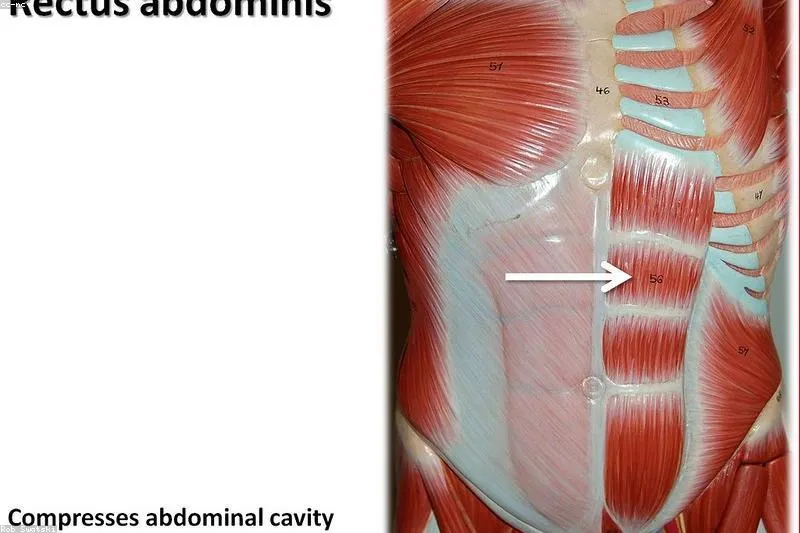
Diastasis recti (separation of the rectus abdominis muscles) is a physiological widening of the rectus muscles on either side of the linea alba, caused by the growing uterus in pregnancy. It affects 60 to 100% of mothers in the third trimester. After birth, in most women, it narrows on its own in the first 8 weeks. In 30 to 40%, it persists over 2 cm and needs active rehabilitation. It is not just a cosmetic problem: untreated diastasis can cause back pain, core weakness, poor posture, hernias, pelvic organ prolapse, incontinence, and sexual dysfunction. The right approach is not “more crunches”, but “reconnect the core from the base up”, with breathing and transverse activation.
Table of Contents
- What diastasis recti is and how to check for it
- Causes and risk factors
- Remedy 1: 360-degree diaphragmatic breathing
- Remedy 2: Transverse abdominis activation
- Remedy 3: Safe progressive exercises
- Remedy 4: Kegels and pelvic floor
- Remedy 5: Collagen and connective tissue nutrition
- Remedy 6: Posture and daily habits
- Connective tissue massage and mobilization
- CONTRAINDICATED exercises
- Practical tips
- Conclusion
- Frequently asked questions
What diastasis recti is
The rectus abdominis muscles are connected in the middle by a band of connective tissue called the linea alba. In pregnancy, hormones (relaxin, progesterone) and uterine pressure stretch this line, and the muscles move apart. Normal at the end of pregnancy and in the early postpartum weeks. The problem is when the separation persists beyond 8 to 12 weeks or when the tissue is so thin it no longer supports the core.
How to check at home:
- Lying on your back, knees bent, feet on the mat
- Relax the abdomen, place 2 to 3 fingers above, below, and at the belly button, horizontally
- Gently lift your head and shoulders (not fully, just enough to feel the contraction)
- Feel how wide the gap is between the contracted muscles
- Measure in fingers: under 2 cm (1 to 2 fingers) = normal; 2 to 4 cm (2 to 3 fingers) = moderate; over 4 cm (4+ fingers) = severe
- Notice depth too: if fingers sink deep = weak tissue; if there is resistance = stronger tissue
Clinical signs:
- Belly “sits” over the pants (doming)
- “Cone” during abdominal contraction
- Feeling weak when lifting things
- Lower back pain
- Chronic constipation
- Umbilical hernia
- Stress incontinence
Causes and risk factors
- Pregnancy: the main cause (large uterus, relaxin, pressure)
- Multiple or closely spaced pregnancies (under 18 months apart)
- Age over 35 (less elastic tissue)
- Large baby (over 4 kg)
- Excess amniotic fluid
- Twin or multiple pregnancies
- Large weight gain during pregnancy
- Incorrect exercises in pregnancy (crunches, heavy overhead lifts)
- Poor posture in pregnancy and postpartum
- Genetics (weaker collagen)
- Chronic constipation (intra-abdominal pressure)
- Chronic cough
- Incorrect heavy lifting
- Returning to sport too quickly postpartum
Remedy 1: 360-degree diaphragmatic breathing
The foundation of diastasis rehab. The diaphragm, pelvic floor, and transverse abdominis work together. If you breathe shallowly, only with your chest or by “puffing the belly out”, this system is disconnected.
How to do it:
- Lie on your back, knees bent, feet on the mat
- Hands on the ribs (one each side)
- Inhale slowly through the nose: ribs expand in every direction (sideways, back, up), not just upward
- Imagine your midsection is a balloon inflating 360 degrees
- Exhale slowly through the mouth, with a “sssss” or “hhhh” sound
- On the exhale, feel the ribs drop and the abdomen gently draw toward the spine
- 5 to 10 minutes, 2 to 3 times a day
Why it works:
- Reconnects diaphragm with transverse and pelvic floor
- Lowers intra-abdominal pressure
- Calms the nervous system (lowers stress)
- Prepares the core for exercises
- Can be done anywhere: while nursing, in queues, at work
Remedy 2: Transverse abdominis activation
The transverse abdominis is the “internal corset” that supports the belly. In diastasis, this muscle is weak or inhibited. Activating it is the first step toward closing the linea alba.
Technique:
- Same diaphragmatic breathing position
- On the exhale, after ribs drop, gently draw the navel toward the spine (without hiking the belly up) and imagine you “zip up a tight pair of jeans” (contraction should be low in the abdomen, not just at the top)
- Hold 5 seconds while breathing normally
- Release and repeat
- 10 reps x 3 sets, twice a day
Variations:
- On all fours (palms and knees on the floor), let the belly softly hang, then on exhale draw it toward the spine
- Wall support: standing, press back against the wall, activate transverse
- While walking: continuous gentle transverse activation
Caution:
- Do not hold your breath; keep breathing
- Do not strongly contract glutes or upper abs
- Gentle, not forced; it is about reconnection, not max strength
Remedy 3: Safe progressive exercises
After 2 to 4 weeks of breathing and transverse activation, you can add exercises. All with exhale on effort and continuous transverse activation.
Heel slides:
- Lying on back, knees bent
- Transverse activated
- On exhale, slide one leg out close to the floor without arching the back
- On inhale, return
- 10 per leg, 3 sets
Toe taps:
- Lying on back, knees at 90 degrees, shins parallel to the floor
- On exhale, tap one toe to the floor, then return
- Transverse engaged throughout
- 10 per leg
Pelvic tilts:
- Lying on back, knees bent
- On exhale, press the lower back into the mat, pelvis tilts up gently
- Hold 3 seconds
- 15 reps x 2 sets
Bird dog:
- On all fours, hands under shoulders, knees under hips
- Transverse activated
- Extend right arm forward and left leg back, hold 3 seconds
- Alternate
- 10 each, 2 sets
Glute bridge:
- Lying on back, knees bent, feet on the floor
- On exhale, lift hips toward the ceiling (straight shoulder-knee line)
- Squeeze glutes and transverse
- Hold 5 seconds
- 10 to 15 reps
Remedy 4: Kegels and pelvic floor
The pelvic floor works in synergy with the transverse. Proper Kegels support diastasis rehabilitation.
Correct technique:
- Identify the muscles: imagine stopping urine mid-stream (but do not test on the toilet, only as a reference)
- Contract the pelvic muscles as if lifting a berry with the vagina
- Hold 5 seconds, release 5 seconds
- 10 reps x 3 sets/day
Variations:
- Short Kegels: 1-second rapid contractions (10 x)
- Long Kegels: 10-second contractions (5 x)
- Elevator Kegels: imagine floors 1-2-3-4 up, then down
- Combine with diaphragmatic exhale
Caution:
- Do not use glutes or thighs
- Do not hold your breath
- Do not do Kegels if you have a hypertonic (tight) pelvic floor; relax first
- If unsure, see a specialized physiotherapist
Remedy 5: Collagen and connective tissue nutrition
The connective tissue (collagen) of the linea alba needs specific nutrients to regenerate.
Collagen:
- Hydrolyzed collagen peptides: 10 to 20 g/day
- In coffee, smoothie, soup, yogurt
- With vitamin C (essential for collagen synthesis)
- Continue 3 to 6 months for visible effect
Protein:
- 1.2 to 1.5 g/kg/day (while breastfeeding)
- Eggs, meat, fish, lentils, cottage cheese
Foods for natural collagen:
- Bone broth (slow-cooked, 24 hours)
- Chicken skin, fish with skin
- Gelatin (homemade fruit jelly)
- Spinach, cabbage, broccoli (vitamin C)
- Citrus, kiwi, papaya (vitamin C)
- Almonds, sunflower seeds (vitamin E)
- Pumpkin seeds, oysters, beef (zinc)
- Salmon, sardines (anti-inflammatory omega-3)
Hydration:
- 2 to 3 liters of water/day
- Hydrated connective tissue is more elastic
Avoid:
- Refined sugar (degrades collagen)
- Ultra-processed food
- Alcohol (dehydrates)
- Smoking
Remedy 6: Posture and daily habits
95% of what you do is outside your exercise program. Posture and daily habits determine success.
Correct posture:
- Standing: long spine, ribcage stacked over pelvis (not ribs pushed forward), shoulders relaxed
- While nursing: pillow under baby, back supported, do not hunch over the baby
- Lifting the baby: bend knees, engage transverse, lift with legs, exhale on effort
- At the washing machine or low cupboard: squat, do not bend from the waist
- Getting out of bed: turn to the side, push up with your hand (log roll), never direct sit-up
Habits to avoid:
- Holding the baby always on one hip
- Carrying the baby in front with arched back
- Sit-ups, classic crunches, old-school abs
- Heavy lifting without preparation
- Coughing with open mouth and no core engagement
- Carrying heavy bags on one shoulder
- Slouching at a computer
Compression band (splint):
- Useful in the first 6 weeks postpartum and during effort
- Do not use all the time (weakens muscles long term)
- Wear it when lifting the baby, shopping, housework
- Take it off during exercise or rest
Connective tissue massage and mobilization
Abdominal fascia scars after pregnancy and after C-section. Mobilizing it helps rehab.
Self-massage:
- Coconut or almond oil with 2 to 3 drops of essential oil (lavender, frankincense)
- Lie on your back, relaxed
- Start at the periphery and move toward the linea alba
- Light circular movements, then moderate firmness
- 5 to 10 minutes daily
- For C-section scars: massage directly on the scar after complete healing (6+ weeks), with “wiping” strokes along the scar
Rollers:
- Soft foam roller on back and thighs
- Releases tensions that pull into the abdomen
Specific techniques:
- “Skin rolling”: pinch lightly between fingers, mobilize the skin
- “C strokes” in a C shape around the navel
- Deep breathing during massage
CONTRAINDICATED exercises
Do not do these exercises until diastasis is under 2 cm and you are free of doming:
- Classic crunches
- Sit-ups
- V-ups
- Full flat plank (start on knees)
- Full push-up
- Straight double leg raises
- Bicycles
- Russian twists with rotation
- Burpees
- Impact running (first 3 months)
- Heavy overhead lifts
- Any movement that causes doming
How to tell if an exercise is harmful?
- A “cone” rises or the belly bulges at the midline = stop
- Back pain afterward = too hard
- You leak urine during effort = too hard
Practical tips
- Start at 6 to 8 weeks postpartum (vaginal birth) or 8 to 12 weeks (C-section)
- Invest in a session with a perinatal physiotherapist for a personalized plan
- Start with 5 to 10 minutes/day, build up to 20 to 30
- Consistency beats intensity: 10 minutes daily beats 1 hour a week
- Do not compare your recovery to other mothers (every body is different)
- Change is slow; realistic timeline is 3 to 6 months for visible improvement
- Keep a journal: measure diastasis monthly
- Wear clothes that do not squeeze your midsection
- Sleep as much as you can (tissue rebuilds in sleep)
- Manage constipation (water, fiber, movement)
- Treat chronic cough if you have one
Conclusion
Diastasis recti is a common condition, correctable in most cases with a dedicated program. Do not rush into “abs like before”; first reconnect the core from the base: diaphragmatic breathing, transverse, pelvic floor, posture. Avoid contraindicated exercises. Collagen, hydration, protein, sleep, stress management. If after 6 months of a proper program the separation persists above 3 cm or you have a hernia, see a doctor. Some cases need surgery, but they are rare.
With patience, the mom-body rebuilds its power. Not the same belly, but a functional, strong, and beautiful belly in its own way.
Frequently asked questions
1. How long does it take to close diastasis? Mild cases (under 2 cm) resolve in 2 to 3 months. Moderate (2 to 4 cm) in 4 to 8 months. Severe (over 4 cm) may need 6 to 12 months and sometimes do not fully close without surgery.
2. Can I get pregnant again if I have diastasis? Yes, but closely spaced pregnancies make it worse. Ideally wait at least 18 months and rehab your core before the next pregnancy.
3. Do stability ball (fitball) exercises help? Yes, if done correctly (with transverse engaged, no doming). Bird dog on a ball, bridges on a ball, are useful in the intermediate stage.
4. Do I need surgery? Most cases do not. Surgery (abdominoplasty with rectus plication) is reserved for severe diastasis (above 5 cm), associated hernias, or cases that do not respond to 6 to 12 months of rehab.
5. Can I run with diastasis? Not in the first 3 months postpartum or until you feel the core reconnected. Start with walking, cycling, swimming, then add running once you can do 10 minutes of core exercises without doming.