
Falls syndrome in the elderly: prevention and remedies
IMPORTANT: A fall in the elderly is not a banal accident. It is a medical signal requiring investigation. Statistically, one in three elderly over 65 falls at least once a year, and over 80 the figure reaches one in two. Hip fractures after falls have a 20-30% mortality in the first year and lead to loss of autonomy in half of survivors. Do not minimize. Every fall must be discussed with the doctor, who will investigate the cause (cardiovascular, neurological, visual, medication-related, musculoskeletal) and establish a prevention plan. Information in this article is adjunct to medical strategy.
My grandfather Gheorghe was 78 when he tripped on the hallway rug and fell. Fractured femoral head. Surgery, hospital, hard recovery, hospital pneumonia, prolonged hospitalization, five months until he could walk again with a walker. But he was never the same. He died one year later of heart failure, but the real beginning of the end was that banal fall on a rug that was wrinkling. If it had been taped down or removed, he would probably have lived a few more good years.
The falls syndrome in the elderly is a public health priority. In Europe, falls are the second cause of accidental death (after road accidents). The economy costs billions annually. The family suffers enormously. The elderly person loses independence, often forever.
Good news: falls are largely preventable. With simple, practical strategies any family can implement. Studies teach us this and the experience of old women in our villages shows us: they stand straight until 90 because they move, work a little daily, eat simply, keep the house tidy, and the family gives them attention.
Table of contents
- Why the elderly fall (causes)
- Risk factors
- Warning signs of impending falls
- Consequences of falls
- Medical evaluation: what the doctor asks
- Home safety setup
- Balance and strength exercises
- Diet and hydration
- Useful supplements (vitamin D, calcium, protein)
- Medication review
- Vision, hearing, feet
- What to do when an elderly falls
- Adjuvant plants for tone and circulation
- Practical tips for the family
- Conclusion
- Frequently asked questions
Why the elderly fall (causes)
Falls in the elderly almost always have several simultaneous causes. Rarely just one explanation.
Intrinsic causes (from the body):
- Muscle weakness (sarcopenia). Legs no longer hold.
- Balance decline. Inner ear and postural reflexes degrade.
- Vision decline (cataracts, glaucoma, macular degeneration).
- Hearing decline.
- Peripheral neuropathy (diabetes, B12 deficit, alcohol). Does not feel feet.
- Knee, hip, spine osteoarthritis. Pain + stiffness.
- Orthostatic hypotension (dizziness when standing up).
- Cardiac arrhythmias (syncope).
- Parkinson’s, stroke sequelae, dementia.
- Vertigo (labyrinthitis, Meniere, benign paroxysmal positional vertigo).
- Anemia.
- Hypoglycemia.
- Depression and apathy (slow movement, inattention).
- Sleep disorders (daytime drowsiness, confused night waking).
- Urinary incontinence (rushed toilet wake, night trips).
Extrinsic causes (environment):
- Rugs with curled or unfixed edges.
- Unstable furniture (swivel chairs, unsteady tables).
- Electric cables on the floor.
- Poor lighting (especially at night).
- Steps without handrails.
- Bathtub without grab bar and non-slip mat.
- Slippery floor (waxed wood, wet tile).
- Unsuitable footwear (slippers, backless shoes, heels).
- Wrong glasses or progressive lenses (distort steps).
- Ice, snow outside.
- Pets underfoot.
- Small children leaving toys on the floor.
Risk factors
An elderly person with several of these factors has increased risk:
- Age over 75.
- Female sex (more generally, due to osteoporosis and longevity).
- History of previous fall (strongest predictor).
- Osteoporosis or osteopenia.
- Multiple chronic diseases.
- Over 4 daily medications (polypharmacy).
- Psychotropic medications (benzodiazepines, antidepressants, antipsychotics, sleep aids).
- Strong diuretics.
- Too-strong antihypertensives causing orthostatic hypotension.
- Vitamin D deficiency.
- Alcohol.
- Social isolation (no one notices stumbles).
- Dementia.
- Depression.
- Undernutrition (BMI below 18.5).
- Fear of falling (paradoxically increases risk, tense movement).
Warning signs of impending falls
An elderly person may signal being “on the path of falls”:
- Walks with smaller, slower steps.
- Grabs furniture when walking indoors.
- Needs support to stand up.
- Hesitates on stairs.
- Feels “unsteady” on feet.
- Had “near-fall” episodes (tripped but caught furniture).
- Gets dizzy on sudden rising.
- Looks down when walking.
- Has lost weight.
- Fears going out.
- Has lost interest in activities.
If you see these signs in a parent/grandparent, go to the doctor. Do not wait for the first serious fall.
Consequences of falls
Direct:
- Fractures (hip, wrist, spine, humerus).
- Head trauma (subdural hematoma, dangerous especially on anticoagulants).
- Wounds, hematomas, bruises.
- Rhabdomyolysis (after prolonged lying on the floor).
Indirect:
- Prolonged hospitalization.
- Bed confinement and complications (pressure sores, pneumonia, thrombosis, urinary infections).
- Accelerated cognitive decline.
- Loss of autonomy.
- Admission to nursing home.
- Depression.
- Post-fall syndrome: fear of walking, which worsens sarcopenia and paradoxically increases new-fall risk.
- Increased mortality.
Statistically: after hip fracture, 20-30% die in the first year, 50% do not regain autonomy, 25% become dependent on continuous care.
Medical evaluation: what the doctor asks
For any elderly with a fall (or high risk), the doctor should do:
- Detailed history: fall circumstances, frequency, associated symptoms.
- Complete physical exam: blood pressure lying and standing (orthostatism), pulse, cardiac rhythm, carotid pulse, cardiac auscultation.
- Neurological exam: muscle strength, reflexes, sensitivity, balance, coordination.
- Gait and balance assessment: “Timed Up and Go” test (stand up from chair, walk 3 meters, turn, sit down; over 13 seconds is pathological).
- Berg Balance, Tinetti tests.
- Blood tests: CBC, glucose, electrolytes, kidney and liver function, TSH, vitamin D, B12, calcium, magnesium.
- ECG, possibly 24h Holter ECG.
- 24h blood pressure (Holter BP).
- Echocardiography if cardiac syncope suspected.
- Ophthalmologic consult.
- ENT consult (audiometry, possibly Epley for positional vertigo).
- DEXA (bone density).
- Medication review: how many medications, which can be reduced or stopped.
- Cognitive assessment (MMSE).
- Depression assessment (GDS scale).
- Autonomy assessment (Barthel, IADL).
- Physiotherapy consult.
Home safety setup
This is the chapter that saves the most lives. Without big investment. With huge effect.
Living room and bedroom:
- Fixed rugs, taped with double-sided tape, or removed.
- Electric cables along walls, fixed.
- Sofas and beds at proper height (not too low, to stand up easily).
- Chairs with armrests.
- Accessible lights with large, lit switches.
- Night lights in hallways, bathroom, bedroom (motion sensors are excellent).
- Phone within reach, both landline and charged mobile.
- Glasses, hearing aids, cane on nightstand.
- Bed high enough to stand up easily (not too low, not too high).
Bathroom:
- Grab bars next to toilet and at shower/tub.
- Non-slip mat in tub.
- Shower chair for those who cannot stand.
- Raised toilet seat if too low.
- Door opening outward (for access in case of a fall).
- Wall-mounted soap dispenser (do not fall while reaching for soap).
- No fabric rugs, tub-exit towel fixed.
- Good lighting.
Kitchen:
- Frequently used items at medium height (not top, not bottom).
- Kitchen chair for resting while cooking.
- No ladder-tricks (for high items, ask for help).
- Floor dried immediately if spilled.
- No threshold at door (or visible).
- Electric or gas stove with safety shutoff.
Stairs:
- Handrail on both sides, solid.
- Non-slip tape on treads.
- Good lighting.
- Stairlift for severe cases.
Outside:
- Entrance with visibly marked steps.
- Exterior railings.
- Exterior lighting.
- Salt or sand in winter.
- No potholes, loose stones, uneven paths.
Balance and strength exercises
Combining strength + balance + flexibility exercises reduces fall risk by 30-40%. Ideally under physiotherapist supervision.
Strength exercises (2-3 times/week):
- Sit-to-stand without hand support (10-15 reps).
- Partial squats with table top support.
- Knee raises standing on one leg near a wall.
- Heel raises.
- Ankle extension with elastic band.
- Arm raises with water bottles or small dumbbells (0.5-2 kg).
Balance exercises (daily):
- Standing on one leg for 30 seconds (with chair support at start).
- Walking heel-to-toe (straight line).
- Walking on toes and heels.
- Slow circular turns.
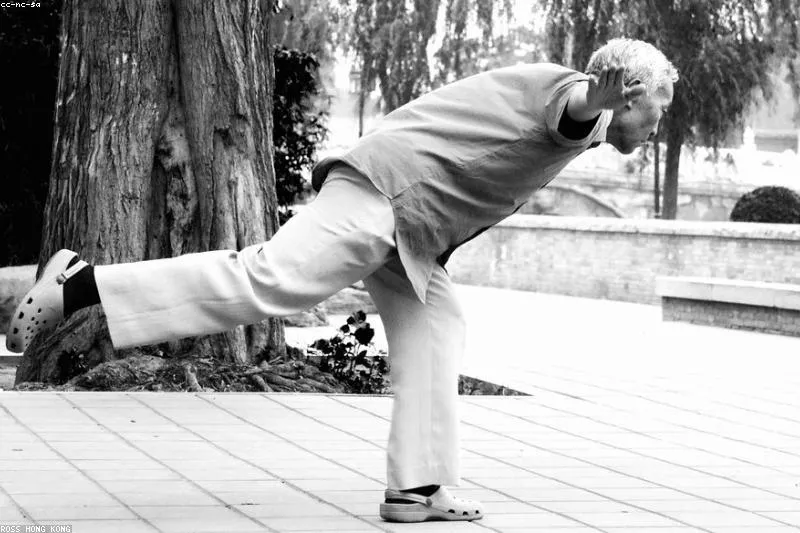
- Tai chi: proven highly effective, gentle and pleasant.
- Yoga for seniors: posture, breathing, balance.
Flexibility:
- Gentle stretching of legs, back, shoulders.
- Gentle neck rotations.
Walking:
- 30-45 minutes daily, even in segments.
- Not alone on streets at first, with family member.
- With cane or walker if needed (not shame, it is smart).
Diet and hydration
Undernutrition is a major frailty and fall-risk factor.
Protein: 1-1.2 g/kg/day in elderly. Lean meat, fish, eggs, dairy, legumes, 20-30 g protein per meal. Calories: not excessively reduced. Unintentional weight loss is an alarm. Vitamins and minerals: varied, colorful diet. Multivitamin supplement if diet is poor. Hydration: elderly feel less thirst. 1.5-2 liters water/day, spaced. More in summer. Frequent small meals: 5-6 times a day.
Useful supplements (vitamin D, calcium, protein)
- Vitamin D3: 1000-2000 IU/day all winter, possibly year-round after 70. Proven to reduce fall risk by 20-30%.
- Calcium: through diet, supplementation only if needed, maximum 500 mg/day.
- Protein supplement (powder) if person eats too little.
- Magnesium 200-400 mg/evening.
- B12 in elderly, 500-1000 mcg/day.
- Omega 3 (fish oil) 500-1000 mg EPA+DHA/day.
Medication review
One of the most important and most neglected points.
Medications with high fall risk:
- Benzodiazepines (diazepam, alprazolam, clonazepam, lorazepam): often unnecessary, to stop gradually under supervision.
- Z-hypnotics (zolpidem, zopiclone): dizziness risk, night confusion.
- Tricyclic antidepressants (amitriptyline): orthostatic hypotension.
- Antipsychotics: parkinsonism, sedation.
- Opioids: sedation.
- Old antihistamines (diphenhydramine): anticholinergic, confusion.
- Too-strong or excessive antihypertensives.
- Too-strong diuretics: dehydration, hypotension.
- Hypoglycemia-risk antidiabetics (sulfonylureas, insulin).
- Anticholinergics (antispasmodics, urinary retention meds).
Go with the elderly to the family doctor with all medication boxes and ask for review. Often 2-4 medications can be safely reduced.
Vision, hearing, feet
Vision:
- Annual ophthalmologic check.
- Cataract surgery at the right time (do not postpone years).
- Proper, clean glasses.
- Prefer simple indoor glasses, not progressive lenses (distort steps).
- Good light everywhere.
Hearing:
- Audiometry as needed.
- Hearing aid if indicated. Good hearing aids balance and prevents isolation.
Feet:
- Regular podiatrist for nails, corns, fungal infections.
- Stable, closed shoes with non-slip sole, heel under 2 cm.
- Compression stockings if significant varicose veins.
- Caution in diabetics: neuropathy + diabetic foot.
What to do when an elderly falls
If you are next to them when they fall:
- Do not lift abruptly. Check if conscious, breathing, in pain.
- If severe hip/leg/spine pain, do not move them. Call emergency.
- If they hit their head, especially on anticoagulants, call ambulance.
- If seemingly fine, help them rise slowly: first on knees, then on a chair, then standing. Monitor for at least an hour.
- Watch for 24 hours: pain, weakness, dizziness, confusion, nausea. Any anomaly means doctor.
If elderly is alone and falls:
- They should have an alarm bracelet/pendant (button alarm). Available from specialized firms.
- Keep mobile phone with them always, even at home, in pocket, with preset emergency numbers.
- Neighbors should know and check if not seen for hours.
- Regular family phone schedule (at least once daily).
After a fall:
- Go to doctor (family or emergency).
- Investigate the cause (not “I tripped, never mind”).
- Review home, medication, exercises.
- Treat fall fear: gentle exercises, gradual return to activities, sometimes therapy.
Adjuvant plants for tone and circulation
Do not replace medical evaluation but can help.
Ginkgo biloba: improves cerebral circulation, vascular-origin dizziness, tinnitus. 120-240 mg/day standardized extract.
Ginseng (Panax ginseng): general tonic for elderly with asthenia. 200-400 mg/day extract.
Eleuthero: similar to ginseng, milder.
Rosemary: circulatory tonic, raises blood pressure slightly (caution in hypertensives).
Hawthorn (Crataegus): gentle cardiac tonic for mild arrhythmia or heart failure. Tea or extract.
Mistletoe (Viscum album): for mild hypertension, under supervision. Caution, plant with indications and contraindications.
Ginger: for dizziness, nausea, motion sickness.
Horsetail and nettle: remineralizing, silicon for bones.
Magnesium: for nocturnal muscle cramps, sleep, anxiety.
Practical tips for the family
- Take parent to doctor every 6-12 months, even if “fine”.
- Review medication box with the doctor.
- Set up home (list above). Make a “safety weekend”.
- Install grab bars in bathroom. Cost 50-100 lei each. Save lives.
- Tape down rugs or remove.
- Stronger bulbs and motion-sensor lights.
- Useful gift: good orthopedic shoes with non-slip soles.
- Useful gift: button alarm/smart watch with fall detection.
- Encourage movement: daily walk, physiotherapy, tai chi, senior group.
- Go out together: walks, market, church, cemetery, visits.
- Combat isolation: daily phone, regular visits, grandchildren, pets (carefully not hazardous).
- Teach them to ask for help. Many elderly have pride and do not ask. Explain it is not weakness.
- Talk openly about fear of falling, balance losses, what they need.
- Emergency plan: who to call when needed, where the medication list is, where the health card is.
- Do not neglect depression. A depressed elder moves worse and falls more.
- Prayer, song, family. Not medications, but health.
Conclusion
Falls syndrome in the elderly is largely preventable. With simple, involved, consistent strategies, fractures, hospitalizations, loss of autonomy, often death, can be avoided.
My grandfather fell because we were all too busy to care for him properly. That rug had been wrinkling for months, we all saw it, said “we’ll fix it”, did not. My aunt thought moving too much would make her fall, and she stopped walking, weakened more, and fell anyway. My grandmother took sleep aids for years without us knowing, and nocturnal falls came because of that.
Our mistakes. But they can be corrected. Every prevention step counts. A taped rug. A bathroom bar. A daily walk. Winter vitamin D. An eye checkup. A medication review. An evening check-in call.
Their sum means longer, better years on foot, beside family. That is not bought at the pharmacy. It is built with love and attention.
Frequently asked questions
1. My father fell once, nothing happened. Is that ok? Every fall is a warning. Go to the doctor even without fracture. A fall means increased risk of a second fall, which may be worse. Investigate cause.
2. How often should they do physiotherapy? Ideally 2-3 sessions/week at start, then 1-2, then home exercises with periodic supervision. Talk to physiotherapist. May be covered by health insurance.
3. Is a cane shameful? On the contrary. A cane is intelligence. Like glasses: does not make you old, helps you manage better. Preferably chosen with physiotherapist, at proper height. If needed, walker (4 legs or wheeled).
4. What should I feed her to be strong? Protein at each meal: eggs, cheese, yogurt, fish, meat. Colored vegetables and fruits. Whole bread or brown rice. Legumes. Nuts and seeds. Olive oil. Little sweets. Plenty of water. Sunday’s sweet bread is fine, but protein daily.
5. The doctor prescribed sleeping pills for insomnia. Is it ok? Benzodiazepine sleep aids (stilnox, lexaurin, xanax, diazepam) greatly increase nocturnal fall risk. First try sleep hygiene, melatonin, teas, meditation. Discuss safer alternatives and gradual stopping with doctor.
6. My father fell and now refuses to go out. What do I do? This is post-fall syndrome and very dangerous, leading to atrophy, depression, new falls. Physiotherapy, short accompanied outings, reassurance, sometimes psychologist. Do not let him close in. Gradual resumption, with patience.
MEDICAL DISCLAIMER: Falls syndrome in the elderly requires individualized medical evaluation. Information in this article is educational and complementary to medical strategy. After any fall, especially in those on anticoagulants, with head trauma, severe pain, confusion, go to hospital. Supplements and plants may interact with medications. Always consult the family doctor and specialists. Physiotherapy should be done with professionals to avoid accidents. Home setup should be done with practical sense and sometimes occupational therapy consultation.