 Photo: U.S. Department of Defense, Defense Visual Information Center, Public domain, via Wikimedia Commons
Frozen shoulder (adhesive capsulitis) is inflammation followed by thickening and tightening of the shoulder joint capsule, leading to pain and a gradual loss of movement, especially turning the arm outwards and lifting it. It usually resolves on its own, but over 1-3 years; gentle exercises matched to the stage, heat, managing night pain and, when needed, an injection or physiotherapy considerably shorten the uncomfortable period.
Many people confuse frozen shoulder with simple tendinitis or “a draught”. The key difference: in adhesive capsulitis the shoulder will not move even when someone else tries to lift your arm, because the limitation comes from the tight capsule, not just from pain.
Key takeaways
- It mostly affects people aged 40-60, more often women, and is 2-4 times more common in people with diabetes.
- It progresses through 3 stages: painful (“freezing”), stiff (“frozen”) and recovery (“thawing”).
- Exercises must match the stage: gentle and pain-free at first, stretching later.
- Heat, a good sleeping position and natural anti-inflammatories ease pain, but do not speed healing by themselves.
- A corticosteroid injection in the first stage relieves pain faster than any home remedy.
- Shoulder pain with breathlessness, chest pain or fever is an emergency.
What happens inside the shoulder
The shoulder is the most mobile joint in the body because it is wrapped in a loose, elastic capsule. In adhesive capsulitis this capsule becomes inflamed, then thickens, scars and contracts. Joint volume shrinks and movement is lost in every direction.
The three stages
| Stage | Approximate duration | What you feel | Goal |
|---|---|---|---|
| 1. Painful | 2-9 months | intense pain, especially at night, movement gradually decreases | pain control, gentle movement |
| 2. Stiff | 4-12 months | pain eases, but the shoulder is “locked” | keep and gradually regain mobility |
| 3. Thawing | 5-24 months | movement gradually returns | stretching and strengthening |
Total duration varies a lot. Most people recover functional movement, although some are left with a slight limitation.
Causes and risk factors
- Diabetes: the most important risk factor; the condition is often longer and can affect both shoulders. See also our article on type 2 diabetes.
- Thyroid disease (underactive or overactive).
- Immobilisation of the shoulder after a fracture, surgery or injury.
- Age 40-60 and female sex.
- Heart disease, stroke, Parkinson’s disease.
- Abnormal blood lipids.
In many cases there is no clear cause (“idiopathic” form).
How to tell it from other shoulder pain
- Rotator cuff tendinitis or bursitis: pain comes with certain movements, but with help the arm can be lifted. More in our articles on bursitis and tendinitis.
- Shoulder osteoarthritis: more common in older people, with grinding; diagnosed on X-ray.
- Pain referred from the neck: comes with numbness or tingling down the arm.
A general guide is in our article on shoulder pain.
Exercises by stage
Golden rule: in the painful stage, movement should not go beyond mild discomfort (2-3 out of 10). Forcing it worsens inflammation. In later stages, stretching can be firmer. Do the exercises below 2-3 times a day, after warming the shoulder with a hot shower or a 10-minute warm compress.
Stage 1 (painful)
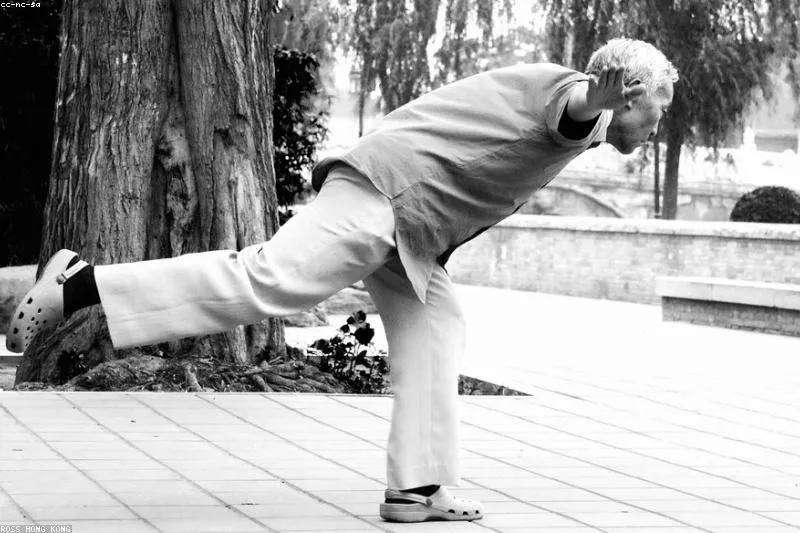
- Pendulum (Codman): lean forward with your good hand resting on a table and let the affected arm hang loose. Swing it gently in small circles, 10 each way, then forwards-backwards and side to side. The motion comes from your body, not from the shoulder muscles.
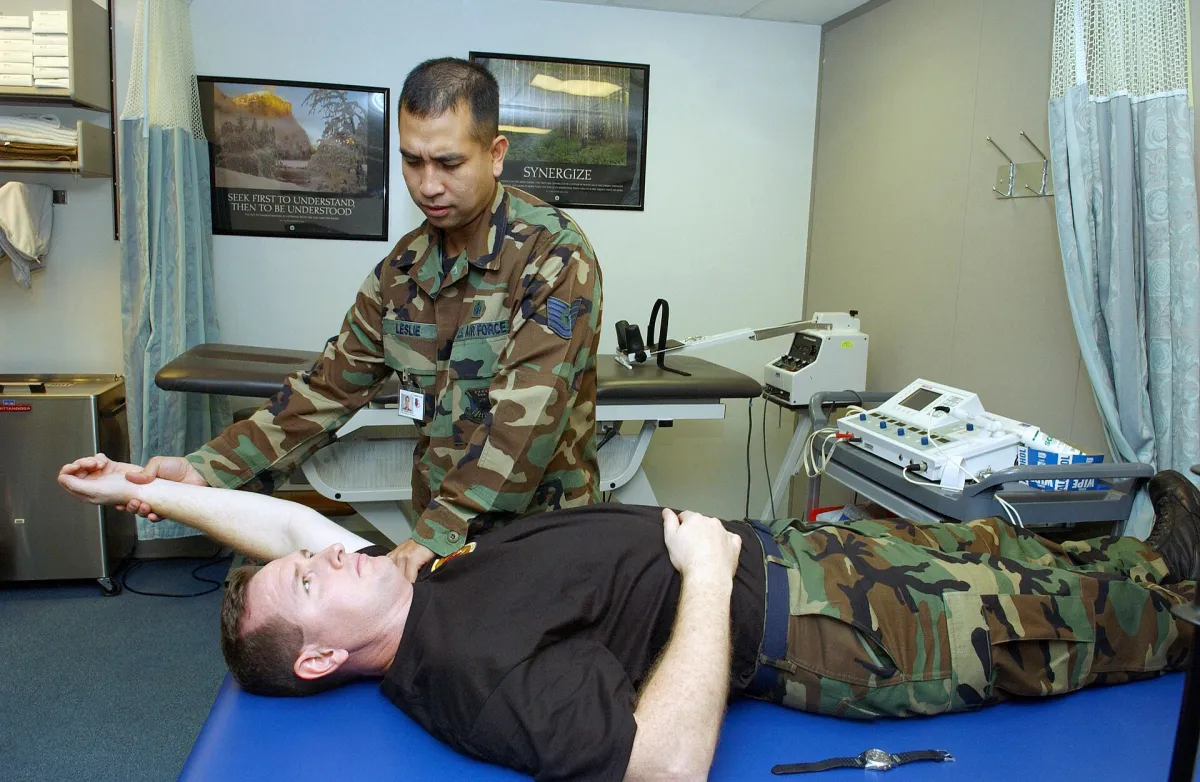
- External rotation with a stick: lying on your back, elbows tucked in and bent at 90°, hold a stick with both hands and use the good hand to gently push the affected hand outwards. 5-10 reps, hold 5 seconds.
- Assisted raise: lying on your back, lift the affected arm with help from the good hand as far as is pain-free. 10 reps.
Stage 2 (stiff)
- Wall walk (“spider”): facing a wall, walk your fingers up as high as you can, hold 10 seconds, come down. 10 reps. Mark the height to track progress.
- Door pulley: with a pulley fixed above a door, pull down with the good hand to raise the affected arm. 2-3 minutes.
- Cross-body stretch: bring the affected arm across your chest, helped by the other hand, 20-30 seconds, 3 times.
- Towel behind the back: hold a towel with the good hand over your head and the affected hand behind your back; pull gently upwards. 20 seconds, 3 times.
Stage 3 (thawing)
Continue the stretches and add strengthening with a resistance band (external and internal rotation, side raises) under a physiotherapist’s guidance. Studies show supervised programmes give better results than ad hoc exercise.
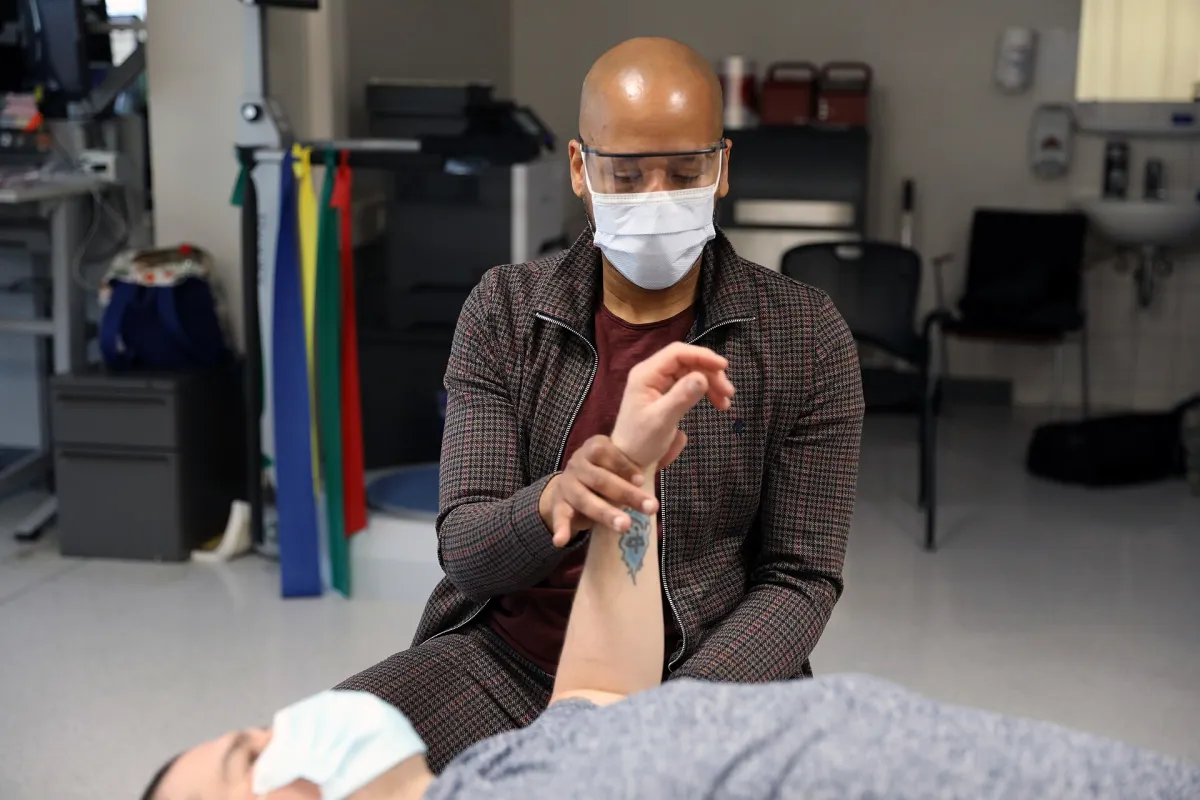 Photo: U.S. Army RHCE by Russell Toof, Public domain, via Wikimedia Commons
Natural remedies for pain
Heat
A warm compress, a heated cherry-stone pillow or a hot shower on the shoulder for 15-20 minutes before exercising. Heat relaxes the muscles and makes stretching more comfortable. Ice is useful after exercise if the shoulder hurts, for 10 minutes.
Pain-free sleep
- Sleep on your back with a pillow under the affected arm so the elbow is slightly raised.
- On the good side, hug a pillow and rest the affected arm on it.
- Avoid lying on the painful shoulder.
Herbs and foods with anti-inflammatory effects
- Devil’s claw (Harpagophytum): the EMA recognises traditional use for minor joint pain. Use capsules as directed on the label, usually for a few weeks.
- Turmeric (curcumin): some clinical trials in osteoarthritis show pain reduction comparable to common anti-inflammatories, with fewer digestive side effects; there are no specific data for frozen shoulder.
- Ginger: 1-2 g a day, fresh or as tea.
- Arnica ointment or comfrey gel, applied to the shoulder 2-3 times a day.
Anti-inflammatory ginger and turmeric tea
3-4 slices of fresh ginger and 1/2 teaspoon turmeric, simmered gently for 10 minutes in 300 ml water, a pinch of black pepper (improves curcumin absorption), and a little honey once cooled below 40°C. 1-2 cups a day for 3-4 weeks.
Medical treatments
| Option | When it helps most |
|---|---|
| Painkillers, anti-inflammatories | painful stage, short term |
| Intra-articular corticosteroid injection | stage 1; reduces pain and may speed recovery |
| Physiotherapy | all stages, adapted |
| Hydrodilatation (capsular distension) | stage 2, marked stiffness |
| Manipulation under anaesthesia, arthroscopic release | resistant cases after 6-12 months |
Contraindications and precautions
- Devil’s claw should be avoided with stomach ulcers, gallstones, in pregnancy and with anticoagulants.
- Turmeric supplements should be avoided with bile duct obstruction and with anticoagulants.
- Comfrey is for external use only, on unbroken skin, for short periods as directed on the pack.
- People with diabetes should know that a steroid injection temporarily raises blood sugar.
When to see a doctor
Immediately if shoulder pain (especially on the left) comes with chest pain, breathlessness, sweating or nausea: it may be a heart problem. Also with fever and a hot, swollen shoulder (infection), after a fall with deformity or inability to move the arm (fracture, dislocation, tendon tear), or with sudden weakness in the arm.
Book an orthopaedic or rehabilitation appointment when pain has been waking you at night for more than 2 weeks or movement is steadily decreasing.
Common mistakes
- Forcing stretches in the painful stage “so it doesn’t lock”.
- Keeping the arm completely still in a sling for weeks.
- Giving up exercises after a few weeks without visible progress: results come over months.
- Ignoring blood sugar: for people with diabetes, glucose control matters for the shoulder too.
Conclusion
Frozen shoulder is a long and frustrating condition, but self-limiting in most cases. The key is to respect the stage you are in: gentleness and pain control at first, consistent stretching later, strengthening at the end. Heat, the right sleeping position and anti-inflammatory herbs genuinely help comfort. An injection and supervised physiotherapy can significantly shorten the journey, especially if you have diabetes.
Frequently asked questions
How long does frozen shoulder last? On average 1-3 years from the first symptoms to recovery of most movement. The right stage-appropriate treatment can reduce pain and shorten the stiff period.
Can I exercise with a frozen shoulder? Walking, cycling and leg and core exercises are fine. Avoid sports with sudden arm movements (tennis, volleyball, front crawl) until mobility returns.
Why does the shoulder hurt more at night? Lying down raises pressure in the inflamed joint, and relaxed muscles no longer protect the shoulder. A pillow under the arm and not lying on the affected side help.
Is heat or ice better for frozen shoulder? Heat before exercises, for relaxation. Ice after exercises or on very painful days. Many people prefer heat for long-term comfort.
Can frozen shoulder come back? Rarely in the same shoulder. About 1 in 5 people may later develop it in the other shoulder, especially people with diabetes.
Does massage help? Gentle massage of the muscles around the shoulder and neck relaxes and reduces tension, but it does not free the capsule. It is a useful add-on to mobility exercises.
Is the injection dangerous? It is generally safe, with rare side effects (temporary pain, facial flushing, raised blood sugar). A limited number of injections per year in the same joint is advised.
Sources
- American Academy of Orthopaedic Surgeons (OrthoInfo): “Frozen Shoulder”.
- Cochrane Database of Systematic Reviews: reviews on physiotherapy, injections and arthrographic distension for adhesive capsulitis.
- EMA/HMPC: community herbal monographs on Harpagophyti radix and Arnicae flos.
- NHS: information page “Frozen shoulder”.
This content is for information only and does not replace medical advice. See a qualified professional for diagnosis and treatment.