 Photo: PTPioneer, CC BY 2.0, via Wikimedia Commons
The muscle soreness that shows up a day or two after exercise is called delayed onset muscle soreness (DOMS). It usually starts 12-24 hours after an unfamiliar workout, peaks at 24-72 hours and fades on its own within about 5-7 days. It is not caused by lactic acid but by tiny injuries in muscle fibres and the inflammation that repairs them; massage, gentle movement and heat help most, while tart cherry, ginger and magnesium add only a small extra.
Key takeaways:
- DOMS mostly follows braking (eccentric) movements: downhill running, squats, lowering weights, your first gym session after a break.
- Lactate is cleared from the blood within about an hour after exercise, so it is not what hurts the next day.
- Massage has the strongest evidence, followed by compression, cold water, heat and active recovery; stretching barely changes soreness.
- Tart cherry juice and ginger have small studies with modest effects; magnesium matters mainly if your intake is low.
- Tea- or cola-coloured urine, major swelling and severe weakness after exercise can mean rhabdomyolysis: go to the emergency department.
What is DOMS?
DOMS is the ache and stiffness you feel in muscles you have worked hard in an unfamiliar way. The muscle is tender to touch, stiff, painful when you contract or stretch it, and temporarily weaker. At complete rest it usually hurts very little.
The classic examples: walking downstairs after leg day, struggling to lift your arms after painting a ceiling, or finding that laughing hurts after the year’s first sit-ups. It can hit anyone, from someone who spent an afternoon digging the garden to an athlete who has just changed programmes. What matters is how new the effort is, how hard it was and, above all, the type of muscle contraction.
Why it happens: micro-damage, not lactic acid
Eccentric contractions, where the muscle lengthens under load, cause the most soreness: lowering into a squat or push-up, braking on a downhill run, descending a mountain. These movements create microscopic damage in the contractile structures and connective tissue of the muscle. A local inflammatory response follows, with mild swelling and the release of substances that sensitise nerve endings. That is why the muscle hurts when you press on it or move it.
The lactic acid theory has been around for decades but does not hold up. Lactate builds up during hard effort, yet the body reuses it as fuel and blood levels return to baseline within about an hour. Nothing stays “crystallised” in your muscles. Running uphill also produces plenty of lactate but little soreness, while running downhill does exactly the opposite.
How long does muscle soreness last?
- 0-12 hours: usually just tiredness, no particular pain.
- 12-24 hours: stiffness sets in.
- 24-72 hours: peak soreness; strength and range of motion may drop.
- 5-7 days: the pain is almost completely gone.
After a single session the muscle adapts. This is called the repeated bout effect: doing the same activity again over the following weeks hurts far less. That is why gradual progression remains the best prevention, more effective than any supplement.
Remedies ranked by evidence
Nothing makes DOMS vanish overnight. The best options reduce it partly and help you move comfortably until it passes. A 2018 meta-analysis in Frontiers in Physiology comparing recovery techniques found the most consistent effect for massage, followed by compression garments and water immersion.
| Method | What studies show | How to use it | Strength of evidence |
|---|---|---|---|
| Massage | Less soreness and perceived fatigue | 20-30 min within the first 24-48 hours | Moderate, the best |
| Foam rolling | Small to moderate effect on soreness | 60-90 s per muscle group | Moderate |
| Cold water | Small reduction in soreness | 10-15 min at 10-15°C right after exercise | Moderate |
| Heat | Less pain and stiffness | Bath at 37-39°C for 15-20 min | Limited to moderate |
| Active recovery | Temporary relief, better mobility | 20-30 min of easy exercise | Limited but safe |
| Tart cherry juice | Mixed results, mostly in runners | 2 servings a day before and after exercise | Limited |
| Ginger | Small effect after several days | 2 g a day for 1-2 weeks | Limited |
| Magnesium | Mainly useful if intake is low | From food or 200-300 mg a day | Weak |
| Stretching | Negligible effect on soreness | For mobility, not for DOMS | Weak |
1. Massage and foam rolling
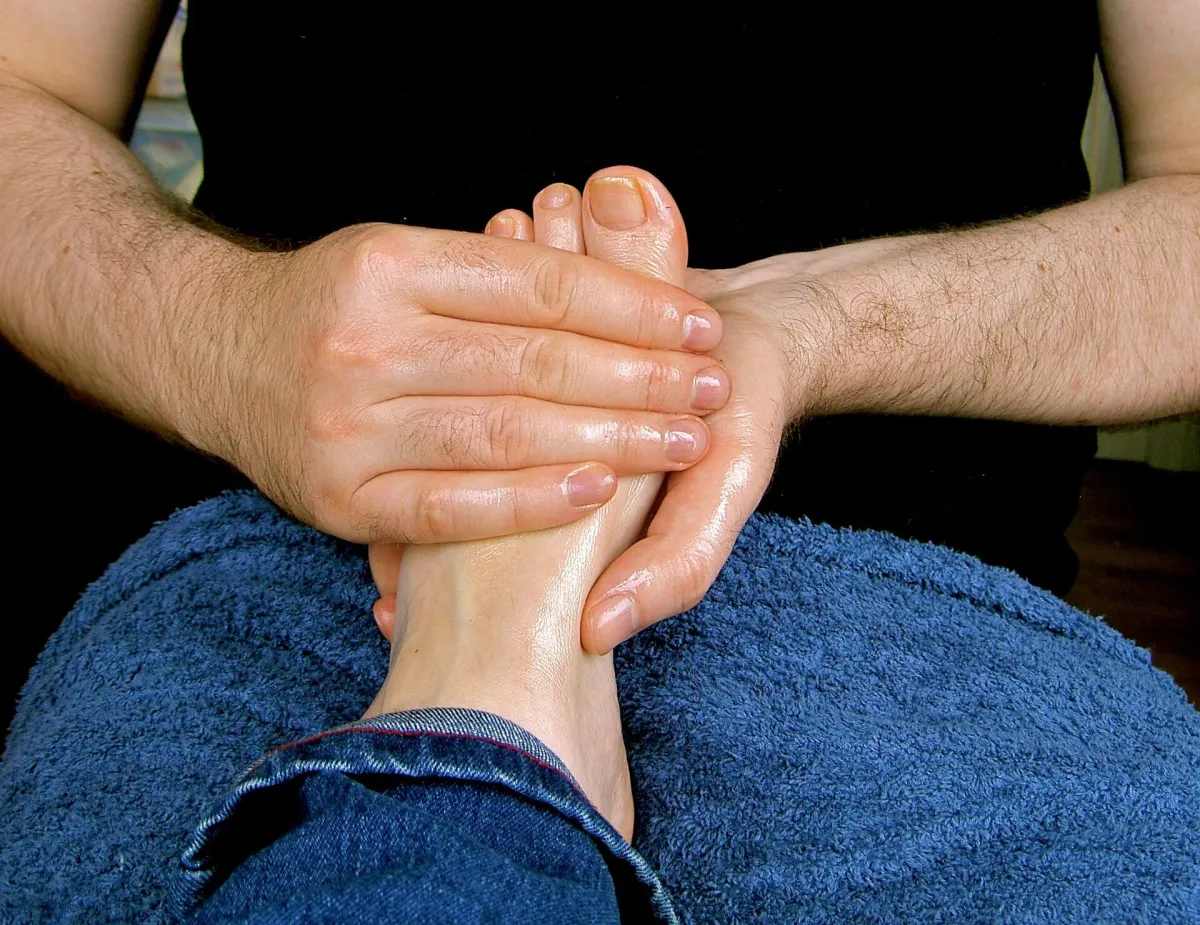
Massage in the first one or two days relieves soreness better than most methods tested. It probably works by changing pain perception and relaxing the muscle, not by “flushing out toxins”.
Self-massage, step by step:
- Warm a few drops of a neutral plant oil (sunflower, sweet almond) between your palms.
- Use long strokes from the limb towards the heart with moderate pressure, 5 minutes per muscle group.
- Follow with gentle kneading for another 3-5 minutes.
- Keep discomfort below 4-5 out of 10; aggressive massage does not speed anything up.
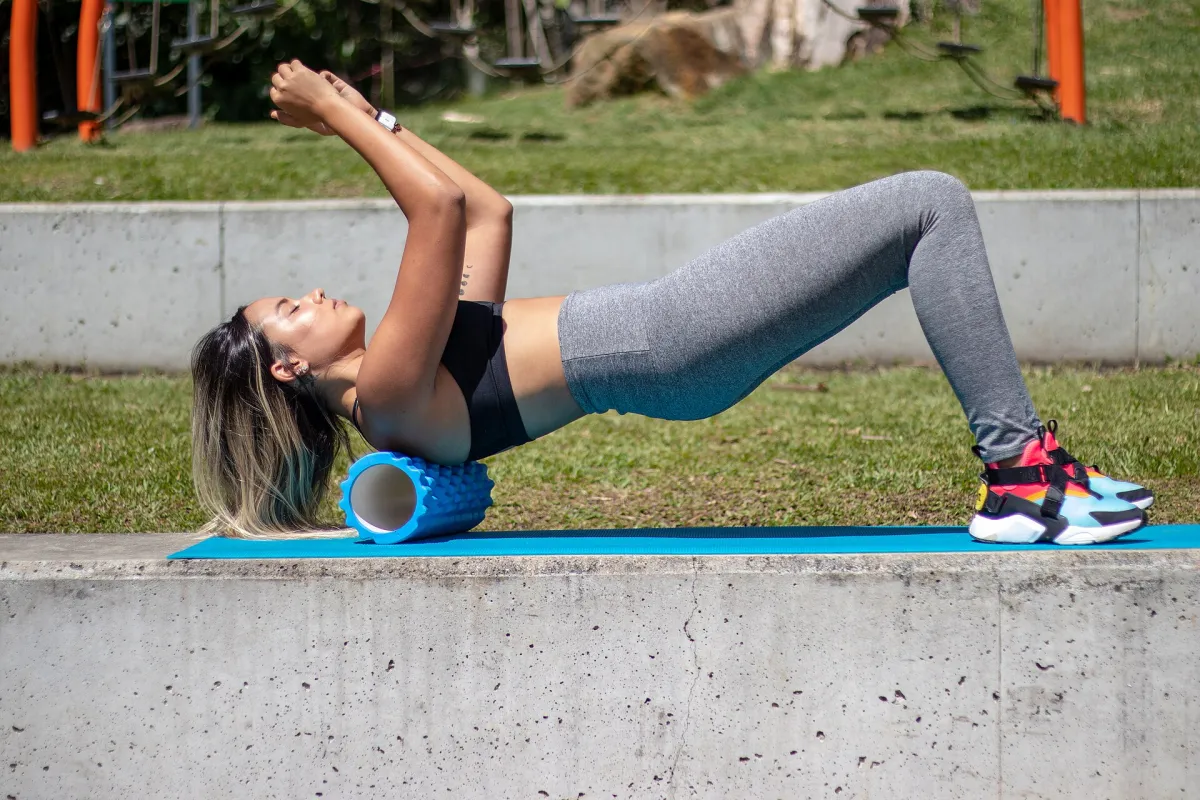
With a foam roller, roll slowly for 60-90 seconds on each muscle group (quads, glutes, calves, upper back), avoiding joints, bony points and the lower back.
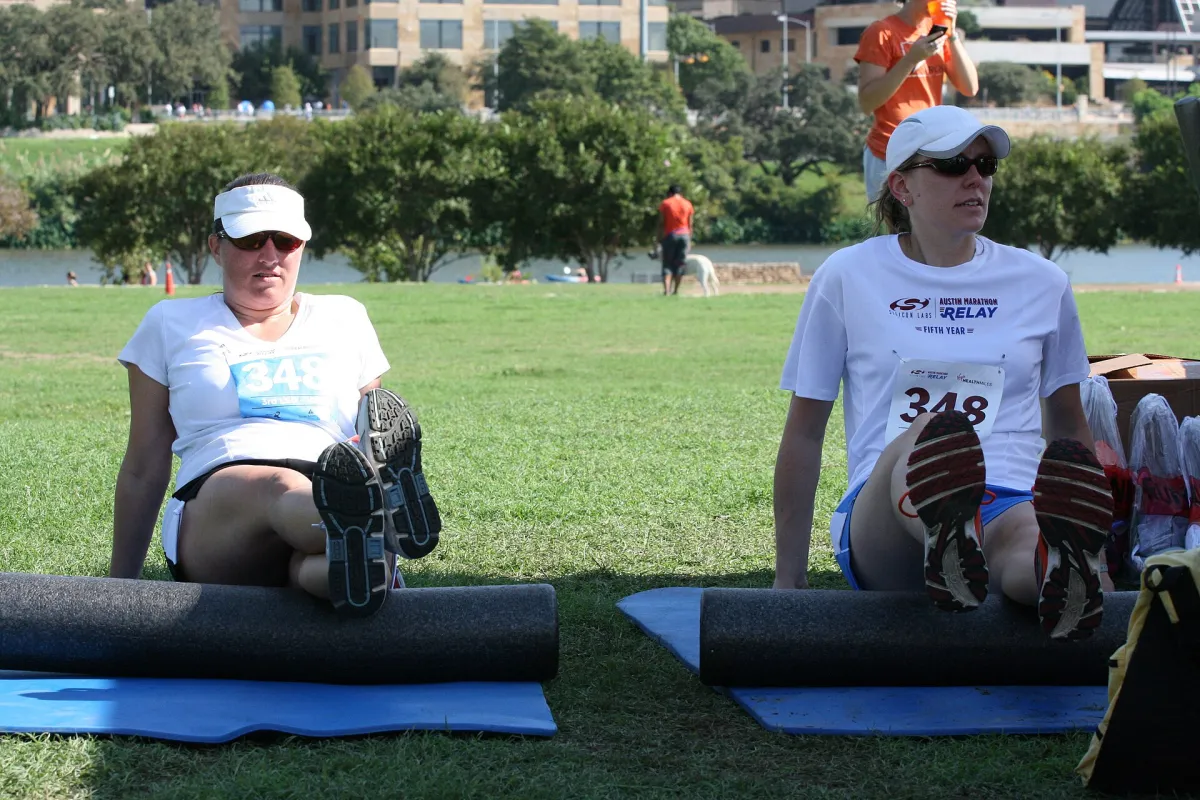 Photo: Roger Mommaerts, CC BY-SA 2.0, via Wikimedia Commons
2. Active recovery
Brisk walking, cycling or swimming at low intensity (you can talk without gasping) for 20-30 minutes increases blood flow and eases stiffness. The relief lasts while you move and a little afterwards, but it is real and risk-free. What makes no sense is another hard session on the same muscles right at peak soreness.
3. Cold or heat?
Cold water (a bath or shower at 10-15°C for 10-15 minutes, right after exercise) slightly reduces soreness over the following days, according to a Cochrane review. However, there is evidence that ice baths after every strength session may blunt muscle growth, so they suit competitions or back-to-back training days better than routine use.
Heat feels better and fits from the next day: a bath at 37-39°C for 15-20 minutes, or a hot-water bottle wrapped in a towel for 20 minutes, 2-3 times a day. Studies with heat wraps applied early showed less pain and stiffness. Epsom salts make a pleasant bath, but magnesium absorption through the skin is not proven; the warm water does most of the work.
4. Tart cherry juice
Tart or sour cherries (Prunus cerasus), especially the Montmorency variety used in research, are rich in anthocyanins and other polyphenols with antioxidant and anti-inflammatory activity. Some trials in runners and strength athletes found less soreness and faster strength recovery; others found no difference. The benefit shows up mainly when the juice is started in advance.
How it was used in studies: two servings a day, either unsweetened juice (a glass of about 250-350 ml) or concentrate (around 30 ml diluted in water), starting 4-5 days before a planned effort such as a marathon or long mountain hike and continuing for 2-3 days afterwards. A bowl of fresh or frozen sour cherries is a good food option, though polyphenol content varies.
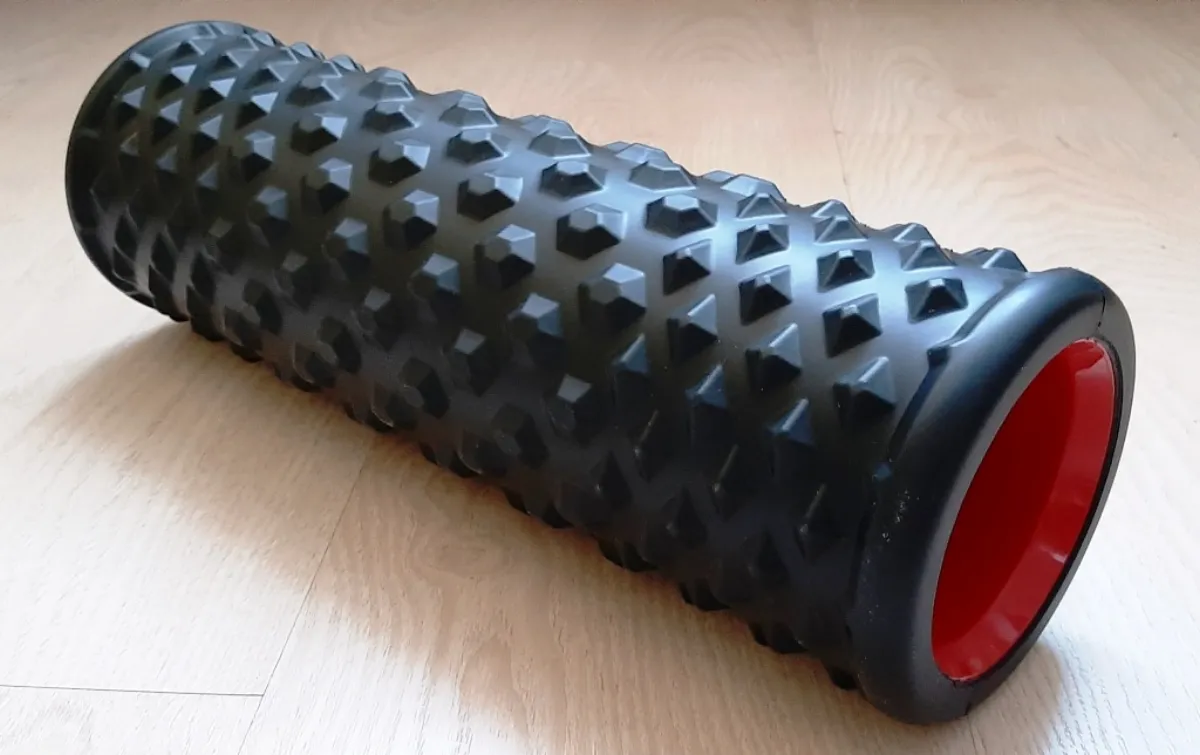 Photo: Aleksander Durkiewicz, CC BY-SA 4.0, via Wikimedia Commons
5. Ginger
A 2010 randomised trial found that 2 g of ginger a day, raw or heat-treated, taken for 11 days, moderately reduced muscle pain after eccentric exercise. It is not a quick painkiller: it needs several days. In practice, take a level teaspoon of ginger powder (about 2 g) in yoghurt or a smoothie, or make a tea from 2-3 cm of sliced fresh root steeped in 250 ml of boiling water, covered, for 10 minutes.
6. Magnesium
Magnesium is involved in muscle contraction and relaxation, but in well-nourished people it does not prevent DOMS. It matters if your intake is low, which is common in people who eat few seeds, legumes and whole grains; signs and food sources are covered in our guide to magnesium deficiency. As a supplement, 200-300 mg of elemental magnesium in the evening, as citrate or bisglycinate, is a typical dose. Do not confuse DOMS with muscle cramps, where magnesium is discussed more often.
Weak or mixed evidence
- Stretching: a Cochrane review found that stretching before or after exercise has a negligible effect on soreness. Do it for mobility, not pain relief.
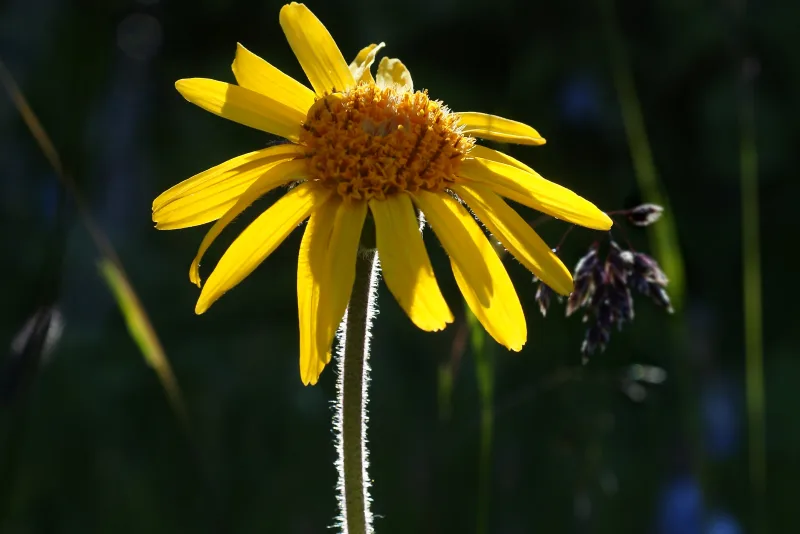
- Arnica: gels and arnica oil give inconsistent results; they can be used as a massage medium, on unbroken skin only.
- Anti-inflammatories (ibuprofen): they ease pain short term, but should not be taken preventively or before long efforts in the heat, when they strain the kidneys. Regular use might also slow muscle adaptation.
- Turmeric (curcumin): a few small studies with standardised extracts look promising, but not enough for a firm recommendation.
The foundation is simple: 20-40 g of protein after exercise (Greek yoghurt, eggs, cheese, legumes), 7-9 hours of sleep and enough fluids to keep your urine pale straw-coloured.
Muscle soreness myths
- “It is lactic acid.” False: lactate is gone within about an hour.
- “No soreness means a wasted workout.” Soreness reflects how new the effort was, not how good it was. Trained athletes progress without it.
- “Baking soda or beer flushes it out.” There is nothing to flush; large doses of baking soda upset the gut and alcohol slows recovery.
- “A good stretch beforehand prevents it.” The evidence says it does not.
Contraindications and precautions
- Cold water: avoid it with heart disease, uncontrolled high blood pressure or Raynaud’s syndrome.
- Heat: take care with diabetic neuropathy or reduced sensation (burn risk); do not apply it to a swollen area after a fresh knock; avoid hot baths in pregnancy.
- Massage: not over varicose veins, broken skin or a calf that might have a clot; use gentle pressure if you take anticoagulants.
- Tart cherry juice: contains natural sugar and sorbitol, so be careful with diabetes and irritable bowel syndrome.
- Ginger: caution with anticoagulants and antiplatelets (warfarin, aspirin, clopidogrel), gallstones, reflux and before surgery.
- Magnesium: not without medical advice in kidney disease; can cause diarrhoea; take it 2-4 hours apart from tetracyclines, quinolones, bisphosphonates and levothyroxine.
- Ibuprofen: avoid with ulcers, kidney disease, heart failure, anticoagulant use or in the third trimester of pregnancy.
If you take statins for cholesterol and have muscle pain without any unusual exercise, tell your doctor: it can be a side effect.
When it is not DOMS: red flags
Ordinary muscle soreness affects the muscles you worked, is usually symmetrical and eases day by day. Rhabdomyolysis is different: massive muscle breakdown releases myoglobin into the blood, which can seriously damage the kidneys. It follows extreme or completely new efforts (a first spin class, CrossFit, hundreds of squats, long marches), especially in the heat, with dehydration, alcohol, stimulants or in people on statins.
Go to the emergency department if after exercise you have:
- dark urine, the colour of tea or cola, or you pass very little urine;
- pain far worse than expected that rises instead of easing;
- a very swollen, hard muscle with tight skin or numbness (possible compartment syndrome);
- marked weakness, nausea, vomiting, confusion or a real fever.
Diagnosis relies on a blood test for creatine kinase (CK) along with kidney function tests.
See a doctor as well if:
- you felt a sudden, sharp pain during exercise, perhaps with bruising: a muscle strain is more likely;
- one calf is swollen, warm and painful (possible blood clot);
- you have chest pain or shortness of breath;
- the pain lasts beyond 7 days or appears without any exercise.
Common mistakes
Coming back from a break at full volume. After a holiday or illness, start at half of what you used to do and build up over 2-3 weeks.
Ignoring urine colour. It is the simplest warning sign you have after an extreme session.
An ice bath after every strength workout. If muscle gain is your goal, save it for competitions.
Massaging too hard. Extra pain does not speed recovery and can leave bruises.
Bottom line
DOMS is a sign that a muscle has met a new stimulus and is adapting, not a disease. It clears up on its own within days; massage, gentle movement and heat make it more bearable, while tart cherry juice, ginger and magnesium may add a small benefit when used correctly. Gradual progression remains the best prevention. Dark urine, major swelling or severe weakness are not normal soreness and need prompt medical assessment.
Frequently asked questions
Can I exercise with sore muscles? Yes, but gently: walking, cycling, swimming or training other muscle groups. Avoid maximal effort on very sore muscles until the pain eases, to reduce the risk of a strain.
Does muscle soreness mean the workout was effective? Not necessarily. It shows the effort was new or unusual. You can make excellent progress without soreness by increasing load gradually.
Why does it hurt more on day two than on day one? Inflammation and nerve sensitisation take time to develop; soreness usually peaks 24-72 hours after exercise.
What gets rid of muscle soreness fastest? Massage and a warm bath give the quickest relief, and light movement eases stiffness straight away. Supplements work slowly and mainly when taken in advance.
Can I take ginger and magnesium together? Generally yes, they do not interact with each other. Check each one’s precautions, especially if you take anticoagulants or have kidney disease.
Do children get DOMS? Yes, after new activities such as a full day of skiing. Rest, fluids, a warm bath and light movement usually suffice; severe pain or dark urine means a doctor visit.
Sources and further reading
- Herbert R.D., de Noronha M., Kamper S.J., “Stretching to prevent or reduce muscle soreness after exercise”, Cochrane Database of Systematic Reviews, 2011.
- Bleakley C. et al., “Cold-water immersion (cryotherapy) for preventing and treating muscle soreness after exercise”, Cochrane Database of Systematic Reviews, 2012.
- Dupuy O. et al., “An evidence-based approach for choosing post-exercise recovery techniques to reduce markers of muscle damage, soreness, fatigue, and inflammation: a systematic review with meta-analysis”, Frontiers in Physiology, 2018.
- Cheung K., Hume P., Maxwell L., “Delayed onset muscle soreness: treatment strategies and performance factors”, Sports Medicine, 2003.
- Black C.D. et al., “Ginger (Zingiber officinale) reduces muscle pain caused by eccentric exercise”, The Journal of Pain, 2010.
- MedlinePlus (U.S. National Library of Medicine), “Rhabdomyolysis”.
Informational content only; it does not replace a consultation with a doctor or pharmacist.