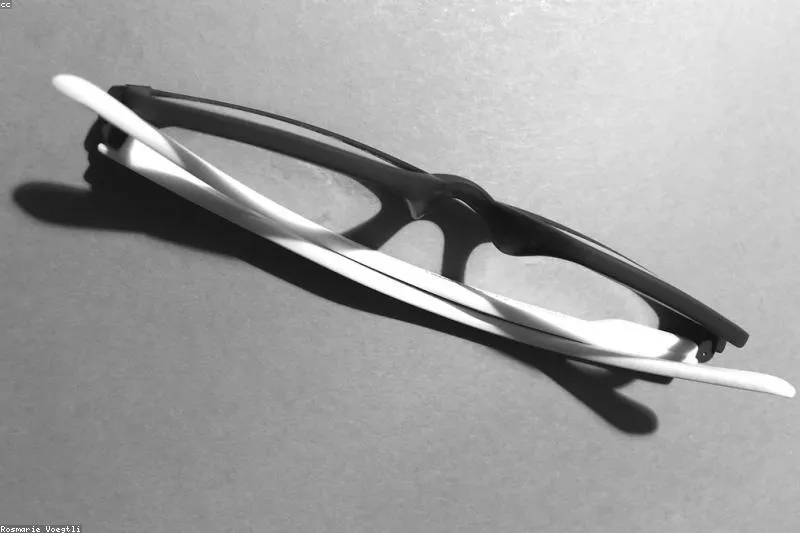

Presbyopia: Natural Support Measures and Prevention
IMPORTANT: Presbyopia is a physiological age-related change of the lens, usually starting after 40-45 and progressing until about 60-65. It is not a disease, but a normal stage of aging. It cannot be fully reversed by natural remedies, exercises or supplements, because it is due to loss of lens elasticity and weakening of the ciliary muscle. The measures below can slow progression, relieve symptoms (fatigue, tension, headaches), reduce the need to change glasses often and support overall eye health. For optical correction (clear near vision) you will probably need reading glasses or, in other cases, multifocal contact lenses, intraocular lenses or laser surgery. Consult an ophthalmologist if: near vision dropped suddenly, you have strong headaches when reading, vision worsens rapidly (not slowly as is normal in presbyopia), spots or flashes appear in the visual field. Sudden vision drops can hide serious conditions (cataract, glaucoma, retinal detachment).
Presbyopia is, with humor and resignation, called “short arm disease”. Up to age 40, we look at things close up without thinking. At 42-45, we start holding the book a little farther, then farther, until the arm is no longer long enough and we find ourselves squinting, straining, tiring and getting headaches after a few pages. The restaurant menu becomes a problem, the medicine label is impossible, threading a needle is the domain of magic. It is the moment you go to the ophthalmologist or optician and find out “your reading glasses have arrived”. Many get upset, because presbyopia is the first visible sign of aging.
For my grandmother, who lived 89 years, presbyopia came at about 48. At the optician in town she got reading glasses with round metal frames, which she wore at the tip of her nose and looked over when talking to someone. “I only wear them for embroidery and reading letters”, she said. She took care of her eyes, ate lots of spinach and carrots from the garden, sewed in the evening by the gas lamp, then under the electric bulb, with good light, never “in the dark”. She read until the end, with stronger glasses after 70, without reaching severe cataract. Her discipline is, essentially, the recipe for living with presbyopia with minimum discomfort.
Table of Contents
- What presbyopia is and why it appears
- At what age it starts and how it evolves
- Measure 1: Eye exercises (ocular gymnastics)
- Measure 2: The 20-20-20 rule for screens
- Measure 3: Correct lighting for reading
- Measure 4: Nutrition for eye health
- Measure 5: Supplements with lutein, zeaxanthin, omega-3
- Measure 6: Hydration and dry eye syndrome
- Measure 7: Warm compresses and periocular massage
- Reading glasses, lenses, surgeries
- Practical tips and prevention
- Frequently asked questions
- Conclusion
What presbyopia is and why it appears
The ocular lens is an elastic lens, behind the iris, suspended by fine fibers (zonule of Zinn) from a circular muscle (ciliary muscle). When we look at something near, the ciliary muscle contracts, the fibers relax, and the lens, through its elasticity, becomes more curved (more converging), focusing the image near. When we look far, the muscle relaxes, fibers stretch, the lens becomes flatter, focusing the image far. This process is called accommodation.
With age, the lens gradually loses elasticity (hardens), and the ciliary muscle weakens. The result is that, to focus near, we need greater and greater efforts, until accommodation becomes insufficient. Presbyopia is the direct consequence of this loss of elasticity. It is an inevitable process, a characteristic of all mammals that live long enough.
At what age it starts and how it evolves
First signs usually appear between 40 and 45 (sometimes earlier in hyperopes, later in mild myopes). It progresses until about 60-65, then stabilizes. A 45-year-old presbyope needs +1 diopter glasses, a 55-year-old +2, a 65-year-old +2.5 or +3.
Typical symptoms:
- You need to hold objects farther to see clearly
- Eye fatigue when reading, especially in the evening
- Headaches after prolonged reading
- Difficulty in dim light (reading the menu in a restaurant with ambient lighting)
- Near vision improves by closing one eye (pinhole effect)
- Need for more light for fine tasks
- Difficulty switching gaze near-far-near
Measure 1: Eye exercises (ocular gymnastics)
Although they cannot reverse presbyopia, eye exercises strengthen ciliary and oculomotor musculature, improve circulation, reduce fatigue and delay symptoms. Be disciplined, do them daily.
Palming exercise
Rub your palms together for 20 seconds until they warm up. Place cupped palms over closed eyes without pressing on the globes. Stay like this 1-2 minutes, breathing deeply, in darkness. Greatly relaxes the musculature and optic nerve.
Near-far exercise
10 times in a row: fix your gaze on the tip of a finger raised 20-25 cm from the eyes, then fix something 5-10 meters away (a window, a painting on the wall). Hold 2-3 seconds each position. Trains the ciliary muscle.
Figure-eight exercise
Imagine writing a big eight with your gaze (like infinity). Do it slowly, 10 times in one direction, 10 in the other. Relaxes the oculomotor musculature.
Eye-ball rotation
With closed eyes, rotate eyeballs in a big circle: up, right, down, left, 10 times in one direction, 10 in the other. Good for circulation and mobility.
Conscious blinking
20 times in a row, blink firmly (squeeze eyes 2 seconds, open 2 seconds). Distributes the tear film, stimulates Meibomian glands, cleans the eye surface.
Frequency: 5-10 minutes per day, preferably in the morning or during computer breaks.
Measure 2: The 20-20-20 rule for screens
Computer, phone or tablet work, hours fixed at a constant distance, fatigues the ciliary musculature, dries the eyes (we blink much less in front of screens) and emphasizes presbyopia symptoms.
20-20-20 rule: every 20 minutes, look for 20 seconds at something 6 meters (20 feet) or farther away. Relaxes the lens, rehydrates the tear film, reduces fatigue.
Other screen tips:
- Keep 50-70 cm distance from the monitor
- Monitor slightly below eye level (slight downward gaze)
- Moderate brightness, not too high
- Good contrast
- Enlarged font if needed
- Blue light filters, especially in the evening
- Night mode (warm tint) in the evening, 2-3 hours before bedtime
Measure 3: Correct lighting for reading
Presbyopes need more light than young people for the same task. Eye fatigue when reading is often caused by insufficient lighting, not worse vision.
Tips:
- Desk lamp with 60-100 W equivalent bulb (15-25 W LED), positioned laterally, on the opposite side of the writing hand (left for right-handed)
- Natural light when possible, near the window
- Avoid reading in bed with a single small lamp
- Do not read with a single strong source creating shadows (use ambient plus task light)
- Bulbs with color temperature 4000-5000 K for reading (natural white), not 2700 K (too yellow), not 6500 K (too cold)
Measure 4: Nutrition for eye health
Although it does not cure presbyopia, a diet rich in eye nutrients slows other age-related eye problems (cataract, macular degeneration, dry eye), which can worsen visual difficulties.
Staple foods:
- Dark leafy greens: spinach, kale, arugula, lettuce
- Fatty fish: salmon, sardines, mackerel, 2-3 times per week
- Farm eggs
- Carrots, pumpkin, sweet potatoes, red and yellow peppers
- Blueberries and forest fruits
- Rose hips and sea buckthorn (rich in vitamin C)
- Walnuts, almonds, sunflower seeds, pumpkin seeds
- Extra-virgin olive oil
- Legumes: lentils, chickpeas, beans
- Citrus, kiwi
To avoid or limit: refined sugar, processed products, trans fats, excess alcohol, smoking (worsens all eye problems).
Measure 5: Supplements with lutein, zeaxanthin, omega-3
For those with pronounced presbyopia, long computer hours or family history of cataract or AMD, supplements can make the difference.
Lutein and zeaxanthin: 10 mg lutein + 2 mg zeaxanthin daily, taken with lunch (especially if it has fats, for absorption).
Omega-3: 1000-2000 mg EPA+DHA daily, for anti-inflammation and tear film support.
Vitamin C: 500-1000 mg daily, antioxidant for the lens.
Vitamin E: 200-400 IU daily.
Astaxanthin: 4-12 mg daily, a very powerful carotenoid, with promising studies on eye fatigue and accommodation.
Bilberry (European blueberry) standardized extract: 80-160 mg anthocyanins daily, supports night vision and reduces eye fatigue.
Consult your doctor if you take other medications, especially anticoagulants (vitamin E and omega-3 may interact).
Measure 6: Hydration and dry eye syndrome
With age, tear production decreases and their quality degrades. Dry eye syndrome is very common in presbyopes and worsens all symptoms (fatigue, blurring, discomfort).
Measures:
- 1.5-2 liters of water per day
- Avoid dry air (radiators, air conditioning); use a humidifier
- Preservative-free artificial tears, 3-4 times a day, especially at the computer
- Conscious frequent blinking
- Omega-3 in the diet
Measure 7: Warm compresses and periocular massage
Once a day, in the evening, an 8-10 minute warm compress on closed eyelids relaxes tired ciliary musculature, activates Meibomian glands and relieves the day’s symptoms.
Optionally, gentle massage of the temples, the points at the base of the nose (between the eyes) and the orbits, with fingers, for 2-3 minutes. Activates circulation and reduces tension.
Reading glasses, lenses, surgeries
Monofocal reading glasses: simplest and cheapest, good for someone reading a lot at the same distance. Disadvantage: must be removed to see far.
Bifocal glasses: one part for near, another for far, with a visible line between them. Outdated but practical.
Progressive glasses: continuous transition between near, intermediate (computer) and far. Most modern and aesthetic. Requires adaptation.
Multifocal contact lenses: an option for active people who do not want glasses. Requires adaptation.
Monovision: one eye corrected for near, the other for far (with contact lenses or surgically). Works for some, not for others.
Laser surgery (PresbyLASIK) or multifocal intraocular implant: for those who want to get rid of glasses definitively. Must be discussed at length with the ophthalmologist.
Pilocarpine drops (Vuity and others): relatively new option, constrict the pupil, allow near vision 6-10 hours per day. Useful for incipient presbyopia.
Practical tips and prevention
Do not shy away from glasses. Many refuse reading glasses out of vanity and force themselves, get headaches, tire. Glasses do not “ruin” the eyes, they only correct what has already changed.
Ophthalmologic check every 2 years. Presbyopia evolves and diopters change. Old glasses may be insufficient.
Do not buy ready-made reading glasses from stalls if you have large differences between eyes or astigmatism. They may suit you for a while, but long-term, personalized glasses make the difference.
Quit smoking.
Protect eyes from UV (UV 400 sunglasses).
Sleep 7-9 hours.
Regular exercise.
Accept that you are aging and take care of your eyes with good humor. Presbyopia is not an enemy, it is just a stage.
Frequently asked questions
Can presbyopia be cured? It cannot be cured, only corrected. Glasses, lenses, surgery or drops are correction options.
Do eye exercises really work? They do not reverse presbyopia, but relieve fatigue and can delay the need for stronger glasses. Do not fool yourself with “miracle methods” promising cure in 30 days, they are charlatanism.
Can I wear multifocal contact lenses? Yes, many people are satisfied. Adaptation requires 2-4 weeks. Not everyone adapts.
Is presbyopia surgery recommended? Depends on the case. For active people who hate glasses, it may be a good solution. Discuss at length with a specialized ophthalmologist before deciding.
I wake up at night and can no longer see the clock, is it presbyopia? It may be. Presbyopia is more pronounced in dim light, because the pupil is dilated and accommodation harder.
I am 35 and no longer see well close up. Is it presbyopia? Unlikely so early. More likely computer eye strain or undiscovered hyperopia. Go to an ophthalmologist.
Conclusion
Presbyopia is an inevitable travel companion after 45. We cannot stop lens aging, but we can do a lot to keep them comfortable, rested, functional. Daily exercises, the 20-20-20 rule at the computer, correct lighting, Mediterranean diet, lutein and omega-3 supplements, evening compresses and accepting reading glasses when needed are a complete strategy that really works.
My grandmother embroidering by gas lamp at 80 with her round glasses is for me the image of elegance with which presbyopia can be carried. She was not bothered that she no longer saw as at 30. She was glad she saw enough to do her work nicely. Eye aging is part of life, a confirmation that we had a full life. Treat your eyes with respect, go regularly to the ophthalmologist, and you will read books and look at beloved faces for many, many more years.