
Natural remedies for sarcopenia (muscle mass loss)
Sarcopenia is the progressive loss of muscle mass and strength associated with aging, but also with sedentary living, chronic diseases, low protein nutrition. For a long time it was viewed as a “natural and inevitable” process, a simple consequence of passing years. Today medicine recognizes it as a standalone condition with its own diagnostic codes, with major impact on quality of life, independence and even mortality in people over 60.
Our grandparents, who did physical work late in life, generally had better preserved muscle mass than today’s elderly. A person who dug in the garden, carried water, climbed stairs, cut wood kept their muscles active. Today, after retirement, many retreat to armchairs, television, cars, elevators, and unused muscles begin to disappear. The phenomenon is jokingly called “toothpaste tube”: after 30 you lose what you do not use.
The statistics are alarming. After 50 we lose on average 1 to 2% of muscle mass a year, and strength drops by 3% a year. By 70, a sedentary person has lost 25 to 30% of muscle mass from youth. Consequences are: weakness, falls, fractures, dependency, cognitive decline, more frequent diabetes, premature death. But good news: sarcopenia is partially reversible at any age through the right combination of training and nutrition. Studies on 80 to 90 year olds have shown gains in muscle mass and strength after just 12 weeks of appropriate exercise.
This guide is designed for people over 50 who want to keep their strength, but also for younger ones who want to prevent loss. Because sarcopenia is best fought 20 to 30 years before peak incidence, through habits that build a solid “muscle reserve”.
Contents
- What sarcopenia is and how it develops
- Causes of muscle mass loss
- Signs and diagnosis
- Remedy 1: Quality protein
- Remedy 2: Leucine and BCAA amino acids
- Remedy 3: Creatine, the most studied supplement
- Remedy 4: Vitamin D and calcium
- Remedy 5: Omega-3 and anti-inflammatory plants
- Strength training at any age
- Movement in daily life
- Sleep, stress and hormones
- Common mistakes to avoid
- Practical tips
- Conclusion
- Frequently asked questions
What sarcopenia is and how it develops
Sarcopenia (from Greek, “sarx” = flesh, “penia” = loss) is the diminishment of muscle mass, strength and functionality. Medical diagnosis combines:
- low muscle mass (measured by DEXA, bioimpedance or calf circumference);
- low muscle strength (usually hand grip test, dynamometry);
- low physical performance (walking speed, chair rise test).
The process starts insidiously around age 30 but accelerates after 50, especially if aggravating factors are present: sedentary living, low protein diet, chronic diseases, cortisone treatments.
Causes of muscle mass loss
Causes of sarcopenia are multiple and often combined:
- age (decreased protein synthesis, decreased anabolic hormones);
- sedentary life (lack of growth stimulus);
- insufficient protein intake (very common in elderly);
- malnutrition or weight loss through strict dieting;
- chronic diseases: heart failure, kidney, COPD, cancer, rheumatic diseases;
- low grade chronic inflammation;
- hormonal imbalances: low testosterone, low GH, low estrogen in postmenopausal women;
- vitamin D deficiency;
- insulin resistance;
- medications: long term corticosteroids, some chemotherapies;
- prolonged hospitalization or bed rest;
- depression and social isolation (lead to sedentary life);
- alcohol abuse.
Identifying correctable causes is important. Protein deficit is corrected with diet. Vitamin D deficit is supplemented. Sedentary life is countered with training.
Signs and diagnosis
Warning signs:
- decreased grip strength (jar lid seems harder and harder to open);
- rapid fatigue climbing stairs or walking distances;
- difficulty rising from a chair without support;
- thinner legs, looser pant waist but more prominent belly;
- poor balance, tendency to fall;
- decreased walking speed;
- general fatigue and decreased appetite for movement.
Diagnosis is made by geriatrician or internist through combination of clinical signs and simple tests:
- grip strength test (dynamometry): under 27 kg men, under 16 kg women = low strength;
- 4-meter walk time: under 1 m/s = slow;
- 5-time chair rise test: over 15 seconds = slow;
- muscle mass at DEXA or bioimpedance.
Remedy 1: Quality protein
Protein is the brick that muscle is built from. Without adequate protein intake, any training is wasted effort. Unfortunately many elderly eat under half of what they need, especially at breakfast and dinner.
Updated recommendations
- healthy young adults: 0.8 to 1.2 g protein per kg body weight a day;
- active adults/athletes: 1.4 to 2 g per kg body weight;
- elderly (over 60): 1.2 to 1.5 g per kg body weight, possibly more in acute illness.
A 70 kg person needs 85 to 105 g protein a day. Divided over 3 to 4 meals means 25 to 30 g per meal.
Excellent sources
- egg: 6 to 7 g per egg. Best quality/price ratio.
- beef: 25 to 28 g per 100 g (cooked).
- chicken breast: 30 to 31 g per 100 g.
- fish (salmon, tuna, cod): 20 to 25 g per 100 g.
- fresh cheese: 10 to 15 g per 100 g.
- Greek yogurt: 8 to 10 g per 100 g.
- milk: 3 to 4 g per 100 ml.
- cooked lentils: 9 g per 100 g.
- chickpeas: 9 g per 100 g.
- tofu: 8 g per 100 g.
Daily example for a 70 kg person
- breakfast: 2 eggs plus 2 slices of turkey ham plus cheese = 30 g;
- lunch: 150 g chicken breast plus rice plus vegetables = 45 g;
- snack: 200 g Greek yogurt plus nuts = 20 g;
- dinner: 150 g salmon plus baked potato plus salad = 30 g.
Total: 125 g, optimal amount.
Remedy 2: Leucine and BCAA amino acids
Leucine is an essential amino acid with a special role: it directly activates mTOR, the pathway that commands muscle protein synthesis. To trigger this anabolic signal, 2.5 to 3 g of leucine per meal are needed.
Leucine rich sources
- whole egg: 0.6 g per egg (so 3 to 4 eggs per meal = anabolic signal);
- chicken breast 150 g: 2.3 g;
- whey protein 25 g: 2.5 to 3 g (most effective source);
- cheese: 1 g per 100 g;
- salmon 150 g: 2 g.
For elderly
There is a recommendation to supplement with leucine or BCAA (leucine plus isoleucine plus valine) in elderly with sarcopenia, especially those who cannot eat enough.
- dose: 2 to 3 g leucine or 5 to 10 g BCAA at main meals;
- most useful before or just after training;
- combined with a complete protein source.
For most adults a diet with adequate protein covers leucine needs anyway. Supplementation is for special situations.
Remedy 3: Creatine, the most studied supplement
Creatine monohydrate is the most studied and safest supplement for strength and muscle mass. It is not a hormone, not a steroid, it is a natural substance found in meat and fish that the body uses as a quick energy reserve in muscles.
Benefits for sarcopenia
- increases muscle mass by 1 to 2 kg in 12 weeks combined with training;
- increases strength by 10 to 20%;
- improves recovery;
- possible cognitive benefits in elderly;
- supports bone health.
How to use
- loading dose (optional): 20 g a day (4x5 g) for 5 to 7 days;
- maintenance dose: 3 to 5 g a day, daily, indefinitely;
- take anytime with water or juice;
- choose pure creatine monohydrate, not expensive formulas.
It is safe, the only reactions being mild water retention (actually useful for sarcopenia) and, rarely, digestive discomfort. Not recommended in severe kidney failure.
Remedy 4: Vitamin D and calcium
Vitamin D is essential for muscle health. Its receptors are in muscle, and vitamin D deficiency is associated with muscle weakness, falls, fractures.
Most elderly have deficiency. Correcting it:
- vitamin D3: 2000 to 4000 IU a day with a meal containing fat;
- sun exposure: 15 to 20 minutes, arms and legs uncovered, in summer;
- food sources: fatty fish, egg yolk, butter, fortified milk, sun-exposed mushrooms;
- vitamin K2: 100 to 200 mcg a day for proper calcium distribution;
- calcium: 1000 to 1200 mg a day (from dairy, sardines, spinach, broccoli, almonds; from supplement only if not covered by diet).
Target blood values: 30 to 60 ng/ml vitamin D 25-OH.
Remedy 5: Omega-3 and anti-inflammatory plants
Low grade chronic inflammation (“inflammaging”) accelerates sarcopenia. Fighting it helps directly.
Omega-3
- fatty fish 2 to 3 times a week (salmon, sardines, herring, mackerel);
- or fish oil: 1 to 2 g EPA plus DHA a day;
- reduces inflammation, improves muscle response to protein;
- studies show clear benefits for muscle mass and strength in elderly.
Anti-inflammatory plants
- turmeric with black pepper and fat: 500 mg curcumin twice a day;
- ginger: tea or fresh root in food;
- raw garlic: 1 to 2 cloves a day;
- green tea: 2 to 3 cups a day (or EGCG extract);
- berries: antioxidants and polyphenols;
- extra virgin olive oil: 2 to 3 tablespoons a day.
Supplements with weaker evidence but used
- HMB (hydroxymethylbutyrate, leucine metabolite): 3 g a day, may help in advanced sarcopenia;
- hydrolyzed collagen with vitamin C: may help joints, indirect training support.
Strength training at any age
Without strength training, all supplements and proteins are insufficient. Muscle needs mechanical stimulus to grow or even maintain.
Principles for beginners of any age
- 2 to 3 sessions a week;
- 6 to 8 exercises per session, covering all major groups (legs, back, chest, arms, core);
- 2 to 3 sets of 8 to 15 reps;
- weight that causes fatigue on last reps with correct form;
- gradual progression: increase weight slightly when you can easily do target reps.
Essential exercises (adapted variants)
- chair rise (fundamental squat): 3x10 reps;
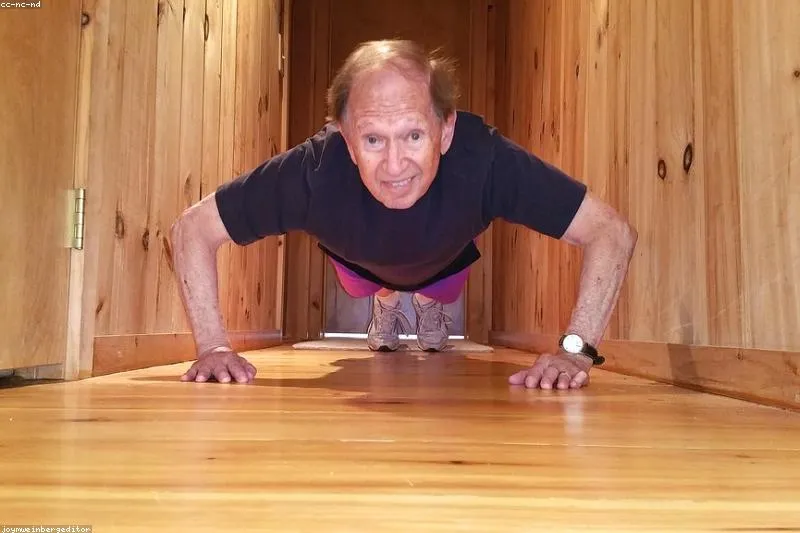
- wall/knee/full push-ups: 3x8-12;
- pulls with resistance band (for back): 3x10;
- calf raises: 3x15 (for calves, important for balance);
- ab work on chair/floor: 3x10;
- walking on toes and heels: 3 minutes (balance);
- step-up on low stair: 3x8 each leg.
For people over 70
- start with body weight or very light dumbbells (1 to 2 kg);
- progression is slower but results exist;
- prefer gym with specialized trainer or physiotherapist for safety;
- added balance and flexibility exercises.
Movement in daily life
Structured training is essential, but additional daily movement counts a lot.
- daily walking: 30 to 45 minutes at moderate pace;
- stairs instead of elevator: a vital habit;
- gardening: active, varied, useful;
- dancing: social and fun;
- hiking in mountains or hills;
- tai chi, qi gong: for balance, coordination, calm;
- swimming or aqua-gym: suitable for sensitive joints.
Goal: minimum 7000 to 10000 steps a day for adults, 5000 to 7000 for sedentary elderly to start.
Sleep, stress and hormones
Sleep
- 7 to 9 hours a night for adults;
- during deep sleep anabolic hormones are produced (GH, testosterone);
- sleep in cool, dark room;
- treat sleep apnea if present.
Stress
- chronic cortisol catabolizes muscle;
- relaxation techniques, time in nature, hobbies, socializing;
- do not work to exhaustion daily.
Hormones
- low testosterone in men, low estrogen in women: worsens sarcopenia;
- lifestyle correction helps a lot;
- TRT or hormone therapy in women is medically evaluated.
Common mistakes to avoid
- low protein diet in elderly, out of fear of cholesterol or kidneys (usually unfounded if kidneys are healthy);
- only aerobic exercise (walking, swimming) without strength: maintains cardio but does not prevent sarcopenia;
- prolonged fasting without monitoring in elderly, leading to muscle loss;
- heavy training without recovery (rare in elderly but possible);
- buying every new supplement: start with basics (protein, creatine, vitamin D), the rest is optional;
- fear of lifting weights: “I will become like a bodybuilder” - completely false, especially in elderly and women;
- ignoring signs of weakness and postponing medical consultation.
Practical tips
- Do not wait for sarcopenia signs to appear. Build muscle now, at 30, 40, 50 years, it is an investment for old age.
- Check your protein intake: for 3 days note everything you eat and calculate with an app or manually.
- In postmenopausal women, protein and training are more important than ever.
- In men over 50, include strength training at least twice a week.
- At 70+, seek professional support (physiotherapist, specialized trainer) to start correctly.
- Prepare and freeze protein portions (chicken breast, fish, meat) so you do not run out.
- A main dinner can be a 3 egg omelet with vegetables. Practical and effective.
- Do not skip training because “I am tired”: fatigue is paradoxically treated with movement, not passive rest.
Conclusion
Sarcopenia is the silent enemy of modern aging. It does not hurt, is not easily seen, but leads to a smaller, more fragile, more dependent life. The excellent news is that unlike many aging processes, sarcopenia is effectively fought with simple tools: sufficient protein, strength training, creatine, vitamin D, good sleep.
It is never too late to start. Studies on people 85 to 90 have shown strength and muscle gains after only 8 to 12 weeks. But it is also not too early: the earlier you build the “muscle reserve”, the better your starting position when you age.
Change your paradigm: muscle is not just aesthetics, it is health, autonomy, life expectancy. An elderly person with strong muscles rises alone from a chair, climbs stairs, carries shopping bags, does not fall, does not break. A weakened elderly person depends, falls, breaks, becomes immobilized, fades away. The choice is largely each person’s, every day.
Frequently asked questions
At what age do I start losing muscle mass? Around 30, slowly, then accelerated after 50 to 60. But if you do strength training and eat well you can gain muscle mass even at 40 to 50 and maintain until 70+.
Can I build muscle at 70? Yes, clearly. The pace is slower than at 30, but gains are real and important. Studies show 15 to 30% strength increase in 12 weeks.
How much protein is too much? For healthy people up to 2 to 2.5 g per kg body weight a day has not been shown to harm. In kidney failure adjust with the doctor.
Does creatine affect kidneys? No, not in healthy kidneys. Decade long studies show no harm in healthy people. In kidney failure discuss with the doctor.
Am I too old to start with weights? You are not too old. It is just important to start with appropriate weights, correct form, possibly under supervision. 90 year olds train with weights successfully.
What do I do if I have osteoarthritis and cannot squat? There are adapted variants: chair rise, leg press machine, isometric exercises, resistance band exercises. A physiotherapist can build a safe program.
How long until I see results? Strength increases noticeably in 4 to 6 weeks. Visible muscle mass in 8 to 12 weeks. Major changes in independence and balance in 3 to 6 months.
Is sarcopenia reversible? Partially, yes, very often. Degree of reversibility depends on age, initial condition, effort and nutrition. Even partial reversal changes your life.
Important notice: Sarcopenia is a medical condition requiring proper evaluation. In elderly, before starting a training program, cardiological and general medical consultation is recommended. A physiotherapist or trainer specialized in elderly is of great help. If you have chronic diseases (cardiac, renal, pulmonary), always consult your doctor before taking supplements or radically changing your diet.