
Scoliosis: Exercises, Support and Tips for a Curved Spine
IMPORTANT: Scoliosis is a serious spine condition. Diagnosis is made with a full spine x-ray and Cobb angle measurement. Treatment is individualized by the orthopedic doctor, based on age, stage, and type of scoliosis. Exercises and advice in this article are informative for families with a child or adult with diagnosed or suspected scoliosis. They do not replace a personalized program made by a physiotherapist trained in specific methods (Schroth, SEAS, Lyon). Never ignore scoliosis in a growing child, because it progresses rapidly and can become severe.
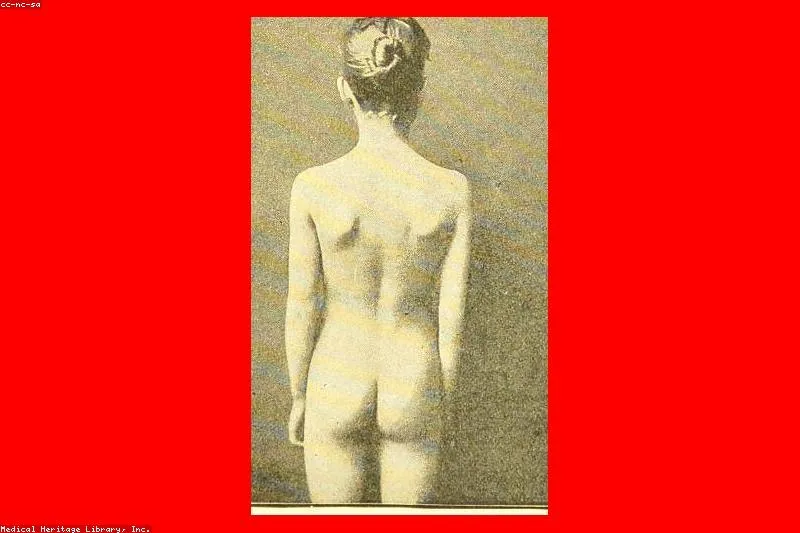
Scoliosis is not simply a crooked spine. It is a three-dimensional deformity of the spine, with lateral curvature, rotation of vertebrae and, often, changes in the normal kyphosis or lordosis. The classic mirror image shows an S or C shaped spine, but on closer look you notice that shoulders are uneven, shoulder blades are at different heights, and on bending forward a “rib hump” appears on one side. This vertebral rotation is, in fact, the most important component and is what makes scoliosis a true challenge for body balance.
The incidence of idiopathic scoliosis (unknown cause) is about 2-3% of the population, most cases being mild. Of these, only a small portion progresses to severe forms requiring bracing or surgery. The problem is that you cannot know at the start which category your child will fall into. That is why early diagnosis and careful monitoring during growth are essential.
Table of Contents
- What scoliosis is and what it is not
- Main types of scoliosis
- How to detect it at home
- Medical diagnosis and the Cobb angle
- Treatment by stage
- Specific scoliosis exercises
- Schroth and other modern methods
- Pilates, swimming and useful activities
- Bracing, when and how
- Emotional support for child and family
- Nutrition for a growing spine
- Conclusion
- Frequently asked questions
What Scoliosis Is and What It Is Not
Scoliosis is a lateral spinal curvature greater than 10 degrees, measured on x-ray by the Cobb method, accompanied by vertebral rotation. Below 10 degrees it is not called scoliosis but postural asymmetry. The difference matters: postural asymmetry corrects with exercise and attention; true scoliosis remains even when you straighten your posture.
What scoliosis is not: rounded spine (kyphosis), spine with exaggerated lordosis, uneven shoulders from habit, herniated disc with antalgic leaning. All these can mimic scoliosis but x-ray clarifies.
Main Types of Scoliosis
Idiopathic Scoliosis
The most common type, about 80% of cases. No clear cause, although there are genetic, growth, neurologic, and muscular factors. Subdivided by age at onset:
- Infantile (under 3 years), rare, sometimes with spontaneous regression
- Juvenile (3-10 years), uncommon
- Adolescent (10-18 years), the most frequent form, corresponding to the growth spurt
Congenital Scoliosis
Caused by vertebral malformations present from birth. Usually detected in the first years of life and behaves individually, sometimes progressive, sometimes stable. Requires evaluation by a specialized pediatric orthopedist.
Neuromuscular Scoliosis
Appears in children with neurological or muscular diseases: cerebral palsy, muscular dystrophy, spina bifida, spinal muscular atrophy. These scolioses tend to be progressive and severe because the musculature meant to support the spine is weakened.
Adult Degenerative Scoliosis
Appears after 50 due to disc wear and asymmetric posterior arthritis. Manifests with pain rather than esthetic concerns.
Functional Scoliosis
Not true scoliosis but spinal asymmetry from other causes: leg length inequality, muscle contracture, antalgic posture from disc herniation. When the cause is corrected, the spine straightens.
How to Detect It at Home
It is important for parents to do a simple exam on their child, especially during puberty. Here is the Adams test, used in all school screenings:
Adams Test
- The child stands with feet together, back uncovered
- Ask them to bend forward, arms hanging free, as if picking something from the floor
- You look at the back from above and behind
What to Look For
- A bulge on one side of the thoracic spine, like a “rib hump”, from vertebral rotation
- Waist asymmetry (one flank fuller than the other)
- Shoulders at different heights
- Shoulder blades at different heights, one more prominent
- Uneven hips
- A plumb line from the middle of the nape not reaching the gluteal cleft (spinal deviation)
If you see any of these signs, go to the doctor for an x-ray. Do not rely on “maybe it will straighten out”. The earlier you detect, the easier it is to manage.
Medical Diagnosis and the Cobb Angle
Full spine x-ray, standing, frontal and lateral, is the basic investigation. The doctor measures the Cobb angle, the angle between the most tilted vertebrae of the curve.
Classification by Angle
- Under 10 degrees: not scoliosis, just asymmetry
- 10-25 degrees: mild scoliosis, observation and physiotherapy
- 25-45 degrees: moderate scoliosis, brace for growing child, intensive physiotherapy
- Over 45 degrees: severe scoliosis, surgery is considered (spinal fusion with rods)
Other Measurements
- Vertebral rotation (Nash-Moe scale)
- Bone maturity (Risser sign), showing how much growth remains
- Leg length (to rule out functional scoliosis)
Treatment by Stage
Mild Scoliosis (under 25 degrees)
Observation every 6 months, specific physiotherapy (Schroth, SEAS, Lyon), postural awareness exercises, general physical activity (swimming, Pilates, adapted yoga). No brace.
Moderate Scoliosis (25-45 degrees) in Growing Child
Orthopedic brace, often Cheneau or Boston type, worn 18-22 hours a day. Plus Schroth or similar physiotherapy. The aim is halting progression until growth ends, when scoliosis stabilizes. In adults, if stable, no brace.
Severe Scoliosis (over 45 degrees)
Surgical evaluation. The operation involves spinal fusion with metal rods that correct the curve and block the operated portion. Not taken lightly, but for severe progressive scoliosis, surgery prevents respiratory, cardiac issues, and chronic pain.
In Adults
Stable scolioses that do not progress need no corrective treatment, only pain management, physiotherapy, adapted physical activity. Adult degenerative scolioses with severe pain or instability may benefit from surgery.
Specific Scoliosis Exercises
Attention: scoliosis exercises are not universal. In a right thoracic scoliosis, some exercises improve it, others worsen it. That is why any program must be done with a physiotherapist trained in specific methods. Here are some general exercises for back and core strengthening that are useful in almost all cases.
Side Plank
Recent studies show that side plank on the convex side of the curve helps correct scoliosis. Position: lateral on forearm, body straight, supported on forearm and side of foot. Hold 20-40 seconds, 3 reps on the side indicated by your physiotherapist. Start with 10 seconds and build up.
Bird Dog
On all fours, raise left arm and right leg simultaneously, hold 3-5 seconds, alternate. 10 reps each side. Trains deep stabilizing muscles.
Cat-Cow
On all fours, alternate arching the back up and down in rhythm with breath. 10 full breath cycles. Warms up and mobilizes the spine.
Pelvic Bridge
Lying on back, knees bent, feet on floor. Lift pelvis, hold 5 seconds, lower slowly. 10-15 reps. Strengthens glutes and lumbar spine.
Superman
Lying face down, lift arms extended forward and legs extended simultaneously. Hold 3-5 seconds, lower. 10 reps. Strengthens back muscles.
Side Stretches
Standing, raise one arm overhead and lean sideways toward the direction indicated by physiotherapist, hold 20-30 seconds. In scoliosis, these stretches are asymmetric (done on one side, not the other).
Schroth Breathing
A specific Schroth exercise is “rotational breathing” toward the concave side of the curve to open the concave chest. Learned with a therapist and essential to avoid worsening the curve.
Schroth and Other Modern Methods
Schroth
Developed in Germany in the 1920s, the most recognized scoliosis specific physiotherapy method. Based on three-dimensional postural correction, rotational breathing, active spine elongation. A Schroth program involves 1-2 hours a day, initially under a certified Schroth therapist, then weekly follow-up sessions.
SEAS (Scientific Exercise Approach to Scoliosis)
Italian method, more adapted to daily life, with shorter exercises (20-30 minutes a day) integrated into the daily routine.
Lyon
French method based on bracing paired with specific exercises, with good results in progressive scolioses.
FITS
Polish method, individualized to the type of curve.
Schroth-certified physiotherapists are concentrated in larger cities worldwide. Look for one with real certification, not just claimed.
Pilates, Swimming and Useful Activities
Swimming
Excellent for all back muscles, without axial loading. Preferred stroke is backstroke, but front crawl and breaststroke are also good. Butterfly is avoided because of intense asymmetric movements. Recommended frequency: 2-3 times a week, 30-45 minutes.
Pilates
Trains core, flexibility, symmetry. Useful if done with an instructor informed about scoliosis who adapts exercises to the curve type.
Yoga
Useful but with care. Intense twisting and asymmetric poses can worsen scoliosis if done incorrectly. Yoga based on active elongation (Iyengar style) is safest.
Cycling
On flat ground, with proper posture, good for fitness, without axial impact.
What to Avoid
- Intense asymmetric sports (high level tennis, golf, shot put)
- Acrobatic dance with large twists
- Rugby, American football (intense impact)
- High level artistic gymnastics with extreme hyperextensions
At recreational level, these sports can be practiced, but individual evaluation is essential.
Bracing, When and How
The brace is prescribed by an orthopedist for scolioses over 25-30 degrees in a growing child to halt progression. It does not correct the curve permanently but prevents worsening.
Types of Brace
- Boston (thoraco-lumbo-sacral): for medium and low curves
- Cheneau: similar, modern design, more comfortable
- Milwaukee: for high thoracic curves, with cervical support, less used today
How It Is Worn
- 18-22 hours a day, including school and sleep
- Removed for sport, specific physiotherapy, shower
- Reevaluation every 3-6 months, adjustments if child grows
- Worn until growth ends (Risser sign 4-5 on pelvis x-ray, meaning full bone maturity)
How to Help the Child Accept It
The adaptation period is tough: the brace is uncomfortable, socially awkward, turns already difficult adolescence into an even more complicated experience. The family must support the child, reassure them that they remain the same person, and that the long term result is better.
Emotional Support for Child and Family
Scoliosis, especially in adolescence, is a psychological disease as much as a physical one. The adolescent is no longer like the others, must wear a brace, do daily exercises, go to checkups, hear terms like “Cobb angle” and “surgery”. All this affects self image, confidence, mood.
What Helps
- Open communication, without minimizing or dramatizing
- Correct information: dig into the details, read with the child, meet other children with scoliosis
- Support groups, dedicated online forums where teens exchange experiences
- Psychotherapy when signs of depression, anxiety, social withdrawal appear
- Active family involvement in the exercise program. Do not leave the child alone with daily responsibility
- Suitable clothing over the brace (looser t-shirts, preferably dark colors)
- Sport at a moderate level so they do not feel excluded
- Normalization: scoliosis is common, not shameful
What Harms
- Comparison with other “healthy” children
- Excessive pressure to do exercises perfectly
- Dramatizing the situation
- Total ignoring of the emotional side
Nutrition for a Growing Spine
An adolescent with scoliosis needs nutrition that supports the growing bone and cartilage. Principles:
- Sufficient protein: eggs, fish, lean meat, cheeses, yogurt, legumes
- Calcium 1200-1500 mg a day for adolescents. Three dairy portions plus greens and sesame
- Vitamin D 800-2000 IU a day, especially in winter
- Vitamin K2 from yolks, fermented cheeses
- Vitamin C from colorful fruits and vegetables daily
- Magnesium, zinc, copper from seeds, nuts, cocoa, greens
- Water 1.5-2 liters a day
What to Limit
- Cola-type carbonated drinks
- Refined sugar
- Ultra-processed foods
- Daily fast food
Without being extreme, a Mediterranean diet with fish, eggs, vegetables, legumes, fruits, whole grains, is ideal for a growing adolescent with scoliosis.
Everyday Practical Tips
- Never carry a backpack on one shoulder. Use both straps, kept short, close to the back
- Ergonomic chair at the desk, with lumbar support, adjustable in height
- Study desk at correct height, so you do not bend constantly
- Computer screen at eye level, not low
- Phone at eye level when possible, not gazing down for hours
- Sleep on firm mattress, with a pillow that aligns the neck
- Never sleep on the stomach
- Active breaks every 45 minutes of sitting
- Try not to stand long on one leg (hip pushed to one side)
- Orthopedic checkups at required intervals, never miss them
- Do exercises every day, even on holidays
- Inform the PE teacher, the kindergarten carer, any adult who interacts a lot with the child, about the condition
Conclusion
Scoliosis is a condition that, most likely, will accompany you for life. But that does not mean suffering. With early diagnosis, specific exercises, bracing when needed, surgery rarely but life-saving when appropriate, and a normal active life, a person with scoliosis can live well, play recreational sports, have a family, a career, a healthy old age.
The key is not to ignore. Not to wait for it to pass. To go to the doctor, get the x-ray, start physiotherapy with a specialist. And to keep morale high, not to let yourself be defined by a spinal curve. You are much more than an x-ray. Scoliosis is only part of what you are, not the whole.
To parents we say: do the Adams test on your children between 8 and 15 years. Look carefully at their back. Go to the doctor at the slightest suspicion. It costs nothing to check and can change your child’s life.
Frequently Asked Questions
1. Can scoliosis go away by itself? Mild forms, under 20 degrees, can stabilize by themselves, without progression, after growth ends. But they do not “disappear”. Once formed, the curve remains. That is why the goal of treatment is to halt progression, not to cure.
2. Why are girls more affected than boys? Adolescent idiopathic scoliosis is 7-8 times more frequent in girls than in boys, and curves progress faster in girls. The exact cause is unclear, but hormones (estrogen), genetics, and faster growth in girls are implicated.
3. Does the brace harm musculature? A myth. The modern brace is designed to allow movement, and simultaneous physiotherapy maintains the musculature. If you do exercises daily, muscles do not weaken. After bracing ends, complete muscular recovery takes several months of intensive physiotherapy.
4. Can I do weight training with scoliosis? At recreational level, with medium weights and proper technique, yes. But avoid heavy axial lifts (squats with heavy bar, maximal deadlift) that can worsen the curve. A trainer informed about scoliosis is useful.
5. Is scoliosis inherited? There is a clear genetic component. If a parent has scoliosis, the child’s risk is 2-3 times higher. Families with history should screen children more carefully from age 8-9.