
Natural Remedies for Shoulder Pain
IMPORTANT: Shoulder pain can have various causes, from simple tendinitis, bursitis, frozen shoulder, to rotator cuff tears or osteoarthritis. The remedies in this article help with mild and moderate forms, but if pain persists beyond 3-4 weeks, if the shoulder locks, or if it appears after a trauma, consult an orthopedic doctor.
The shoulder is the joint with the greatest mobility in the body, but also one of the most fragile. Exactly this freedom of movement makes it vulnerable: four thin muscles (the rotator cuff) do all the work, and when they become inflamed or worn out, the pain is sharp, limiting, and sometimes wakes you at night when you turn to the “wrong” side. Raising your arm overhead becomes torture, buttoning at the back, combing your hair, or reaching the top shelf become serious problems.
The causes are diverse. For some it’s tendinitis after an unusual activity (painting the ceiling, carrying suitcases, an intense badminton game). For others it’s bursitis, an inflammation of the fluid sac that lubricates the joint. In women over 40, frozen shoulder (adhesive capsulitis) can appear suddenly, seemingly without reason, and lock the joint for months. Regardless of the cause, local inflammation is the common component, and this is where natural remedies have a strong voice. Here’s what works.
Remedy 1: Arnica Ointment, King of Bruises and Inflammation
Arnica montana is the plant that grows at high altitudes, with yellow-orange flowers, known for centuries as “the athletes’ remedy”. The flavonoids and sesquiterpene lactones in arnica have a marked anti-inflammatory effect and reduce swelling, bruises, and local pain. For the shoulder, it is one of the best options for topical application.
Oil or Ointment Recipe
- Ingredients: 3 tablespoons dried arnica flowers, 200 ml olive or sweet almond oil, 20g beeswax (for ointment version)
- Oil preparation: Place the flowers in a jar and cover with oil. Macerate for 3-4 weeks in a warm place, away from direct light, shaking daily. Strain finely through cheesecloth.
- Ointment preparation: After the oil is macerated and strained, heat it in a water bath, add grated wax and stir until melted. Pour into small jars and let solidify.
- Application: 3 times a day on the painful area with gentle massage. Never on damaged skin or open wounds, arnica used internally or on broken skin is toxic.
- Frequency: Until improvement, typically 2-3 weeks.
Faster alternative: Ready-made arnica cream, available at pharmacies.
Remedy 2: Warm Fresh Ginger Compresses
Ginger is a top-notch natural anti-inflammatory, and applied externally as a warm compress, it has a remarkable effect on muscle and joint pain. Gingerols penetrate the skin, dilate local vessels, and reduce pain.
How to Prepare
- Ingredients: 30-50g fresh ginger root, 500 ml water, a small cotton towel
- Preparation: Grate the ginger and simmer in water for 10 minutes, covered. Let stand another 5 minutes, then strain. The liquid should be warm-hot, but not boiling.
- Application: Soak the towel in the ginger liquid, gently squeeze, and apply to the painful shoulder. Cover with a dry towel or plastic wrap to retain heat. Refresh the compress every 10 minutes, for a total of 30 minutes.
- Frequency: Twice a day.
Internal bonus: In parallel, drink ginger tea, 2-3 cups a day. The systemic anti-inflammatory effect combines with the local one.
Remedy 3: Essential Oil Blend for Massage
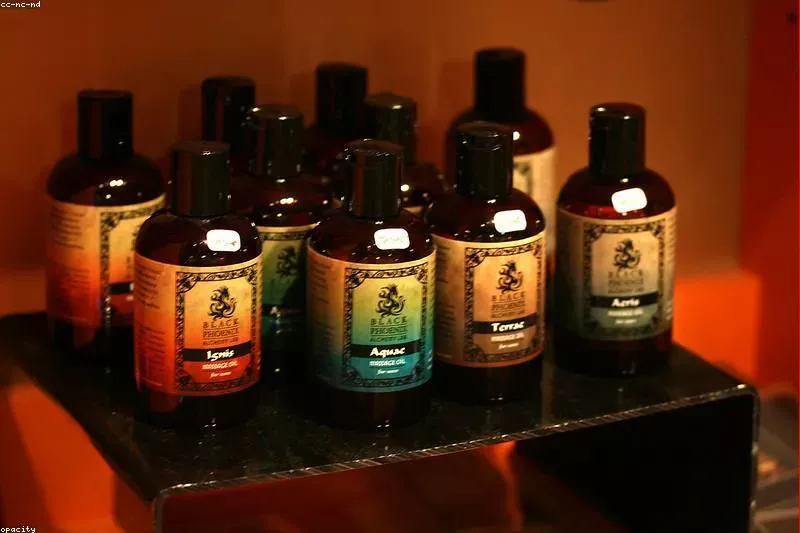
Combining several essential oils gives a more powerful effect than any one alone. For shoulder pain, the classic blend is: peppermint (cooling and numbing effect), eucalyptus (anti-inflammatory), rosemary (muscle tonic), and lavender (relaxing).
Recipe
- Ingredients: 50 ml carrier oil (sweet almond, jojoba, or fractionated coconut), 8 drops peppermint essential oil, 8 drops eucalyptus, 6 drops rosemary, 6 drops lavender
- Preparation: Combine everything in a dark glass bottle. Shake well before each use.
- Application: Pour 1 tablespoon into your palm, warm by rubbing palms together, massage the shoulder with firm circular motions, insisting on painful points. Also massage the trapezius and the base of the neck (shoulder pain often radiates from these areas). Duration: 10-15 minutes.
- Frequency: Twice a day.
Caution: Test on a small area before first use. Improperly used essential oils can cause irritation. Do not apply in the eyes or on mucous membranes.
Remedy 4: Alternating Hot and Cold Compresses
This is an old “thermal contrast” technique, known from Kneipp’s hydrotherapy. Alternating heat and cold stimulates local circulation, eliminates inflammation, and speeds tendon healing. It is especially useful for shoulder tendinitis and bursitis.
Procedure
- Prepare an ice pack (or cubes in a towel) and a towel soaked in warm water (or a hot water bag)
- Apply heat for 3 minutes on the shoulder
- Switch to ice for 1 minute
- Repeat the cycle 4-5 times
- Always end with cold (for acute inflammation) or with heat (for chronic stiffness)
- Total duration: 15-20 minutes
- Frequency: twice a day
Caution: Do not apply ice directly to skin (wrap in a towel). Do not exceed 1 minute of cold per session. Do not apply heat if the shoulder is visibly inflamed, red, and hot, wait 48 hours.
Remedy 5: Horse Chestnut Tincture Rubs
Horse chestnut (Aesculus hippocastanum) contains aescin, a very powerful anti-edema and anti-inflammatory compound. Horse chestnut tincture is traditionally used for varicose veins, hemorrhoids, but also for joint and muscle inflammation. For the shoulder, it is very effective in reducing swelling and the feeling of heaviness.
How to Prepare the Tincture
- Ingredients: 100g peeled and chopped horse chestnuts, 500 ml 40-50% food-grade alcohol (natural brandy or vodka)
- Preparation: Place the chestnuts in a jar and cover with alcohol. Macerate for 3-4 weeks in the dark, shaking daily. Strain.
- Application: Put a little tincture on a piece of cotton and dab the shoulder, or gently massage with your fingers. Let air dry. Apply 2-3 times a day.
- Compress variant: Mix 2 tablespoons of tincture with 1 cup of warm water, soak a towel, squeeze, and apply for 20 minutes on the shoulder.
Caution: External use only. Do not consume orally, raw horse chestnut is toxic.
Shoulder Exercises, Absolutely Essential
For the shoulder, movement is medicine. Prolonged immobilization leads to frozen shoulder, a very unpleasant complication. Here are the exercises that must be done daily, gently, even when it hurts a little.
1. The Pendulum (Codman Exercise)
Lean slightly forward, rest your healthy hand on a table, let the painful arm hang freely. Make small circles clockwise, then counterclockwise. Start with small circles and gradually enlarge them. 2 minutes per direction. It is the safest and best mobilization exercise for a stuck shoulder.
2. Finger Walk on the Wall
Face the wall, an arm’s length away. “Walk” your fingers slowly up the wall, as high as you can reach without intense pain. Hold 5 seconds, then lower. Repeat 10 times. Each time try to reach a bit higher.
3. Cross-Body Shoulder Stretch
Bring the painful arm across your chest, grab the elbow with the other hand, and gently pull toward you. Hold 20-30 seconds. Repeat 3 times.
4. Towel Stretch Behind Back
Take a towel, hold it behind your back with one hand over the good shoulder (above) and the other at the back (below). Gently pull upward with the top hand to lift the bottom hand, as if zipping up. Hold 20 seconds. Repeat 5 times.
5. External Rotations with Elastic Band
Stand with your elbow glued to your waist, bent at 90°. Hold a light elastic band in your hand and pull laterally (external rotation), keeping the elbow against the body. 10 reps, 2 sets. Strengthens the rotator cuff, essential for shoulder stability.
Ergonomics and Daily Habits
- Do not sleep on the painful shoulder. Lie on the other side, with a pillow to support the painful arm in front.
- Mind the heavy bag. Wear a backpack with both straps, not a single-strap bag on the affected shoulder.
- Use the mouse correctly. Elbow at 90°, not extended far from the body. Adjust desk height.
- Warm up before new activities. Don’t jump straight into painting the ceiling or moving furniture.
- Do not sleep with your arm under your head, a habit that compresses circulation and irritates the rotator cuff.
- Heat in the morning, ice in the evening is a good rule for subacute inflammations.
When to See a Doctor
- Pain doesn’t go away after 3-4 weeks of remedies
- Shoulder is visibly deformed (possible dislocation or major tear)
- Cannot lift the arm at all (possible rotator cuff tear)
- Pain follows a direct trauma (fall, strong blow)
- Pain wakes you at night systematically and radiates to neck or arm
- Shoulder progressively locks, with loss of mobility (frozen shoulder diagnosed early is treated much more easily)
- Fever, red and hot swelling: could be a joint infection, an emergency
Warning: Left shoulder pain that appears during effort, associated with chest pain, nausea, or shortness of breath, may be a heart attack. Go to the emergency room immediately.
Remember: Your shoulder needs balance between rest and movement. Too much rest locks it, too much effort inflames it. The remedies above help with pain and inflammation, but real healing comes from gentle, consistent movement and patience. Don’t rush, but don’t abandon the exercises. Bad shoulders recover, but they need weeks, sometimes months.