 Photo: James Heilman, MD, CC BY-SA 4.0, via Wikimedia Commons
Stomach flu (viral gastroenteritis, also called a “stomach bug”) is an infection of the stomach and intestines with viruses such as norovirus or rotavirus, causing vomiting, watery diarrhoea, cramps and sometimes fever. It usually clears by itself within 1-3 days in adults and up to a week in children. The most important treatment is proper rehydration, with small, frequent sips of oral rehydration solution, followed by a quick return to light food.
There is no antibiotic or tea that kills the virus. What you can do is prevent dehydration, settle the stomach, help the gut recover and avoid infecting everyone else at home. And that, in fact, is the complete treatment for most people.
Key takeaways
- The main causes are norovirus (adults, household outbreaks) and rotavirus (unvaccinated young children).
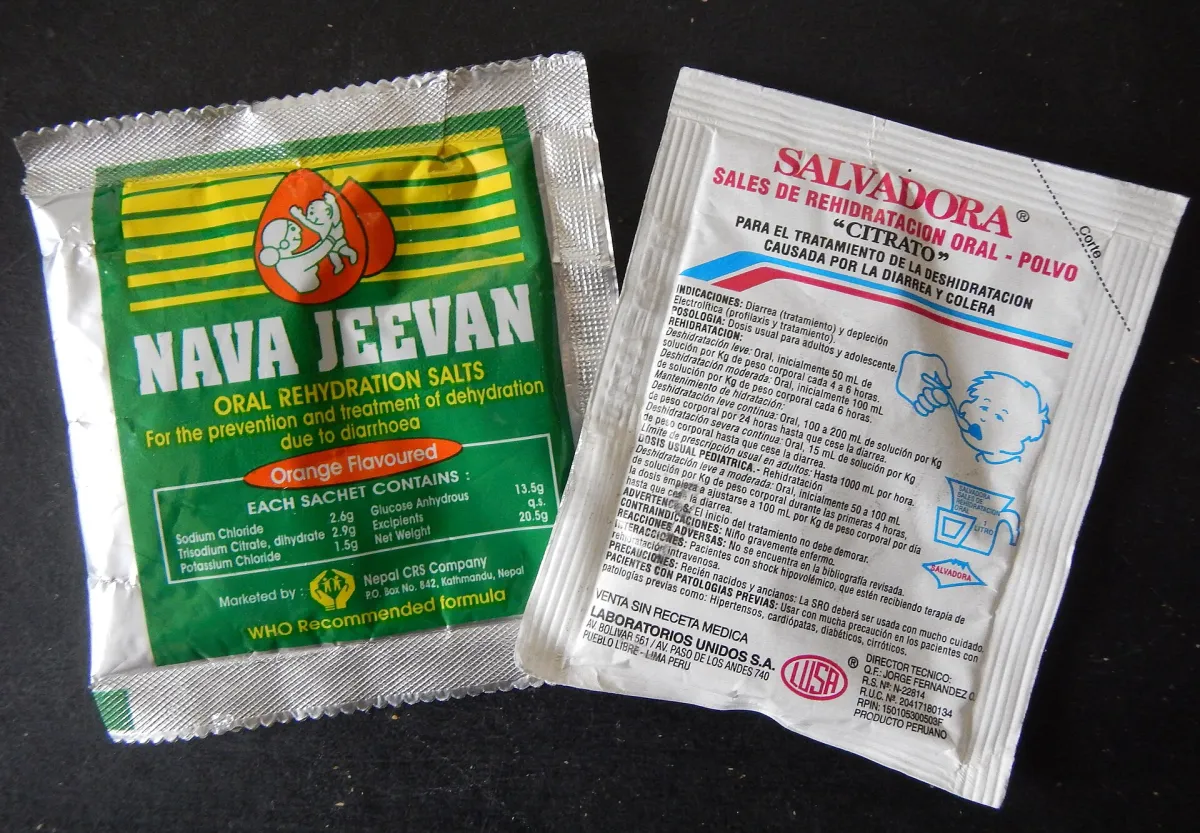
- Oral rehydration solution (ORS) is better than plain water, juices or sports drinks.
- Small sips every few minutes: 5 ml every 1-2 minutes is better at stopping vomiting than a full glass at once.
- Eating restarts a few hours after vomiting stops; days of strict tea-and-toast diet are no longer recommended.
- Alcohol hand gels do not kill norovirus: soap-and-water handwashing and chlorine disinfection are essential.
- Signs of dehydration in babies and older adults need prompt medical attention.
How to recognise stomach flu
| Feature | Viral gastroenteritis | Bacterial food poisoning |
|---|---|---|
| Onset | sudden, often at night | a few hours after a suspect meal |
| Vomiting | frequent, especially at first | variable |
| Diarrhoea | watery, no blood | may contain blood or mucus |
| Fever | absent or moderate | can be high |
| Who gets ill | spreads person to person in families, nurseries | everyone who ate the same food |
| Duration | 1-3 days (norovirus), 3-8 days (rotavirus) | variable |
For food poisoning, read our guide to food poisoning, and for diarrhoea without vomiting, the article on diarrhoea.
Rehydration, step by step
Diarrhoea and vomiting remove not only water but also sodium, potassium and bicarbonate. Rehydration solutions have a precise ratio of salt to glucose that uses a transport mechanism in the gut: glucose “pulls” sodium in, and sodium pulls water. That is why a correct solution is absorbed even when the gut is inflamed.
Homemade rehydration solution (simplified WHO formula)
- 1 litre of boiled and cooled water;
- 6 level teaspoons of sugar (about 25-30 g);
- 1/2 level teaspoon of salt (about 2.5-3 g).
Stir until fully dissolved. Keep it in the fridge and throw it away after 24 hours. The measurements must be exact: too much salt or sugar can make diarrhoea worse. For children, pharmacy sachets are preferable because they have the exact composition and also contain potassium.
How to give it
- If you are vomiting: 1 teaspoon (5 ml) every 1-2 minutes. It looks like little, but adds up to 150-300 ml an hour. After an hour without vomiting, gradually increase the amount.
- Adult with diarrhoea: about 200-400 ml after each watery stool, plus normal fluids.
- Child: about 10 ml/kg after each watery stool and 2 ml/kg after each vomit, according to paediatric recommendations.
- Cold solution, in small sips or as ice cubes, is better tolerated.
What not to drink
Fruit juices, sugary fizzy drinks and sports drinks have too much sugar and too little salt: they draw water into the gut and can worsen diarrhoea. “Flat cola” is a popular myth; it does not rehydrate properly. Avoid alcohol and coffee.
What to eat
Current advice is to restart eating as soon as vomiting stops, usually after 4-6 hours. The gut recovers faster when it is fed. Breastfed babies should keep breastfeeding throughout the illness.
The first 24-48 hours
- clear vegetable or chicken broth, lightly salted;
- boiled rice, mashed potatoes without milk, plain pasta;
- ripe banana, baked or grated apple;
- toast, plain crackers, pretzels;
- plain yoghurt, if tolerated;
- lean boiled meat, boiled egg, from the second day.
Avoid for a few days
- fried, fatty and spicy food;
- large amounts of milk (after gastroenteritis a temporary lactose intolerance can occur);
- lots of raw fruit, raw vegetables, beans and lentils;
- concentrated sweets.
Teas and natural remedies
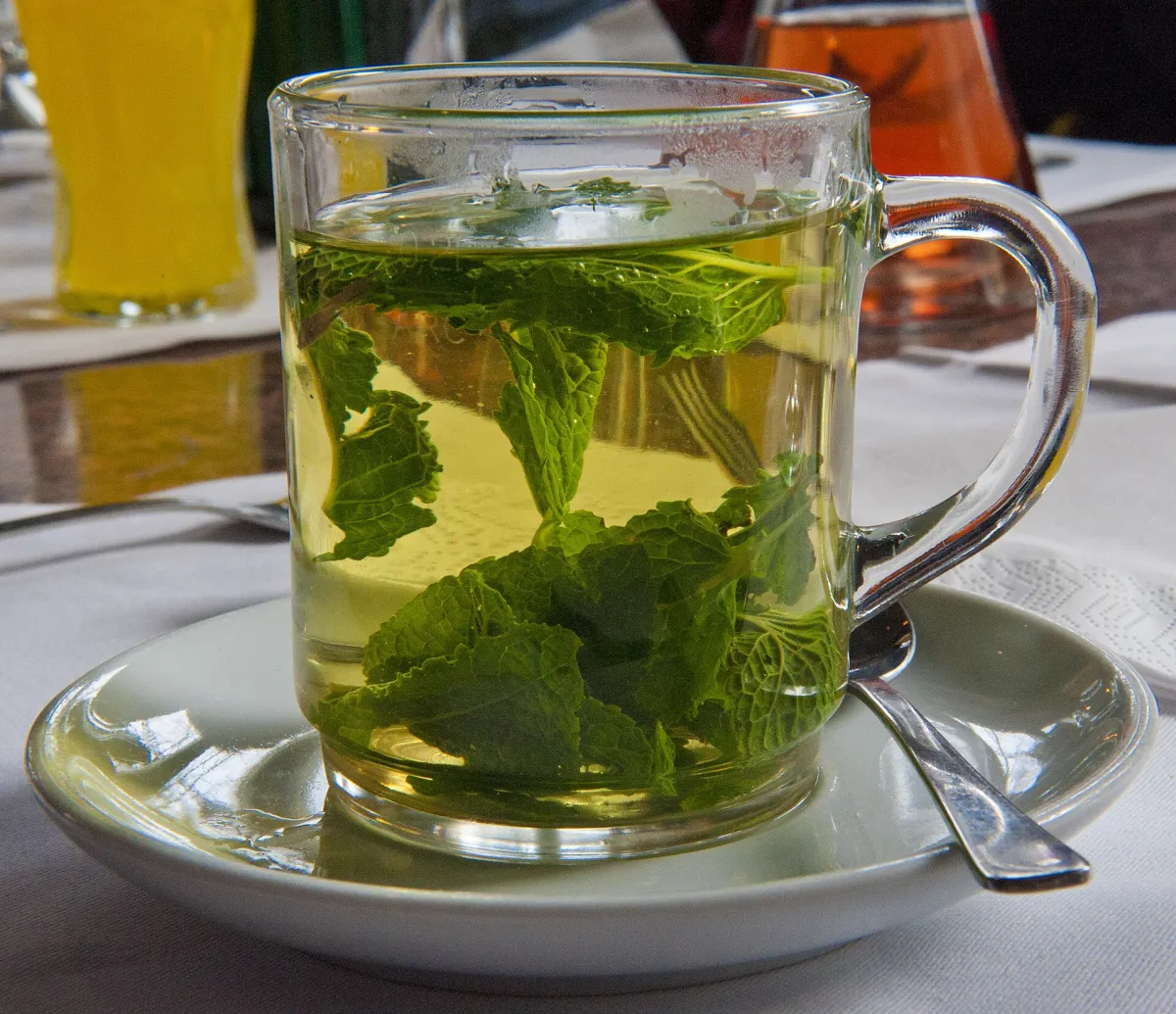 Photo: Hannes Grobe, CC BY 3.0, via Wikimedia Commons
Chamomile tea
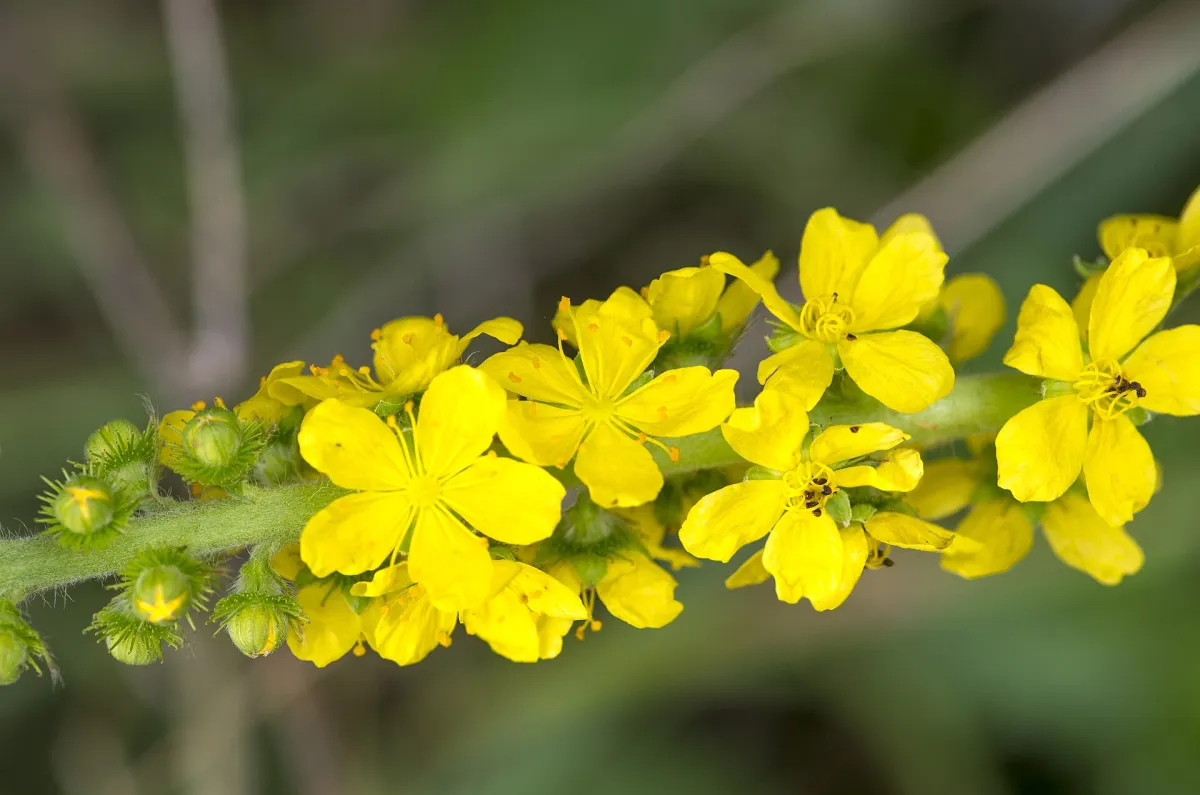
1 teaspoon chamomile flowers in 250 ml boiling water, steep covered for 5-10 minutes. It has a mild antispasmodic effect, eases cramps and is recognised by the EMA for traditional use in minor digestive complaints. Drink it lukewarm in small sips. It is extra fluid, but it does not replace rehydration solution.
Ginger for nausea
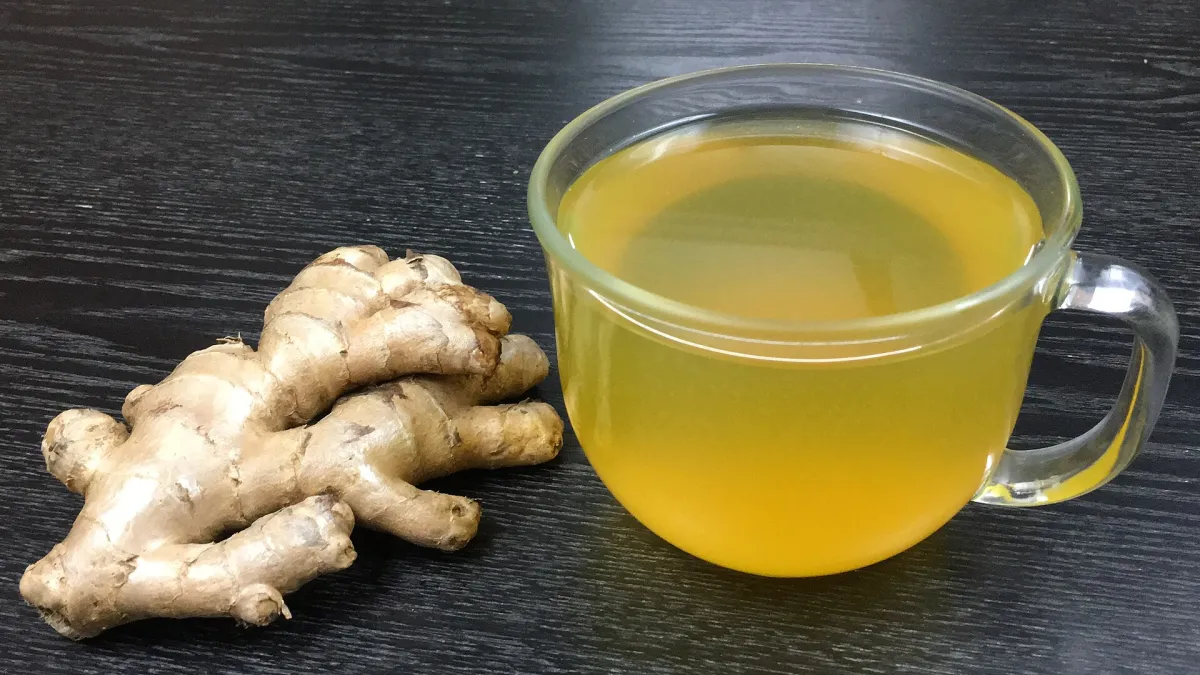
A thin slice of fresh ginger (2-3 g) steeped for 10 minutes in 250 ml hot water, sipped slowly. Ginger has clinical trials for nausea (pregnancy, after surgery, chemotherapy). For young children, only with a doctor’s approval. More ideas in our article on nausea.
Peppermint tea
Eases nausea and bloating. Avoid it if you have reflux, as it relaxes the oesophageal sphincter.
Dried bilberries
Folk medicine uses a decoction of dried bilberries (the fruit, not the leaves) for diarrhoea: 1-2 tablespoons of dried fruit simmered for 10 minutes in 250 ml water. The EMA recognises traditional use of dried bilberry fruit for mild diarrhoea, thanks to its tannins. Do not use fresh berries, which have the opposite effect.
Probiotics
Certain strains, especially Lactobacillus rhamnosus GG and Saccharomyces boulardii, have been studied in children with acute gastroenteritis. Results are mixed: some studies show diarrhoea shortened by about a day, while two large multicentre trials found no benefit. They can be tried but are not essential.
Quick table: what to do by age
| Group | Priority | Special caution |
|---|---|---|
| Baby under 6 months | keep breastfeeding, ORS by spoon | see a doctor quickly at any sign of dehydration |
| Child 1-5 years | ORS from sachets, light food after 4-6 hours | nappy dry for over 6-8 hours |
| Healthy adult | ORS or salty broth + water, rest | signs of severe dehydration |
| Older adult, chronic illness | ORS, close monitoring | dizziness, confusion, diuretic treatment |
How to protect others
Norovirus is extremely contagious: a few particles are enough to infect someone, and the virus survives for days on surfaces.
- Wash your hands with soap and water for at least 20 seconds after the toilet and before eating. Alcohol gels are not enough for norovirus.
- Clean up vomit and contaminated surfaces with gloves and a chlorine solution (household bleach diluted as per the label).
- Wash contaminated clothes and bedding at 60°C or higher.
- Do not prepare food for others for 48 hours after your last symptoms.
- Children should stay off nursery or school until 48 hours after the last episode of vomiting or diarrhoea.
Medicines: what helps and what does not
- Paracetamol for fever and pain is safe at correct doses.
- Anti-diarrhoeals like loperamide should not be given to children and should not be used with high fever or blood in the stool.
- Antibiotics have no effect on viruses.
- Anti-sickness medicines only on medical advice.
- Racecadotril is sometimes recommended by paediatricians; prescription only.
Signs of dehydration: when to see a doctor
Seek urgent care if there is:
- dry mouth, no tears, sunken eyes, a sunken soft spot in a baby;
- very little urine (a child’s nappy dry for over 6-8 hours, an adult passing no urine for over 8-12 hours);
- drowsiness, listlessness, extreme irritability, confusion;
- vomiting that prevents any fluid intake for several hours;
- blood in stool or vomit, green (bile-stained) vomit;
- high fever (over 39°C in a child, persistent over 38.5°C in an adult);
- severe, localised abdominal pain that does not ease between cramps;
- symptoms lasting over 3 days in an adult or over 7 days in a child.
Babies under 6 months, older adults, pregnant women and people with diabetes, kidney disease or weak immunity should be seen earlier. For accompanying fever in children, follow our guide to fever in children.
Common mistakes
- Large amounts of plain water after vomiting, which trigger more vomiting.
- Cola and juices “for energy”.
- Fasting for days or living on tea and toast for a week.
- Giving anti-diarrhoeals to children.
- Relying on hand gel against norovirus.
- Going back to work in a kitchen as soon as you feel better.
Conclusion
Stomach flu is unpleasant but usually short. The secret is patient rehydration with small sips of rehydration solution, a quick return to light food and strict hygiene so the whole household does not fall ill. Chamomile, ginger and dried bilberries can ease symptoms but do not replace rehydration. With babies, older people and at any sign of dehydration, do not wait: see a doctor. After a stomach bug some children have harder stools for a few days; if so, our guide to constipation in children will help.
Frequently asked questions
How long does stomach flu last? Norovirus usually lasts 1-3 days. Rotavirus, more common in young children, can last 3-8 days. Tiredness and looser stools may linger for a few days afterwards.
How long is stomach flu contagious? It is most contagious during symptoms and for 48 hours afterwards, but norovirus can be shed in stool for up to 2 weeks. Hand hygiene stays important after recovery.
Is cola good for stomach flu? No. Cola has a lot of sugar, little sodium and caffeine, which can make diarrhoea worse. Oral rehydration solution or salty broth are much better choices.
Can I make a rehydration solution at home? Yes: 1 litre of boiled and cooled water, 6 level teaspoons of sugar and 1/2 level teaspoon of salt. Measurements must be exact. For babies and young children, pharmacy sachets are safer.
What should I eat after stomach flu? Clear broth, rice, mashed potatoes, banana, baked apple, toast, plain yoghurt, then lean boiled meat and eggs. Return to your normal diet gradually over 2-3 days.
Does activated charcoal help? There is no evidence that it shortens the illness or reduces dehydration, and guidelines do not recommend it. It can also reduce the absorption of other medicines.
Can I get stomach flu more than once? Yes. There are many norovirus strains, and immunity after an infection is short-lived. The rotavirus vaccine protects babies from severe disease.
Sources
- World Health Organization and UNICEF: recommendations on reduced-osmolarity oral rehydration solution.
- ESPGHAN/ESPID: guideline on the management of acute gastroenteritis in children in Europe.
- CDC (Centers for Disease Control and Prevention): materials on norovirus and preventing transmission.
- EMA/HMPC: community herbal monographs on Matricariae flos, Zingiberis rhizoma and Myrtilli fructus.
This content is for information only and does not replace medical advice. See a qualified professional for diagnosis and treatment.