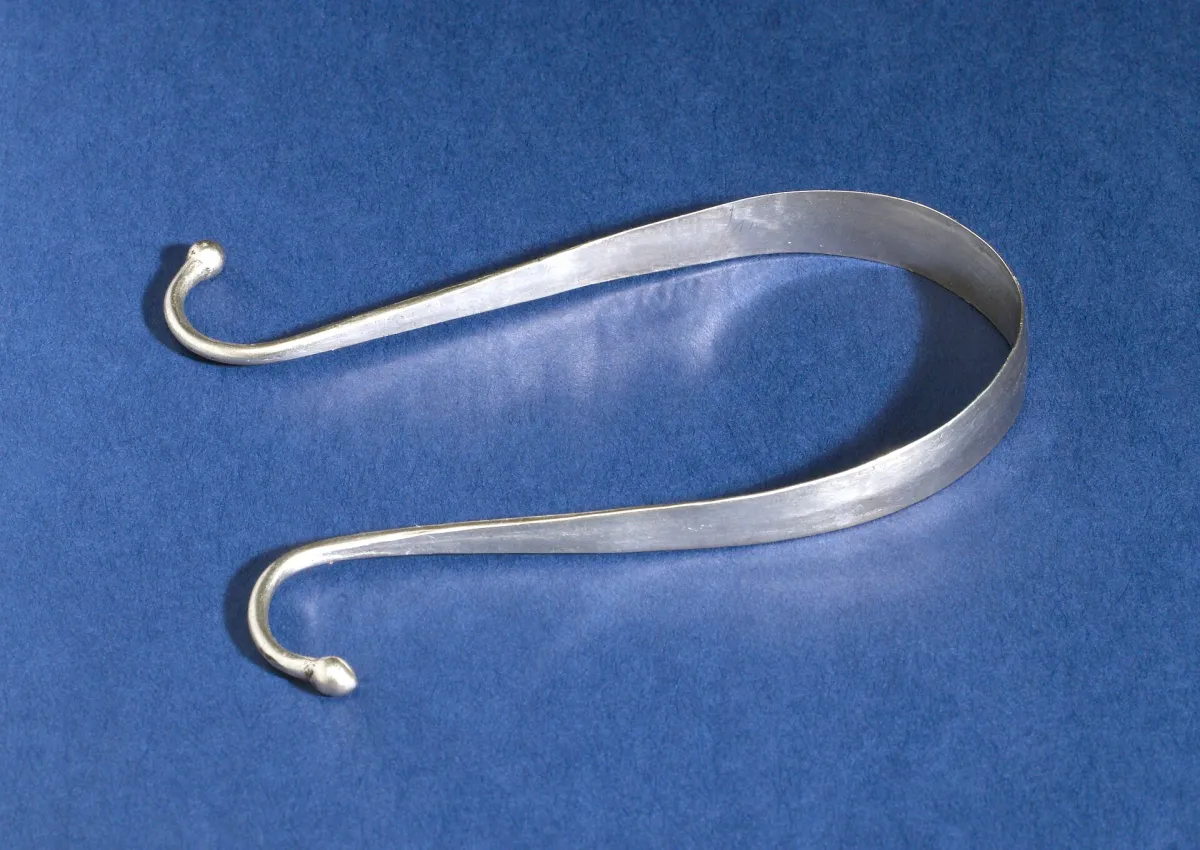
 Photo: Amras666, CC BY 3.0, via Wikimedia Commons
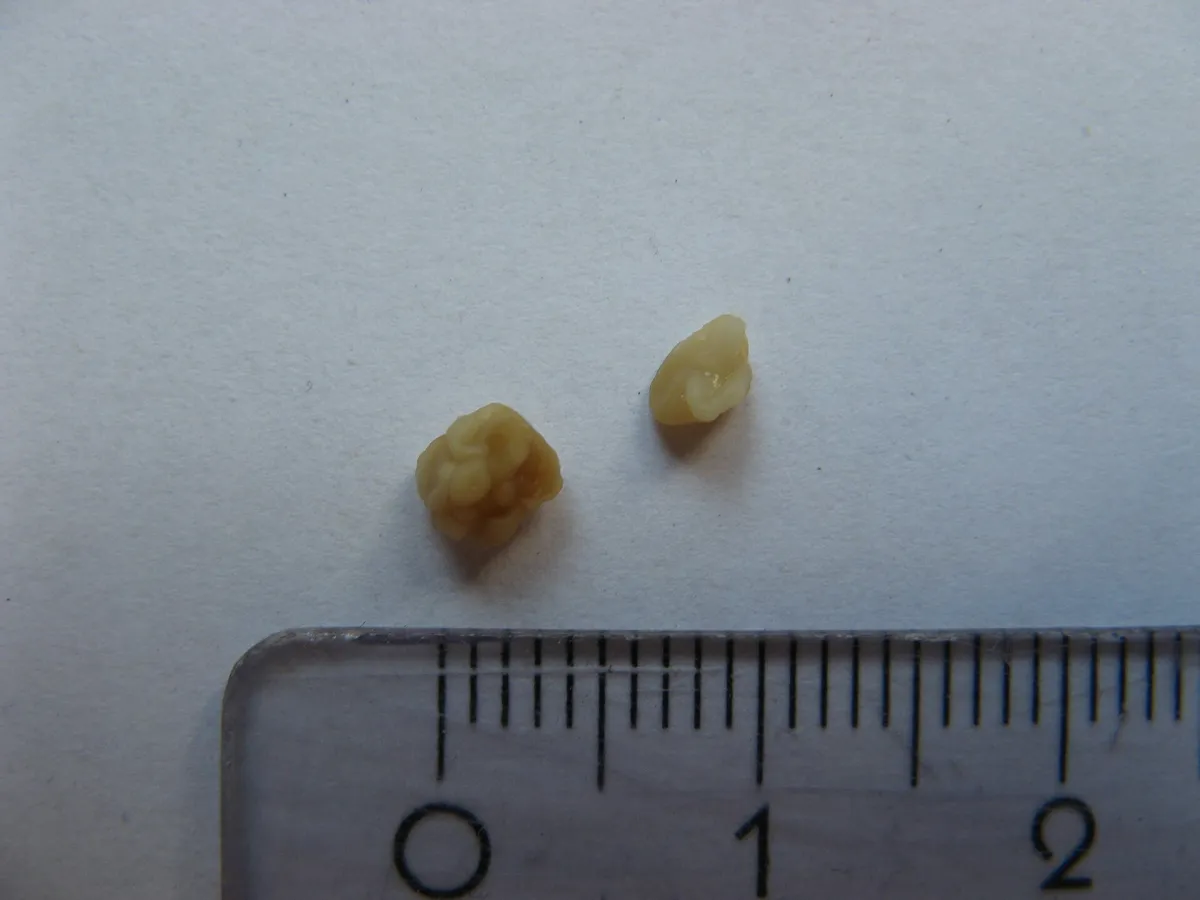
Tonsil stones, or tonsilloliths, are small clumps of food debris, dead cells, mucus and bacteria that collect in the pockets of the tonsils and sometimes harden. They look like white or yellowish specks, smell strongly and are usually harmless. You can remove and prevent most of them safely at home with warm salt water or sage tea gargles, a water flosser on its lowest setting and good oral hygiene, without cotton swabs, toothpicks or squeezing the tonsil.
Key takeaways:
- Tonsil stones form in the tonsil crypts, where anaerobic bacteria build a biofilm that releases sulfur compounds, which is why they smell.
- A warm salt water gargle 2-3 times a day is the first step: it softens the plugs and flushes the crypts.
- Use a water flosser only on the lowest pressure, aiming beside the tonsil, never straight into a crypt.
- Cotton swabs, toothpicks, tweezers and hard squeezing can injure the tonsil, cause bleeding and push debris deeper.
- One swollen tonsil, fever, severe pain on swallowing or a lump in the neck need a doctor, not home remedies.
What tonsil stones are
The palatine tonsils, the two pads of lymphatic tissue at the back of the throat, are not smooth. Their surface is folded into pits called crypts, which increase the area exposed to mouth microbes and help the immune system sample them. In some people these crypts are deep and winding, and whatever gets in does not easily come out.
Shed cells, food particles, mucus and saliva collect in these pockets. Bacteria, especially anaerobes that thrive without oxygen, colonise the material and form a biofilm. They break down proteins and release volatile sulfur compounds, the same ones behind the smell of rotten eggs. Over time calcium salts may deposit in the plug, and it hardens into a small stone.
Most tonsil stones are the size of a grain of rice or smaller. Large ones, measuring a centimetre or more, are rare and are usually found during an ENT examination or by chance on a CT scan.
Symptoms to look for
- white, yellow or greyish specks on the tonsils, visible in a mirror with a torch;
- bad breath that brushing does not fix (throat-related bad breath is often linked to tonsil stones);
- a feeling that something is stuck in your throat, frequent swallowing or throat clearing;
- an unpleasant, metallic or rotten taste;
- coughing up a small, soft, foul-smelling pellet;
- sometimes mild throat or ear pain on the same side.
Many people have tonsil stones with no symptoms at all and never notice them.
Why some people get them and others don’t
- Deep crypts: an anatomical trait that often runs in families.
- Repeated tonsillitis: chronic inflammation widens and scars the crypts, so they trap more material.
- Postnasal drip: allergic rhinitis, chronic sinusitis or nasal polyps send mucus down onto the tonsils.
- Dry mouth: mouth breathing, snoring, smoking, alcohol and some medicines (antidepressants, antihistamines, diuretics) reduce saliva, which normally rinses the mouth.
- Poor oral hygiene: plaque on the teeth and coating on the tongue raise the bacterial load.
Tonsil stones are not contagious and are not a sign of serious disease. They do tend to come back, so prevention matters more than hunting down every speck.
What the evidence says about home remedies
There are no large clinical trials comparing home methods for tonsil stones. The advice below reflects ENT practice and patient guidance such as that from the UK’s NHS, which suggests salt water gargles and careful oral hygiene. Sage and chamomile are recognised by the European Medicines Agency as traditional herbal medicines for mild inflammation of the mouth and throat: their use is considered plausible and safe based on long experience, not specifically tested on tonsil stones. The main effect of any gargle is mechanical: it softens and rinses the plug.
How to get rid of tonsil stones at home, step by step
1. Salt water gargle
The simplest and safest method.
- Warm 250 ml (about 1 cup) of water until lukewarm, roughly 37-40°C, comfortable on your wrist.
- Dissolve 1/2 teaspoon of salt (about 3 g).
- Take a mouthful, tilt your head slightly back and gargle for 20-30 seconds, then spit.
- Repeat until the glass is empty.
Gargle 2-3 times a day, after meals and before bed, for 1-2 weeks. Small stones often come loose on their own within a few days. Do not swallow the salt water.
2. Sage or chamomile gargle
Herbs add a soothing, mildly astringent effect, useful if your throat is also a little irritated.
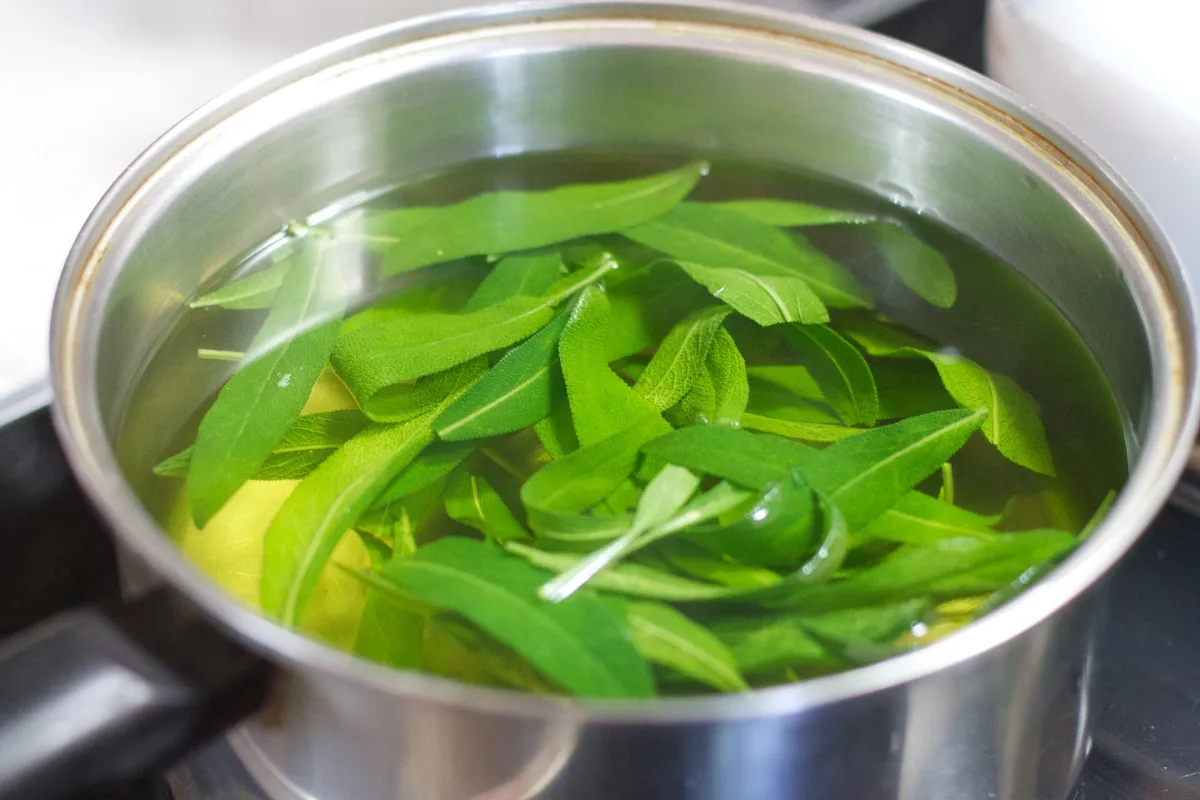
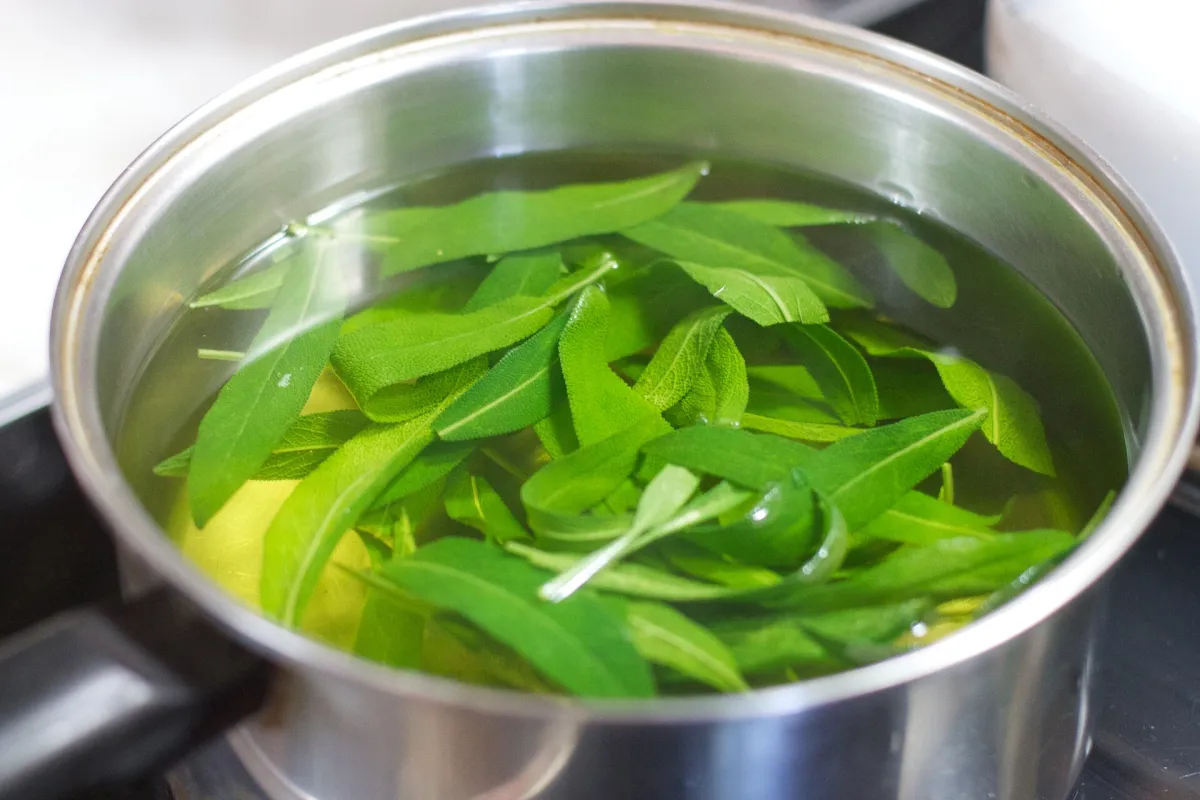
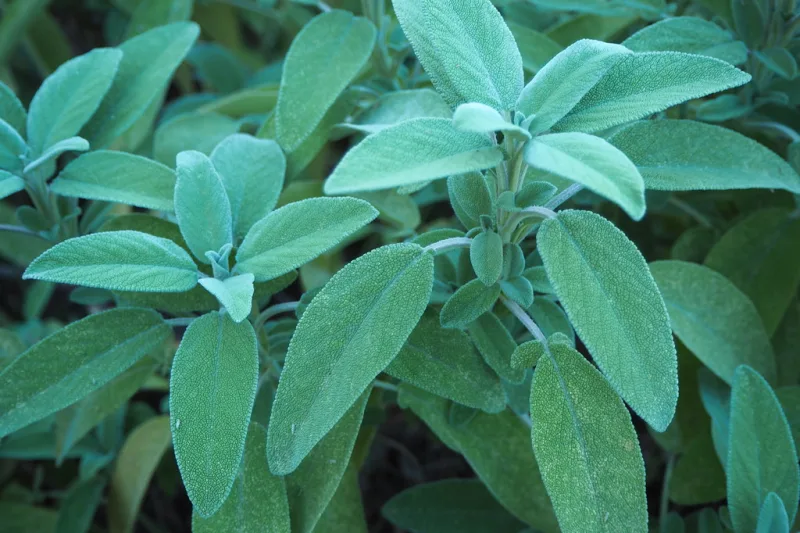
- Sage: 1 teaspoon of dried leaves (about 1.5-2 g) in 150 ml of boiling water, covered for 10 minutes, then strained.
- Chamomile: 1 tablespoon of flowers (about 3 g) in 150 ml of boiling water, covered for 10 minutes.
- Thyme: 1 teaspoon in 150 ml, a good choice when the throat also feels congested.
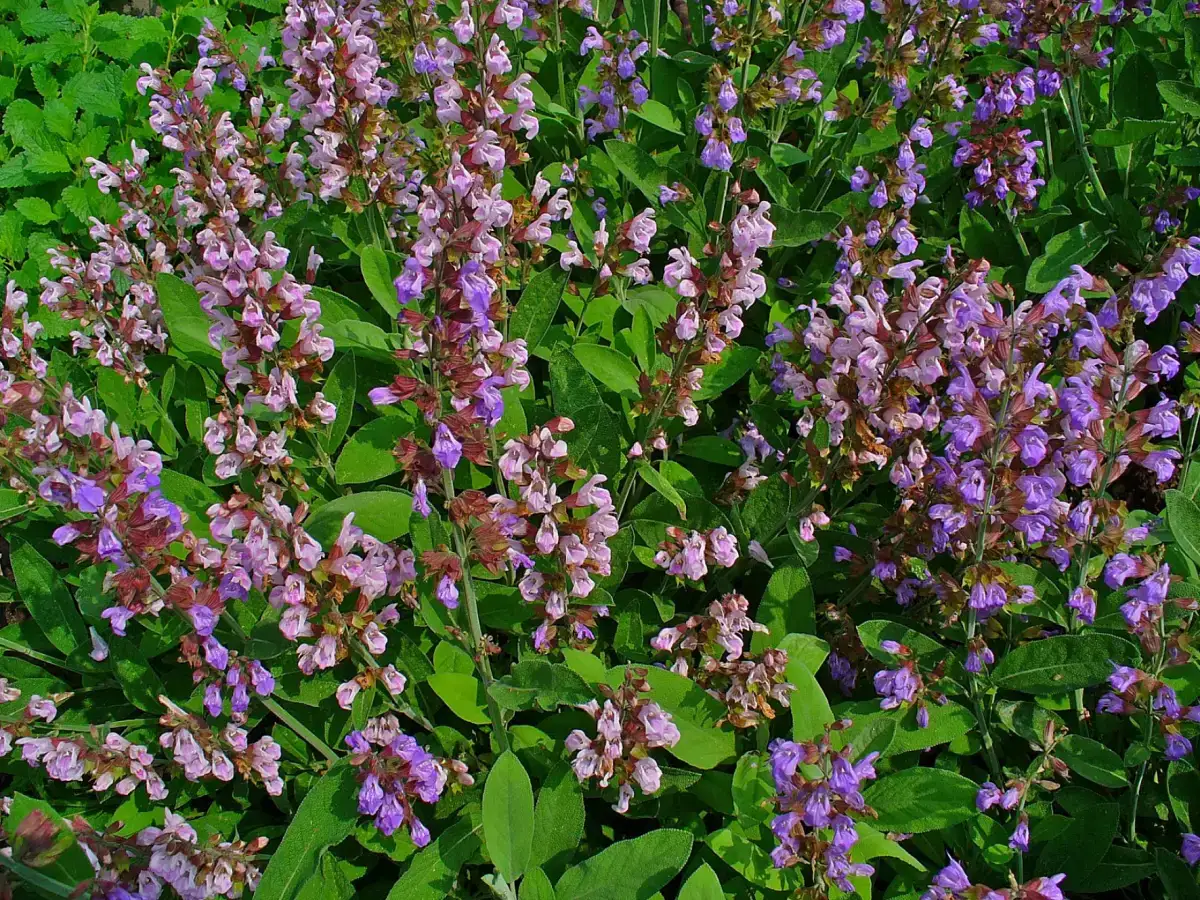
Let the tea cool to room temperature or lukewarm and gargle 2-3 times a day, as with salt water. You can alternate: salt water in the morning, sage at night. Make a fresh batch every day. More recipes are in our guide to herbal gargles, and the plant itself is covered in our article on sage.
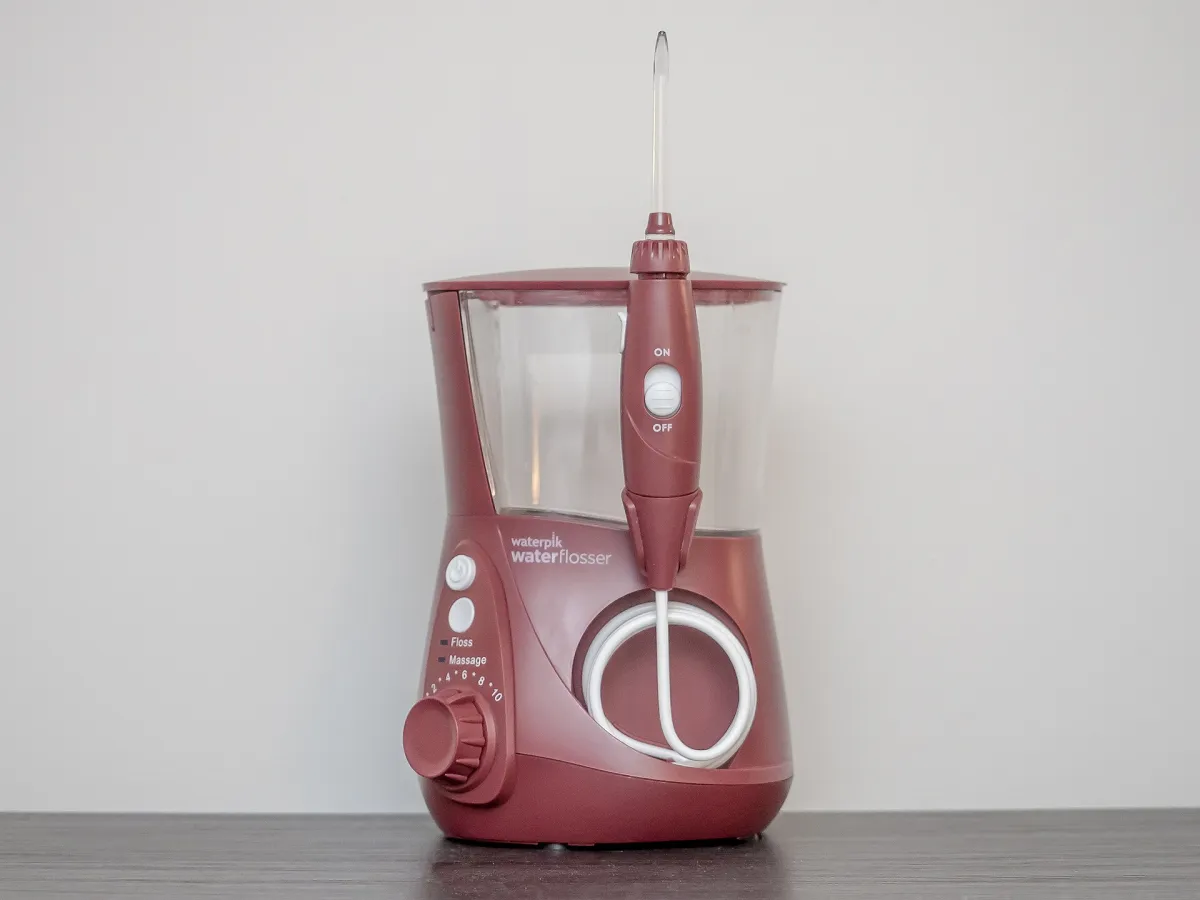 Photo: ajay_suresh, CC BY 2.0, via Wikimedia Commons
3. Water flosser on low pressure
A water flosser (oral irrigator) can dislodge visible stones, but used carelessly it can damage the tissue.
- Fill the reservoir with lukewarm water, optionally with a pinch of salt.
- Choose the lowest pressure setting. If your device has no very gentle setting, do not use it on your tonsils.
- Open wide in front of a mirror with a torch and push your tongue down.
- Aim the stream beside the stone and along the edge of the crypt, not straight into the opening, so you don’t drive debris deeper.
- Spray for 3-5 seconds, pause, and repeat only a few times.
- Stop if you feel pain, see blood or gag strongly.
Used a few times a week after gargling, it also helps prevention. Avoid it in the weeks after throat surgery and ask your doctor first if you take blood thinners.
4. Coughing and your tongue
Soft stones often pop out with a short, firm cough right after gargling, or by gently pressing your tongue toward the tonsil area. If a stone won’t budge after a few tries, leave it: regular gargling will loosen it over the next days. Don’t persist until your throat is sore.
5. Hygiene habits that stop them coming back
- Brush twice a day and floss in the evening.
- Clean your tongue with a scraper or toothbrush, back to front: the coating feeds the same bacteria.
- Drink 1.5-2 litres of fluids a day; enough saliva naturally rinses the crypts.
- Rinse your mouth with water after meals, especially after dairy and sweets.
- Treat a blocked nose: a saline nasal rinse reduces mucus dripping onto the tonsils.
- Stop smoking and limit alcohol, both of which dry the mucous membranes.
- Choose alcohol-free mouthwashes.
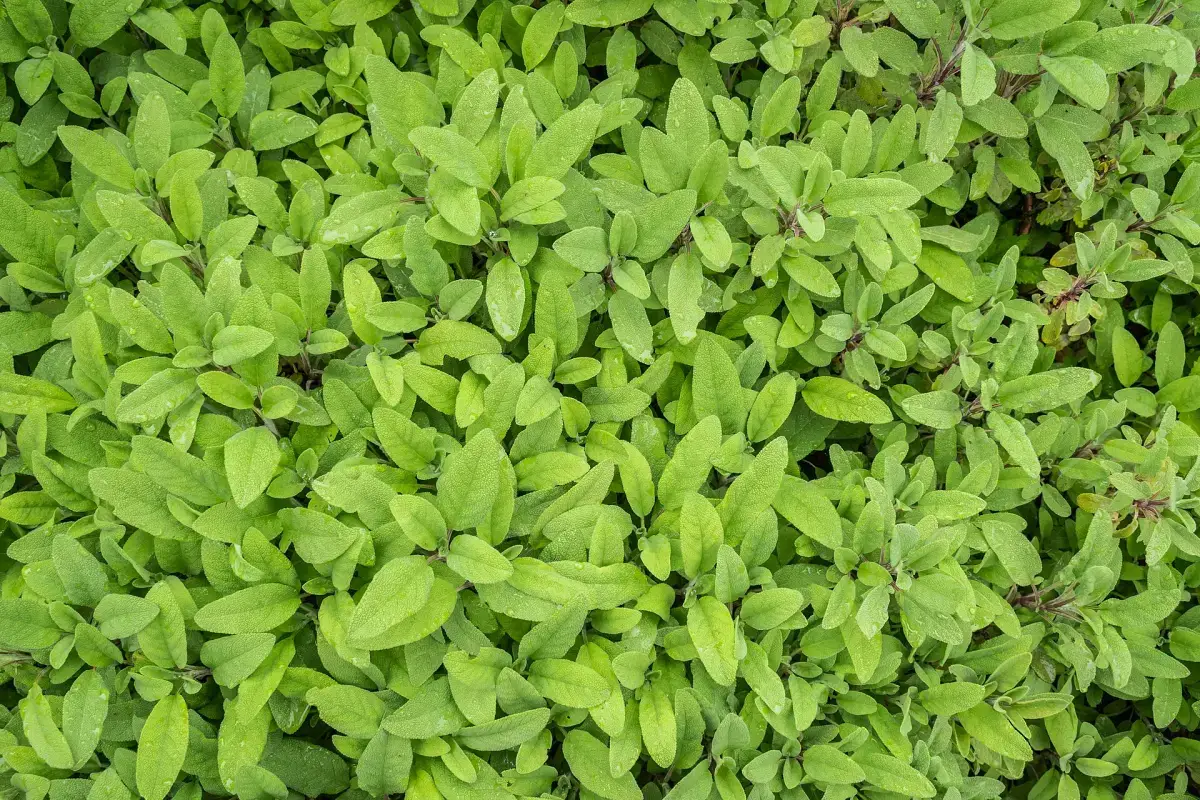 Photo: Krzysztof Golik, CC BY-SA 4.0, via Wikimedia Commons
Home methods compared
| Method | How | How often | Safety |
|---|---|---|---|
| Salt water gargle | 1/2 tsp salt in 250 ml lukewarm water, 20-30 s per mouthful | 2-3 times a day, 1-2 weeks | Very safe; do not swallow |
| Sage gargle | 1.5-2 g leaves in 150 ml, steep 10 min | 2-3 times a day, max 2 weeks in a row | Safe locally; avoid in pregnancy and epilepsy |
| Chamomile gargle | 3 g flowers in 150 ml, steep 10 min | 2-3 times a day | Safe; watch for daisy family allergy |
| Water flosser | Lowest setting, aim beside the crypt, 3-5 s | A few times a week | Safe only on low pressure |
| Coughing, tongue pressure | After gargling | As needed | Safe |
| Cotton swabs, toothpicks, tweezers | Not recommended | Never | Risk of injury, bleeding, infection |
Common mistakes
Digging with cotton swabs, toothpicks or tweezers. Tonsil tissue is soft and rich in blood vessels. A scratch can bleed and get infected, and the debris is often pushed deeper. The resulting scars deepen the crypts and encourage new stones.
Squeezing the tonsil with a finger, as forums suggest. Hard pressure irritates and inflames the tonsil, triggers gagging and rarely empties the crypt completely.
Running a water flosser on full power. A strong jet can injure the lining and force debris to the bottom of the crypt.
Gargling with undiluted hydrogen peroxide, vinegar or alcohol. These irritate the lining and dry the mouth, which makes the problem worse. Chlorhexidine mouthwash should be used only for a few days, on a doctor’s or pharmacist’s advice, because it stains teeth and alters taste.
Taking antibiotics on your own. Tonsil stones are not an acute infection. Antibiotics don’t open up the crypts, and stones return once you stop.
Checking every speck in the mirror daily. Obsessive inspection and repeated poking irritate the tonsil. Regular gargling and good hygiene work better than extraction.
Contraindications and precautions
- Children under 6 usually cannot gargle properly and may swallow the liquid; discuss tonsil stones with their paediatrician.
- Sage contains thujone: don’t swallow large amounts of the gargle, and avoid it in pregnancy, breastfeeding and epilepsy.
- Chamomile can cause allergic reactions in people sensitive to the daisy family (ragweed, arnica, chrysanthemum).
- High blood pressure is not a concern with salt gargles as long as you spit the water out.
- Blood thinners or bleeding disorders call for caution with any mechanical method, including a water flosser.
- After throat surgery, resume any method only with your surgeon’s approval.
What an ENT doctor can do
If stones keep returning, smell strongly or cause ongoing discomfort, an ENT specialist can:
- remove them under direct vision with proper instruments, sometimes with local anaesthetic;
- suggest cryptolysis with laser or radiofrequency (coblation), which smooths the tonsil surface and closes deep crypts;
- discuss tonsillectomy, reserved for severe cases or people with recurrent tonsillitis. Surgery carries real risks, including bleeding afterwards, and adult recovery takes 1-2 weeks.
When to see a doctor
See your GP or an ENT specialist if:
- one tonsil is clearly larger than the other or has a hard or ulcerated area;
- you have a fever, chills, pus on the tonsils or tender neck glands;
- you struggle to swallow, can’t open your mouth fully or your voice sounds muffled, like talking with a hot potato in your mouth (possible signs of a peritonsillar abscess);
- you have trouble breathing: this is an emergency;
- you notice blood in your saliva without a clear cause;
- one-sided throat or ear pain lasts more than 3 weeks;
- you find a lump in your neck or lose weight without trying, especially if you smoke or drink regularly;
- bad breath persists for several weeks despite good hygiene and regular gargling.
Conclusion
Tonsil stones are unpleasant, mostly because of the smell, but rarely dangerous. Regular salt water or sage gargles, a low-pressure water flosser and consistent oral hygiene clear and prevent most cases. Put the cotton swabs and toothpicks away, and if stones keep coming back or any warning sign appears, get an ENT opinion.
Frequently asked questions
Are tonsil stones contagious? No. They are made of your own cells, food debris and bacteria that normally live in the mouth. They don’t spread through kissing or shared cutlery.
Why do tonsil stones smell so bad? Anaerobic bacteria inside the plug break down proteins and release volatile sulfur compounds, which smell like rotten eggs.
Can tonsil stones go away on their own? Yes, small ones often come out by themselves when you swallow or cough. Regular gargling speeds this up and reduces recurrence.
Is it harmful to swallow a tonsil stone? No. It ends up in the stomach and passes like any other bit of food.
What should I eat to stop getting tonsil stones? No single food reliably prevents them. Staying hydrated, rinsing after dairy and sweets, and avoiding things that dry your mouth, such as alcohol and smoking, help most.
Can you get tonsil stones after a tonsillectomy? After a complete tonsillectomy there are no crypts left, so tonsil stones no longer form. Bad breath can still have other causes, from teeth to sinuses.
Can tonsil stones be a sign of cancer? Tonsil stones themselves are not. However, one enlarged tonsil, a sore that won’t heal or a neck lump should be checked promptly by an ENT doctor.
Sources and further reading
- NHS (UK National Health Service), Tonsil stones, nhs.uk.
- Cleveland Clinic, Tonsil Stones (Tonsilloliths), Health Library.
- European Medicines Agency, HMPC, European Union herbal monograph on Salvia officinalis L., folium.
- European Medicines Agency, HMPC, Community herbal monograph on Matricaria recutita L., flos.
- Burton M.J. et al., Tonsillectomy or adeno-tonsillectomy versus non-surgical treatment for chronic/recurrent acute tonsillitis, Cochrane Database of Systematic Reviews, 2014.
Informational content only; it does not replace a consultation with a doctor or pharmacist. Fever, one swollen tonsil or difficulty swallowing need medical assessment.