 Photo: Unknown, CC BY 4.0, via Wikimedia Commons
A white tongue usually appears when the tiny papillae on the surface of the tongue swell and trap food debris, bacteria and dead cells, forming a whitish coating. Most of the time the cause is harmless: dehydration, poor oral hygiene, mouth breathing, smoking or a feverish illness, and the tongue returns to normal within a few days with daily cleaning and enough fluids. If the coating will not scrape off, hurts, bleeds or lasts more than two weeks, it may be oral thrush, leukoplakia or lichen planus, and a doctor or dentist should take a look.
Key takeaways:
- A thin, even white layer that comes off with a scraper and returns in the morning is usually harmless and linked to hygiene and hydration.
- Thick, cottage-cheese-like white patches that leave a red, raw surface underneath suggest oral thrush and need antifungal treatment.
- A fixed white patch that cannot be wiped away, especially in smokers, may be leukoplakia and should be checked by a dentist.
- The 7-day routine: tongue scraping twice daily, proper brushing, a sage infusion gargle, probiotic foods and 1.5-2 litres of fluids.
- If your tongue looks the same after 7-14 days of good care, stop experimenting and book an appointment.
What a white tongue actually means
The surface of your tongue is not smooth. It is covered with thousands of small projections, the papillae, and between them there is normally a fine film of saliva, bacteria and shed cells. When saliva is low, when you do not chew firm foods that naturally “polish” the tongue, or when the tongue is never cleaned, the filiform papillae lengthen slightly and debris builds up between them, looking white or yellowish-white.
So a white tongue is a sign, not a disease. Three details point you in the right direction quickly: whether the coating scrapes off, whether it hurts and how long it has been there.
Harmless causes: the most common ones
- Dehydration. Too little fluid, sweating, exercise or heat reduce saliva and slow the tongue’s self-cleaning. A white tongue in the morning, after a night without water, is typical.
- Poor oral hygiene. Many people brush their teeth but never their tongue. Coating on the back third of the tongue is also the most common source of bad breath.
- Mouth breathing and snoring. A blocked nose, a deviated septum or snoring dry out the mouth overnight.
- Smoking and alcohol. Both irritate the lining of the mouth, dry it out and encourage thickened papillae.
- Fever and acute illness. During a virus you eat little, drink little and breathe through your mouth, so the tongue becomes coated. It clears as you recover.
- A soft, sugary diet. White bread, sweets and lots of dairy without raw vegetables leave more residue on the tongue.
- Medicines that dry the mouth. Antihistamines, some antidepressants, diuretics and overactive bladder drugs. If dryness is the underlying problem, see the guide to dry mouth (xerostomia).
What these causes share: the coating is thin and even, comes off easily, does not hurt and partly re-forms by the next day.
Causes that need attention
Oral thrush (candidiasis)
The yeast Candida albicans lives normally in the mouth but can overgrow when the local balance is disturbed. White, cottage-cheese-like patches appear on the tongue, inside the cheeks, on the roof of the mouth or at the corners of the lips. When wiped, they leave a red, sometimes bleeding surface, and the mouth may burn or taste metallic. Classic risk factors: recent antibiotics, inhaled corticosteroids used without rinsing the mouth, poorly controlled diabetes, dentures worn overnight, infancy or older age, and a weakened immune system. Thrush is treated with prescribed antifungals; natural remedies are only supportive. More in the article on oral thrush.
Acid reflux
Clinicians often link reflux with a coated tongue, a sour or bitter taste in the morning and bad breath. The connection is plausible (acid rising at night plus a dry mouth) but not strongly documented: a white tongue on its own does not mean reflux. If you also have heartburn, regurgitation, a dry night-time cough or morning hoarseness, it is worth addressing the cause. See the guide to acid reflux and gastric acidity.
Leukoplakia
Leukoplakia is a well-defined white patch that cannot be wiped or scraped off and has no other obvious explanation. It appears mainly in smokers and regular drinkers, often on the sides of the tongue, under the tongue or inside the cheeks. It is classed as a potentially malignant lesion: most stay benign, but some can progress to mouth cancer, so it needs examination and often a biopsy. There is no natural remedy for leukoplakia; stopping smoking is the single most important step.
Oral lichen planus and geographic tongue
Oral lichen planus looks like a network of fine, lacy white lines, usually on both cheeks and sometimes on the tongue, with red areas that sting with spicy food. It is a chronic inflammatory condition that should be followed by a doctor. Geographic tongue is benign: smooth red patches with white borders that change position from day to day.
Rarer causes
Iron or vitamin B12 deficiency usually gives a smooth, pale or red, sore tongue rather than a thick white coating. Oral hairy leukoplakia (white vertical ridges along the sides of the tongue) is linked to Epstein-Barr virus and occurs in people with weakened immunity. Secondary syphilis can cause greyish-white patches in the mouth. These are diagnosed only by a doctor.
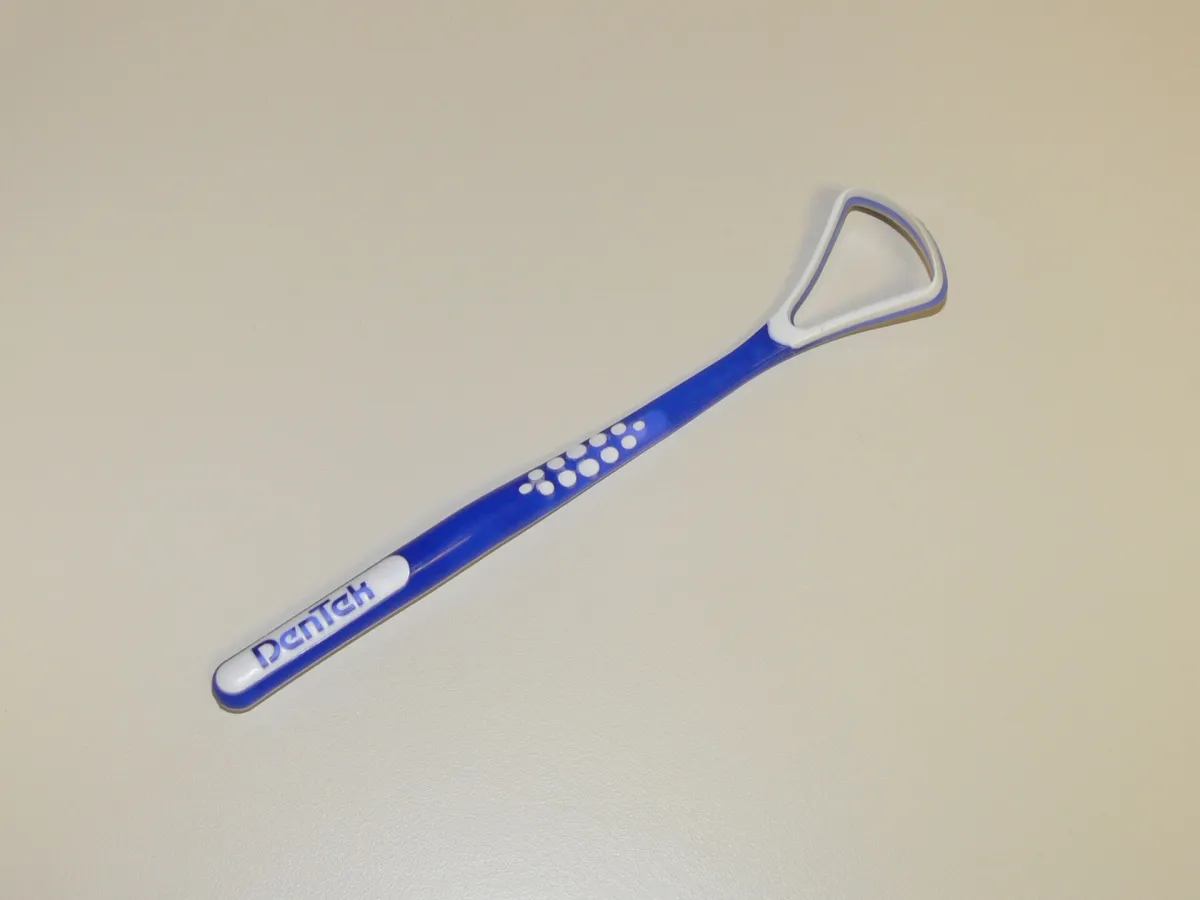 Photo: Niro5 at English Wikipedia, Public domain, via Wikimedia Commons
How to tell them apart at a glance
| Appearance | Scrapes off? | Pain | Likely cause | What to do |
|---|---|---|---|---|
| Thin, even, white-yellow layer over the whole tongue | Yes, easily | No | Dehydration, hygiene, mouth breathing | 7-day routine |
| Thick, cheesy white patches, also on cheeks | Yes, leaves red area | Burning, altered taste | Oral thrush | GP or dentist |
| Fixed, well-defined white patch | No | Usually none | Leukoplakia | Dentist, possibly biopsy |
| Lacy white lines, symmetrical on cheeks | No | Sometimes burning | Oral lichen planus | Dentist or dermatologist |
| Red patches with white borders that move | No | Rarely, with acidic or spicy food | Geographic tongue | Observation, avoid irritants |
A 7-day routine for a harmless white tongue
Use this routine only when the coating comes off easily, does not hurt and you have no risk factors for thrush or leukoplakia. The aim is twofold: clean the tongue and find out whether the problem disappears once the everyday causes are removed.
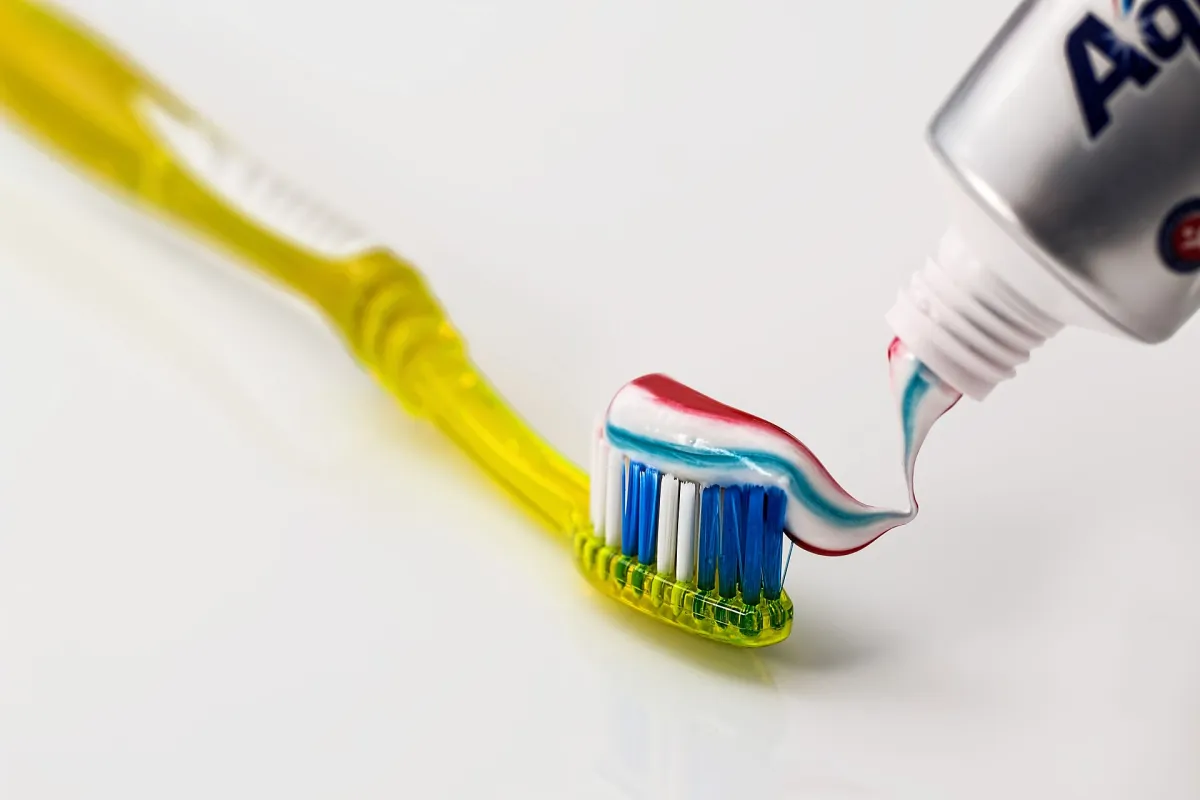
1. Tongue scraper, morning and evening
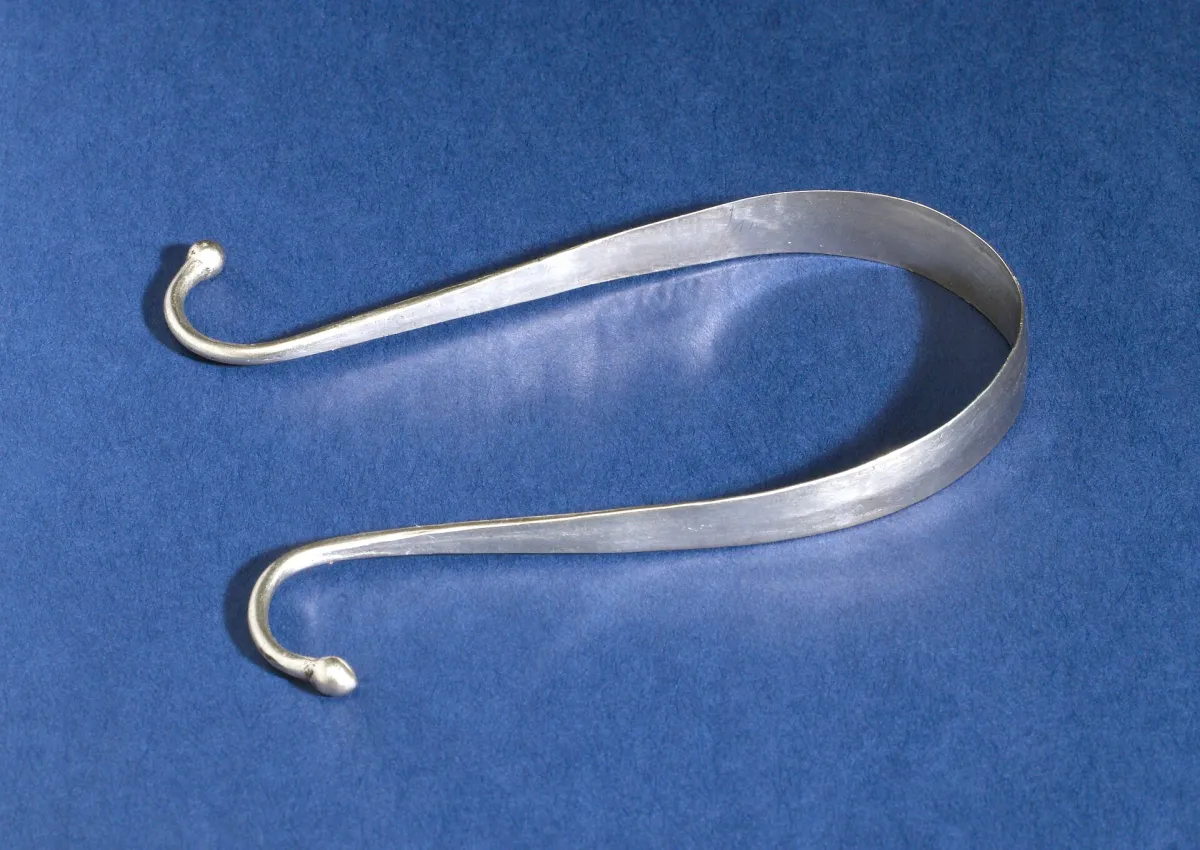
Choose a flexible plastic or stainless steel scraper with a rounded edge. Stick out your tongue, place the scraper as far back as you can without triggering your gag reflex and draw it gently towards the tip. Repeat 5-8 times, rinsing the scraper after each pass. Pressure should be firm but painless. A Cochrane review on tongue cleaning for halitosis found that scrapers reduce odour in the short term slightly better than toothbrushes, although the studies were small. For the look of the tongue, a visible change usually comes within 2-4 days.
2. Sage infusion gargle
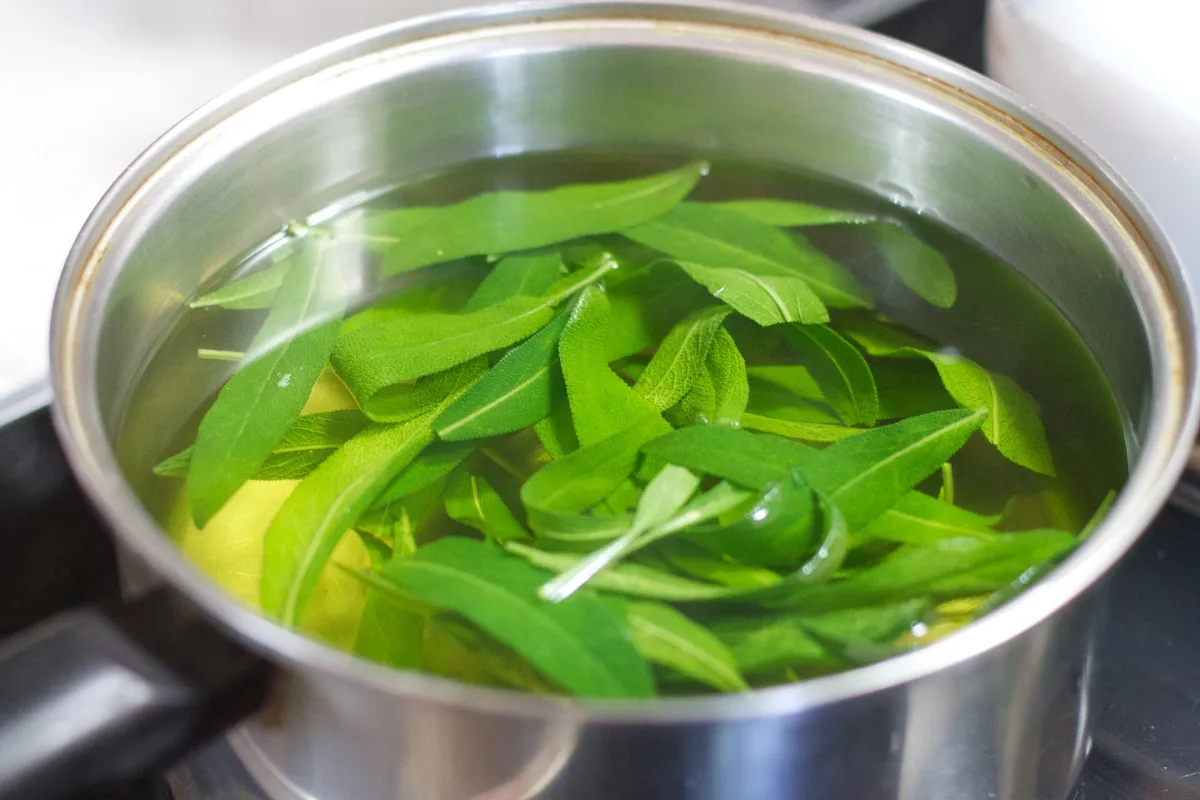
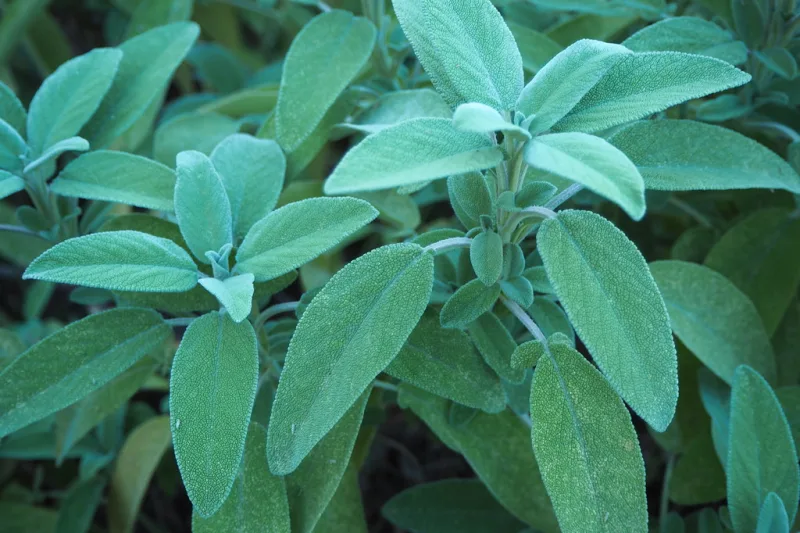
Sage leaf (Salvia officinalis) is recognised by the European Medicines Agency as a traditional remedy for mild inflammation of the mouth and throat, based on long-standing use rather than strong clinical trials. It contains astringent tannins and a volatile oil with antimicrobial activity shown in the lab.
How to make it:
- Put 1 heaped teaspoon of finely cut dried leaves (about 2-2.5 g) in a mug.
- Pour over 100-150 ml of boiling water and cover the mug so the volatile oil does not escape.
- Steep for 10 minutes, then strain.
- Let it cool until lukewarm or room temperature.
- Rinse and gargle for 30-60 seconds, then spit it out. Repeat 2-3 times a day, after brushing.
Make a fresh infusion each day. For other rinses, see the guide to herbal gargles.
3. Probiotics from food
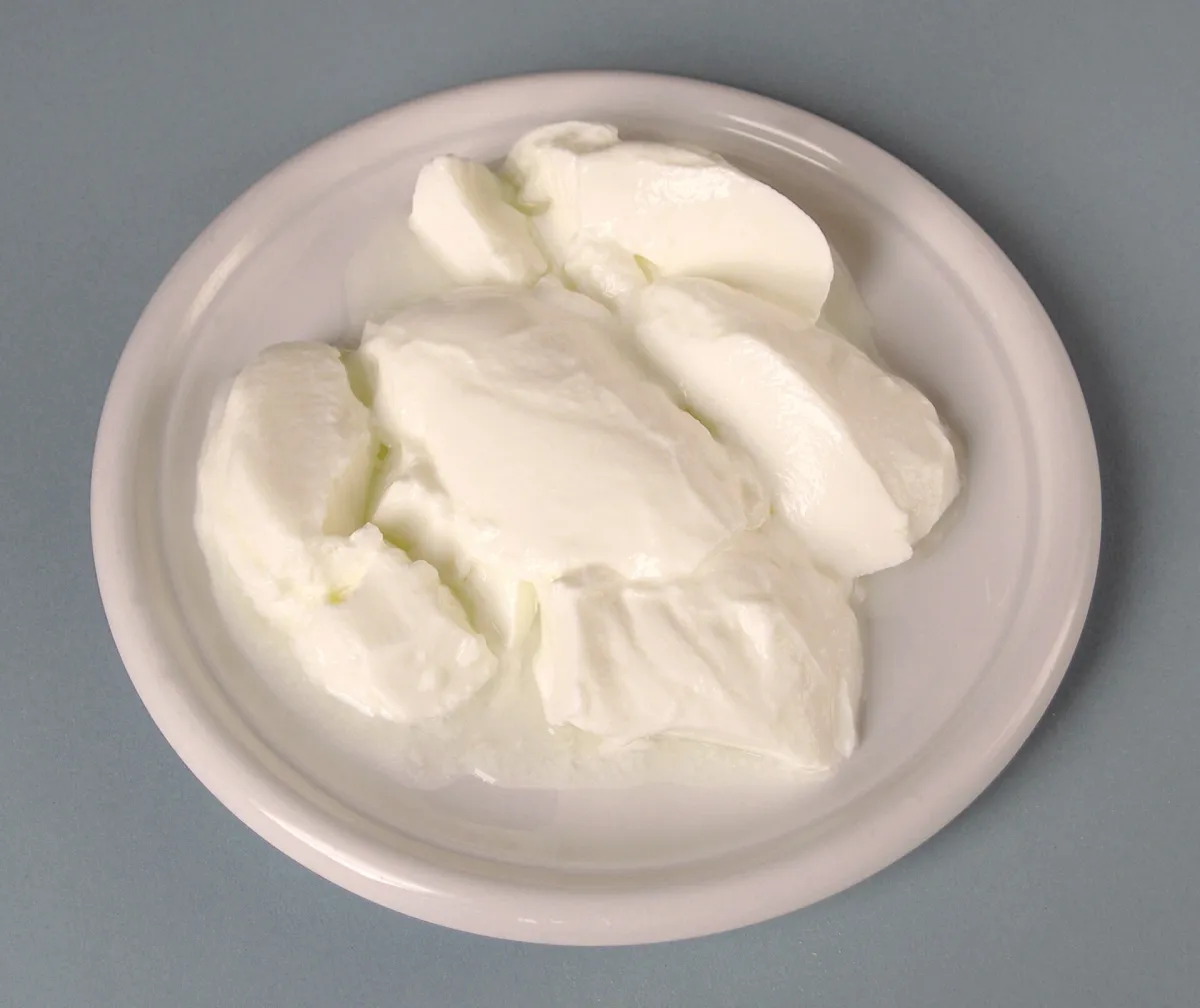
Kefir, live yoghurt and sauerkraut supply lactic acid bacteria that may help rebalance the oral and gut flora, especially after antibiotics. Some small studies have found that certain strains (for example Lactobacillus reuteri or Streptococcus salivarius K12, as lozenges) reduce bad breath or Candida colonisation in older adults, but the evidence is preliminary and inconsistent. In practice: one 150-200 ml serving of kefir or plain yoghurt a day, without added sugar.
4. Hydration and cleansing foods
Drink 1.5-2 litres of fluid a day in small amounts, not all at once. Include something raw and crunchy at every meal (carrot, apple, celery, cucumber): chewing stimulates saliva and mechanically cleans the tongue. Cut down on sticky sweets and alcohol. If you breathe through your mouth at night, deal with the blocked nose, for example with saline nasal rinses, and skip alcohol in the evening.
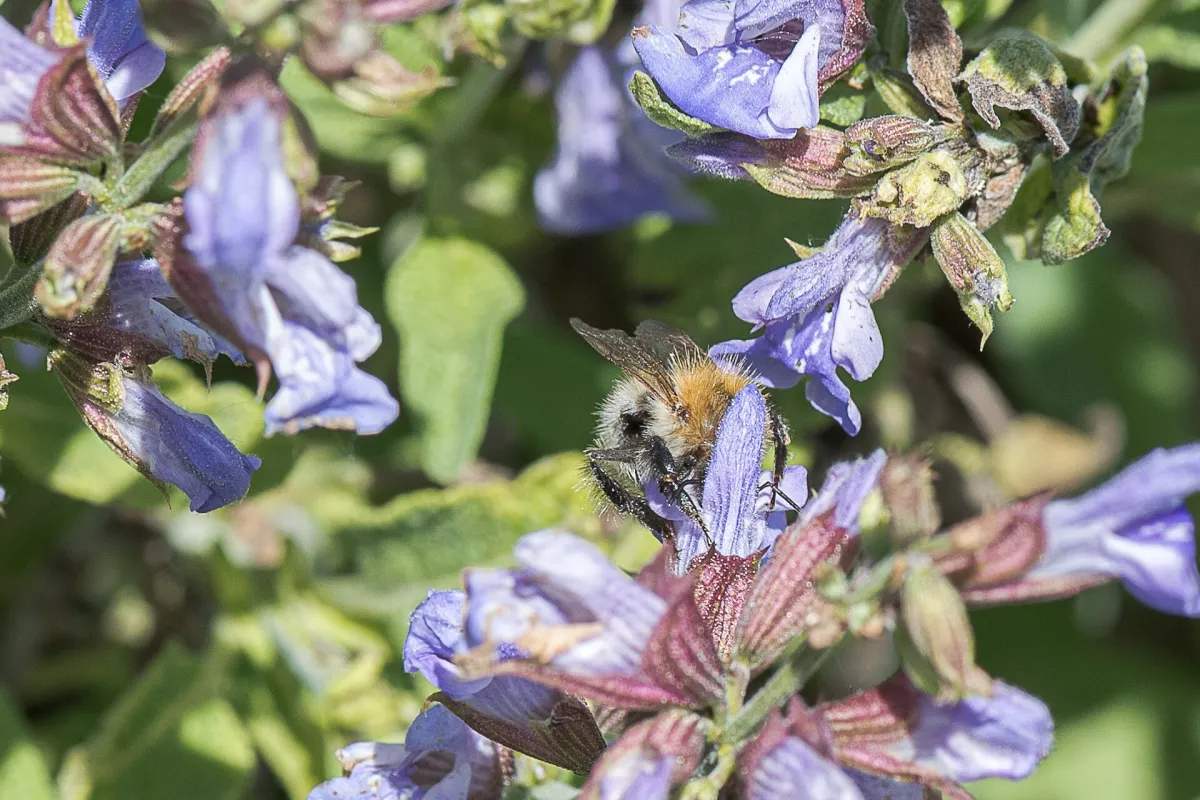 Photo: Flocci Nivis, CC BY 4.0, via Wikimedia Commons
Day-by-day plan
| Days | Morning | During the day | Evening | What to watch |
|---|---|---|---|---|
| 1-2 | Brush 2 minutes, scrape 5-8 passes, glass of water | Sage gargle after lunch, 1.5-2 l fluids, raw vegetables | Brush, floss, scrape, gargle | How easily the coating comes off |
| 3-4 | Same | Kefir or yoghurt 150-200 ml, no sticky sweets | Same, no alcohol | Coating thins, taste improves |
| 5-6 | Same | Check whether you breathe through your mouth | Same, dentures out and cleaned | Tongue mostly pink |
| 7 | Check in daylight, in a mirror | Note what has changed | Keep scraping as a habit | If no change at all, book a check-up |
The remedies with the best evidence are also the simplest: mechanical tongue cleaning, brushing with fluoride toothpaste and hydration. Sage, chamomile or calendula gargles are traditional uses, while coconut oil pulling has only small studies and does not replace brushing.
Contraindications and precautions
- Sage: do not drink large amounts and do not use it internally during pregnancy, breastfeeding or epilepsy, because of the thujone in its volatile oil. Gargling and spitting is considered safe for adults. Never put sage essential oil in your mouth. Young children who cannot gargle yet should not use it.
- Baking soda (1/2 teaspoon in 200 ml water) can be used occasionally as a rinse, but it contains sodium; do not swallow it if you have high blood pressure or kidney disease.
- Alcohol-based mouthwash dries the mouth and can make things worse. Chlorhexidine should be used only short term, on a dentist’s advice, because it stains teeth and alters taste.
- Probiotic supplements should be avoided without medical advice in people with severely weakened immunity, a central venous catheter or acute pancreatitis.
- Tea tree oil must not be applied undiluted to the tongue or swallowed, as it is toxic by mouth.
- Babies with white patches in the mouth must not be given honey (botulism risk under 1 year) or home remedies: the paediatrician decides.
When to see a doctor or dentist
Book an appointment if:
- the white coating has not cleared after 2 weeks of good oral hygiene;
- a white patch will not scrape off or has sharp, fixed edges;
- a sore, lump or hardened area does not heal within 3 weeks;
- you have pain, burning, bleeding or difficulty swallowing;
- you smoke or drink regularly and are over 40;
- you have diabetes, use inhaled corticosteroids, have had chemotherapy or have weakened immunity;
- the white tongue comes with fever, swollen neck glands, weight loss or marked fatigue;
- a baby has white patches and refuses the breast or bottle.
Who to see: your GP for thrush and blood tests (glucose, full blood count, iron, vitamin B12), your dentist for persistent lesions of the mouth lining and, if needed, an oral and maxillofacial surgeon for a biopsy.
Common mistakes
Scraping until it bleeds. You injure the papillae and keep the inflammation going. A few gentle passes are enough.
Treating “fungus” without a diagnosis. Random antifungals can mask leukoplakia or lichen planus and delay the right diagnosis.
Relying on mouthwash alone. Rinsing does not lift a sticky coating; mechanical cleaning is essential.
Ignoring dentures. Unwashed dentures worn overnight are a frequent cause of thrush in older people.
Forgetting to rinse after an asthma inhaler. After every use of an inhaled steroid, rinse your mouth with water and spit.
Thinking you need a detox. A white tongue is not a marker of a “toxic liver” and will not be fixed by fasting cleanses.
Conclusion
In most cases a white tongue comes from an ordinary combination: a dry mouth, too little cleaning and habits that encourage build-up. A week of scraping, careful brushing, sage gargles, fluids and raw food usually settles the question. Anything that will not scrape off, hurts or lasts more than two weeks deserves a professional look, especially in smokers.
Frequently asked questions
Why is my tongue white in the morning? Saliva flow drops overnight, and if you breathe through your mouth or drank little water, debris collects between the papillae. A thin coating that disappears after brushing and a drink of water is normal.
Does a white tongue mean stomach problems? Not necessarily. Reflux and gastritis can go along with a coated tongue and an unpleasant taste, but most cases start in the mouth, not the stomach. The accompanying symptoms matter: heartburn, regurgitation, upper abdominal pain.
How long does it take for a white tongue to go away? When the cause is dehydration or hygiene, the tongue improves visibly in 2-7 days. Properly treated thrush usually improves within 1-2 weeks.
Can I use a toothbrush instead of a tongue scraper? Yes, if you pass it gently over the tongue a few times. A scraper is wider, triggers the gag reflex less often and removes the coating more efficiently.
Can a white tongue be a sign of cancer? Rarely. But a fixed white patch that will not come off, or a sore that has not healed in 3 weeks, must be checked, especially in smokers and drinkers, because leukoplakia can be precancerous.
What should I do if my tongue turns white after antibiotics? Antibiotics can trigger thrush. If you notice thick patches, burning or a metallic taste, see your doctor for antifungal treatment; kefir and yoghurt are support, not the cure.
Can children have a white tongue? Yes. In babies, a thin white milk coating is common and wipes away easily. Patches that do not wipe off or leave red areas suggest thrush and should be shown to a paediatrician.
Sources and further reading
- NHS, “White tongue”, patient information page.
- NHS, “Oral thrush in adults”, patient information page.
- NHS, “Mouth cancer”, symptoms and when to see a doctor.
- European Medicines Agency, Committee on Herbal Medicinal Products (HMPC), Community herbal monograph on Salvia officinalis L., folium.
- Outhouse T.L. et al., “Tongue scraping for treating halitosis”, Cochrane Database of Systematic Reviews.
- Mayo Clinic, “White tongue”, causes and care.
Informative content only; it does not replace a consultation with a doctor or pharmacist. A white patch that will not scrape off, hurts or lasts more than two weeks needs medical assessment.