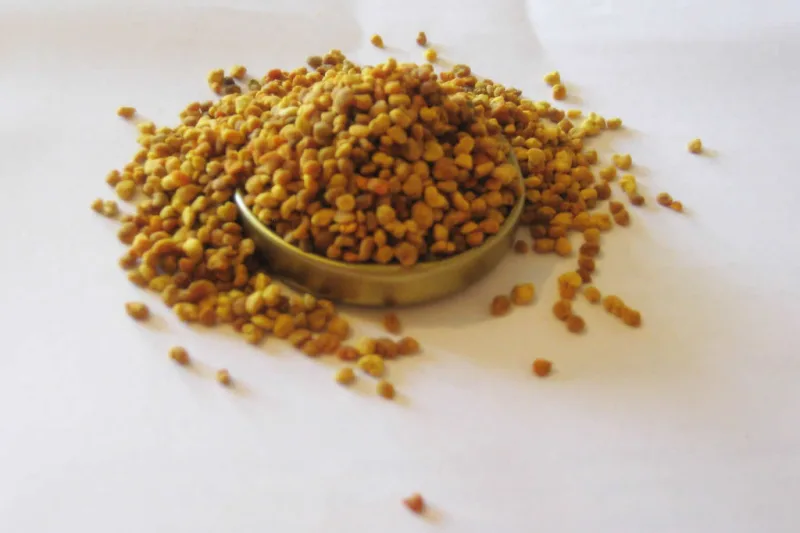

Bee Pollen: Benefits, Uses and How to Consume It
IMPORTANT: Bee pollen can cause severe allergic reactions in people who are sensitive to pollen, bee stings or other bee products. The first time you try pollen, start with a single granule and increase the dose very slowly, watching for any sign of itching, swelling, breathing difficulty or discomfort. People with asthma, severe allergies or a history of anaphylactic shock should avoid pollen or try it only under medical supervision. Pollen should not be given to children under one year of age, and it should be used with caution during pregnancy and breastfeeding, after consulting a doctor. If you are on anticoagulant therapy or have a chronic condition, talk to your doctor before adding it to your diet. Pollen is a dietary supplement, not a substitute for a balanced diet or prescribed treatment.
The story of Grandpa George and the hives in the garden
Behind the house at the edge of the hill, Grandpa George kept about ten beehives that he tended with an almost religious patience. Every spring, when the acacia was about to bloom, he fitted small mesh baskets at the hive entrance, through which the bees had to squeeze on their way back. That is how he “combed off” the little clumps of pollen the worker bees carried on their legs. In the evening, he would pull out the drawer full of colorful granules — yellow, orange, brown, sometimes even purple — and spread them on a sieve, in the shade, to dry slowly.
“This is the bees’ bread,” he would say, “and it’s good for people too.” Every winter morning, when the wind whistled at the windows, he took a teaspoon of pollen, held it under his tongue for a few moments to soften, then chewed it slowly. He said that ever since he started doing this he no longer caught colds as he did in his youth, and that he had the strength to work until late in the evening. Aunt Veta, the neighbor, came over for “George’s remedy” whenever she felt drained after a long winter. Perhaps not all the old folk’s stories hold up to scientific scrutiny, but respect for this gift of the hive has been passed down from generation to generation.
What is bee pollen
Bee pollen is the material that worker bees gather from the stamens of flowers and carry on their hind legs in the form of small clumps. To make it stick, the bees mix it with a little saliva and nectar, forming compact granules. This bee-collected pollen differs from the pollen we associate with seasonal allergies (the kind carried by the wind): pollen gathered by bees comes from entomophilous flowers, that is, plants pollinated by insects, and it is richer in nutrients.
In the hive, pollen plays an essential role: it is the colony’s main source of protein and the basic food of the larvae. Beekeepers harvest it with devices called pollen traps, fitted at the hive entrance, taking care not to deprive the bees of the reserve they need. Fresh granules are dried at low temperature or frozen, in order to preserve their nutritional value. The varied colors of the granules reflect the diversity of the flowers they come from, and a mixed, multicolored pollen is usually a sign of a harvest from a rich flora.
Valued for thousands of years in folk traditions around the world, pollen has often been called “an almost complete food,” because it brings together, in a very small volume, a wide range of nutrients.
Table of Contents
- What is bee pollen
- Nutritional value
- Health benefits
- Traditional uses
- How to consume bee pollen
- Simple recipes with pollen
- How much to consume and how to store it
- How to choose quality pollen
- Lifestyle and practical tips
- Practical Tips and Common Mistakes
- Conclusion
- Frequently Asked Questions
Nutritional value
Bee pollen has a remarkably complex composition, which is why it is considered a superfood. Although the proportions vary depending on the source flowers, the region and the season, pollen generally contains:
- Proteins and amino acids — pollen is rich in protein, including all the essential amino acids that the body cannot produce on its own. This makes it especially valued by people looking for a plant-based source of protein.
- Carbohydrates — mainly simple sugars (fructose, glucose) that provide quick energy, along with fiber.
- Healthy fats — small amounts of fatty acids, including some unsaturated ones.
- Vitamins — from the B complex (including B1, B2, B3, B6 and folic acid), vitamin C, as well as small amounts of vitamin E and provitamin A (carotenoids).
- Minerals and trace elements — potassium, magnesium, calcium, iron, zinc, copper, manganese and selenium.
- Bioactive compounds — flavonoids, phenols, carotenoids and enzymes, which give pollen its antioxidant properties.
This combination of nutrients, concentrated in small granules, explains why pollen has long been regarded as a “concentrate of vitality.” Studies suggest that it is precisely the richness in flavonoid-type antioxidants that may underlie many of the benefits attributed to this bee product.
Health benefits
A source of energy and vitality
The best-known use of pollen, supported by folk tradition, is as an energizing tonic. The combination of easily assimilated sugars, B-group vitamins and amino acids makes pollen a natural aid during periods of fatigue, exhaustion or convalescence. Many people use it in the morning to start the day with more energy, or during periods of sustained physical and mental effort.
Supporting the immune system
Beekeeping tradition credits pollen with immune-strengthening properties, especially in the cold season. The antioxidants and bioactive compounds in pollen may help the body cope better with oxidative stress. Studies suggest that some compounds in pollen have antimicrobial and anti-inflammatory activity, which could explain its reputation as an ally of the body’s natural defenses.
A wealth of antioxidants
The flavonoids, carotenoids and phenolic compounds in pollen act as antioxidants, neutralizing free radicals. Oxidative stress is involved in the aging process and in many imbalances of the body, and a diet rich in antioxidants is generally considered beneficial. Pollen complements this approach nicely, especially when consumed alongside colorful fruits and vegetables.
Support for digestion and appetite
In folk tradition, pollen was recommended to people who were weak, had no appetite or were convalescing. The natural enzymes present in pollen and its supply of nutrients may contribute to better digestion and to regaining appetite. Some people use it to support healthy weight gain, especially older children (over one year of age) or frail elderly people — always with caution and after confirming there is no allergy.
Support for the skin and overall appearance
Thanks to its content of vitamins, minerals and antioxidants, pollen is also valued for its effects on the appearance of the skin, hair and nails. Cosmetic tradition used pollen both internally and in various masks, considering that it nourishes the skin from within. Studies suggest that antioxidants may support tissue health, although the effects on the skin depend largely on a balanced diet as a whole.
Support during stressful periods
Like many foods rich in B-group vitamins, pollen is considered a support for the nervous system, especially during periods of stress and mental fatigue. Tradition recommends it to students during exam season, to overworked people or to those going through seasonal changes felt as low energy.
Traditional uses
In Romanian folk medicine and in classical apitherapy, pollen has had numerous uses:
- As a general tonic for recovery after illness or after winter.
- As a strengthening agent for frail children (over one year) and for the elderly.
- For supporting appetite in weakened people.
- As part of a “spring cure,” alongside other hive products, to restore vigor and good spirits.
- In combination with honey and propolis, as a seasonal remedy for strengthening the body.
Many beekeepers traditionally recommend a pollen cure of a few weeks, followed by a break, rather than permanent use — a prudent approach that allows the body to benefit without becoming overly accustomed to the supplement.
How to consume bee pollen
Pollen can be consumed plain or incorporated into various preparations. Here are some traditional and modern methods:
Directly, under the tongue
The simplest method is to consume the granules as they are. Take the desired dose, hold it under the tongue for a few seconds to soften, then chew slowly. This is how the old beekeepers did it, believing that the enzymes in saliva begin digestion right from first contact.
Soaked in water or honey
Pollen granules have a fairly tough outer shell. For better absorption, many recommend soaking the granules overnight in a tablespoon of liquid honey, in a little warm water (not hot) or in yogurt. By the next day, the pollen becomes softer and easier to digest.
In mixtures and dishes
Ground or whole pollen can be added to smoothies, yogurt, oatmeal, fruit salads or onto bread with honey. The important thing is not to expose it to high temperatures, so as not to destroy the heat-sensitive enzymes and vitamins. That is why it is not added to hot or baked dishes.
Simple recipes with pollen
Morning energy tonic
Ingredients: one teaspoon of bee pollen, one teaspoon of honey, the juice of half a lemon, one glass of room-temperature water.
Preparation: Soak the pollen in a little warm water for 10–15 minutes. Add the honey and lemon juice, top up with water and stir. Drink in the morning, on an empty stomach, as a start-of-day tonic.
Nutritious smoothie
Ingredients: one banana, a handful of berries, one glass of yogurt or plant-based drink, one teaspoon of pollen.
Preparation: Blend the banana, berries and yogurt until smooth. Add the pollen at the end and stir gently (without blending intensely, to preserve its texture). Serve immediately.
Strengthening hive cream
Ingredients: 100 g honey, one tablespoon of ground pollen, a little propolis (optional, if there are no contraindications).
Preparation: Mix the honey with the ground pollen until smooth. Store in the refrigerator, in a closed jar. Take one teaspoon in the morning, in cures of a few weeks. Be mindful of possible allergies to any of the bee products.
How much to consume and how to store it
Traditional doses vary depending on age and goal. For a healthy adult, a usual amount is about one to two teaspoons per day (around 10–20 grams), preferably in the morning. For children (over one year) the amount is reduced considerably, starting with a few granules. Regardless of age, the first attempt is made with a minimal amount, to test tolerance.
For storage, dried pollen is kept in an airtight jar, in a cool, dark and dry place; this way it lasts several months. Fresh (undried) pollen is kept in the freezer, where it preserves its nutritional value very well. Avoid exposure to light, heat and moisture, which rapidly degrade the nutrients and can encourage mold.
How to choose quality pollen
Good pollen can be recognized by a few signs:
- Granules of varied colors — the diversity of shades indicates a rich flora.
- A dry, crumbly appearance (for dried pollen) or firm, aromatic granules (for fresh pollen).
- A pleasant, floral and slightly sweet smell, without traces of mold or fermentation.
- A trustworthy source — ideally directly from a beekeeper or from a source that guarantees correct harvesting and drying.
Avoid pollen that has hardened into lumps, smells stale or alcoholic (a sign of fermentation), or shows suspicious spots.
Lifestyle and practical tips
Bee pollen gives the best results when it is part of a balanced lifestyle, not an isolated remedy. To make the most of its benefits:
- Combine it with a diet rich in vegetables, fruits and whole grains.
- Use it especially in the morning, to take advantage of the tonic effect during the day.
- Keep it away from high temperatures: do not add it to hot teas or cooked dishes.
- Take it in cures, not as permanent consumption: for example, a few weeks of pollen followed by a break.
- Stay well hydrated and ensure quality sleep — natural energy comes first and foremost from the overall balance of the body.
Practical Tips and Common Mistakes
Mistake no. 1: Taking a large dose on the very first try. The most dangerous mistake is to consume a whole spoonful straight away without checking your tolerance. Always start with a single granule and increase the dose gradually, over several days.
Mistake no. 2: Ignoring the risk of allergy. People allergic to pollen, bee stings or other bee products can have severe reactions. Do not treat this lightly; at the slightest reaction, stop and seek medical advice.
Mistake no. 3: Exposure to heat. Adding pollen to hot teas, hot porridge or baked preparations destroys the heat-sensitive enzymes and vitamins. Always add it at the end, over lukewarm or cold dishes.
Mistake no. 4: Incorrect storage. Pollen left in moisture, light or heat degrades and can become moldy. Use airtight jars, a cool and dark place, and keep fresh pollen in the freezer.
Mistake no. 5: Eating whole granules without soaking. The granules’ outer shell is tough, and sometimes the nutrients are not fully absorbed. Soaking in honey, warm water or yogurt overnight improves digestibility.
Mistake no. 6: Unrealistic expectations. Pollen is not a medicine and does not cure serious diseases. It is a supplement that supports the body. Treatments prescribed by a doctor should not be replaced with pollen.
Conclusion
Bee pollen is one of the most prized gifts of the hive, a small concentrate of proteins, vitamins, minerals and antioxidants that folk tradition has valued for centuries as a tonic for energy and immunity. Consumed in moderation, in the morning, as part of a balanced lifestyle, pollen can be a pleasant and natural support for vitality, especially during periods of fatigue or seasonal change. The key is to introduce it cautiously, starting with very small amounts, to make sure you are not allergic, and to store it correctly. With these simple precautions, pollen can find a valuable place in the home’s natural pharmacy — just as our grandparents saw it, as “the bees’ bread,” good for people too.
Frequently Asked Questions
How much bee pollen can I consume per day? For a healthy adult, the usual dose is about one to two teaspoons per day (around 10–20 grams). However, start with a minimal amount and increase gradually, watching how your body tolerates it.
Does bee pollen cause allergies? Yes, it can cause allergic reactions, sometimes severe, in people sensitive to pollen, bee stings or other bee products. That is why the first attempt is made with a single granule, to test the reaction.
When is it best to consume pollen? Tradition recommends consuming it in the morning, on an empty stomach or before a meal, to benefit from the tonic effect during the day. Late evening is usually avoided by those sensitive to the energizing effect.
Can I give pollen to children? Pollen should not be given to children under one year of age. Above that age it can be used in very small amounts and only after you have made sure there is no allergy; ideally, talk to your pediatrician first.
Can pollen be added to hot tea? This is not recommended, because high temperatures destroy the heat-sensitive enzymes and vitamins. Add pollen over lukewarm or cold preparations, never to hot liquids.
How is bee pollen stored? Dried pollen is kept in an airtight jar, in a cool, dark and dry place, where it lasts for months. Fresh pollen is best kept in the freezer.
Does pollen help boost energy? Folk tradition uses it as an energizing tonic, thanks to its content of easily assimilated sugars, B-group vitamins and amino acids. Many people consume it precisely to fight fatigue and support vitality.
Should pollen be consumed in cures or permanently? Many beekeepers recommend cures of a few weeks, followed by breaks, rather than permanent consumption. This way the body benefits from the supply of nutrients without becoming overly accustomed to the supplement.