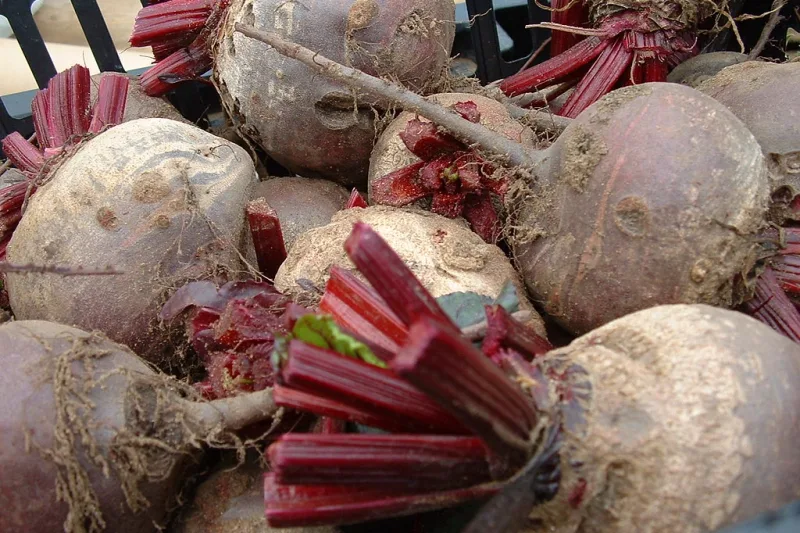

Beetroot: Benefits for Blood Pressure, Liver and Natural Detox
IMPORTANT: Beetroot is a safe food for most people, but it should be approached with care in certain situations. People prone to oxalate kidney stones should limit it, since beetroot is rich in oxalates. Those with diabetes should keep its natural sugar content in mind, especially in concentrated juice form. Anyone taking medication for blood pressure or blood thinners should talk to their doctor before consuming large amounts of beet juice, because its blood-pressure-lowering effect may stack with the medication. Do not be alarmed if your urine or stool takes on a pinkish-red tint after eating beetroot: this is a normal, harmless phenomenon called “beeturia.” Beetroot does not replace medical treatment for hypertension, anemia or liver disease — it is a dietary support, not a miracle cure.
Grandmother Veta and the jar of beet juice
In the village at the foot of the hills, Grandmother Veta kept a pantry she tended like a pharmacy. On the lower shelves, beside the jars of pickles, stood rows of bottles filled with the beet juice she prepared in autumn, when the harvest was fresh and sweet. “For the blood,” she would say curtly, whenever someone in the family turned up pale, tired and drained after a long winter. She gave them a small glass each morning, mixed with a little apple juice so it wouldn’t taste too earthy, and she swore that nothing put a person back on their feet faster.
I still remember, as a child, watching her hands stained red after peeling the boiled beets, and how she laughed at the fright on my face at my first sip of juice. “It’s the earth giving you strength,” she’d say. Only later did I understand that her simple country wisdom held an intuition that modern science would confirm: beetroot truly has a gift for improving circulation, supporting the liver and restoring energy. Grandmother Veta had read no studies, but she had observed, generation after generation, what this humble food did for a weary body.
What beetroot is
Beetroot (Beta vulgaris) is a root vegetable in the same botanical family as spinach and chard. Native to the Mediterranean basin, where at first only the leaves were eaten, the beet came to be valued for its deep red-purple root — sweet, fleshy and full of color — only later. Today it is grown throughout the temperate world, and in Romanian cooking it holds a special place: it appears in borscht-style soups, in winter salads, in pickles and, increasingly, in fresh juices made at home.
Its intense, almost wine-red color is not just striking — it is the signature of a group of unique pigments called betalains, responsible for many of its beneficial properties. Beetroot is valued both as a cheap, filling staple and as a “superfood” for circulatory and detoxifying support. Romanian folk tradition has always used it for “cleansing the blood” and strengthening the weak, and the current interest in functional foods has restored its star status.
Table of Contents
- Nutritional value of beetroot
- Health benefits
- Beetroot and blood pressure
- Beetroot and liver detox
- Beetroot for blood and energy
- Traditional uses in the Romanian village
- How to eat it: step-by-step recipes
- How much and how to consume it properly
- How to choose and store it
- Lifestyle: how to work beetroot into your diet
- Practical tips and common mistakes
- Conclusion
- Frequently Asked Questions
Nutritional value of beetroot
Beetroot is surprisingly generous for a food so modest in price. It is low in calories yet rich in nutrients that matter. It contains a worthwhile amount of folate (vitamin B9), essential for forming red blood cells and especially important during pregnancy. It supplies manganese, potassium and iron — minerals that support energy metabolism, fluid balance and the transport of oxygen in the blood.
Beyond vitamins and minerals, beetroot is a good source of fiber, which feeds beneficial gut bacteria and supports digestion. But its real treasures are the bioactive compounds:
- Dietary nitrates — beetroot is one of the richest plant sources of natural nitrates, which the body converts into nitric oxide, a molecule that relaxes and widens blood vessels.
- Betalains — the red (betacyanins) and yellow (betaxanthins) pigments with antioxidant and anti-inflammatory action.
- Betaine — a compound that supports liver function and fat metabolism.
Beet leaves, often thrown away, are also edible and very nutritious: they contain even more vitamin A, vitamin K and iron than the root. Folk tradition used them in soups and dishes, and today they can be cooked just like spinach.
Health benefits
Supports the heart and circulation
Thanks to its high nitrate content, beetroot is intensely studied for its effects on the cardiovascular system. The nitric oxide formed from nitrates helps relax the walls of the blood vessels, improving blood flow and reducing the workload on the heart. Studies suggest that regular consumption of beet juice may contribute to better circulation and more efficient oxygen delivery to the tissues.
Supports physical endurance
Athletes and exercise enthusiasts have discovered beetroot for a specific reason: by improving how efficiently muscles use oxygen, beet juice appears to increase endurance during effort. Folk tradition simply said it “gives strength,” and modern research tends to confirm that it can help us tire less easily during prolonged exertion.
Antioxidant and anti-inflammatory action
The betalains in beetroot neutralize free radicals and calm the low-grade chronic inflammation now considered a factor in many modern conditions. Antioxidants protect cells from oxidative stress, and a diet rich in colorful vegetables like beetroot is generally associated with better health.
Supports digestion
The fiber in beetroot feeds the good bacteria in the gut and helps maintain regular transit. A balanced gut flora influences not only digestion but also immunity and overall well-being.
Beetroot and blood pressure
This is perhaps beetroot’s best-documented benefit. The dietary nitrates it contains are converted in the body into nitric oxide, which widens the blood vessels and can lead to a slight drop in blood pressure. Studies suggest that regular consumption of beet juice may have a modest but real effect on blood pressure in people with slightly elevated values.
It is important to understand that this effect is supportive, not a substitute. If you have hypertension, beetroot can be a valuable ally within a balanced diet, alongside reducing salt, exercising and managing your weight — but you must not stop prescribed medication without your doctor’s agreement. For those who already have low blood pressure, a large intake of juice can worsen dizziness, so moderation is key.
Beetroot and liver detox
In folk medicine, beetroot was always associated with “cleansing” the body. Today we know this reputation has a real basis: the betaine in beetroot supports the liver’s detoxification processes and helps metabolize fats, preventing their excessive buildup in liver cells. The antioxidants in the betalains also protect liver cells from oxidative stress.
The liver is our main filtering organ, and anything that supports it has effects felt throughout the body: better fat digestion, clearer skin, more energy. The traditional spring cure of beet, carrot and apple juice — familiar in many households — starts from precisely this idea of “reviving” the liver after winter. It is not a miraculous detox, but a gentle, genuine support for an organ that works tirelessly.
Beetroot for blood and energy
“For the blood” — that’s how Grandmother Veta recommended it, and she wasn’t wrong. Beetroot contains iron and, above all, folate, both involved in forming and maintaining red blood cells. For people with mild anemia or who feel tired and pale, beetroot can be a precious dietary support, especially when combined with a source of vitamin C (such as lemon or orange juice), which aids iron absorption.
The feeling of “energy” beetroot gives is not an illusion: by improving circulation and oxygenation, by supplying folate and by supporting the liver, the body functions more efficiently. Many people describe, after a few days of regular consumption, a sense of liveliness and the lifting of a heavy fatigue — exactly what the village elders had observed.
Traditional uses in the Romanian village
In the traditional household, beetroot was never wasted. In autumn, the roots were kept in the cellar, buried in sand, so they would last until spring. In winter they appeared on the table as a salad with horseradish — a classic pairing, spicy and refreshing — or in soups that took on a beautiful ruby color.
Beet juice was the winter remedy for the “bloodless,” the weak and the pale. Mixed with honey, it was also used for a sore throat and for coughs. Young leaves went into soups and stews. And in some regions, boiled and mashed beetroot was even applied to skin wounds and inflammations as a cooling poultice. All these uses show how prized this humble food was — a gift of the earth accessible to anyone.
How to eat it: step-by-step recipes
Beet juice for blood pressure and energy
This is the most concentrated way to benefit from beetroot’s nitrates.
- Wash 1 medium beetroot and 2 carrots well.
- Peel them, or if organic, simply scrub the skin thoroughly.
- Run them through a juicer together with 1 apple (for sweetness and taste).
- Add the juice of half a lemon — the vitamin C aids iron absorption and softens the flavor.
- Drink the juice fresh, preferably in the morning. Start with a small amount (50–100 ml) so your body can adjust.
A herbalist’s tip: let beet juice “breathe” for a few minutes at room temperature before drinking it, to take the edge off its strong effect.
Beetroot salad with horseradish
The classic Romanian winter recipe.
- Boil 2–3 whole, unpeeled beets until tender (test with a fork).
- Let them cool, then peel the skin (it slips off easily).
- Grate the beetroot.
- Mix with grated horseradish to taste, salt, a little vinegar and a touch of oil.
- Chill for a few hours so the flavors can blend.
Beetroot salad with yogurt and garlic
A creamier, milder variation.
- Boil and peel the beets as above, then cut into cubes.
- Mix Greek yogurt with a crushed clove of garlic and chopped dill.
- Combine with the beetroot, salt and add a touch of olive oil.
Roasted beetroot
Roasting concentrates the natural sweetness.
- Wrap the whole, washed beets in foil.
- Roast at 200°C for about an hour, until tender.
- Peel, slice and serve with goat cheese, walnuts and a drizzle of balsamic vinegar.
How much and how to consume it properly
For general benefits, a serving of beetroot a few times a week is enough. For the effect on blood pressure or physical endurance, a glass of fresh juice (about 150–250 ml) per day is the amount usually mentioned in studies — but it is wise to build up gradually from small amounts.
Boiled, roasted or raw in salads, beetroot keeps most of its properties, although some nitrates are lost when it is boiled at length in a lot of water. Roasting or steaming preserves more. Raw juice is the most concentrated form, but also the most powerful, so do not overdo it.
How to choose and store it
Choose beets that are firm, heavy for their size, with smooth skin and no soft spots or wrinkled areas. Small and medium beets are usually sweeter and more tender than very large ones, which can be woody. If they still have their leaves attached, those should be green and fresh — a sign of freshness.
For storage, cut off the leaves (leaving a few centimeters of stem so they don’t “bleed”) and keep the roots in the vegetable drawer of the fridge, where they last several weeks. Use the leaves within a few days. Cooked beetroot keeps in the fridge for 3–4 days, and fresh juice should be drunk the same day, as it quickly loses its properties.
Lifestyle: how to work beetroot into your diet
Beetroot shouldn’t be a rare event but a natural habit. You can add it grated raw to everyday salads, roast it in large batches and keep it for several meals, or slip it into colorful smoothies alongside berries. The leaves go into soups and omelets.
For active people, a glass of beet juice 1–2 hours before exercise can be a useful ritual. For those who want to support their heart and liver, a gentle few-week cure with beetroot in various forms, worked into a varied and colorful diet, is the healthiest approach. The key is consistency and balance, not occasional huge amounts.
Practical tips and common mistakes
Mistake no. 1: Being scared of red urine. Beeturia (the pink-red coloring of urine and stool) is normal and harmless after eating beetroot. It is not blood and does not indicate a problem. It goes away on its own.
Mistake no. 2: Drinking a lot of beet juice all at once. Concentrated juice can cause digestive discomfort, dizziness or drops in blood pressure. Start with small amounts and build up gradually.
Mistake no. 3: Boiling peeled, chopped beetroot in lots of water. This way you lose the color, the nitrates and some nutrients into the water. Boil it whole and unpeeled, or better still roast or steam it.
Mistake no. 4: Throwing away the leaves. Beet leaves are edible and extremely nutritious — use them like spinach.
Mistake no. 5: Relying on beetroot alone for blood pressure or anemia. Beetroot is a support, not a treatment. Continue your medication and medical check-ups, and consult your doctor for any serious condition.
Mistake no. 6: Eating it in excess if you are prone to kidney stones. The high oxalate content can be a problem for people prone to oxalate stones. Moderation is essential in this case.
Conclusion
Beetroot is one of those humble foods that fully deserves its reputation. Affordable, cheap and tasty, it offers real support for blood pressure, circulation, the liver and the restoration of blood and energy. The wisdom of our grandparents, who used it “for the blood” and “for strength,” meets today with modern science’s observations on nitrates, betaine and betalains. Eaten regularly and in moderation, in as many forms as possible — raw, boiled, roasted or as fresh juice — beetroot can become a trusted ally of your health. Not a miracle cure, but a natural gift of the earth, exactly as Grandmother Veta used to say.
Frequently Asked Questions
Why does my urine turn red after eating beetroot? This is a normal phenomenon called beeturia, caused by the betalain pigments in beetroot that some bodies do not fully break down. It is not blood, it is harmless and goes away on its own. It is more common in people with low iron.
How much beet juice can I drink per day? For benefits to blood pressure or endurance, a glass of about 150–250 ml per day is the amount usually mentioned. Start with 50–100 ml to get used to it and build up gradually. Don’t overdo it, especially if you have low blood pressure.
Does beetroot really lower blood pressure? Studies suggest that the nitrates in beetroot, converted into nitric oxide, can contribute to a modest reduction in blood pressure. It is a useful support, but it does not replace medication prescribed by your doctor.
Can I eat beetroot if I have diabetes? Beetroot has natural sugars but also fiber that moderates their absorption. Eaten whole, in salads, it is generally acceptable in moderation. Concentrated juice should be limited. Discuss amounts with your doctor.
Is raw or cooked beetroot better? Both are good. Raw beetroot keeps more nitrates and heat-sensitive vitamins, while boiling makes it easier to digest. Roasting and steaming are the best cooking methods for preserving nutrients.
Is beetroot good for the liver? Yes, the betaine in beetroot supports the liver’s detoxification processes and fat metabolism, and the antioxidants protect its cells. It is a gentle support, not a miraculous “detox.”
Can I eat beet leaves? Absolutely. The leaves are edible and very nutritious, rich in vitamin A, K and iron. You can cook them like spinach, in soups, omelets or sautéed.
Who should avoid beetroot? People prone to oxalate kidney stones should limit it because of the oxalate content. Those with very low blood pressure should be cautious with concentrated juice. For any serious condition, consult your doctor before starting a cure.