 Photo: San Juan del Sur, CC BY-SA 4.0, via Wikimedia Commons
Black radish is a pungent winter root rich in glucosinolates, sulfur compounds that turn into isothiocyanates when the radish is grated or chewed. These give it its sharp taste and drive its main effects: they stimulate digestive secretions and bile flow, which helps with the digestion of fatty meals. Tradition uses it for a “sluggish liver” and for coughs, and German herbal monographs recognize its use for digestive complaints related to bile flow. That same effect, however, makes it unsuitable for people with gallstones, gastritis or ulcers.
In Romanian households, black radish was stored over winter in sand in the cellar, alongside carrots and beets. It was eaten grated with oil and salt next to roast pork or beans, and “radish with honey” was the classic cough remedy for children. The pairing with heavy meals was no accident: people had noticed that digestion went more smoothly.
Key takeaways
- 100 g of raw black radish has only about 20 kcal and provides vitamin C, potassium and fiber.
- Glucosinolates (especially glucoraphasatin) and the isothiocyanates they form are responsible for the taste and the choleretic effects.
- It helps digest fatty meals; its “liver detox” reputation is exaggerated by tradition.
- Usual portion: 50 to 100 g grated, with a meal; the juice is used in small amounts.
- It is not suitable with gallstones, gastritis, ulcers or severe reflux, and in large amounts with hypothyroidism and iodine deficiency.
What black radish is
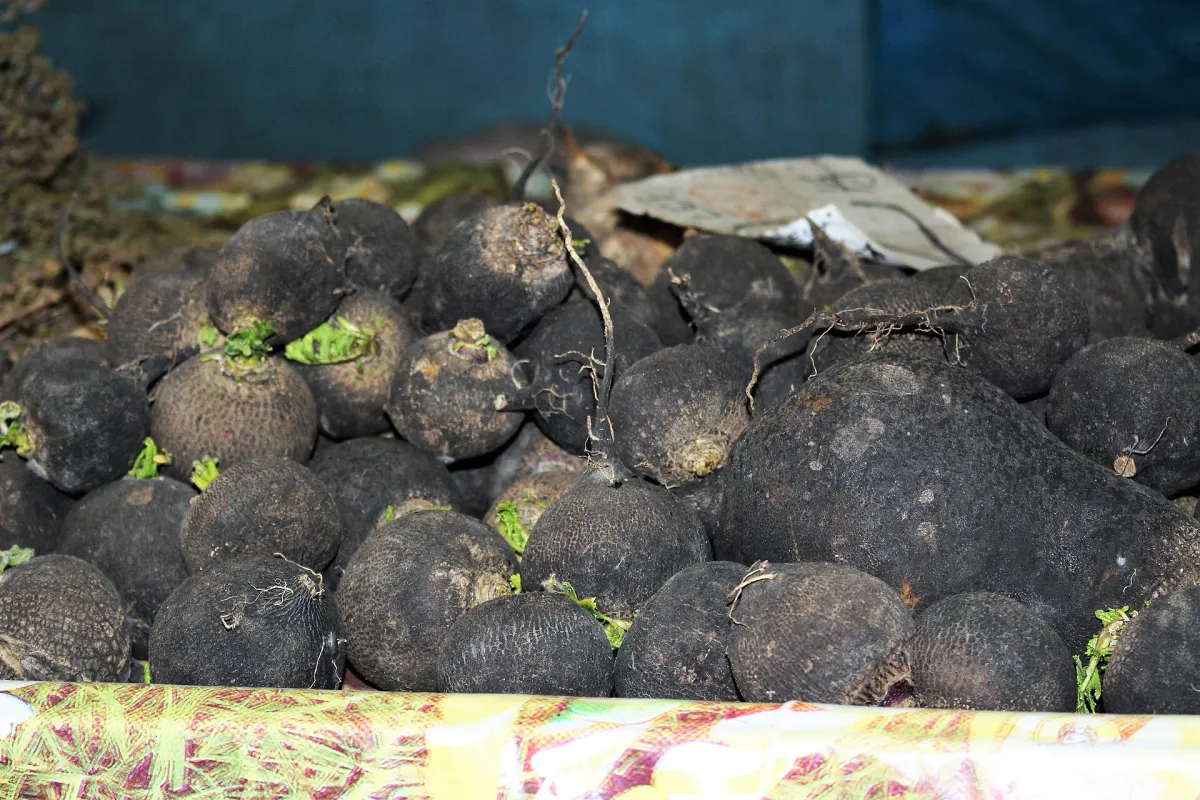
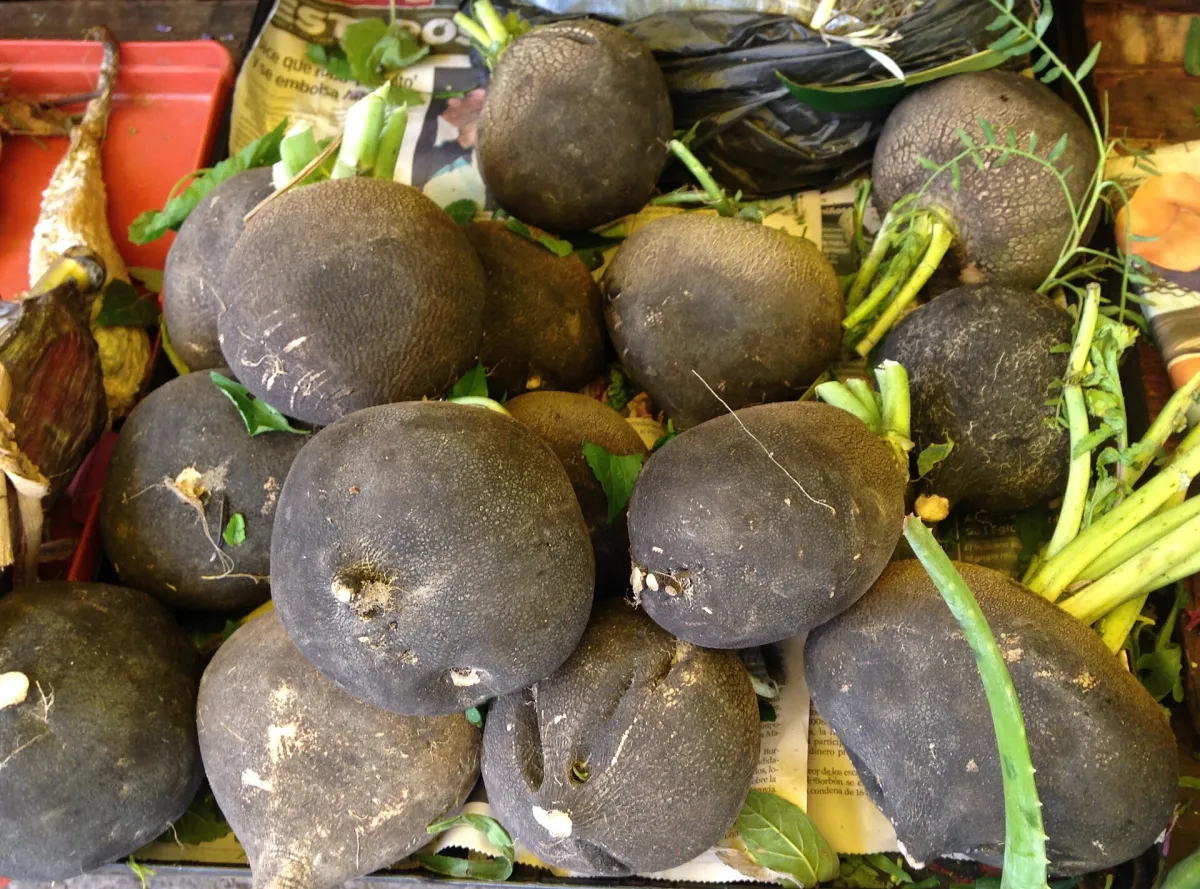
Black radish (Raphanus sativus var. niger) belongs to the crucifer family (Brassicaceae), alongside cabbage, broccoli, horseradish and mustard. It has a large root, round or elongated, with rough, black-grey skin and dense white flesh, far more pungent than spring radishes. It is sown in summer and harvested in late autumn, which is why for centuries it was one of the few fresh vegetables available in winter.
Unlike red spring radishes, black radish keeps for months in a cold, humid place, and its flavor becomes more intense during storage.
What it contains
Approximate values per 100 g of raw radish (data vary with variety and season):
| Component | Approximate amount | Why it matters |
|---|---|---|
| Energy | ~18-20 kcal | Very few calories |
| Water | ~93-95 g | Hydrating, filling |
| Fiber | ~1.5-2 g | Regularity, fullness |
| Vitamin C | ~15-25 mg | Antioxidant, immunity |
| Potassium | ~230-280 mg | Electrolyte balance |
| Glucosinolates | high, especially in and under the skin | Pungency, effect on digestive secretions |
| Phenolic compounds | present, mainly in the skin | Antioxidant activity |
Glucosinolates are inactive in the intact root. When you grate or chew it, the enzyme myrosinase converts them into volatile isothiocyanates. That is why radish grated and left for 5 to 10 minutes is hotter than sliced radish.
Benefits: what studies show and what is tradition
Fat digestion and bile flow
This is the best-supported effect. Pungent compounds reflexively stimulate saliva and stomach secretions, and animal studies together with herbal tradition point to a choleretic effect (more bile produced) and a cholagogue effect (the gallbladder empties more readily). The German Commission E monograph on radish root lists its use for digestive complaints, particularly those related to impaired bile flow. In practice, a few spoonfuls of grated radish alongside a fatty meal can reduce heaviness and bloating. If this is a frequent problem, read our guide to indigestion.
The liver: what is realistic
Tradition calls black radish “the liver cleanser”. Animal studies show its extracts can raise the activity of certain phase II liver detoxification enzymes, an effect shared by many crucifers such as broccoli. In humans, direct evidence is lacking. Radish can be part of a liver-friendly diet, but it does not “cleanse” a fatty liver or treat liver disease. For what actually works, see our article on liver detox.
Cough and airways
Black radish with honey is a traditional cough remedy. The pungent compounds mildly thin secretions and encourage expectoration, and Commission E also mentions use for catarrh of the upper respiratory tract. Modern clinical trials do not exist, but as a gentle remedy alongside hydration it has been used for generations. The syrup recipe is in our article on homemade cough syrups.
Antioxidant and antimicrobial
In the laboratory, black radish extracts have shown antioxidant and antimicrobial activity. These are cell-culture results that cannot be translated directly into health effects in people.
How much to eat
| Form | Typical amount | Notes |
|---|---|---|
| Grated radish (salad) | 50-100 g per serving, a few times a week | With oil, with a meal, not on an empty stomach |
| Fresh juice | 1-2 tablespoons, slowly increasing to 50 ml a day | Short courses of 1-2 weeks, only with a healthy gallbladder |
| Radish with honey (syrup) | 1 teaspoon 3 times a day for adults | Only over age 1 (because of honey) |
Always start small. Black radish is strong: too much at once irritates the stomach and can cause cramps.
How to eat it: simple recipes
Traditional black radish salad
- Peel a medium black radish (about 200 g), or just scrub it well if you want to keep the compounds in the skin.
- Grate it on the coarse side of a grater.
- Sprinkle with a level teaspoon of salt, mix and leave for 10 minutes; squeeze out some liquid for a milder taste.
- Add 2 tablespoons of sunflower or olive oil, a little vinegar or lemon juice and a spring onion.
Serve as a side with meat, beans or rich dishes. For a sweeter, milder version, mix it 1:1 with grated carrots and an apple.
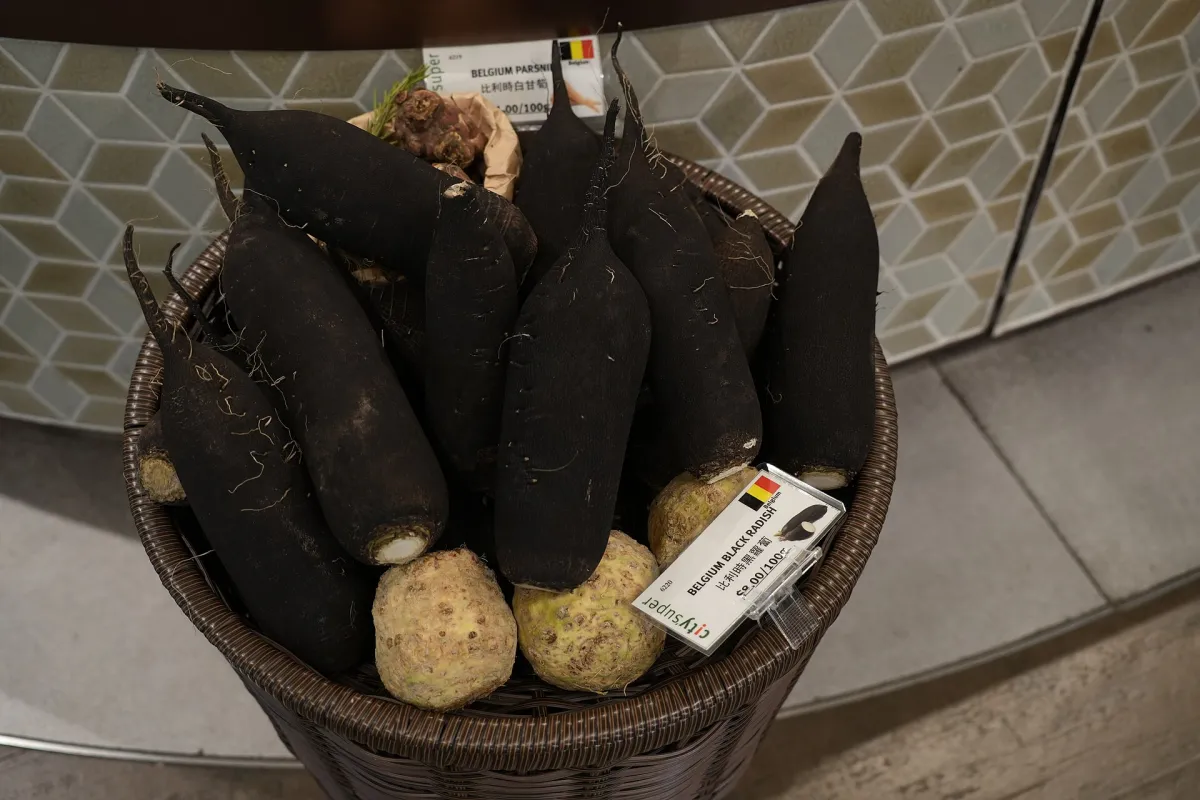 Photo: Peachyeung316, CC BY-SA 4.0, via Wikimedia Commons
Black radish juice
Grate or juice a well-scrubbed radish and squeeze the pulp through cheesecloth. Start with 1 teaspoon diluted in a glass of water after lunch. If you get no heartburn or pain, gradually increase to 1 or 2 tablespoons twice a day. Do not exceed 2 consecutive weeks, and stop at any pain in the right side of the abdomen.
How to tame the heat
- Salting and draining the liquid after 10 minutes reduces pungency.
- Sour cream or yogurt (2 tablespoons per radish) rounds out the flavor.
- Thin slices marinated for 1 hour in cider vinegar with a little water become a quick, crunchy pickle.
Contraindications and who should avoid it
- Gallstones: the cholagogue effect can move a stone and trigger biliary colic or obstruction. Avoid it, especially the juice, without your doctor’s approval. See gallstones.
- Gastritis, stomach or duodenal ulcer, severe reflux: pungent compounds irritate the lining. Read our guide to gastritis.
- IBS, frequent bloating: crucifers can increase gas.
- Hypothyroidism or iodine deficiency: glucosinolates have a goitrogenic effect in large daily amounts. Normal portions in a diet with iodized salt are not considered a problem. Details in our article on hypothyroidism.
- Young children: the taste and irritation make it unsuitable under age 3, and honey syrup is forbidden under age 1.
- Pregnancy: small portions as food are fine; concentrated juice “cures” are not recommended.
When to see a doctor
- severe pain under the right ribs radiating to the back or shoulder, possibly with nausea and vomiting;
- yellowing of the skin or eyes, dark urine or pale stools;
- persistent heartburn or stomach pain, vomiting blood or black stools;
- a cough lasting more than 3 weeks, high fever, blood in sputum or difficulty breathing.
Radish is not a treatment for any of these and can make some of them worse.
Common mistakes
“Cleansing” courses with half a liter of juice a day. Large amounts irritate the stomach and can trigger colic in people with undiagnosed gallstones.
Juice on an empty stomach for people with a sensitive stomach. Take it after a meal, not before.
Ignoring pain on the right side of the abdomen. It is a signal to stop and see a doctor.
Confusing it with red radishes. Red radishes are much milder; the effects described here are specific to the pungent black varieties.
Keeping it grated in the fridge for days. It loses flavor and develops an unpleasant smell. Grate it just before the meal.
Conclusion
Black radish is a modest winter vegetable with a lot of character: few calories, vitamin C, fiber and sulfur compounds that stimulate digestion and bile. Served next to heavy dishes, it eases digestion, and as a traditional cough remedy it has a long history. Modern evidence is limited, though, and “liver cleansing” is more legend than fact. For people with gallstones, gastritis or ulcers, black radish is not a good choice. Used in moderation, it remains a healthy companion to winter meals, in the same family of bitter and pungent plants as dandelion.
If you want to use black radish as a liver and gallbladder remedy (juice cure schedule, doses and contraindications), read the dedicated guide: Black radish for the liver and gallbladder.
Frequently asked questions
Is black radish good for the liver? It can support fat digestion by stimulating bile, and animal studies show effects on liver enzymes. In humans, there is no evidence that it “cleanses” the liver or treats liver disease.
Can I eat black radish if I have gallstones? It is not recommended. The gallbladder-emptying effect can trigger an attack. Talk to your doctor before eating it regularly.
How much black radish juice can I drink a day? For adults without digestive problems, no more than 50 ml a day, building up from a teaspoon, in courses of no more than 2 weeks. Juice is not suitable for people with gastritis or gallstones.
Does black radish help with coughs? Tradition and herbal monographs mention it as a gentle remedy for a chesty cough. There are no robust clinical trials, and a persistent cough should be checked by a doctor.
Why is black radish so hot? Because of the isothiocyanates formed from glucosinolates when the root is grated or chewed. Salting, draining and pairing it with sour cream or carrot soften the taste.
Does black radish affect the thyroid? In very large daily amounts, glucosinolates can interfere with iodine use. Normal portions in a diet with iodized salt are not considered a problem.
How do I store black radish? Unwashed and with leaves removed, in damp sand in a cold cellar, or in the vegetable drawer of the fridge in a perforated bag, where it keeps for several weeks.
Sources
- Blumenthal M. (ed.), The Complete German Commission E Monographs, monograph on radish root (Raphani sativi radix).
- Published studies on glucoraphasatin and isothiocyanates from Raphanus sativus, including animal research on phase II liver enzymes.
- Scientific literature on crucifer glucosinolates and goitrogenic effects under iodine deficiency.
- USDA FoodData Central: nutrient profile for raw radishes.
This content is for information only and does not replace medical advice. If you have gallbladder, stomach or thyroid conditions, talk to your doctor before eating it regularly.