
Broccoli: Benefits, Sulforaphane, Uses and How to Eat It Right
IMPORTANT: Broccoli is a safe and valuable food for most people, but it is not a cure-all and does not replace medical treatment. People taking anticoagulant medication (such as warfarin) should be mindful, because broccoli is high in vitamin K, which affects blood clotting—do not cut broccoli out of your diet, but keep your intake steady and talk to your doctor. Those with hypothyroidism should know that cruciferous vegetables eaten raw, in very large amounts, contain goitrogenic compounds that may interfere with thyroid function; cooking greatly reduces this effect. Broccoli can cause bloating and gas in sensitive individuals, due to its fiber and certain hard-to-digest sugars. If you have irritable bowel syndrome, introduce it gradually. Always consult your doctor before making major dietary changes, especially if you have a chronic condition.
A story from grandmother’s table
Aunt Veta from our mountain village had never heard the word “sulforaphane,” but she knew one thing for certain: her children almost never caught a cold in winter. Her secret, she would say with a laugh, was “that funny cabbage with little green flowers” she grew in a shady corner of the garden, where the soil stayed cool and moist. She picked it in the morning, while dew still glistened on the florets, and steamed it for just a few minutes—“just until it softens, not until it turns to mush.” She drizzled it with a little oil, a splash of apple cider vinegar, and a sprinkle of crushed garlic. “Eat it while it’s green and crisp,” she urged us, “because if you boil it too long, all its power runs off into the water.”
Only later did I understand how wise that simple rule was. What grandmother intuitively called the vegetable’s “power,” modern science calls a whole family of protective compounds. Aunt Veta had never read a single study, yet she honored laws that current research confirms: fresh broccoli, lightly cooked and eaten quickly, retains its virtues best. This little story actually sums up everything we’ll explore below.
What broccoli is and where it comes from
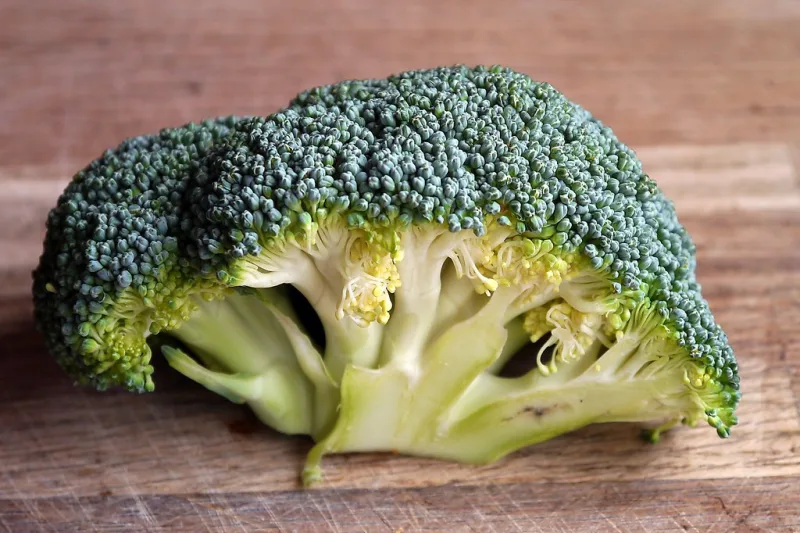
Broccoli (Brassica oleracea var. italica) is a vegetable in the cruciferous family (Brassicaceae), the same family as cabbage, cauliflower, Brussels sprouts, kale and radish. The part we eat is, in fact, the immature flowering head—the compact clusters of green-blue floral buds, supported by a thick, tender stalk. If left to grow, broccoli would bloom with small yellow flowers.
Its origin lies in the Mediterranean basin, and its intensive cultivation began in ancient Italy, hence the name: the word “broccoli” derives from the Italian broccolo, a diminutive of brocco, meaning “shoot” or “little branch.” The Romans already prized it, and over the centuries it spread throughout Europe and, later, around the world. Today it is one of the most appreciated vegetables for its remarkable nutritional value relative to its low calorie count.
It is valued precisely because it pulls off a rare feat: it offers very high nutrient density—plenty of vitamins, minerals and bioactive compounds—at a minimal caloric cost. In other words, with every bite you get a lot of “good” for very little energy, which makes it an ideal ally both for those who want to eat well and for those watching their weight.
Table of Contents
- What broccoli is and where it comes from
- Nutritional value
- Health benefits
- Sulforaphane—the star compound
- How to eat it and recipes
- How much to eat
- How to choose and store it
- Lifestyle and practical tips
- Practical Tips and Common Mistakes
- Conclusion
- Frequently Asked Questions
Nutritional value
Broccoli is, without exaggeration, a true nutritional treasure. About 100 grams of cooked broccoli contains roughly 30–35 calories, which makes it extremely “waistline-friendly.” Beyond the low calorie count, however, its nutrient profile is impressive.
Vitamin C. Broccoli is one of the best vegetable sources of vitamin C—a good portion covers a significant part of the daily requirement. Vitamin C supports the immune system, contributes to collagen formation (important for skin, blood vessels and bones) and acts as an antioxidant.
Vitamin K. It contains generous amounts of vitamin K, essential for normal blood clotting and for bone health.
Folate (vitamin B9). Particularly important during pregnancy, but also for the normal formation of cells and blood.
Dietary fiber. Broccoli provides both soluble and insoluble fiber, which support digestion, feed the beneficial bacteria in the gut and create a feeling of fullness.
Minerals. Potassium (helpful for blood pressure), calcium, magnesium, manganese and iron in useful amounts, especially for those who eat little meat.
Bioactive compounds. This is where our star comes in—glucosinolates, which convert into sulforaphane—plus other antioxidants such as carotenoids (lutein and zeaxanthin, good for the eyes), flavonoids and phenolic compounds.
Water. Broccoli has a high water content, which contributes to hydration and to portion volume without adding calories.
Health benefits
Supports the immune system
Thanks to its rich vitamin C content and other antioxidants, broccoli contributes to the proper functioning of the body’s natural defenses. Folk tradition has always used it in the cold season, exactly as in the opening story, and studies suggest that a diet rich in cruciferous vegetables is associated with better overall health. Antioxidants help neutralize free radicals, those unstable molecules that, in excess, contribute to oxidative stress and cellular aging.
Supports digestion and gut health
The fiber in broccoli acts as a “natural broom” for the intestine, promoting regular transit and preventing constipation. In addition, some of the fiber serves as food (prebiotic) for the beneficial bacteria in the microbiome, thus contributing to better gut balance. A healthy gut indirectly means a stronger immune system too, since a large portion of immune cells reside in the digestive tract.
Contributes to cardiovascular health
The combination of fiber, potassium and antioxidants makes broccoli a friend of the heart. Fiber helps maintain healthy cholesterol levels, potassium supports balanced blood pressure, and antioxidants protect the blood vessels against oxidative stress. Studies suggest that people who consistently eat cruciferous vegetables tend to have better cardiovascular health.
Supports eye health
Lutein and zeaxanthin, two carotenoids found in broccoli, concentrate in the retina and help filter out harmful blue light. A diet rich in these substances is traditionally associated with long-term protection of vision, especially for people who spend a lot of time in front of screens.
Helps maintain a healthy weight
With very few calories, lots of water and fiber that creates satiety, broccoli is the ideal food for those who want to eat a lot, feel full, and yet not overdo it on energy. A generous plate of broccoli keeps you full longer and reduces the temptation to snack between meals.
Contributes to bone health
The vitamin K, calcium and magnesium in broccoli work together to maintain bone density. Vitamin K, in particular, plays an important role in fixing calcium into the bones, a nutrient often overlooked in discussions about skeletal health.
Supports natural detoxification processes
Here sulforaphane comes in again. The modern tradition of healthy eating considers broccoli a “detoxifying” food, and the basis of this reputation is sulforaphane’s ability to support the activation of the body’s natural enzymes involved in neutralizing and eliminating unwanted compounds. It is important to clarify: the body “detoxifies” itself, through the liver and kidneys, and broccoli only offers nutritional support to these processes—not a “miracle cleanse.”
Sulforaphane—the star compound
If broccoli has an undeniable star, it is sulforaphane. It is not found as such in the vegetable; rather, it forms through a fascinating reaction. Broccoli contains a compound called glucoraphanin (a glucosinolate) and, separately, an enzyme called myrosinase. As long as the vegetable’s cells are intact, the two remain apart. The moment we cut, chew or break broccoli, the cells rupture, and myrosinase comes into contact with glucoraphanin, converting it into sulforaphane.
This detail has a huge practical consequence: the way you prepare broccoli decides how much sulforaphane you’ll get. Myrosinase is sensitive to intense heat. If you boil broccoli for a long time, the enzyme is destroyed before it has a chance to form sulforaphane, and some of the precursors are lost in the cooking water. That is why gentle methods—brief steaming, eating it raw, cutting it 30–40 minutes before cooking—maximize the amount of sulforaphane.
Sulforaphane is intensely studied for its antioxidant properties and for its ability to support the body’s natural cellular protection mechanisms. Studies suggest it may have a role in supporting enzyme systems that defend cells against oxidative stress. A trick known among the initiated: if you cook broccoli for a long time, you can recover its ability to produce sulforaphane by sprinkling a little mustard powder on top or adding a few raw radish/arugula leaves, which provide “fresh” myrosinase.
How to eat it and recipes
Broccoli is a versatile vegetable that lends itself to dozens of dishes. Here are a few methods and simple recipes designed to preserve as much of its value as possible.
Steamed broccoli (the recommended method)
Steaming is, by far, the best method for preserving nutrients.
- Break the broccoli head into florets of equal size (so they cook evenly).
- Peel the thick stalk’s fibrous outer layer and cut it into rounds—it’s very tasty and shouldn’t be thrown away.
- Put water in a pot, enough not to touch the steaming basket, and bring to a boil.
- Place the florets in the basket, cover and steam for 4–5 minutes, no longer. Broccoli should stay bright green and slightly crisp.
- Remove immediately and, if you want a perfectly green color, rinse briefly with cold water (this step stops the cooking).
- Season: olive oil, a splash of lemon juice, salt, pepper, garlic.
Pan-sautéed broccoli
- Blanch the florets for 2 minutes, then drain well.
- Heat a little oil in a pan, add sliced garlic.
- Add the broccoli and sauté over medium-high heat for 3–4 minutes, stirring.
- Season with salt, chili flakes and, optionally, a few sesame seeds.
Oven-roasted broccoli
- Toss the florets with olive oil, salt, pepper and garlic powder.
- Spread them on a tray, without overlapping.
- Roast at 200 °C (400 °F) for about 18–22 minutes, turning once, until browned at the edges. Roasting gives them a delicious sweet-smoky flavor.
Cream of broccoli soup
- Sweat an onion and a diced potato.
- Add the broccoli and cover with vegetable broth.
- Simmer only until the broccoli softens (8–10 minutes).
- Blend, add a splash of plant-based cream or yogurt and season.
Raw broccoli in salads
Small, raw florets add a crisp texture to salads. Combine them with grated carrot, seeds, raisins and a yogurt-mustard dressing—the mustard not only adds flavor but also helps form sulforaphane.
How much to eat
There is no strict “dose,” because broccoli is a food, not a medicine. To benefit from its virtues, a portion of 100–200 grams a few times a week is a reasonable and easily achievable target. Many nutritionists recommend including cruciferous vegetables in the menu 3–5 times a week, alternating broccoli with cauliflower, cabbage and kale, for variety.
For people with sensitive digestion, it is wise to start with small portions and increase gradually, letting the gut get used to it. Cooking (steaming or sautéing) makes broccoli much easier to tolerate than eating it raw in large amounts.
How to choose and store it
When buying, look for a head with compact florets of an intense green color, possibly with violet-blue hues—these are the freshest and richest in nutrients. The stalk should be firm, not soft or hollow. Avoid broccoli with yellow patches (a sign it has started to flower and age) or with spread-out, dried florets.
For storage, broccoli keeps in the refrigerator, in the vegetable drawer, unwashed (moisture speeds up spoilage). Ideally, wrap it loosely in a paper towel or put it in a perforated bag. It lasts 4–7 days this way. Wash it only right before cooking.
For freezing, broccoli keeps excellently. Blanch the florets for 2–3 minutes, cool them quickly in ice water, drain them well and freeze them on a tray, then transfer them to bags. This way you avoid them sticking together in a block and preserve most of the nutrients.
Lifestyle and practical tips
Broccoli gives the best results when it is part of a balanced lifestyle, not when it is eaten in isolation as a “miracle food.” A few ideas that turn it into a healthy long-term habit:
- Make it appealing. Many people “can’t stand” broccoli because they’ve only eaten it overboiled, soft and flavorless. Roasted in the oven with garlic or sautéed with a splash of soy sauce, it becomes something else entirely.
- Use the whole vegetable. The peeled stalk is tender and sweet. The leaves, if it has any, cook like spinach. Zero waste means more nutrients and savings.
- Pair it with a source of healthy fat. Carotenoids (lutein, zeaxanthin) are absorbed better in the presence of fats, so a drizzle of olive oil or a few seeds aren’t just for flavor.
- Vary your crucifers. Alternate broccoli with cauliflower, red cabbage, kale and Brussels sprouts, for as wide a spectrum of beneficial compounds as possible.
- Combine it with movement and sleep. No food compensates for lack of exercise or insufficient sleep. Broccoli is an excellent brick, but the wall of health is built from many things.
Practical Tips and Common Mistakes
Mistake no. 1: Lengthy boiling. The most widespread mistake. Broccoli boiled for 15–20 minutes loses its color, texture, a good part of its vitamin C (which “runs off” into the water) and its ability to form sulforaphane. Cook it briefly, by steaming.
Mistake no. 2: Throwing away the stalk. The stalk represents a significant part of the vegetable and is perfectly edible. Peeled of its fibrous layer, it is tender and sweet. Throwing it away means waste and lost nutrients.
Mistake no. 3: Cutting at the last second, then immediately cooking at high temperature. If you want sulforaphane, cut the broccoli and let it sit for 30–40 minutes before cooking, so the enzyme has time to work. Or add a source of myrosinase (mustard, radish, arugula).
Mistake no. 4: Eating it exclusively raw, in large amounts, for people with sensitive thyroids. Raw goitrogenic compounds can interfere with the thyroid in excess. The simple solution: cook it, which greatly reduces this effect.
Mistake no. 5: Storing it washed in the fridge. Moisture speeds up molding. Wash it only before cooking.
Mistake no. 6: Cutting it out of the diet entirely for fear of bloating. If you bloat, don’t give up—introduce it gradually, cooked, in small portions. The gut adapts over time, and the benefits are worth the patience.
Conclusion
Broccoli is, rightly so, one of the most valuable vegetables we can put on our plate. Rich in vitamins, minerals, fiber and antioxidants, but above all in the precursors of sulforaphane, it offers a lot of “good” at a minimal caloric cost. The secret, as Aunt Veta from our story knew, lies in freshness and gentle cooking: steamed, briefly, preserving the green color and crisp texture. Included a few times a week in a varied diet, alongside movement and rest, broccoli becomes a trusted ally of health. It is not a medicine and does not work miracles on its own—but it is exactly the kind of simple, accessible and wise food that folk tradition has always cherished, and common sense urges us to keep it in a place of honor on the table.
Frequently Asked Questions
Is broccoli healthier raw or cooked? Both versions have advantages. Raw, it preserves the maximum of vitamin C and myrosinase (the enzyme that forms sulforaphane). Gently cooked, by steaming, it is easier to digest, reduces goitrogenic compounds and remains very nutritious. Ideally, eat it in both forms throughout the week.
Why do I bloat when I eat broccoli? Broccoli contains fiber and certain sugars (raffinose) that are hard to digest, which ferment in the gut and produce gas. Cooking helps, and gradual introduction allows the microbiome to adapt. If the discomfort persists, talk to your doctor.
How much broccoli should I eat per week? There is no strict rule. A portion of 100–200 g a few times a week is a reasonable target. The important thing is to alternate it with other cruciferous vegetables for variety.
Can I eat broccoli if I take anticoagulants? Yes, but with caution and consistency. Broccoli is high in vitamin K, which affects clotting. You don’t need to eliminate it, but keep a steady intake from week to week and inform your doctor, so the medication dosage can be adjusted correctly.
What is sulforaphane and why does it matter? Sulforaphane is a compound that forms when broccoli is cut or chewed, through the action of the enzyme myrosinase on glucoraphanin. It is intensely studied for its antioxidant properties and for its role in supporting the body’s natural cell protection mechanisms.
Can you eat the broccoli stalk? Absolutely. Peeled of its fibrous outer layer, the stalk is tender, sweet and full of nutrients. It can be cut into rounds and cooked together with the florets or added raw to salads.
How do I keep broccoli fresh longer? Keep it in the fridge, unwashed, wrapped loosely in a paper towel or in a perforated bag. Wash it only before cooking. For long-term storage, blanch it briefly and freeze it.
Does broccoli help with weight loss? Indirectly, yes. It has very few calories, lots of volume and fiber that creates satiety, so it helps you feel full without overdoing it on energy. It doesn’t “burn fat” on its own, but it is an ideal food in a balanced diet for weight management.