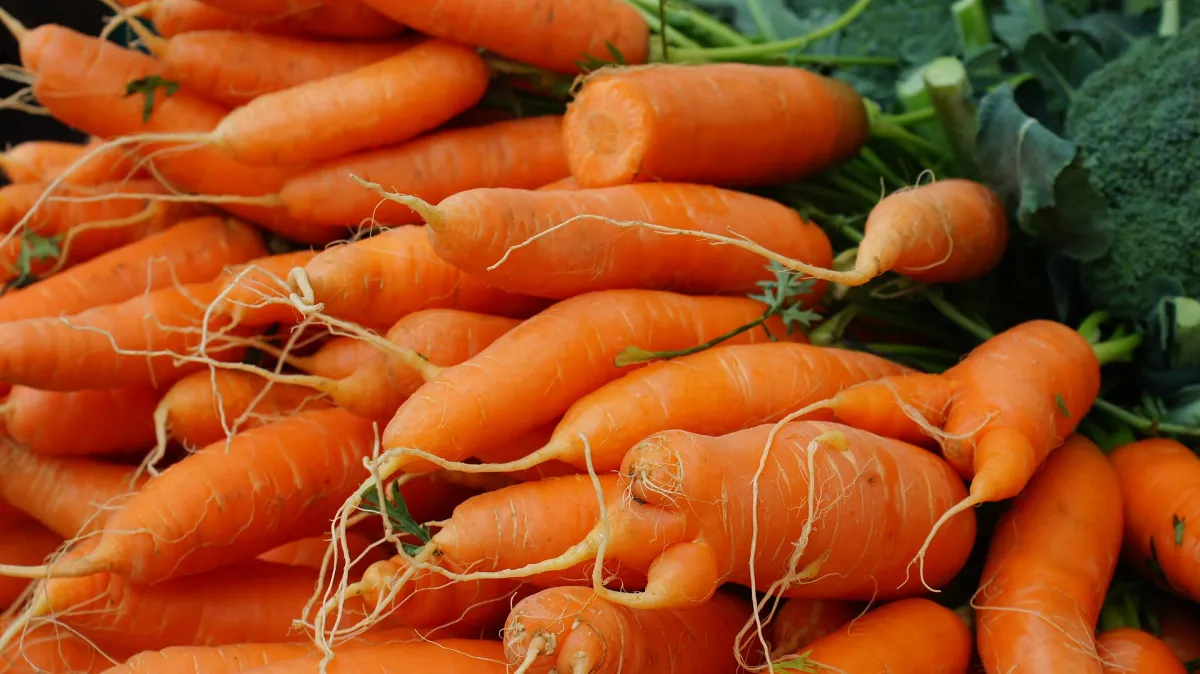
 Photo: domdomegg, CC BY 4.0, via Wikimedia Commons
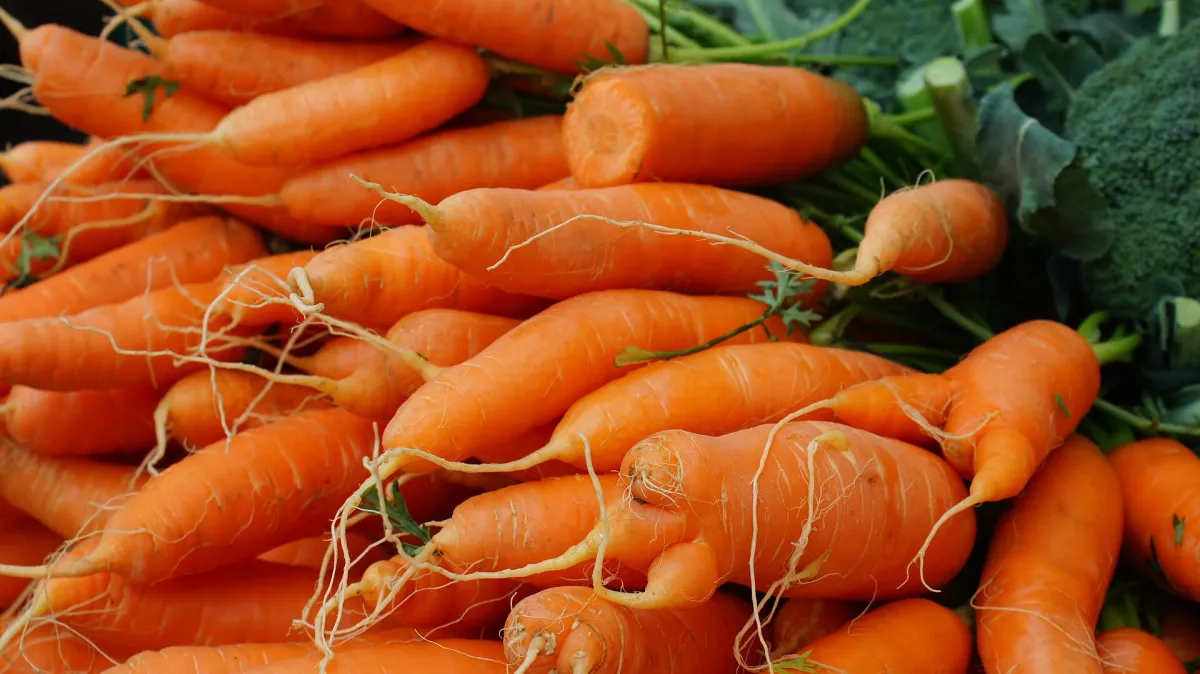
Carrots are one of the richest and cheapest sources of beta-carotene, which the body converts into vitamin A, needed for vision (especially in dim light), skin and immunity. A single medium carrot (about 60 g) covers the full daily vitamin A requirement for most adults. Carrots have only 41 kcal per 100 g, provide fiber, potassium and vitamin K, and when cooked with a little fat release more beta-carotene than when raw. Carrots will not give you “eagle eyes”, but they prevent vision problems caused by vitamin A deficiency.
Carrots are everywhere in Romanian cooking: in sour soups, in pea stew, in the classic salată de boeuf, grated with apple for children. Grandmothers said carrots were “good for the eyes and for rosy cheeks”, and carrot soup was given to small children with diarrhea. Some of those sayings are true; others were born from wartime propaganda, as you will see below.
Key takeaways
- 100 g of raw carrots: about 41 kcal, 2.8 g fiber, 8 mg beta-carotene and 830 µg vitamin A equivalent.
- Beta-carotene is better absorbed from cooked carrots and with some fat.
- Carrots support vision in dim light and skin health, especially when vitamin A intake is low.
- Boiled carrots have a low to moderate glycemic index and suit people with diabetes.
- Too many carrots and too much juice can turn the skin orange (carotenemia), which is harmless.
What carrots are
The carrot (Daucus carota subsp. sativus) is the root of a plant in the Apiaceae family, related to parsley, parsnip, celery and dill. The first cultivated carrots in Central Asia were purple or yellow; the orange, beta-carotene-rich varieties were selected in the Netherlands in the 16th and 17th centuries. Today you can again find purple carrots (rich in anthocyanins), yellow ones (lutein) and red ones (lycopene) alongside orange.
Nutrition facts
Approximate values (USDA FoodData Central):
| Nutrient | 100 g raw carrots | 100 g boiled carrots | 250 ml carrot juice |
|---|---|---|---|
| Energy | ~41 kcal | ~35 kcal | ~95 kcal |
| Carbohydrates | ~9.6 g | ~8.2 g | ~22 g |
| of which sugars | ~4.7 g | ~3.5 g | ~9 g |
| Fiber | ~2.8 g | ~3 g | ~2 g |
| Beta-carotene | ~8,300 µg | ~8,300 µg | ~22,000 µg |
| Vitamin A (RAE) | ~835 µg | ~850 µg | ~2,250 µg |
| Vitamin K | ~13 µg | ~14 µg | ~37 µg |
| Potassium | ~320 mg | ~235 mg | ~690 mg |
An adult needs about 650 to 750 µg of vitamin A a day. A glass of carrot juice provides three times that, which is not dangerous (beta-carotene from food does not cause vitamin A toxicity), but shows how concentrated it is.
Benefits: what studies show and what is tradition
Vision: truth and myth
Vitamin A is essential for rhodopsin, the retinal pigment that lets us see in dim light. Vitamin A deficiency, still common in some developing countries, causes night blindness and severe dryness of the eyes. Carrots prevent and correct this deficiency. See our article on vitamin A deficiency.
The myth: the idea that carrots give you exceptional night vision was spread in Britain during the Second World War to hide the radar that helped pilots find enemy aircraft at night. In a well-nourished person, extra carrots do not improve vision beyond normal.
Eyes in later life
Orange carrots contain little lutein; yellow carrots contain more. For protecting the macula, leafy greens such as spinach matter more, but carrots contribute to total carotenoid intake, which observational studies link with a lower risk of macular degeneration.
Skin
Vitamin A supports skin cell renewal, and carotenoids that accumulate in the skin offer modest protection against oxidative effects of sunlight. Small studies have shown that higher intake of carotenoid-rich fruit and vegetables subtly shifts skin tone toward a “healthier” color. They do not replace sun protection.
Heart and cholesterol
The soluble fiber in carrots (mainly pectin) can bind some cholesterol in the gut. Observational studies link eating orange and yellow vegetables with lower cardiovascular risk. As part of a vegetable-rich diet carrots matter, but they are not a treatment.
Digestion and carrot soup
In the early 20th century, the pediatrician Ernst Moro described a long-simmered carrot soup used for infant diarrhea, with good results for its time. Later research suggested that long boiling releases oligosaccharides that may prevent some bacteria from attaching to the gut wall. Today, treating diarrhea in children relies on oral rehydration solutions; carrot soup can be a gentle food during recovery, with your pediatrician’s agreement. Details in our article on diarrhea.
Raw or cooked?
| Aspect | Raw carrots | Cooked carrots |
|---|---|---|
| Beta-carotene absorption | Lower (rigid cell walls) | Higher, especially with fat |
| Vitamin C | Slightly more | Losses when boiled |
| Fiber and fullness | More chewing, very filling | Soft texture, suits children and older adults |
| Glycemic index | Low | Low to moderate (around 35-50) |
| Pollen-related oral allergy | May cause mouth itching | Cooking usually removes the reaction |
The best strategy is to alternate: raw grated carrot in salads, cooked carrot in soups and stews, always with a little oil or another fat in the same meal.
How much to eat
| Situation | Typical amount |
|---|---|
| Adult | 1-2 medium carrots a day (60-150 g), raw or cooked |
| Carrot juice | 100-150 ml a day, not liters every day |
| Diabetes | Whole carrots without special limits; juice in moderation |
| Children (after weaning) | Puree or boiled carrot, a few spoonfuls |
Simple recipes
Carrot and apple salad
Grate 2 carrots and a tart apple, add the juice of half a lemon, a tablespoon of olive or sunflower oil and a tablespoon of chopped walnuts. The oil is not optional: without fat, much of the beta-carotene is not absorbed. For a sharper version richer in sulfur compounds, mix the carrot with grated black radish.
Oven-roasted carrots
- Peel 500 g of carrots and cut them into sticks or halve them lengthwise.
- Toss with 1 tablespoon of olive oil, salt, pepper and thyme.
- Roast at 200 °C for 25 to 35 minutes, turning once, until browned at the edges.
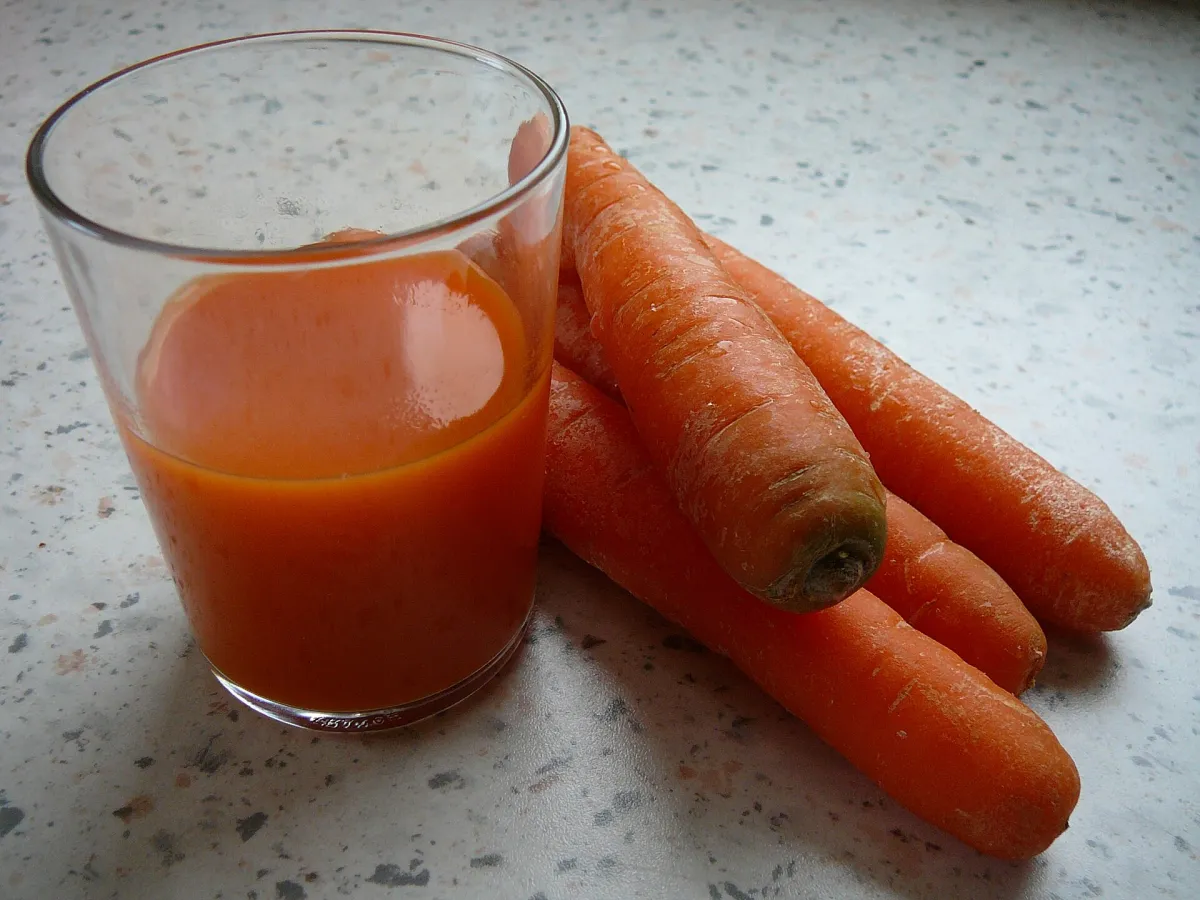 Photo: Salix, CC BY 3.0, via Wikimedia Commons
Balanced carrot juice
Juice 3 carrots, an apple and a small piece of ginger. Add a few drops of oil or drink the juice with a meal that contains some fat. A small glass (150 ml) is enough; juice loses part of the fiber and concentrates the sugars.
Cream of carrot and pumpkin soup
Sauté an onion in 2 tablespoons of oil, add 500 g of carrots and 300 g of pumpkin, 1 liter of water and a pinch of salt. Simmer for 25 minutes and blend. Serve with a spoonful of yogurt and seeds. It is one of the most beta-carotene-rich meals you can cook.
Contraindications and precautions
- Carotenemia: high daily intake (for example several carrots plus juice) can turn the skin yellow-orange, especially palms and soles. It is harmless and fades within a few weeks of eating less. Unlike jaundice, the whites of the eyes stay white.
- Smokers: high-dose beta-carotene supplements increased lung cancer risk in smokers in large trials (ATBC, CARET). This concerns supplements, not carrots; beta-carotene from food has not shown this risk.
- Pollen-related oral allergy: people allergic to birch pollen may get an itchy mouth from raw carrots. Cooking usually solves it.
- Diabetes: whole carrots are fine; limit the juice, which is a source of sugars without much fiber.
- Infants: carrots contain nitrates; carrot puree is introduced after 6 months, freshly made.
- Untreated hypothyroidism: conversion of beta-carotene to vitamin A is slower, and carotenemia appears more easily.
When to see a doctor
- new difficulty seeing in dim light, very dry eyes or spots on the whites of the eyes (possible vitamin A deficiency or another eye problem);
- yellowing of the whites of the eyes or dark urine (not caused by carrots; it may be a liver problem);
- in children with diarrhea: signs of dehydration (dry mouth, no tears, little urine, lethargy), high fever or blood in the stool;
- an itchy throat, lip swelling or difficulty breathing after raw carrots.
Common mistakes
Carrot salad without oil. Beta-carotene needs fat to be absorbed.
Liters of juice “for detox”. There is no detox from carrot juice; excess brings sugar and orange skin.
Peeling too thickly. Many compounds sit just under the skin; scrubbing well or peeling lightly is enough.
Storing them with the tops on. The leaves draw moisture from the root. Cut them off and keep carrots in the vegetable drawer in a perforated bag.
Beta-carotene supplements instead of carrots. In smokers they can even be harmful; food remains the safest source.
Conclusion
Carrots are a simple, cheap vegetable available all year that easily covers your vitamin A needs. They support vision in dim light, skin and immunity, and provide fiber and potassium for very few calories. Cooked with a little fat they release more beta-carotene, while raw they remain a crunchy, filling snack. They do not work miracles for a healthy person’s night vision, and too much juice can tint the skin, but as a daily part of a vegetable-rich diet, carrots are an excellent choice.
Frequently asked questions
How many carrots can I eat a day? One or two medium carrots a day is ideal for most adults. More is not dangerous, but can tint the skin if eaten in large amounts every day for a long time.
Are raw or cooked carrots healthier? Cooked carrots release more beta-carotene; raw ones keep more vitamin C and are more filling. Alternate them and always eat them with some fat.
Is carrot juice healthy? A small glass (100 to 150 ml) is an excellent source of beta-carotene. Large daily amounts bring a lot of sugar without fiber and can cause carotenemia.
Are carrots good for diabetics? Yes. Whole carrots have a low to moderate glycemic index and a low glycemic load. Drink the juice in moderation.
Why did my palms turn yellow after eating carrots? That is carotenemia, beta-carotene deposited in the skin. It is harmless and fades when you eat less. If your eyes turn yellow too, see a doctor.
Do carrots improve eyesight? They prevent vision problems caused by vitamin A deficiency. In a well-nourished person, they do not improve vision beyond normal; the myth comes from British wartime propaganda.
Can I give carrots to my baby? Carrot puree is one of the first foods at weaning, after 6 months, freshly made with no salt or sugar.
Sources
- USDA FoodData Central: nutrient profiles for “Carrots, raw”, “Carrots, cooked, boiled, drained” and “Carrot juice, canned”.
- NIH Office of Dietary Supplements: vitamin A and carotenoids fact sheet.
- World Health Organization: materials on vitamin A deficiency and night blindness.
- ATBC and CARET trials on beta-carotene supplements in smokers.
- International Tables of Glycemic Index and Glycemic Load Values.
This content is for information only and does not replace advice from a doctor or dietitian.