
Chickpeas: Benefits, Nutrition and How to Eat Them
IMPORTANT: Chickpeas are a safe and healthy food for most people. However, like all legumes, they contain oligosaccharides and fiber that can cause bloating, gas or intestinal discomfort in those unaccustomed to them. Introduce them gradually into your diet and stay well hydrated. People with severe irritable bowel syndrome, those following a low-FODMAP diet, or those who have had allergic reactions to legumes (rarely) should be cautious. Raw or undercooked chickpeas should not be eaten, as they contain lectins and other compounds that are hard to digest. If you are under medical treatment, have advanced kidney disease (watch your potassium and phosphorus intake), or are pregnant and have concerns, talk to your doctor or a nutritionist. This article is for informational purposes only and does not replace medical advice.
Old Auntie Veta from my grandmother’s village kept her chickpeas in a cloth sack hanging from a beam in the pantry, safe from moisture. She used to say that “chickpeas are the poor man’s bean that never leaves you poor,” because a handful of them set to boil in a big pot could feed a whole family during fasting days. During Lent, when meat disappeared entirely from the table, she would make a thick chickpea stew with sauteed onion and paprika, served with warm polenta. The children in the yard would crowd around the bowl, without even suspecting that they were eating one of the oldest and most precious sources of plant protein known to humankind.
Later I learned that my grandmother was right in a way she herself never knew: the chickpea (Cicer arietinum) is one of the first plants ever domesticated by humans, cultivated in the Middle East for over 7,000 years. From there it spread to the Mediterranean basin, to India, and gradually around the world. Today we find it in Lebanese hummus, Egyptian falafel, Indian curries, Spanish stews and, of course, in traditional Romanian fasting cuisine. It is a modest food at first glance, but extraordinarily valuable: a true nutritional treasure hidden inside a small, round, ivory-colored bean.
Table of Contents
- What chickpeas are and where they come from
- The nutritional value of chickpeas
- Health benefits of chickpeas
- Types of chickpeas and how to choose them
- How to cook chickpeas properly
- Simple and tasty chickpea recipes
- How many chickpeas you can eat
- How to store chickpeas
- Chickpeas in a healthy diet
- Practical Tips and Common Mistakes
- Conclusion
- Frequently Asked Questions
What chickpeas are and where they come from
The chickpea is an annual legume in the Fabaceae family, the same one that includes beans, lentils and peas. The plant grows in low bushes with small, pinnate leaves and produces short, swollen pods that usually contain one or two beans. Its scientific name, Cicer arietinum, refers to the shape of the bean, which, looked at closely, vaguely resembles a ram’s head (in Latin, aries means ram).
It is a drought-resistant plant, which made it ideal for arid and semi-arid regions. This very ability to grow where other crops fail turned the chickpea into a dietary pillar for the civilizations of the Mediterranean, the Middle East and the Indian subcontinent. India remains the world’s largest producer of chickpeas to this day, followed by Australia, Turkey, Pakistan and other countries with warm climates.
In Romanian tradition, chickpeas never enjoyed the glory of the common bean, but they found their place especially during fasting periods, when they were prized for their ability to fill and to replace animal protein. Peasants boiled them in stews, lightly roasted them and ate them like seeds, or ground them into a nourishing flour.
The nutritional value of chickpeas
What makes chickpeas so special is their remarkably balanced nutritional profile. They are one of the few foods that bring together, in the same portion, a generous amount of protein, fiber and complex carbohydrates, alongside a broad spectrum of vitamins and minerals.
A serving of roughly 100 grams of cooked chickpeas provides around 160-170 calories, making it a filling food that is not excessively caloric. The same portion contains roughly 8-9 grams of good-quality plant protein and 7-8 grams of dietary fiber, a combination that largely explains their benefits.
Among the important nutrients in chickpeas are:
- Plant protein – chickpeas contain all the essential amino acids, although they are relatively low in methionine; combined with grains (rice, wheat, polenta), they form a complete protein, much appreciated by vegetarians and those who fast.
- Dietary fiber – both soluble and insoluble, essential for digestion and gut health.
- Folate (vitamin B9) – important for cell formation and especially valuable during pregnancy.
- Iron – a good plant source, especially for those who eat little meat.
- Magnesium and potassium – minerals that support muscle and nerve function and blood pressure.
- Manganese and copper – trace elements involved in numerous enzymatic processes.
- Vitamin B6 and other B-complex vitamins.
- Complex carbohydrates with a low glycemic index – releasing energy gradually.
Folk tradition intuited this richness long before laboratory analyses confirmed it: chickpeas were considered “power food,” given to those who worked hard in the fields or who needed to recover after illness.
Health benefits of chickpeas
An excellent source of plant protein
For those who reduce their meat intake or who fast frequently, chickpeas are a reliable ally. Their protein helps maintain and rebuild muscle mass, promotes a feeling of fullness, and stabilizes energy levels. Studies suggest that diets rich in legumes contribute to better overall health, especially when these replace, at least partly, fatty animal protein sources high in saturated fats.
Supports digestion and gut health
The fiber in chickpeas plays a double role. Insoluble fiber adds bulk to the stool and helps regular transit, preventing constipation. Soluble fiber, on the other hand, feeds the good bacteria in the gut, acting as a natural prebiotic. A balanced gut flora is now recognized as closely linked to immunity, mood and even body weight. Folk tradition simply said that chickpeas “clean out the gut” — a rustic way of describing what science now calls a prebiotic and transit-regulating effect.
Helps control blood sugar
Thanks to their low glycemic index and high content of fiber and protein, chickpeas release energy slowly, without causing sharp spikes in blood sugar. This makes them a suitable food for people who want to keep their blood sugar under control. Studies suggest that regularly including legumes in the diet may contribute to better insulin sensitivity and more stable blood sugar management.
Supports heart health
The combination of soluble fiber, potassium, magnesium and the absence of cholesterol makes chickpeas a heart-friendly food. Soluble fiber can help reduce levels of “bad” (LDL) cholesterol, while potassium supports healthy blood pressure. Traditionally, Mediterranean populations who eat plenty of legumes have been associated with good cardiovascular health, and the chickpea is a central element of this renowned diet.
Helps maintain a healthy weight
Chickpeas keep you full for a long time, thanks to the fiber and protein that slow the emptying of the stomach. Someone who eats a bowl of chickpeas at lunch feels less of an urge to snack between meals. This makes chickpeas a valuable ally for those who want to manage their weight without resorting to drastic and frustrating diets.
Rich in folate – important during pregnancy
Folate (vitamin B9) is essential for the healthy development of the fetus, especially in the first weeks of pregnancy. Chickpeas are an excellent plant source of folate, which is why they are often recommended for pregnant women or those hoping to conceive, as part of a balanced diet.
Supports energy and fights fatigue
The iron in chickpeas helps transport oxygen throughout the body, while the complex carbohydrates provide lasting energy. For those who tire easily or lead an active life, chickpeas can be a good source of “fuel” that does not cause sharp swings in energy.
Types of chickpeas and how to choose them
There are mainly two large types of chickpeas. Kabuli chickpeas have large, round beans of a light cream color; they are the most common in our region and the kind used for hummus. Desi chickpeas have smaller, more angular and darker beans, common in India, where they are often used dehulled and ground into flour (besan).
When buying dried chickpeas, choose whole beans that are uniform in size and color, without dark spots, signs of mold or insects. Excessively wrinkled beans may be old and will be hard to cook. Canned chickpeas are a practical option, already cooked; if you can, choose varieties with no added salt or reduced salt and rinse them well before use.
How to cook chickpeas properly
Dried chickpeas require patience, but the result is worth it. Here is the classic method, step by step:
- Sorting and washing – spread the beans on a surface and remove any small stones or damaged beans. Rinse them well under running water.
- Soaking – place the chickpeas in a large bowl and cover them with plenty of cold water (at least three times the volume of the beans, since they double in size). Let them soak for 8-12 hours or overnight. Soaking reduces cooking time and improves digestibility by removing some of the compounds that cause gas.
- Changing the water – discard the soaking water and rinse the beans again. This step reduces bloating.
- Boiling – place the chickpeas in a pot with fresh water, bring to a boil, then lower the heat and let them simmer gently for 1-2 hours until soft. The foam that rises to the surface can be skimmed off. Salt is added toward the end, since adding it from the start can toughen the skin.
- Checking – chickpeas are ready when they crush easily between your fingers and have a creamy texture inside.
Useful tricks: adding a pinch of baking soda to the cooking water softens the beans faster (but do not overdo it, as it affects flavor and some vitamins). A bay leaf or a head of garlic in the water adds aroma. In a pressure cooker, soaked chickpeas cook in 20-30 minutes.
Simple and tasty chickpea recipes
Homemade hummus. Blend 250 g of cooked chickpeas with 2-3 tablespoons of tahini (sesame paste), the juice of half a lemon, a clove of garlic, salt, a pinch of cumin and enough water to obtain a creamy paste. Serve with olive oil, paprika and bread or raw vegetables. It is a healthy snack, full of protein.
Crispy roasted chickpeas. Dry the cooked chickpeas well with a towel, toss them with a little oil, salt, paprika and a pinch of cumin, then roast them in the oven at 200°C for 25-30 minutes, shaking the tray halfway through. You get a crunchy snack, perfect in place of processed snacks.
Traditional chickpea stew. Saute a chopped onion in oil, add paprika, a little bell pepper, tomatoes and the cooked chickpeas. Let it simmer gently until the sauce thickens. Serve with polenta or homemade bread, exactly as Auntie Veta used to make it.
Cream of chickpea soup. Boil the chickpeas with carrot, onion and a potato, then blend everything, adding a little cumin and olive oil. A warm, filling soup, ideal for cold days.
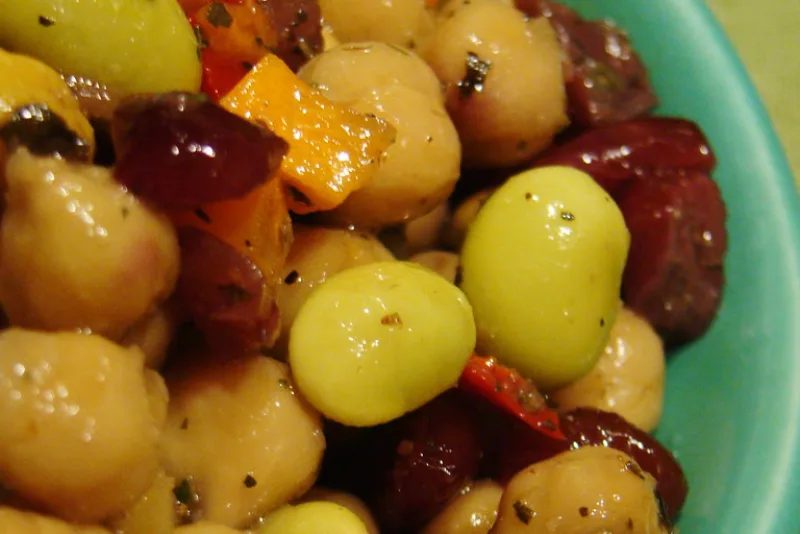
Chickpea salad. Mix cooked and cooled chickpeas with cucumbers, tomatoes, red onion, parsley, olives and peppers, seasoned with olive oil and lemon — exactly the kind of colorful, nourishing salad shown in the picture.
How many chickpeas you can eat
For a healthy person, a serving of roughly 150-200 grams of cooked chickpeas, a few times a week, is a reasonable and beneficial amount. If you are not used to legumes, start with small portions and increase gradually, letting your body adapt. This reduces the risk of bloating and gas.
There is no reason to worry about eating chickpeas daily, as long as your diet is varied. What matters is that they are well cooked and well tolerated by you. Listen to your body: if discomfort appears, adjust the quantity and make sure the chickpeas were properly soaked and cooked.
How to store chickpeas
Dried chickpeas keep for years if stored in an airtight container, in a cool, dry place away from light — exactly as Auntie Veta kept them in her cloth sack. The older they are, the harder they are to cook, so it is best to use them within a year of purchase.
Cooked chickpeas keep in the refrigerator, in a sealed container, for 3-4 days. They can also be frozen, in portions, for a few months, which is very practical: you can cook a large batch at once and then use portions as needed. The water in which the chickpeas were cooked (called “aquafaba”) need not necessarily be thrown away — it can be used as an egg-white substitute in vegan recipes.
Chickpeas in a healthy diet
Chickpeas fit perfectly into a balanced diet, whether you are vegetarian, fasting, or simply want to eat more healthily. Combined with whole grains, they provide complete protein. Added to salads, soups or stews, they increase the satiety and nutritional value of the meal.
They are a food that connects tradition with modernity: the same legume our grandmothers boiled on fasting days is found today in fine kitchens, in the hummus sold in stores and in vegetarian menus everywhere. This continuity is proof that folk dietary wisdom was, very often, right.
To get the most out of chickpeas, alternate them with other legumes — beans, lentils, peas — to obtain as broad a spectrum of nutrients as possible. Variety is the key to a healthy and enjoyable diet.
Practical Tips and Common Mistakes
Mistake no. 1: Skipping the soak. Many people try to boil dried chickpeas directly, without soaking them. The result is chickpeas that cook very slowly, stay hard and cause more bloating. Overnight soaking is essential.
Mistake no. 2: Adding salt too early. Salt added at the start of boiling can toughen the bean skins and prolong cooking time. Add it toward the end.
Mistake no. 3: Eating raw or undercooked chickpeas. Chickpeas must be boiled until creamy. Undercooked ones are hard to digest and can cause discomfort.
Mistake no. 4: Suddenly introducing large quantities. If you are not used to legumes, a large portion all at once can cause gas and bloating. Increase the amount gradually.
Mistake no. 5: Using canned chickpeas without rinsing. Canned chickpeas often contain a lot of salt and preserving liquid. Rinse them well under running water before use.
Mistake no. 6: Storing dried chickpeas in damp conditions. Moisture leads to mold and insects. Always keep them in a dry place, in a sealed container.
Conclusion
Chickpeas are far more than the “poor man’s bean” of the past. They are a legume with a history of thousands of years, a true nutritional treasure that brings together plant protein, fiber, vitamins and minerals in a single modest bean. They support digestion, help control blood sugar, are heart-friendly and keep you full for a long time, making them a reliable ally for a balanced diet. Whether you turn them into creamy hummus, crispy roasted chickpeas or a traditional fasting stew, chickpeas bring flavor, satiety and health to the table. As Auntie Veta used to say, they are the food that never leaves poor the one who puts it on the plate.
Frequently Asked Questions
How long should chickpeas be soaked? Dried chickpeas are ideally soaked for 8-12 hours or overnight, in plenty of cold water. Soaking shortens cooking time and reduces the compounds that cause gas. If you are in a hurry, there is a quick method: boil them for 2 minutes, leave them covered for an hour, then change the water and cook them normally.
Do chickpeas make you gain weight? No, if eaten in reasonable portions. Thanks to their fiber and protein, chickpeas keep you full for a long time and can even help with weight management by reducing the need for unhealthy snacks. Be mindful, however, of large amounts of oil or tahini added in dishes such as hummus.
Can I eat chickpeas if I have diabetes? Yes, in general chickpeas are suitable, thanks to their low glycemic index and fiber content that helps stabilize blood sugar. Still, if you are under treatment, talk to your doctor about the right amounts for you.
Why do chickpeas give me bloating? Chickpeas contain oligosaccharides and fiber that some people digest with difficulty. Soaking, changing the water, cooking well and gradually introducing them into the diet considerably reduce this effect. Over time, the body adapts.
Are canned chickpeas as healthy as dried ones? Canned chickpeas are a practical option and largely retain their nutritional value. The main difference is the salt content and the preserving liquid, which is why it is good to rinse them well before eating. Dried chickpeas cooked at home give you full control over the preparation.
Can I eat chickpeas during fasting? Absolutely. Chickpeas are one of the most valuable fasting foods, being an excellent source of plant protein that replaces missing animal protein. Traditionally, they were always present on the fasting tables of Romanian cuisine.
What is aquafaba? Aquafaba is the thick, slightly viscous liquid that results from cooking chickpeas (or from a can of chickpeas). Thanks to its protein and starch, it can be whipped into foam and used as an egg-white substitute in vegan recipes, for meringues, mousses or eggless mayonnaise.
Can children eat chickpeas? Yes, chickpeas are nourishing and suitable for children, providing protein and iron valuable for growth. They are introduced gradually, well cooked and mashed for little ones, in the form of hummus or added to soups and purees. As with any new food, monitor tolerance.