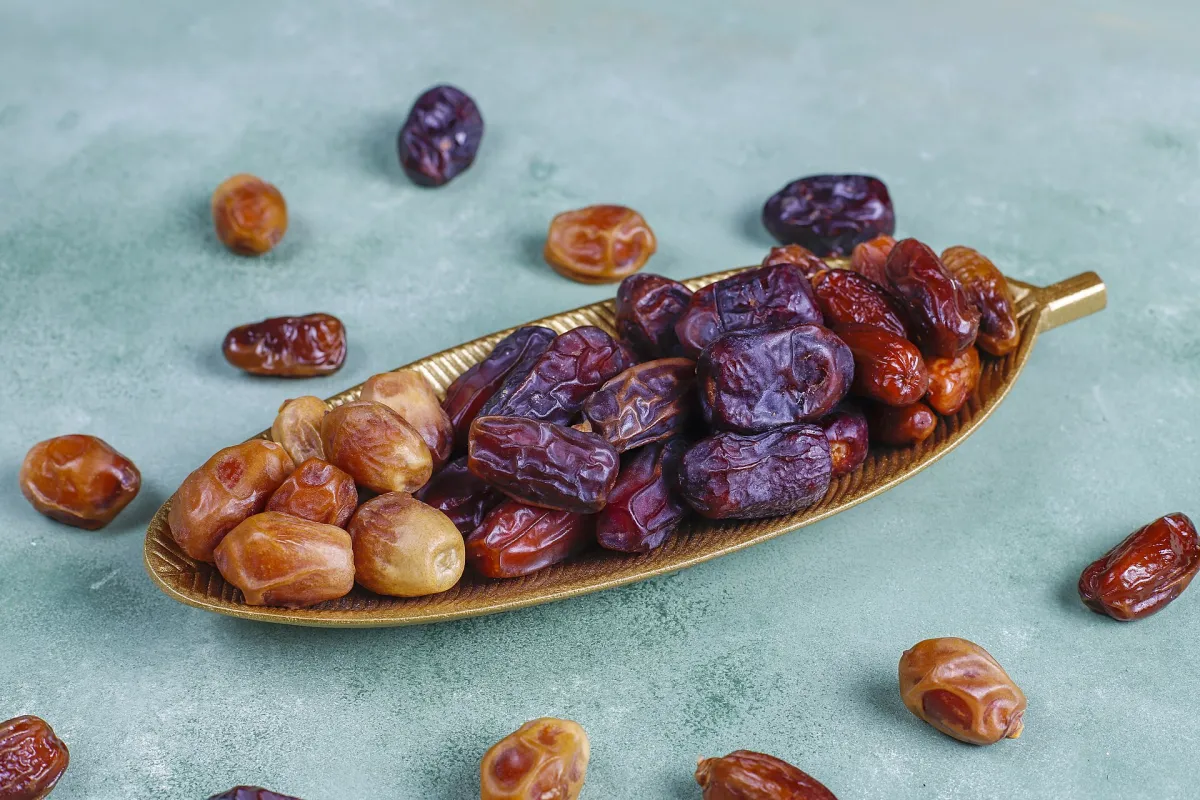
 Photo: AKCD2, CC BY-SA 4.0, via Wikimedia Commons
Dates are the fruit of the date palm and one of the most energizing natural foods: one Medjool date (about 24 g) has around 65 kcal and 16 g of sugars, along with fiber, potassium, magnesium and polyphenols. For most adults, 2 to 4 dates a day make a healthy snack or a good sugar replacement in desserts. Several studies of moderate quality suggest that 6 dates a day in the last 4 weeks of pregnancy may make labor easier. People with diabetes can eat them, but in small portions and alongside protein.
Across the Arab world, the Ramadan fast is traditionally broken with a few dates and water, an old habit with sound logic: their sugars raise energy quickly after a day without food, while their fiber slows things down. In Romania, dates have become popular in recent years as a “healthy sweet” in bars, raw cakes and smoothies. They really are better than sugar, but they are not a food to eat without limits.
Key takeaways
- 100 g of dates has about 280 kcal, 66 g of sugars and 7 g of fiber.
- Their glycemic index is surprisingly low to moderate (around 40 to 55 depending on the variety), thanks to fiber and fructose.
- They are rich in potassium and provide magnesium, copper, vitamin B6 and polyphenols.
- Usual portion: 2 to 4 dates a day; with diabetes, 1 or 2 dates, counted in the meal’s carbohydrates.
- Pregnancy studies suggest a favorable effect on labor, but they do not replace your obstetrician’s advice.
What dates are
Dates come from the date palm (Phoenix dactylifera), cultivated for more than 6,000 years in the Middle East and North Africa. The fruit grows in large clusters and is harvested at different stages of ripeness. In European shops you will mostly find:
- Medjool: large, soft and fleshy with a caramel taste; the most expensive.
- Deglet Noor: smaller, drier, semi-soft with a more delicate flavor; often sold pitted in packs.
- Mazafati, Sukkari, Ajwa and other varieties from Iran, Saudi Arabia or the UAE.
“Dried” dates in shops are fruit left to partly dehydrate on the palm or after harvest; they are not processed with sugar, unlike some candied fruit.
Nutrition facts
Approximate values (USDA FoodData Central):
| Nutrient | 100 g Medjool | 1 Medjool date (~24 g) | 100 g Deglet Noor |
|---|---|---|---|
| Energy | ~277 kcal | ~66 kcal | ~282 kcal |
| Carbohydrates | ~75 g | ~18 g | ~75 g |
| of which sugars | ~66 g | ~16 g | ~63 g |
| Fiber | ~6.7 g | ~1.6 g | ~8 g |
| Potassium | ~700 mg | ~165 mg | ~650 mg |
| Magnesium | ~54 mg | ~13 mg | ~43 mg |
| Copper | ~0.36 mg | ~0.09 mg | ~0.2 mg |
| Vitamin B6 | ~0.25 mg | ~0.06 mg | ~0.17 mg |
| Iron | ~0.9 mg | ~0.2 mg | ~1 mg |
Benefits: what studies show and what is tradition
Quick but “cushioned” energy
Dates contain glucose and fructose in nearly equal amounts, absorbed quickly, which makes them ideal before or during long physical effort (hiking, cycling, running). Unlike refined sweets, their fiber and polyphenols partly slow absorption. Glycemic index studies have found low or moderate values for most varieties, especially when eaten whole.
Regularity
With 7 to 8 g of fiber per 100 g, dates support bowel movements. A small study in which healthy volunteers ate 7 dates a day for 3 weeks reported more frequent bowel movements. The effect is gentler than that of prunes, which also contain sorbitol. For more measures, see our guide to constipation.
Heart and blood pressure
Potassium (almost 700 mg per 100 g) and magnesium contribute to normal blood pressure, especially when dates replace mineral-poor sweets. Date polyphenols show antioxidant activity in laboratory studies. Direct clinical studies on dates and heart disease are few.
Dates in the last weeks of pregnancy
This is the most cited “medical” use. In a study from Jordan published in 2011, women who ate 6 dates a day for the 4 weeks before giving birth arrived at hospital with a more favorable cervix on average, needed labor induction less often and had a shorter first stage of labor. Several later studies and meta-analyses found similar results, but the studies are small and the quality of evidence is rated moderate to low. The reasonable conclusion: for a pregnant woman without gestational diabetes, 6 dates a day in the last month are safe and may help. The decision should be made with your obstetrician, mainly because of the sugar.
What is tradition only
Dates are sometimes promoted for “curing anemia” or “boosting fertility”. They contain very little iron (under 1 mg per 100 g), so they are not a meaningful source for anemia, and there is no evidence for fertility claims.
Dates and diabetes
Dates are not forbidden with diabetes, but they should be treated as what they are: a concentrated source of carbohydrates.
- 1 Medjool date provides about 18 g of carbohydrates, nearly as much as a slice of bread.
- Eat 1 or 2 dates, not more, and count them in the meal total.
- Pair them with protein or fat (a handful of walnuts, almonds or Greek yogurt) to slow the rise in blood sugar.
- Avoid date syrup and bars made mostly of pressed dates, which behave like sugar.
Details in our guide to type 2 diabetes.
How many dates a day
| Situation | Typical amount |
|---|---|
| Snack for an active adult | 2-4 Deglet Noor or 2-3 Medjool |
| Before long exercise | 2-3 dates 30-60 minutes beforehand |
| Weight loss | 1-2 dates as dessert, not as a repeated snack |
| Diabetes | 1-2 dates with protein, counted in carbohydrates |
| Last 4 weeks of pregnancy | up to 6 a day (about 70-80 g), if your doctor agrees |
| Children over 4 | 1-2 pitted dates, chopped |
How to use them: practical ideas
Stuffed dates (a balanced snack)
Pit 2 Medjool dates and fill each with half a walnut or a teaspoon of peanut butter. The fat and protein turn a sugar bomb into a filling snack.
Date paste instead of sugar
Soak 150 g of pitted dates in 150 ml of hot water for 15 minutes, then blend until smooth. Use the paste in cakes, porridge or sauces instead of sugar: a tablespoon of paste replaces roughly 1 to 2 teaspoons of sugar and adds fiber. Keep it in the fridge for up to 7 days.
 Photo: ImanFakhri, CC BY-SA 4.0, via Wikimedia Commons
No-bake energy balls (12 pieces)
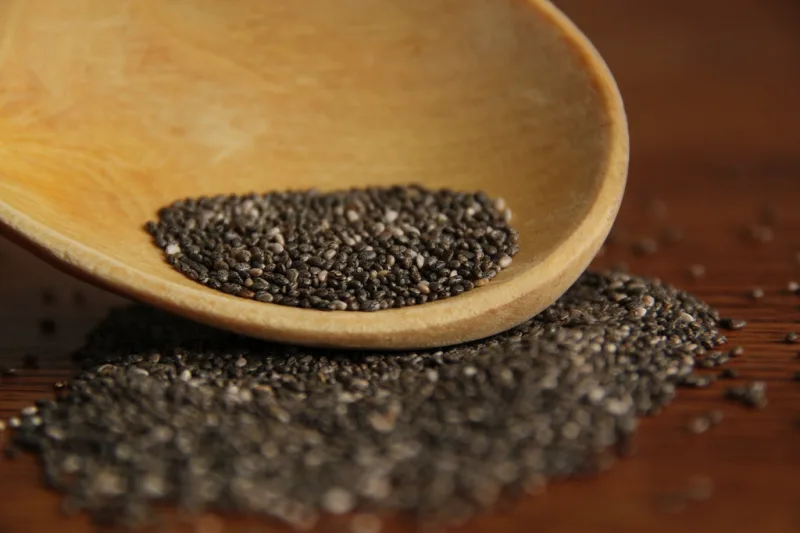
Blend 150 g of pitted dates, 100 g of almonds or walnuts, 2 tablespoons of cocoa, a tablespoon of chia seeds and a pinch of salt until a paste forms, then roll into walnut-sized balls. Each ball has roughly 80 to 90 kcal, so 1 or 2 balls are a snack, not 6.
Contraindications and precautions
- Diabetes and insulin resistance: small portions, with protein.
- Gestational diabetes: dates in the last month of pregnancy only with your doctor’s approval.
- Irritable bowel syndrome: dates are high in fructans and fructose (FODMAPs) and can cause bloating.
- Kidney disease with potassium restriction: watch the amount.
- Sulfite sensitivity: some packaged dates contain preservatives (E220 to E228).
- Teeth: the sticky texture and sugar favor cavities; rinse your mouth or brush afterwards.
- Young children: whole dates, especially with pits, are a choking risk under age 4; chop them finely.
- Quality: cheap loose dates can contain insects or mold. Open them before eating and discard any with a powdery interior or insect webbing.
When to see a doctor
- high blood sugar after sweets, excessive thirst, frequent urination or unexplained weight loss (possible undiagnosed diabetes);
- persistent bloating and abdominal pain after dried fruit, especially with diarrhea;
- in pregnancy: any dietary question in the final weeks, especially with gestational diabetes or high blood pressure.
Common mistakes
“They are natural, so I can eat as many as I like.” Ten Medjool dates add up to almost 650 kcal and 160 g of sugar.
Confusing whole dates with date syrup. The syrup loses the fiber and behaves metabolically like any added sugar.
“No added sugar” bars. They may be 60 to 70% dates; they are still sweets.
Dates on an empty stomach for people with diabetes. Without protein or fat alongside, blood sugar rises faster.
Not checking the inside. Especially with loose dates, it is worth opening them before eating.
Conclusion
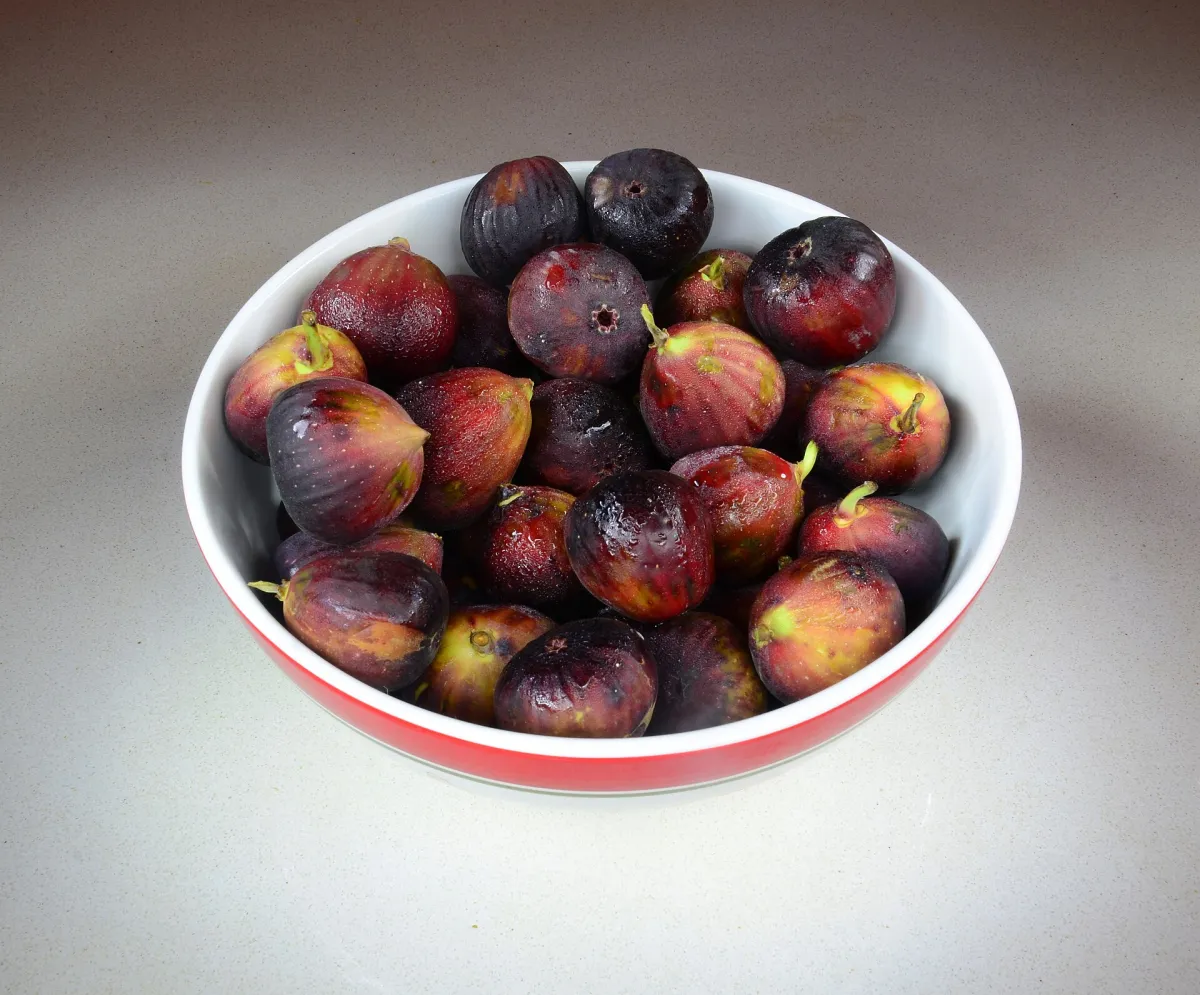
Dates are a high-quality natural sweet: fiber, potassium, magnesium, polyphenols and quick energy, ideal before exercise or as a sugar replacement in recipes. They are still high in sugar, though, so the portion matters: 2 to 4 a day for most adults, 1 or 2 with diabetes. In the last weeks of pregnancy they may favorably affect labor, with your doctor’s agreement. Paired with nuts or yogurt they become a balanced snack, and rotated with figs or prunes they add variety to your diet.
Frequently asked questions
How many dates can I eat a day? For a healthy adult, 2 to 4 dates a day is a reasonable portion. If you are very physically active you can eat more; if you want to lose weight or have diabetes, stick to 1 or 2.
Are dates fattening? Not when eaten in small portions instead of other sweets. They add weight when eaten on top of everything else, because they are energy-dense.
Are dates good for diabetics? They can be included in moderation: 1 or 2 dates with protein, counted in the meal’s carbohydrates. Date syrup and date bars are not recommended.
When should I start eating dates in pregnancy? Studies used 6 dates a day from about week 36 to 37. Talk to your doctor first, especially with gestational diabetes or a risk of a large baby.
Which dates are the healthiest? Differences between varieties are small. Medjool dates are larger and higher in calories per piece; Deglet Noor have slightly more fiber per 100 g. Quantity and the absence of additives matter more.
Do dates help with constipation? Yes, thanks to their fiber, but the effect is gentler than that of prunes. Drink enough water when eating them.
Can children eat dates? Yes, from weaning age, as a paste or finely chopped and pitted. Whole dates are a choking hazard under age 4.
Sources
- USDA FoodData Central: nutrient profiles for “Dates, medjool” and “Dates, deglet noor”.
- Al-Kuran O. et al., study on late-pregnancy date consumption and labor, Journal of Obstetrics and Gynaecology, 2011, and later meta-analyses on the topic.
- Studies on the glycemic index of date varieties (including entries in the International Tables of Glycemic Index).
- World Health Organization: guideline on free sugars intake for adults and children (2015).
This content is for information only and does not replace advice from a doctor or dietitian, especially in pregnancy and diabetes.