 Photo: George Chernilevsky, CC BY-SA 4.0, via Wikimedia Commons
Eggs are a healthy food for most people: one large egg provides about 6 to 7 g of complete protein, plus choline, vitamin B12, vitamin D, selenium, lutein and zeaxanthin, for only 70 to 80 kcal. Research over the last 20 years shows that in healthy people one egg a day does not meaningfully raise cardiovascular risk, and that dietary cholesterol affects blood cholesterol less than once believed. The important exceptions are people with diabetes, familial hypercholesterolemia or existing heart disease, who should agree on the amount with their doctor.
Generations of Romanians grew up on “eggs from the hens in the yard” and on the advice that a soft-boiled egg “gets a convalescent back on their feet”. In the 1980s and 90s, eggs then became the “enemy of the heart” because of the cholesterol in the yolk. The truth, as we see it today, sits somewhere in the middle and depends a lot on who you are and what you eat alongside the egg.
Key takeaways
- One large egg (about 50 g without shell) has roughly 72 kcal, 6.3 g protein, 5 g fat and 185 mg cholesterol.
- For healthy adults, 1 egg a day (7 a week) is considered compatible with a healthy diet.
- The yolk is the “rich” part: choline, vitamins A, D, E, B12 and lutein; the white is mostly protein.
- What comes with the egg matters: eggs with vegetables are a different meal from eggs with bacon, sausages and white bread.
- Raw or undercooked eggs can carry Salmonella; take care with children, pregnant women and older adults.
What is in an egg
A hen’s egg is essentially a “starter kit” for new life, which is why its nutrient profile is so complete. Values below are for one large egg without shell, from USDA FoodData Central (approximate).
| Nutrient | Whole egg (~50 g) | White only (~33 g) | Yolk only (~17 g) |
|---|---|---|---|
| Energy | ~72 kcal | ~17 kcal | ~55 kcal |
| Protein | ~6.3 g | ~3.6 g | ~2.7 g |
| Fat | ~4.8 g | ~0 g | ~4.5 g |
| Cholesterol | ~185 mg | 0 mg | ~185 mg |
| Choline | ~147 mg | ~0.4 mg | ~140 mg |
| Vitamin B12 | ~0.45 µg | trace | ~0.3 µg |
| Vitamin D | ~1 µg (40 IU) | 0 | ~1 µg |
| Selenium | ~15 µg | ~6 µg | ~9 µg |
It is clear that almost all the vitamins, choline and antioxidants are in the yolk. Eating only egg whites means giving up the most valuable part of the egg.
Benefits: what the research shows
High-quality protein
Egg protein contains all the essential amino acids in proportions very close to human needs, and it is highly digestible when cooked (cooking actually improves protein absorption compared with raw egg). For older adults, for whom muscle loss is a real problem, eggs are a cheap and easy-to-chew protein source. See also our article on sarcopenia, where protein at every meal is one of the core measures.
Fullness and weight control
Several studies compared an egg breakfast with a breakfast of the same calories based on cereal or bread. At the next meal, people who had eaten eggs consumed less on average. The effect is not magic, but 2 eggs with vegetables in the morning keep hunger away better than a croissant or a bowl of sweetened cereal.
Choline: the nutrient nobody talks about
Choline is needed for cell membranes, for acetylcholine (a neurotransmitter) and for moving fat out of the liver. Eggs are one of the richest everyday sources. Requirements rise during pregnancy and breastfeeding, when choline supports fetal brain development. Many people fall short of adequate intake, especially those who eat neither eggs nor meat.
Lutein and zeaxanthin for the eyes
The yolk contains two carotenoids that accumulate in the macula, the part of the retina responsible for sharp vision. The amount is modest, but they are very well absorbed thanks to the fat in the yolk. An omelet with spinach is an excellent pairing. For more on eye protection, read our guide to macular degeneration.
Vitamin B12 and vitamin D
Eggs are one of the few natural food sources of vitamin D and a good source of B12 for people who do not eat meat (vegetarians who eat eggs and dairy). They do not cover requirements on their own, but they contribute. More in our articles on vitamin B12 deficiency and vitamin D deficiency.
Eggs and cholesterol: what we know today
The yolk contains about 185 mg of cholesterol. For years, advice was to keep dietary cholesterol under 300 mg a day, practically one egg at most. The US Dietary Guidelines dropped that numeric limit in 2015, and the World Health Organization and European guidelines now focus on saturated fat and the overall dietary pattern.
What research shows:
- In most people, the liver makes less of its own cholesterol when more comes from food. The effect on LDL exists but is moderate.
- Part of the population (sometimes called “hyper-responders”) sees a larger rise in cholesterol from eggs.
- Large meta-analyses have not found a clear link between one egg a day and cardiovascular disease in healthy people. Some studies, however, found a higher risk in people with diabetes who eat many eggs.
- The risk often comes from the “package”: eggs fried in lard with bacon, sausages and white bread.
The practical conclusion: for healthy adults, 1 egg a day is reasonable. If you have high cholesterol, diabetes or heart disease, 3 to 4 eggs a week is a prudent limit until you talk to your doctor, and egg whites can be used freely.
How many eggs can you eat
| Situation | Typical recommendation |
|---|---|
| Healthy, active adult | 1 egg a day, occasionally 2, within a balanced diet |
| Athletes, older adults with low muscle mass | 1-2 eggs a day as part of total protein intake |
| High LDL cholesterol | 3-4 eggs a week; whites without a strict limit |
| Type 2 diabetes | 3-4 eggs a week, agreed with your doctor |
| Familial hypercholesterolemia, coronary disease | As advised by your cardiologist |
| Children over 1 year | 1 well-cooked egg a day is acceptable |
How to cook them most healthily
Boiled eggs: the right timing
Lower room-temperature eggs into gently boiling water (not a hard rolling boil):
- 6 minutes: set white, soft yolk runny at the edges;
- 8 minutes: creamy, “jammy” yolk;
- 10 to 11 minutes: hard-boiled, fully set yolk with no green ring.
Move them straight into cold water for 2 to 3 minutes. The grey-green ring around the yolk appears when an egg is overcooked; it is not dangerous, just a sign of too much heat.
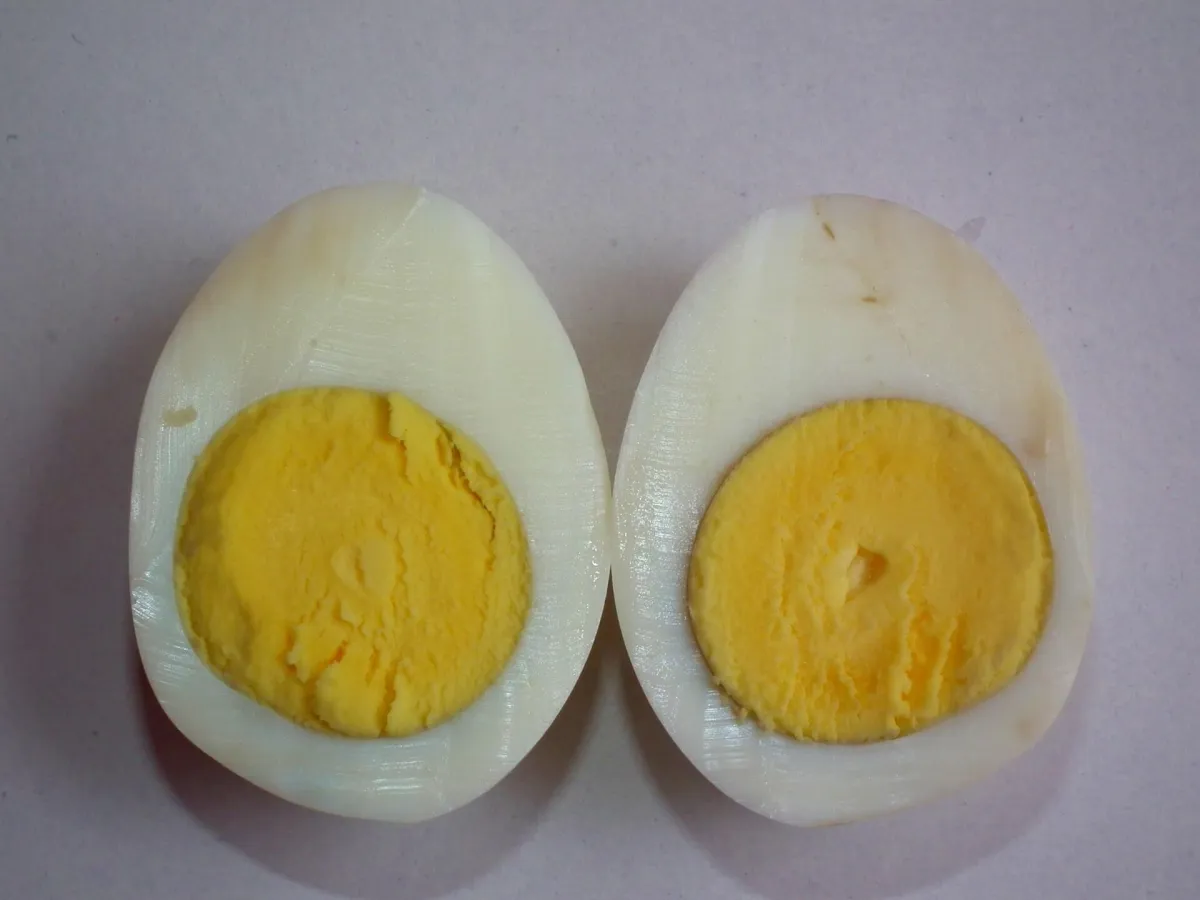 Photo: Ramesh NG, CC BY-SA 2.0, via Wikimedia Commons
Vegetable omelet (2 servings)
Beat 3 eggs with a pinch of salt and pepper. Sauté a spring onion, a diced pepper and a handful of spinach in a tablespoon of olive oil for 2 to 3 minutes. Pour in the eggs and cook over low heat with a lid for 3 to 4 minutes until set. Serve with a slice of wholegrain bread and tomatoes.
Poached egg
Bring water to a gentle simmer (about 85 to 90 °C), add a tablespoon of vinegar, crack the egg into a small bowl and slide it into the water. Cook 3 to 4 minutes, then lift it out with a slotted spoon.
The gentlest methods are boiling, poaching and low-heat omelets. Frying at high temperatures, especially in reused fat, oxidizes some of the cholesterol and adds calories.
Safety: raw eggs, farm eggs and storage
- Raw eggs (in homemade mayonnaise, tiramisu, eggnog-style drinks) can contain Salmonella. For young children, pregnant women, older adults and people with weak immunity, use only well-cooked or pasteurized eggs.
- Farm eggs may have a deeper-colored yolk and sometimes more omega-3 (if hens have access to grass), but they are not automatically safer. They can even carry a higher contamination risk if not sanitarily controlled.
- The shell code in the EU: the first digit shows the farming system (0 = organic, 1 = free range, 2 = barn, 3 = cages), followed by the country code and farm.
- Storage: in the fridge, in their box, not in the door where temperature fluctuates. Do not wash eggs before storing, as water removes the shell’s protective layer.
- The water test: an egg that floats is old and best discarded.
Who should be careful
- Egg allergy: common in children, usually to egg-white proteins. Many outgrow it by school age, but diagnosis and reintroduction should only be done with an allergist.
- People with diabetes, familial hypercholesterolemia or coronary disease: limit yolks as advised by your doctor.
- Advanced kidney disease: protein and phosphorus needs are individualized.
- Gout: eggs are low in purines and are generally a suitable protein source.
When to see a doctor
After eating eggs, seek medical help if you notice:
- swelling of the lips or tongue, difficulty breathing or widespread hives (possible severe allergic reaction, an emergency);
- fever, severe diarrhea or repeated vomiting 6 to 72 hours after raw or undercooked eggs, especially in children, pregnant women and older adults;
- cholesterol levels that remain high despite dietary changes.
Common mistakes
Throwing away the yolk. Most of the vitamins live there. For people with high cholesterol, the answer is 1 whole egg plus 1 or 2 whites, not whites only.
Judging the egg without its side dishes. Eggs with vegetables and wholegrain bread are not the same as eggs with bacon and sausages.
Boiling too long. 15 to 20 minutes of boiling makes the white rubbery and the yolk greenish.
Blind trust in “farm eggs”. They may taste better, but hygiene and freshness matter more than origin.
Raw eggs “for strength”. Protein from raw eggs is absorbed less well and the Salmonella risk is real.
Conclusion
Eggs are a nutrient-dense, cheap and versatile food: complete protein, choline, B12, vitamin D and eye-friendly carotenoids, for few calories. For most healthy adults, one egg a day fits into a balanced diet. People with diabetes, high cholesterol or heart disease should be more careful and discuss the amount with their doctor. Choose gentle cooking methods, pair eggs with vegetables and avoid raw eggs if you belong to a vulnerable group.
Frequently asked questions
How many eggs can I eat per week? A healthy adult can eat around 7 eggs a week without problems, within a balanced diet. People with diabetes or high cholesterol should aim for 3 to 4 yolks a week, with their doctor’s agreement.
Are brown eggs healthier than white eggs? No. Shell color depends on the hen’s breed and does not affect nutritional value. Real differences come from the hens’ feed and living conditions.
Do eggs raise cholesterol? In most people the effect is small, because the liver reduces its own production. Some people respond more strongly, though, and caution is advised for those with diabetes or heart disease.
Is a boiled egg healthier than a fried egg? A boiled or poached egg adds no fat. An egg fried in a little olive oil over medium heat is also a good choice; the problem is deep frying in lots of fat at high heat.
Can I eat eggs on a weight-loss diet? Yes. They are filling and low in calories. A breakfast of 2 eggs with vegetables can reduce hunger until lunch.
Which is better, hen eggs or quail eggs? Nutritionally they are similar by weight (5 quail eggs roughly equal one hen’s egg). Quail eggs have no proven special properties and the same safety rules apply.
Can I eat eggs with cracked shells? Better not. Cracks let bacteria in. If an egg cracks while boiling, it can be eaten right away; cracked raw eggs should be thrown out.
Sources
- USDA FoodData Central: nutrient profiles for “Egg, whole, raw, fresh” and “Egg, yolk / white”.
- Dietary Guidelines for Americans 2015-2020 and 2020-2025: removal of the numeric limit for dietary cholesterol.
- American Heart Association science advisory on dietary cholesterol and cardiovascular risk (2019).
- NIH Office of Dietary Supplements: fact sheets on choline, vitamin B12 and vitamin D.
- EFSA: scientific opinions on Salmonella and egg safety.
This content is for information only and does not replace advice from a doctor or dietitian, especially for heart disease, diabetes or allergies.