 Photo: BenAveling, CC BY-SA 3.0, via Wikimedia Commons
Figs, fresh or dried, are fruits rich in fiber, potassium, calcium and polyphenols. Dried figs contain almost 10 g of fiber per 100 g, more than prunes, and are one of the best plant sources of calcium among fruits. A few small clinical trials have shown that eating figs daily (for example, 2 to 4 soaked dried figs) improves bowel movements in people with functional constipation. Because they are energy-dense and high in sugar, portion size matters, especially with diabetes and on weight-loss diets.
The fig tree grows well in southern Romania, in Dobrogea, Oltenia and along the Black Sea, and in the yards of Constanța or Drobeta-Turnu Severin it is not unusual to find a fig tree laden with sweet fruit in August and September. Grandmothers in the south used dried figs simmered in milk for coughs and “for the tummy”, and figs soaked overnight were a classic constipation remedy.
Key takeaways
- Dried figs: about 250 kcal, 10 g fiber, 160 mg calcium and 680 mg potassium per 100 g.
- Fresh figs: about 74 kcal per 100 g, with less fiber but more water.
- For regularity: 2 to 4 dried figs a day, preferably soaked, with enough water.
- They contribute calcium, potassium and magnesium, useful for bones and blood pressure.
- Precautions: diabetes, IBS (FODMAPs), latex or birch pollen allergy, and irritant sap from the leaves.
What figs are
The fig tree (Ficus carica) belongs to the Moraceae family. It is native to the Middle East and the Mediterranean and has been cultivated for over 5,000 years. What we call the “fruit” is actually a fleshy receptacle enclosing hundreds of tiny flowers, which become the small crunchy seeds that give figs their texture.
In shops you will find:
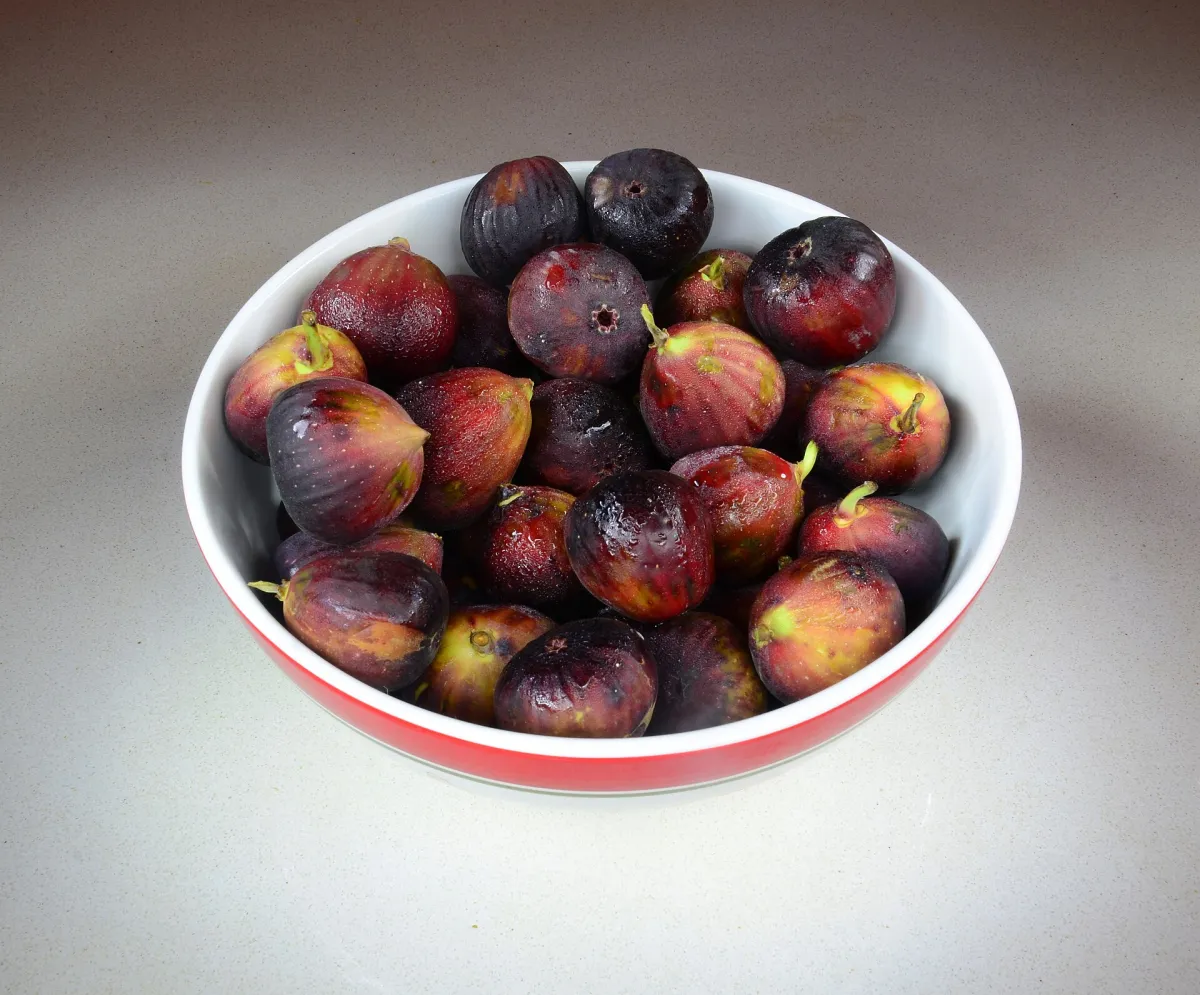
- Fresh figs, in season from August to October; they are very perishable (2 to 3 days in the fridge).
- Dried figs, mainly from Turkey (the pale Sarilop variety), Greece or Spain, available all year.
Nutrition facts
Approximate values (USDA FoodData Central):
| Nutrient | 100 g fresh figs | 100 g dried figs | 1 dried fig (~20 g) |
|---|---|---|---|
| Energy | ~74 kcal | ~249 kcal | ~50 kcal |
| Carbohydrates | ~19 g | ~64 g | ~13 g |
| of which sugars | ~16 g | ~48 g | ~10 g |
| Fiber | ~2.9 g | ~9.8 g | ~2 g |
| Calcium | ~35 mg | ~162 mg | ~32 mg |
| Potassium | ~232 mg | ~680 mg | ~136 mg |
| Magnesium | ~17 mg | ~68 mg | ~14 mg |
| Iron | ~0.4 mg | ~2 mg | ~0.4 mg |
| Vitamin K | ~4.7 µg | ~15.6 µg | ~3 µg |
Compared with other dried fruit, figs stand out for fiber and calcium: 100 g of dried figs has roughly as much calcium as half a glass of milk.
Benefits: what studies show and what is tradition
Regularity
Fig fiber is both soluble (pectins, which form a gel that softens stool) and insoluble (including the seeds, which add bulk). A clinical trial in Korea in adults with functional constipation found that a fig paste eaten daily for 8 weeks improved transit and stool consistency compared with placebo. A later study in people with constipation-predominant irritable bowel syndrome also reported symptom relief with dried figs. The studies are small, but the results match traditional experience. See also our full guide to constipation.
Bones
The calcium, magnesium, potassium and vitamin K in figs contribute to bone health. No studies show that figs prevent fractures, but as a snack instead of refined sweets they bring useful minerals. If bone density concerns you, read our article on osteoporosis, where dairy, vitamin D and exercise remain the main pillars.
Blood pressure
Figs have a high potassium-to-sodium ratio, which supports normal blood pressure as part of a diet rich in fruit and vegetables, such as the DASH diet.
Antioxidants
Figs, especially dark varieties, contain polyphenols (anthocyanins, phenolic acids). Drying concentrates some of them. Their health effects have mostly been studied in the lab.
What is tradition only
Figs simmered in milk are a folk remedy for coughs and hoarseness. As a warm, soothing drink it can calm an irritated throat, but no studies confirm an effect on cough. Fig leaves are used in some countries for blood sugar; there are preliminary studies, but the leaves are not a food and should not be used without a doctor.
How many figs a day
| Goal | Typical amount | Notes |
|---|---|---|
| Snack | 2-3 dried or 2-3 fresh figs | With nuts or yogurt |
| Mild constipation | 3-4 soaked dried figs (60-80 g) | In the morning, with the soaking water |
| Diabetes | 1-2 dried or 2 fresh figs, with protein | Counted in carbohydrates |
| Weight loss | 1-2 dried figs as dessert | High energy density |
| Children over 2-3 years | 1 finely chopped fig | Large pieces are a choking risk |
How to eat them: simple recipes
Soaked figs for regularity
- Rinse 3 dried figs.
- Cut them in half and place them in a mug with 200 ml of boiled, cooled water.
- Leave covered for 8 to 10 hours, overnight.
- In the morning, eat the figs and drink the water with breakfast.
You can alternate weekly with soaked prunes, which also contain sorbitol and have a somewhat stronger effect.
 Photo: Fumikas Sagisavas, CC0, via Wikimedia Commons
Fresh figs with cheese and walnuts
Quarter 4 fresh figs, add 50 g of goat’s cheese or mild feta, a handful of walnuts and a few mint leaves. Finish with a drizzle of olive oil and freshly ground black pepper. A balanced snack, with protein and fat to slow sugar absorption.
Oat porridge with figs
Simmer 40 g of rolled oats in 200 ml of milk, add 2 chopped dried figs in the last 3 minutes and a teaspoon of ground flaxseed. The figs sweeten it enough; no sugar needed.
How to choose and store figs
- Fresh: soft to the touch but not mushy, with intact skin and a sweet, not sour, smell. Keep in the fridge for 2 to 3 days.
- Dried: soft, pliable and evenly colored; a fine whitish layer of crystallized sugar is normal. Discard any with mold, a fermented smell or insects.
- Safe sources: dried figs are one of the products in which European authorities regularly find aflatoxins (toxins produced by molds). Buy from reliable sources rather than loose figs of unclear origin, and do not eat figs that look moldy.
- Storage: keep dried figs in a closed jar in a cool place, or in the fridge in summer.
Contraindications and precautions
- Diabetes: dried figs are high in sugar; small portions with protein. See our guide to type 2 diabetes.
- Irritable bowel syndrome: figs are rich in fructose and fructans (FODMAPs) and can cause bloating in sensitive people, although some studies showed benefits in the constipation type. Test small amounts. Details in our article on irritable bowel syndrome.
- Allergy: people allergic to latex, birch pollen or the weeping fig houseplant (Ficus benjamina) may react to figs.
- Fig sap: the white latex in leaves and stems contains furocoumarins; on skin later exposed to sun it can cause burns and blisters (phytophotodermatitis). Wear gloves when picking and wash your hands.
- Vitamin K antagonist blood thinners: vitamin K content is low, but intake should stay consistent.
- Calcium oxalate kidney stones: dried figs have a moderate oxalate content; for large amounts, talk to your doctor.
- Diarrhea: figs make loose stools worse.
When to see a doctor
- new constipation after age 50, blood in the stool, black stools or unexplained weight loss;
- severe abdominal pain, bloating with vomiting or no passing of gas;
- itching in the mouth, lip swelling or difficulty breathing after figs (possible allergy);
- blisters or burns on the skin after contact with fig leaves and sun exposure.
Common mistakes
Too many figs at once. Ten dried figs mean almost 500 kcal and 100 g of sugar.
Figs without water. Fiber needs fluid to work; otherwise it can increase bloating.
Candied or glazed figs. Some products have added sugar. Check the label.
Ignoring quality. Mold on dried fruit is not just a matter of taste.
Picking with bare hands. The sap can burn the skin in the sun.
Conclusion
Figs are a Mediterranean fruit that fits well in Romanian cooking too: fresh in summer, dried in winter. They bring fiber, calcium, potassium and magnesium, and 2 to 4 soaked dried figs can help regularity, backed by a few clinical trials. They are still energy-dense and high in sugar, so portion size matters, especially with diabetes and weight loss. Rotated with dates, prunes and nuts, they are part of a varied and satisfying diet.
Frequently asked questions
How many dried figs can I eat a day? For a healthy adult, 2 to 4 dried figs a day is a reasonable portion. With diabetes or when losing weight, 1 or 2 are enough.
Do dried figs help with constipation? Yes. They have almost 10 g of fiber per 100 g, and a few clinical trials have shown improved transit. The effect is better if you soak them and drink enough water.
Are fresh or dried figs healthier? Fresh figs have fewer calories and more water; dried figs have more fiber and minerals per gram, but also more sugar. Both are good in the right portions.
Can I eat figs if I have diabetes? Yes, in moderation: 1 or 2 dried figs or 2 fresh figs, with protein or fat, counted in the meal’s carbohydrates.
Are figs high in calcium? For a fruit, yes: about 160 mg per 100 g of dried figs. They do not replace dairy or other main sources, but they contribute.
Why do dried figs have a white coating? It is usually sugar that has crystallized on the surface, completely harmless. Fluffy or greenish growth means mold, and the figs should be thrown out.
Can children eat figs? Yes, after weaning, as a puree or very finely chopped. Large pieces are a choking hazard for small children.
Sources
- USDA FoodData Central: nutrient profiles for “Figs, raw” and “Figs, dried, uncooked”.
- Baek H.I. et al., 8-week randomized, double-blind trial of fig paste in functional constipation (2016).
- Clinical studies on dried fig intake in patients with constipation-predominant irritable bowel syndrome.
- EU Rapid Alert System for Food and Feed (RASFF): notifications on aflatoxins in dried figs.
- Dermatological literature on phytophotodermatitis caused by Ficus carica.
This content is for information only and does not replace advice from a doctor or dietitian.