
Garlic: Benefits for Immunity, Heart Health and How to Use It Right
IMPORTANT: Garlic is generally safe as a food, but in large amounts or as a supplement it can have significant effects. It has blood-thinning properties, so people taking anticoagulants (warfarin, aspirin, clopidogrel) should be cautious and talk to their doctor, especially before surgery. It can lower blood pressure and blood sugar, so those on medication for hypertension or diabetes should monitor their values. In some people it irritates the stomach and causes heartburn or reflux, and applied raw directly to the skin it can cause chemical burns. During pregnancy and breastfeeding, culinary amounts are fine, but concentrated supplements should be avoided without medical advice. Garlic does not replace medical treatment: if you have a serious infection, high blood pressure or high cholesterol, see your doctor.
Grandma Maria from the village of Brebu had a habit no one in the family dared to question: every late-autumn morning, when the cold rains and the sore throats began, she would set on the table a small plate with a crushed clove of garlic spread over a slice of homemade bread smeared with lard and sprinkled with salt. “Whoever eats garlic doesn’t lie sick in bed,” she used to say, chewing without flinching, while we children pinched our noses. She kept a whole head hanging from the rafters, next to the bunch of blessed basil, and treated it like medicine. And the truth is that grandma, though she lived in a house with cold walls and worked the fields her whole life, was rarely truly ill.
Aunt Elena, her neighbor, went even further: she kept a jar of garlic macerated in vinegar and honey, which she took by the teaspoon at the first sign of a scratchy throat. These habits were not local inventions but echoes of a tradition thousands of years old. Garlic (Allium sativum) is one of the oldest plants used simultaneously as both food and remedy. It was cultivated in ancient Mesopotamia and Egypt, given to the workers who built the pyramids to lend them strength, carried by Roman soldiers into battle, and used by medieval physicians against the plague. In Romanian folk cooking and medicine, garlic has always been “the poor man’s antibiotic” and a symbol of protection against illness and evil.
Table of Contents
- What garlic is and where it comes from
- Composition and active compounds: the secret of allicin
- Health benefits
- Traditional uses in folk medicine
- How to prepare and use garlic (step-by-step recipes)
- Dosage and how to take it
- How to choose and store garlic
- Lifestyle: garlic in everyday eating
- Practical tips and common mistakes
- Conclusion
- Frequently Asked Questions
What garlic is and where it comes from
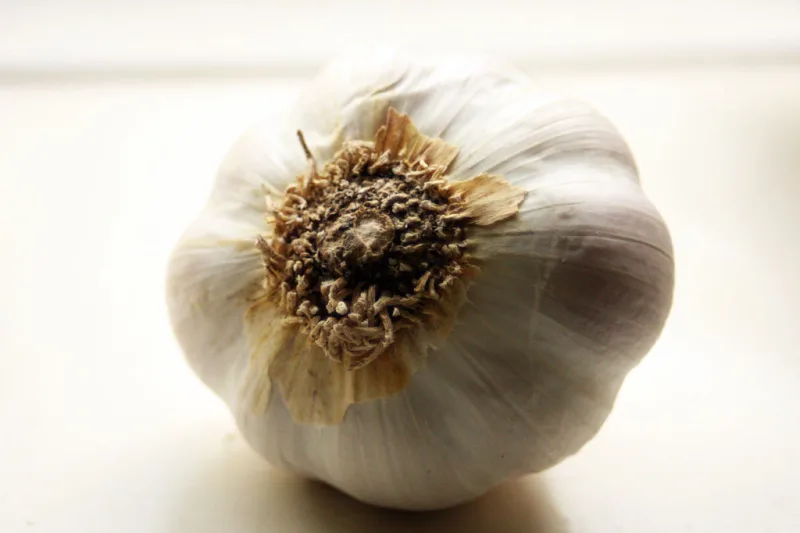
Garlic is a bulbous plant in the Amaryllidaceae family, closely related to onion, leek, shallot and chives. The part we eat is the underground bulb, commonly called the “head,” made up of several “cloves,” each wrapped in a thin, silvery skin. Above ground the plant develops long, flat leaves, and some varieties send up a coiled flower stalk called a “garlic scape,” which is also edible.
Garlic’s origin lies somewhere in Central Asia, from where it spread through trade and migration across the entire Old World. Today it is grown on every continent, and Romania has a solid tradition of cultivating it, with very aromatic local autumn and spring varieties. Autumn garlic, planted in October–November and harvested the following summer, is usually more pungent and richer in active compounds than spring garlic.
What makes garlic so special is not only its aroma but its unique chemistry. In its intact state, a garlic clove is almost odorless. The smell and the power appear only when we cut, crush or chew it — a defense mechanism of the plant that, fortunately for us, releases exactly the substances we are after.
Composition and active compounds: the secret of allicin
Inside the intact clove there is a compound called alliin and an enzyme, alliinase, kept apart in separate compartments of the cells. When we crush garlic, the two meet and, within seconds, allicin is born — the sulfur compound responsible for the sharp aroma and most of the beneficial effects. Allicin, however, is unstable: it quickly breaks down into other sulfur compounds (ajoene, diallyl disulfide, diallyl trisulfide, S-allyl cysteine), which in turn have valuable biological effects of their own.
Besides the sulfur compounds, garlic contains:
- Vitamins: especially vitamin C, vitamin B6 and small amounts of other B vitamins;
- Minerals: manganese, selenium, calcium, phosphorus, iron, copper and potassium;
- Phenolic compounds and flavonoids with antioxidant roles;
- Fructans (inulin) — prebiotic fibers that feed the good bacteria in the gut;
- Saponins and phytosterols involved in regulating cholesterol.
Folk tradition simply says “garlic cleans the blood,” and modern studies suggest that it is precisely this cocktail of sulfur compounds and antioxidants that underlies its reputation as a remedy.
Health benefits
Support for immunity
Garlic’s best-known reputation is as an ally of the immune system. Studies suggest that regular consumption may help the body cope better with seasonal colds, and that people who eat garlic tend to have shorter and milder bouts of illness. The sulfur compounds appear to stimulate the activity of immune cells, and the antimicrobial properties of allicin explain why, in the absence of antibiotics, garlic was used for centuries against infections. It is not a substitute for vaccines or medical treatment, but it is a valuable support within a balanced diet.
Heart and blood vessel health
This is where much of the modern research is concentrated. Studies suggest that garlic, eaten consistently, may contribute to a modest lowering of blood pressure in people with hypertension, thanks to its effect of relaxing the blood vessels. It also appears to help maintain balanced cholesterol values, especially by slightly reducing “bad” (LDL) cholesterol. The compounds in garlic also have a mild blood-thinning effect, reducing the tendency of platelets to stick together — a mechanism useful for circulation, but one that calls for caution in those taking anticoagulants.
Antioxidant and anti-inflammatory action
The phenolic and sulfur compounds in garlic help neutralize free radicals, the unstable molecules that contribute to cellular aging and chronic inflammation. Folk tradition linked garlic with “youth” and vitality, and the basis of this belief seems to be precisely its richness in antioxidants.
Support for digestion and gut balance
The inulin in garlic is a prebiotic fiber that feeds beneficial bacteria in the colon, supporting a healthy gut flora. In folk medicine, garlic was also used as a remedy against intestinal parasites, especially in children and animals. This traditional antiparasitic effect is one of the oldest attributed to the plant.
A possible role in blood sugar regulation
Studies suggest that garlic might help maintain more balanced fasting blood sugar values. For people with diabetes, this is one more reason to include it in their diet, but also to monitor their values carefully if they are on medication.
Traditional uses in folk medicine
In the Romanian household of old, garlic was a constant presence in the “pharmacy” hanging from the rafters. Here are some of the most widespread traditional uses:
- Against colds and cough: raw garlic on bread with lard, or boiled in warm milk with honey.
- For a sore throat: garlic macerated in honey, taken by the teaspoon.
- For blood pressure: a raw clove of garlic in the morning on an empty stomach, followed by a glass of water.
- For intestinal parasites: raw garlic, sometimes combined with pumpkin seeds.
- Poultices for calluses and warts, although these require great caution due to the burn risk.
- Garlic syrup with honey and onion for bronchitis and flu.
These remedies should be seen as part of a tradition, not as guaranteed treatments. For serious conditions, they may complement, but not replace, a doctor’s advice.
How to prepare and use garlic (step-by-step recipes)
The golden rule: let it “breathe”
To get as much allicin as possible, there is a simple and very important trick: after crushing or chopping garlic, let it rest 10 minutes in the air before using or heating it. This pause allows the enzyme to convert alliin into allicin. If you toss it straight into a hot pan, the heat destroys the enzyme before the allicin has a chance to form.
Raw garlic on bread (grandma’s recipe)
- Peel 1–2 cloves of garlic.
- Crush them in a mortar or with the flat of a knife, with a pinch of salt.
- Let the paste rest for 10 minutes.
- Spread it over a slice of whole-grain bread, optionally with a little olive oil. It is eaten mainly in autumn and winter, as support for the immune system.
Garlic macerated in honey
- Peel and thinly slice 4–5 cloves of garlic.
- Place them in a clean jar and cover them completely with raw honey.
- Close the jar and leave it at room temperature, in the dark, for 3–7 days, shaking daily.
- Strain or use directly: 1 teaspoon as needed for a sore throat. Store the maceration in the fridge after preparation.
Garlic boiled in milk with honey (for cough)
- Put 200 ml of milk and 2 crushed garlic cloves in a pot.
- Bring to a gentle boil and let it simmer for 5 minutes.
- Strain, let it cool until lukewarm, then add a teaspoon of honey.
- Drink it in the evening, before bed.
Garlic tincture
- Half-fill a small jar with crushed garlic cloves.
- Cover with food-grade alcohol of 40–60% (or strong plum brandy).
- Leave to macerate for 2 weeks, in the dark, shaking daily.
- Strain. Use in drops, diluted in water, following careful guidance and with caution.
Roasted garlic (the gentle option for the stomach)
- Cut the top off a whole head of garlic without breaking it apart.
- Drizzle with olive oil and salt, wrap in foil.
- Roast at 180°C for about 35–40 minutes, until the cloves are soft and creamy.
- Squeeze the sweet, fragrant paste onto toasted bread. Roasted garlic is much gentler on the stomach and easier to digest, although it loses some of its allicin.
Dosage and how to take it
For a healthy adult, as a food, 1–2 cloves of garlic per day is a reasonable amount and is generally considered safe. Many people prefer to split the amount: half in the morning, half in the evening. For those who cannot tolerate raw garlic, the moderately cooked or roasted version is a gentler alternative.
Standardized garlic supplements should be used strictly according to the manufacturer’s instructions and, ideally, after talking to your doctor, especially if you take other medications. More does not necessarily mean better: in excessive amounts, garlic can irritate the digestive tract and amplify the blood-thinning effect.
How to choose and store garlic
When buying, choose heads that are firm and heavy for their size, with dry, intact outer skins. Avoid garlic that is soft, spotted, moldy or that has started to sprout (cloves with a green shoot are more bitter and less aromatic).
Store garlic in a cool, dry and well-ventilated place, away from direct light — a basket or a net is ideal. Do not keep it in closed plastic bags or in the fridge when whole and raw, because moisture encourages mold and sprouting. A whole head will keep this way for several weeks. Peeled cloves keep for a few days in the fridge, and chopped garlic can be frozen in small portions or preserved in oil only in the fridge and for the short term (beware of the botulism risk if it is kept in oil at room temperature).
Lifestyle: garlic in everyday eating
The healthiest way to benefit from garlic is not a drastic “cure,” but including it consistently in everyday food. Added at the end, to warm dishes, sauces, dressings, soups, stews and marinades, garlic adds flavor and, over time, brings its benefits. A spoonful of garlic sauce alongside roasts, garlic in vegetable spreads, in soups, or in garlic bread are delicious and practical ways to eat it regularly.
For those wary of garlic breath, a few tricks help: chewing a leaf of parsley or mint, a few fennel seeds, eating an apple or drinking a glass of milk after the meal. The smell does not come only from the mouth, but also from the metabolism of the sulfur compounds, so it does not vanish completely, but it does fade.
Practical tips and common mistakes
Mistake no. 1: Cooking it immediately after crushing. Many people crush garlic and toss it straight into hot oil. The heat destroys the enzyme and prevents allicin from forming. Let it rest for 10 minutes in the air first.
Mistake no. 2: Frying it until it burns. Burnt garlic turns bitter and loses its virtues. Add it toward the end of cooking and do not let it blacken.
Mistake no. 3: Eating too much “to be on the safe side.” More cloves do not mean more health, but often an irritated stomach, heartburn and an increased risk of bleeding. Moderation is key.
Mistake no. 4: Applying raw garlic directly to the skin for a long time. For warts or calluses, many people place a raw clove on the skin and keep it there for hours. The risk of a chemical burn is real. The healthy skin around it must be protected and the contact limited.
Mistake no. 5: Preserving it in oil at room temperature. Raw garlic in oil kept warm is an ideal environment for the bacterium that produces botulinum toxin. Such preserves must be kept only in the fridge and eaten quickly.
Mistake no. 6: Ignoring drug interactions. If you take anticoagulants, blood pressure or diabetes medication, do not switch to large amounts of garlic or supplements without talking to your doctor.
Mistake no. 7: Using sprouted cloves as if they were fresh. The green shoot in the middle is bitter; remove it if the garlic has started to sprout.
Conclusion
Garlic is one of the most precious gifts of the traditional pantry: an accessible, fragrant food-remedy supported alike by folk wisdom and modern research. Used sensibly — in moderation, allowed to “breathe” after crushing, and included consistently in the diet — it can support immunity, heart health and digestive balance. It is not a miracle medicine and does not replace doctor-prescribed treatment, but as a daily habit it richly deserves the place of honor our grandmothers gave it on the rafters. Listen to your body, respect the right measure, and enjoy both its taste and its benefits.
Frequently Asked Questions
How many cloves of garlic can I eat per day? For a healthy adult, 1–2 cloves a day is a reasonable and generally safe amount. Above this, the risk of stomach irritation and the blood-thinning effect increase, so do not overdo it.
Is raw garlic better than cooked garlic? Raw garlic retains the most allicin, so it is the most “powerful.” Cooking reduces some of the active compounds, but cooked or roasted garlic remains beneficial and is much gentler on the stomach. The ideal is to combine them.
Does garlic really lower blood pressure? Studies suggest a modest blood-pressure-lowering effect in people with hypertension, especially with regular consumption. However, it does not replace prescribed medication; talk to your doctor before making any changes.
Why does garlic smell so strong and how do I get rid of the smell? The smell comes from the sulfur compounds released on crushing. To soften it, chew parsley, mint or fennel, or drink a glass of milk after the meal. The smell does not disappear entirely, because part of it is released through the breath after metabolism.
Can I take garlic if I am on anticoagulants? Garlic has a blood-thinning effect that can add to that of anticoagulants. Small culinary amounts are usually tolerated, but supplements and large amounts should be avoided without medical advice, especially before surgery.
Is garlic good for children? In small culinary amounts, cooked garlic from food is generally well tolerated by children. Raw, pungent garlic can irritate a small child’s stomach, and supplements should not be given to children without a doctor’s advice.
How do I store garlic so it doesn’t spoil quickly? Keep it in a cool, dry, ventilated place, away from direct light, in a basket or net — not in a plastic bag and not in the fridge when whole and raw. This way it keeps for several weeks.
Does roasted garlic still have the same benefits? Roasted garlic is gentler and easier to digest, but it loses some allicin to the heat. It remains a good source of sulfur compounds and antioxidants, but for maximum effect, raw garlic is unbeatable.