
Hemp Seeds: Benefits, Protein, Omega and How to Consume Them
IMPORTANT: Food-grade hemp seeds (from Cannabis sativa varieties with negligible THC content) are a food, not a drug, and produce no psychoactive effect whatsoever. Even so, if you are taking anticoagulant medication, if you have a chronic kidney condition, if you are pregnant or breastfeeding, or if you must undergo a workplace drug test (in rare cases, seeds with surface contamination could influence the result), talk to your doctor before adding them regularly to your diet. People with seed allergies should be cautious the first time they try them. Hemp seeds complement a balanced diet but do not replace medical treatment for any condition.
A story from the edge of the village
Aunt Veronica, a lean and cheerful woman from my grandparents’ village in the Mureș Valley, kept hemp seeds in a cloth sack hanging in her pantry, which she simply called “the good seed.” In the old days, in many households across Transylvania and Moldavia, hemp was grown for fiber and cloth, and the leftover seed was never thrown away: it was fed to the birds, pressed for oil, and in hard winters lightly toasted in a pan and eaten with a pinch of salt, just like sunflower seeds. Aunt Veronica used to say that “this seed keeps hunger away and puts strength in your arms,” and the village children left with their pockets full whenever they stopped by.
Only later did I understand that the old folks’ intuition held a kernel of nutritional truth: that modest, grayish-green seed is one of the most balanced plant sources of protein and healthy fats we have within reach. What was simply “the good seed” to Aunt Veronica is today called a superfood in the language of health stores, and its rediscovery deserves our full attention.
What are hemp seeds
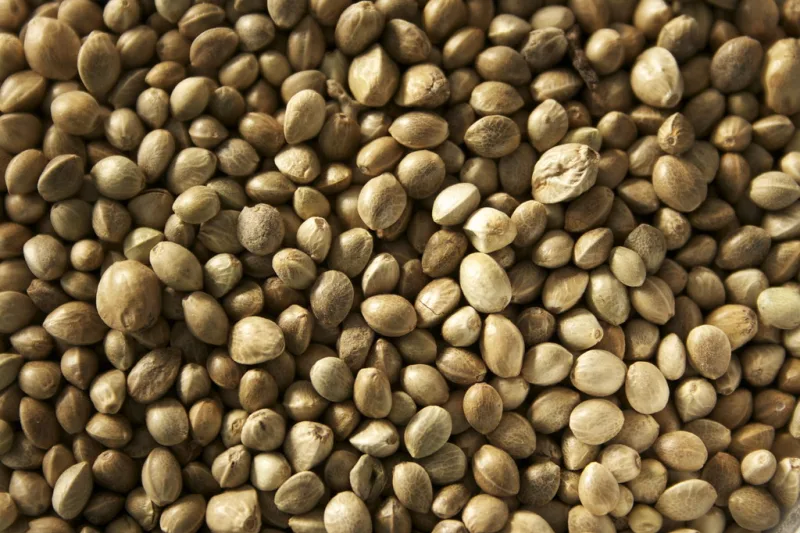
Hemp seeds are the fruits of the Cannabis sativa plant, grown in industrial varieties (technical hemp) specially selected for a very low content of tetrahydrocannabinol (THC), the psychoactive compound. In their whole form, the seeds have a thin, crunchy shell that is grayish-green or brown. Hulled, the tender kernel is often called “hemp hearts,” with a creamy-green color, a delicate, slightly nutty flavor, and a soft, buttery texture.
Hemp is one of the oldest plants cultivated by humans, used for thousands of years for fiber, paper, and rope, but also for food and oil. In Romania, hemp cultivation was, until the twentieth century, an essential component of rural life. Today, hemp seeds are returning to the attention of nutritionists thanks to their remarkable nutrient profile: complete protein, essential fatty acids in an ideal ratio, minerals, and fiber.
Table of Contents
- The nutritional value of hemp seeds
- Health benefits
- How to consume them: ideas and step-by-step recipes
- How much to eat daily
- How to choose and store them
- Lifestyle: integrating hemp into everyday eating
- Practical tips and common mistakes
- Conclusion
- Frequently Asked Questions
The nutritional value of hemp seeds
Few plant foods manage to combine so many qualities in a single seed. Here is what makes them special.
Complete protein. Hemp seeds contain around 25-30% protein, placing them among the richest plant sources. More importantly, they provide all nine essential amino acids, which is why they are considered a “complete” protein, a rarity in the plant world. Their predominant proteins, edestin and albumin, are easy to digest, making them valuable for vegetarians, vegans, and athletes.
Essential fatty acids in an ideal ratio. About 30% of the seeds’ weight is oil, rich in polyunsaturated fatty acids. The distinctive feature of hemp is the ratio between omega-6 (linoleic acid) and omega-3 (alpha-linolenic acid), considered by many specialists to be close to the optimal proportion for the human body, around 3:1. In addition, hemp contains gamma-linolenic acid (GLA), a rare omega-6 with anti-inflammatory properties, also found in evening primrose and borage oils.
Minerals. The seeds are a good source of magnesium, phosphorus, potassium, iron, zinc, and manganese. Magnesium supports muscle and nerve function, iron is involved in oxygen transport, and zinc supports immunity.
Fiber. Whole seeds (with the shell) are rich in both soluble and insoluble fiber, which support intestinal transit and feed beneficial gut flora. The hulled version has less fiber because the shell is removed.
Vitamins. Hemp provides vitamin E (an antioxidant that protects fats from oxidation) and B-complex vitamins, including B1, B2, B3, and B6.
Health benefits
Folk tradition and modern observation often meet when it comes to hemp seeds. Here are the main ways in which they may contribute to good health. Remember that we are talking about a food that supports the body, not a medicine.
Support for the heart and blood vessels
The healthy fats in hemp, especially alpha-linolenic acid and GLA, are traditionally associated with maintaining cardiovascular health. Studies suggest that a balanced intake of omega-3 and omega-6 fatty acids may help keep cholesterol within a normal range and support the elasticity of blood vessels. Arginine, an amino acid abundant in hemp, is a precursor to nitric oxide, a molecule that helps relax and widen blood vessels.
A valuable protein source for muscles
For those reducing their meat intake or following a vegan diet, hemp seeds are an excellent way to meet protein needs. The essential amino acids support the repair and maintenance of muscle mass, which is why hemp protein powder has become popular among athletes and active people.
Supporting digestion
Whole seeds, rich in fiber, help regulate intestinal transit and prevent constipation. Soluble fibers fermented by gut bacteria produce short-chain fatty acids that benefit colon health. Even the hulled version contributes to a feeling of fullness thanks to its combination of protein and fat.
Hormonal balance and premenstrual comfort
The gamma-linolenic acid (GLA) in hemp is valued in herbal practice for its role in supporting hormonal balance. The tradition of using GLA-rich oils to ease premenstrual discomfort is an old one, and hemp seeds deliver this fatty acid in a pleasant food form.
Healthy skin, hair, and nails
The combination of essential fatty acids, vitamin E, and zinc makes hemp an ally of the skin. Regular consumption is associated with maintaining skin hydration and elasticity, and folk tradition also used hemp oil externally for dry or irritated skin.
Energy and a steady nervous system
Magnesium and B-complex vitamins support energy metabolism and the proper functioning of the nervous system. A serving of hemp seeds at breakfast provides lasting energy, without the blood-sugar spikes and crashes associated with sugary foods.
How to consume them: ideas and step-by-step recipes
The great advantage of hemp seeds is their versatility. They have a delicate, nutty flavor that pairs with both sweet and savory dishes. They are best eaten raw or lightly toasted, since high heat degrades their sensitive fatty acids.
Sprinkled over food (the simplest way)
Put a teaspoon or two of hulled seeds over yogurt, on a salad, into a creamy soup, or over a plate of vegetables. It requires no preparation and instantly adds protein and good fats.
Energizing hemp smoothie
- Place a banana, a handful of fresh spinach, 250 ml of plant milk (oat or almond), and 2 tablespoons of hulled hemp seeds into a blender.
- Add, if you like, a teaspoon of honey and a few ice cubes.
- Blend for 30-40 seconds until creamy.
- Drink immediately, as a quick breakfast or a post-workout snack.
Homemade hemp milk
- If using whole seeds, soak 1 cup in water overnight (hulled seeds need no soaking).
- Place the drained seeds in a blender with 3-4 cups of cold water.
- Blend on high for 1-2 minutes.
- Strain through cheesecloth or a fine sieve (with the hulled version you can even skip straining).
- Add a pinch of salt, a teaspoon of honey, or a little vanilla, to taste.
- Keep refrigerated for 2-3 days and shake before serving.
Hemp seed pesto
Replace the pine nuts in the classic pesto recipe with hulled hemp seeds: blend fresh basil, garlic, parmesan (or nutritional yeast for a vegan version), olive oil, and 3-4 tablespoons of hemp seeds. You get a creamy, nourishing sauce for pasta or toast.
Raw energy bars
Blend soft dates, rolled oats, a tablespoon of peanut butter, and 2-3 tablespoons of hemp seeds. Press the mixture into a tray, refrigerate for a few hours, and cut into bars. They make an ideal snack for hikes or an office break.
Porridge and oatmeal topping
Stir hemp seeds into warm oatmeal along with berries and a teaspoon of cinnamon. Add them at the end, after turning off the heat, to keep the fatty acids intact.
How much to eat daily
A typical serving is 1-3 tablespoons per day (about 15-45 g) of hulled seeds. It is wise to start with a small amount, a teaspoon or two, especially if you are not used to fat-rich seeds, to let your digestive system adjust. People who exercise intensely or follow vegetarian diets can gradually work up to 3-4 tablespoons per day. As with any calorie-dense food, moderation is key: hemp seeds are nourishing but also relatively high in calories.
How to choose and store them
Choose seeds from trustworthy producers, preferably from organic farming, packaged in opaque bags that protect them from light. Fresh hulled seeds have a creamy-green color and a fine, nutty smell. Avoid any with a rancid or bitter odor, a sign that the fats have oxidized.
Because they are rich in sensitive fatty acids, hemp seeds keep best in the refrigerator, in an airtight container, away from light and heat. This way they stay fresh for several months. Larger quantities can even be kept in the freezer. Cold-pressed hemp oil must be refrigerated and should never be used for frying.
Lifestyle: integrating hemp into everyday eating
Hemp seeds should not be seen as a “miracle cure” but as one piece of a balanced food puzzle. The best approach is to make them part of a simple routine: a spoonful in the morning smoothie, one sprinkled over the lunch salad, one in the evening yogurt. Combined with a varied diet rich in vegetables, fruit, whole grains, and diverse protein sources, they express their potential best.
For families with children, hulled seeds are a discreet way to enrich dishes with nutrients: they can be added to pancake batter, vegetable patties, or homemade bread. For older people, the soft texture of the hulled kernel makes it easy to eat without chewing effort. And for athletes, hemp protein powder is a plant-based alternative to classic supplements.
Practical tips and common mistakes
Mistake no. 1: Frying them at high temperatures. The essential fatty acids in hemp are heat-sensitive. If you want a lightly toasted flavor, use a pan over low heat for a few minutes, stirring constantly. For maximum benefits, eat them raw.
Mistake no. 2: Keeping them in the cupboard at room temperature. Left in heat and light, the fats oxidize and develop a rancid taste. Their place is in the refrigerator, in a sealed jar.
Mistake no. 3: Confusing food seeds with drugs. Technical hemp seeds contain no significant amounts of THC and have no psychoactive effect. They are a perfectly legal and safe food.
Mistake no. 4: Starting with large amounts. Jumping straight to 4-5 tablespoons a day can cause mild digestive discomfort. Increase the amount gradually.
Mistake no. 5: Relying on them alone for protein. As rich as they are, hemp seeds work best as part of a varied diet, alongside legumes, grains, and other seeds.
Mistake no. 6: Adding them to soup while it boils. Add them at the end, in the bowl, after turning off the heat, to preserve the valuable fats.
Conclusion
Hemp seeds are a beautiful example of a traditional food rediscovered by modern nutrition. What Aunt Veronica simply called “the good seed” turns out to be a remarkably balanced source of complete protein, essential fatty acids, minerals, and fiber. Eaten in moderation, raw or lightly toasted, sprinkled over everyday dishes, they can quietly and pleasantly enrich the whole family’s diet. Like any food, they work no miracles on their own, but within a varied diet and a healthy lifestyle they truly show their worth. The wisdom of our grandparents, who never wasted anything the earth provided, is once again worth listening to.
Frequently Asked Questions
Do hemp seeds make you high or have a drug effect? No. Food-grade hemp seeds come from industrial varieties with negligible THC content and produce no psychoactive effect. They are a safe and legal food.
What is the difference between whole and hulled seeds? Whole seeds have a crunchy shell and are richer in fiber but coarser in taste. Hulled seeds (“hemp hearts”) have a tender, buttery kernel, richer in protein and fat but lower in fiber. Both are valuable.
Can I eat hemp seeds every day? Yes, in moderate amounts (1-3 tablespoons per day) they can be eaten daily as part of a balanced diet. Start with a small amount and increase gradually.
Are they suitable for vegans and vegetarians? Absolutely. Being a complete protein with all essential amino acids, hemp seeds are highly valued in diets free of animal products.
Can children eat them? Yes, hulled seeds, with their soft texture, can be added to older children’s meals in small amounts, sprinkled over food. For young children and in case of an allergy history, consult your pediatrician.
How do I recognize rancid seeds? They have a bitter, sharp, unpleasant smell and taste. Fresh seeds smell faintly of nuts. If you notice any rancidity, throw them away.
Are they good for weight loss? Thanks to their combination of protein and good fats, hemp seeds provide satiety and can support a weight-loss diet, provided they are eaten in moderation, since they are calorie-dense.
Can they be eaten during pregnancy or breastfeeding? As a food, hemp seeds are generally considered safe, but as with any dietary change during this period, it is best to talk to your doctor first.