 Photo: BastienM, CC BY-SA 3.0, via Wikimedia Commons
Jerusalem artichoke (Helianthus tuberosus), also called sunchoke, is a knobbly tuber related to the sunflower and one of the richest food sources of inulin, a prebiotic fibre we cannot digest but that feeds beneficial bacteria in the colon. Because it contains almost no starch, it raises blood sugar far less than potatoes and can replace them in many dishes. The benefits are real but modest, and inulin easily causes gas: introduce it gradually, and be aware that people with IBS or SIBO often tolerate it poorly.
Key takeaways:
- Jerusalem artichoke is, alongside chicory root, one of the richest dietary sources of inulin.
- Inulin has a well-documented prebiotic effect: it increases bifidobacteria and supports regular bowel movements.
- Swapping potatoes for sunchokes lowers the glycemic load of a meal, but it is not a diabetes treatment.
- Start with 30-50 g cooked or 1-2 tablespoons grated raw and build up over 2-3 weeks.
- It is high in FODMAPs (fructans): with IBS, SIBO or on a low-FODMAP diet, avoid it or test it carefully.
- Eat it raw, roasted, boiled, in a creamy soup or fermented; the thin skin can stay on after a good scrub.
What is Jerusalem artichoke?
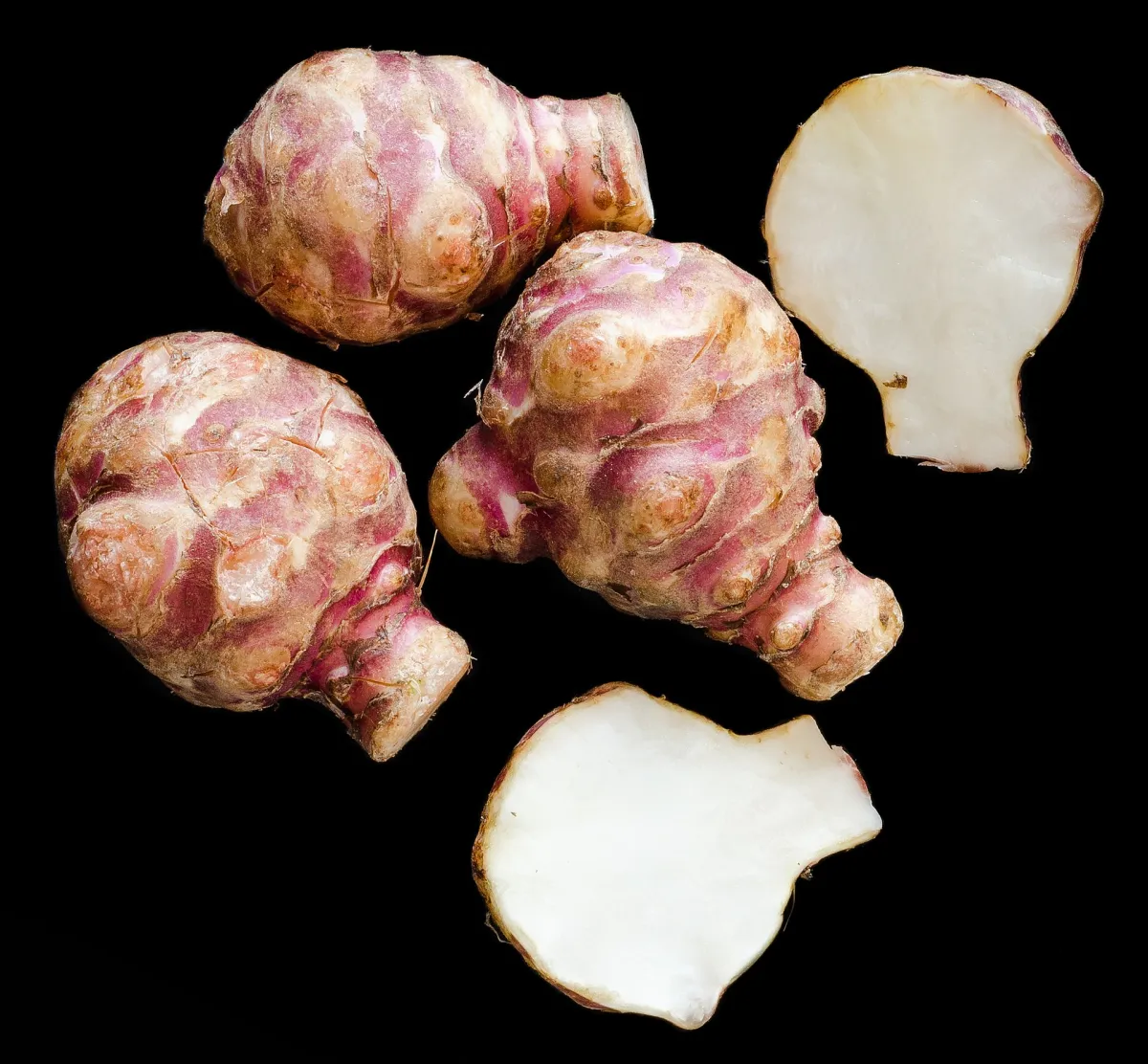
The plant comes from North America and reached Europe in the 17th century. It grows tall, with rough stems and yellow flowers that look like small sunflowers and open in autumn. The edible part is the knobbly tuber, with beige, reddish or purple skin and crisp white flesh that tastes sweet and nutty, somewhere between a water chestnut and an artichoke heart. Despite the name, it has nothing to do with Jerusalem or with globe artichokes.
Tubers are harvested in late autumn and winter, ideally after the first frosts. Cold converts part of the inulin into simple sugars, so tubers dug after a frost taste sweeter. In the garden the plant is invasive: any small piece left in the soil sprouts again in spring.
What it contains
- Inulin and fructooligosaccharides (FOS): chains of fructose that our enzymes cannot break down. They are the tuber’s main storage carbohydrate, taking the place that starch has in potatoes.
- Potassium in useful amounts, plus iron, magnesium and phosphorus.
- B vitamins, especially thiamine (B1).
- Polyphenols and a little protein.
- Very little fat and a moderate calorie content.
The exact inulin content varies widely with variety, soil, harvest time and storage, which is why figures differ from source to source.
Inulin: what it does in your gut
Inulin passes undigested through the stomach and small intestine and reaches the colon, where bacteria ferment it. That makes it a prebiotic: a substance selectively used by beneficial microorganisms, according to the ISAPP consensus definition. Fermentation produces short-chain fatty acids, mainly butyrate, acetate and propionate, which nourish the cells lining the colon, slightly acidify the gut environment and help regulate metabolism.
The less pleasant part: the same fermentation also produces gas (hydrogen, carbon dioxide and, in some people, methane). Hence the bloating and flatulence that earned the sunchoke its English nickname, the fartichoke.
Benefits: what the evidence says and what is tradition
Gut flora (good evidence for inulin)
The prebiotic effect of inulin-type fructans is among the best studied in nutrition science: many human studies show bifidobacteria increasing in the colon with regular intake. There are also small studies using inulin from Jerusalem artichoke itself, added to fruit and vegetable drinks, with a similar prebiotic effect. What is still unclear is how much this shift in gut flora translates into concrete clinical benefits for each individual.
Bowel regularity (good evidence for inulin)
The European Food Safety Authority (EFSA) has accepted a health claim for chicory inulin: it contributes to normal bowel function by increasing stool frequency, at an intake of at least 12 g a day. Jerusalem artichoke contains the same type of fibre, so a similar effect is plausible, although a normal serving usually provides less inulin than the studies used. For a fuller approach, see our guide to natural remedies for constipation.
Blood sugar (moderate evidence, modest effect)
Two things need separating here. The first effect is simple and certain: sunchokes contain little starch, so a serving raises blood glucose much less than the same amount of potato. That swap is useful for anyone watching their blood sugar.
The second effect, of inulin itself, is less certain. Meta-analyses of inulin supplements in people with prediabetes or type 2 diabetes show small improvements in fasting glucose and insulin sensitivity in some trials, but results are inconsistent and the doses are usually higher than you would get from food. The honest conclusion: Jerusalem artichoke is a good food for people with diabetes, not a treatment.
Fullness and weight
Fermentable fibre slows stomach emptying and influences satiety hormones. In practice, a meal with sunchokes keeps you full without many calories. Weight studies with inulin show small effects, so do not expect to lose weight from this food alone.
Traditional uses
In Romanian and Central European folk medicine the tuber was recommended for blood sugar, for blood cleansing and for fatigue, and the raw juice for the stomach. Apart from the blood sugar role discussed above, these uses are not supported by human studies.
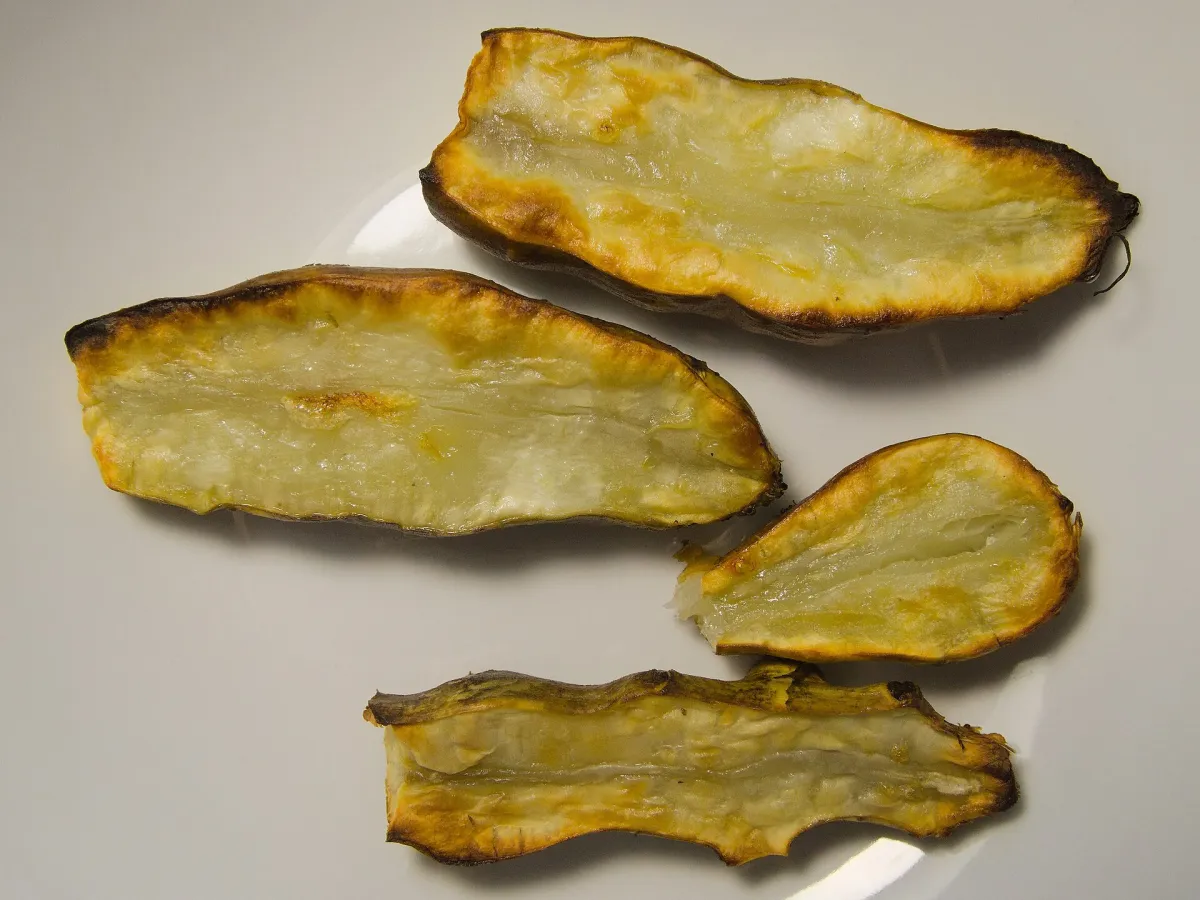 Photo: Adrian Tync, CC BY-SA 4.0, via Wikimedia Commons
How to eat Jerusalem artichokes: simple recipes
Preparation: scrub the tubers under running water with a stiff brush. The skin is thin and edible; if you prefer to peel them, use a vegetable peeler or the edge of a teaspoon. The flesh browns quickly once cut, so drop the pieces into a bowl of water with the juice of half a lemon.
Raw salad with apple and carrot (2 servings)
- Grate 100 g Jerusalem artichoke, one medium carrot and one tart apple.
- Immediately add the juice of half a lemon.
- Stir in 1 tablespoon cold-pressed sunflower or olive oil, salt, a handful of chopped parsley or dill and 1 tablespoon sunflower seeds.
- Serve straight away. Raw sunchoke has the strongest prebiotic effect, and also the greatest potential for gas.
Roasted Jerusalem artichokes
- Heat the oven to 200°C (390°F).
- Cut 500 g tubers into 2-3 cm chunks, skin on.
- Toss with 2 tablespoons oil, salt, pepper, 1 teaspoon caraway or rosemary and 2-3 whole garlic cloves.
- Roast for 30-35 minutes, turning once, until golden at the edges and soft inside.
Creamy Jerusalem artichoke soup (4 servings)
- Gently sweat one chopped onion in 1 tablespoon butter or oil for 5 minutes.
- Add 400 g diced Jerusalem artichoke, one diced potato and 1 litre vegetable stock.
- Simmer over low heat for 20-25 minutes, until soft.
- Blend, season with salt, add a pinch of nutmeg and, if you like, a spoonful of yogurt or cream.
Mash and crisps
Mash them like potatoes after boiling for 15-20 minutes, or go half and half with potato, a gentler option at the start. For crisps, slice very thinly, brush lightly with oil and bake at 180°C (355°F) for 15-20 minutes, watching closely because they burn quickly.
Fermented sunchokes
Put slices into brine (2 tablespoons salt per 1 litre water) with garlic, dill and mustard seeds, the way Romanians make autumn pickles, and leave to ferment for 1-2 weeks at room temperature, then refrigerate. Fermentation uses up part of the fructans and adds lactic acid bacteria, just like sauerkraut.
Worth knowing: boiling in plenty of water draws some fructans out into the liquid, and long cooking breaks part of the inulin down into fructose, which is why cooked tubers taste sweeter and are easier to tolerate. In a soup, however, the fructans stay in the liquid, so a creamy soup is not gentler than roasted chunks.
How much to eat and how to introduce it gradually
There is no set dose for a healthy person. As a guide, many people tolerate a 100-150 g cooked serving 2-3 times a week well after a period of adjustment. Gut flora adapts within a few weeks to a higher intake of fermentable fibre, and gas usually decreases.
| Period | Approximate amount | Recommended form | What to watch |
|---|---|---|---|
| Week 1 | 30-50 g, twice | Cooked (roasted, mashed with potato) | Bloating, cramps, stool consistency |
| Week 2 | 50-80 g, 2-3 times | Cooked; try 1-2 tablespoons grated raw | Mild symptoms that pass within hours |
| Week 3 | 100-150 g, 2-3 times | Cooked or raw, as tolerated | Overall comfort, regularity |
| After that | Normal serving, rotated with other vegetables | Varied | Do not exceed what feels good |
What else helps: eat it as part of a meal rather than on its own; chew well; pair it with spices traditionally used against gas, such as caraway, fennel or dill; drink enough water; and do not stack other big fructan sources on the same day (lots of raw onion, garlic, chicory, inulin supplements).
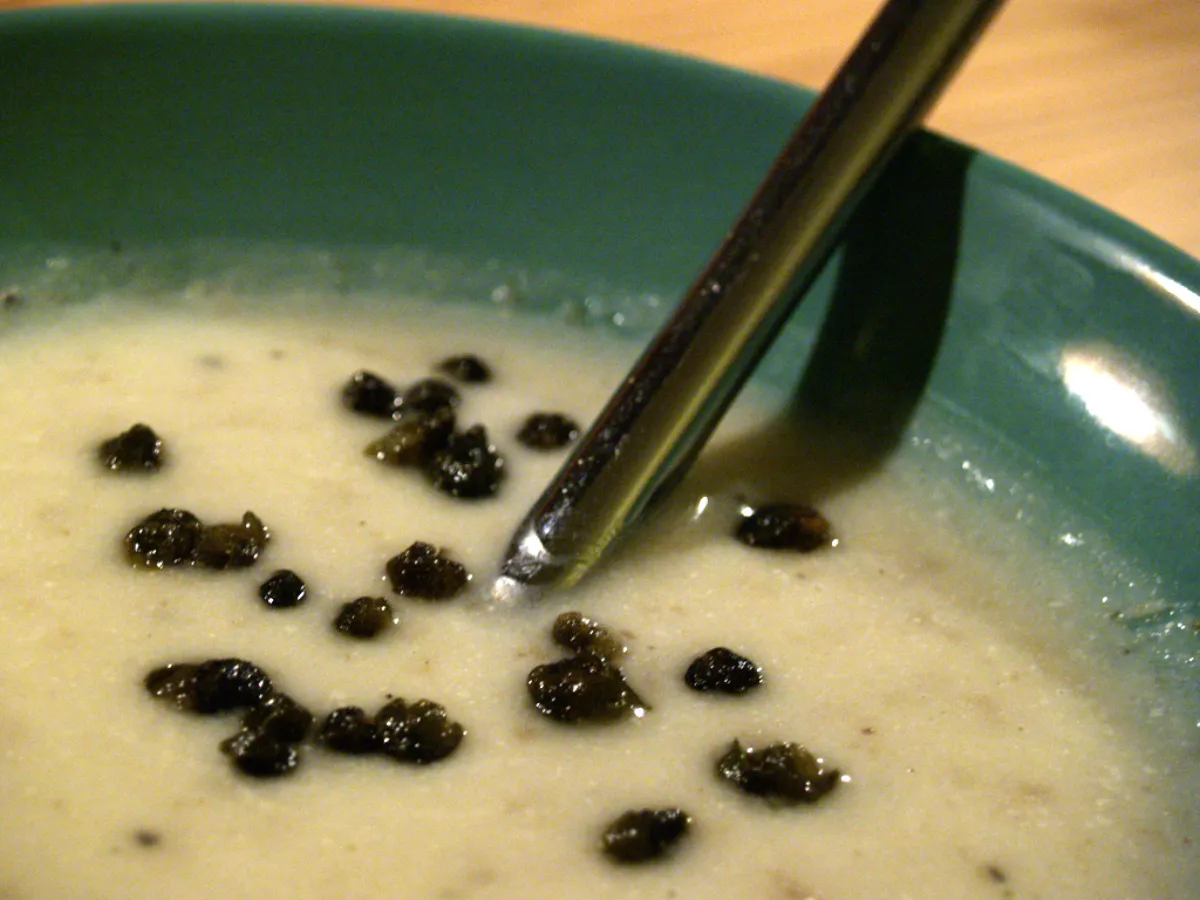 Photo: cyclonebill, CC BY-SA 2.0, via Wikimedia Commons
Who should be careful or avoid it
- Irritable bowel syndrome: fructans are among the main symptom triggers. During the elimination phase of a low-FODMAP diet, avoid Jerusalem artichoke completely; during reintroduction you can test small portions. More in our guide to irritable bowel syndrome.
- SIBO: bacteria in the small intestine ferment inulin too early, causing marked bloating and pain. Avoid it until SIBO has been treated.
- Known fructan or fructose intolerance.
- Inflammatory bowel disease in a flare, acute diverticulitis, intestinal strictures or a history of bowel obstruction: fermentable fibre and raw chunks can worsen symptoms.
- Chronic kidney disease with high potassium: sunchokes contain potassium; portion sizes should be agreed with your doctor or dietitian.
- Allergy to the Asteraceae family (ragweed, chamomile, sunflower): reactions to the tuber are rare but possible.
- Diabetes treated with insulin or sulfonylureas: sunchokes still contain carbohydrate; when you use them instead of potatoes, monitor your glucose to avoid both highs and lows.
No significant drug interactions are known for the tuber eaten as food. As with any high-fibre meal, medicines with sensitive absorption (levothyroxine, for example) should be taken at the interval your doctor or pharmacist recommends. Jerusalem artichoke powder and inulin supplements concentrate the fibre: start with 2-3 g a day and increase slowly.
When to see a doctor
Mild bloating after a new food is normal. See a doctor, however, if you have:
- blood in your stool or black stools;
- unexplained weight loss, fever or night sweats;
- severe abdominal pain or pain that wakes you at night;
- diarrhoea lasting more than a few days, or a new change in bowel habits after age 50;
- vomiting, a very swollen abdomen and no passing of gas or stool (possible obstruction, an emergency);
- persistent bloating even on days without sunchokes, which may point to SIBO, coeliac disease or other problems.
Common mistakes
A big bowl on day one. The surest route to cramps and gas. Start small.
Believing that natural means it treats diabetes. It helps as a potato substitute; it does not replace medication or glucose monitoring.
Leaving it grated without lemon. It turns grey-brown within minutes; harmless, but unappetising.
Confusing it with globe artichoke. Globe artichoke (Cynara scolymus) is a different plant, eaten for its buds and used for its leaves, with different properties.
Storing it at room temperature. The thin skin makes it shrivel fast. Keep it in the fridge in a paper bag or wrapped in a slightly damp towel for 1-2 weeks.
Getting inulin from every direction. Sunchokes plus a supplement plus high-fibre bars is often more than your gut can handle.
Conclusion
Jerusalem artichoke is an inexpensive, easy-to-grow and versatile food with one clear advantage: lots of inulin and very little starch. It feeds beneficial gut bacteria, can support regularity and lowers a meal’s glycemic load when it replaces potatoes. Introduced gradually, preferably cooked at first, it suits most people; with IBS or SIBO, though, it is best avoided or tested with care.
Frequently asked questions
Do you need to peel Jerusalem artichokes? No, the skin is thin and edible after a good scrub. Peel them only if the tubers are very knobbly or you want a smooth purée.
Is raw or cooked Jerusalem artichoke healthier? Raw keeps all the inulin, so the prebiotic effect is stronger, but so is the gas. Cooked is easier to tolerate. Alternate depending on how your gut responds.
Can I eat Jerusalem artichoke if I have diabetes? Yes, it is a good choice instead of potatoes or white bread. The total carbohydrate in the meal still matters, and if you take insulin or sulfonylureas, check your blood glucose.
Why do Jerusalem artichokes cause gas? Inulin reaches the colon undigested, where bacteria ferment it and produce gas. As your gut flora adapts, symptoms ease for most people.
Can children eat it? In small cooked amounts, as part of a varied meal, once solids are established and with your paediatrician’s agreement. Young children bloat easily, so start with a teaspoon mixed into a purée.
Is an inulin supplement better than the tuber? Supplements give precise doses, as in studies, but also more digestive side effects. The tuber adds potassium, vitamins and fullness. For most people the food is the better place to start.
When are sunchokes in season and how do I store them? Usually from October to March or April. Choose firm tubers without soft spots. They keep 1-2 weeks in the fridge, and in the garden they can stay in the ground over winter and be dug up as needed.
Is it related to globe artichoke? No. The English name probably comes from a slight similarity in taste; botanically, the Jerusalem artichoke is a close relative of the sunflower.
Sources and further reading
- EFSA Panel on Dietetic Products, Nutrition and Allergies, Scientific Opinion on the substantiation of a health claim related to “native chicory inulin” and maintenance of normal defecation, EFSA Journal, 2015.
- Gibson G.R. et al., “The International Scientific Association for Probiotics and Prebiotics (ISAPP) consensus statement on the definition and scope of prebiotics”, Nature Reviews Gastroenterology & Hepatology, 2017.
- Slavin J., “Fiber and prebiotics: mechanisms and health benefits”, Nutrients, 2013.
- Monash University, The Monash University Low FODMAP Diet: information on fructans and high-FODMAP foods.
- NHS, Irritable bowel syndrome (IBS): diet, lifestyle and low FODMAP advice.
- USDA FoodData Central, Jerusalem-artichokes, raw: nutrient composition.
Informative content only; it does not replace a consultation with a doctor or pharmacist.