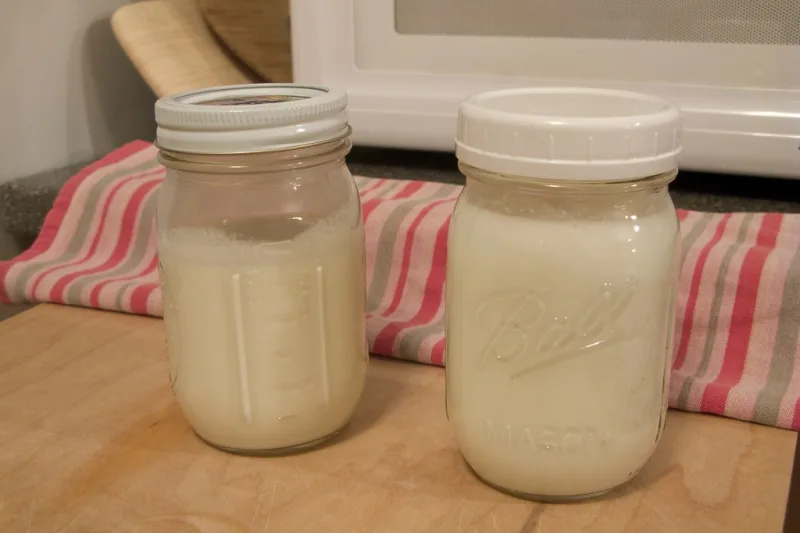

Kefir: Benefits, How to Make It and How to Consume It Properly
IMPORTANT: Kefir is generally a safe and very well-tolerated food, but there are a few situations in which it should be consumed with caution. People with a severely compromised immune system (after organ transplants, during chemotherapy, with advanced AIDS) should talk to their doctor before consuming live fermented foods. Those with severe lactose intolerance may feel discomfort at first, although kefir contains far less lactose than fresh milk. People with autoimmune bowel conditions (Crohn’s disease, ulcerative colitis) in an acute flare should introduce kefir gradually and under supervision. If you are on important medication, keep in mind that fermented foods can influence the flora that metabolizes certain substances. Kefir does not replace medical treatment and does not cure diseases; it is a health-supporting food, not a medicine.
A story from our grandparents
Old Mrs. Vasilica from my grandmother’s village kept a jar covered with a piece of cheesecloth on her kitchen windowsill, in which, she said, “the milk grows.” We children were fascinated by the strange white, gelatinous mass that looked like little cauliflower florets floating in cloudy milk. “These are the kefir grains,” she would explain, “my mother gave them to me, and her grandmother gave them to her — they come all the way from the mountains, from the shepherds.” Every morning she would strain the sour, fizzy drink, pour it into mugs and give us each a sip. It had a tangy, refreshing, slightly sparkling taste, like a thin yogurt that had come to life. Mrs. Vasilica was over eighty, stood straight as a candle and never once complained about her stomach.
Only later did I understand that what she kept on her windowsill was a living inheritance thousands of years old: a symbiotic culture of bacteria and yeasts that turns ordinary milk into one of the richest natural sources of probiotics known. Those grains weren’t “bought” from a shop — they were inherited, gifted, passed from hand to hand like a family treasure.
What is kefir
Kefir is a fermented drink that originated in the Caucasus mountain region, where it has been consumed for centuries by herding peoples. The word “kefir” is believed to come from a Turkish term meaning “to feel good” — a testament to its reputation as a drink that gives vitality. Unlike yogurt, which is made with a limited number of bacterial species, kefir is prepared with the help of “kefir grains,” gelatinous structures that host a complex community of dozens of types of lactic bacteria and beneficial yeasts, held together in a matrix of proteins and sugars called kefiran.
There are two main types of kefir: milk kefir, the traditional kind, made by fermenting milk (cow, goat or sheep), and water kefir, a dairy-free version made by fermenting sugar-sweetened water, suitable for those who avoid dairy. Both are full of live microorganisms, but their nutritional profiles differ.
During fermentation, the microorganisms consume some of the lactose in the milk and produce lactic acid, small amounts of alcohol, carbon dioxide (which gives the slight fizz) and a wide range of beneficial compounds. The result is a tangy, creamy, slightly foamy drink, far richer in live cultures than most commercially available fermented products.
Table of Contents
- The composition and nutritional value of kefir
- Health benefits
- Milk kefir vs. water kefir
- How to make kefir at home, step by step
- How and how much to consume
- Recipes and combinations
- How to choose and care for the grains
- Practical Tips and Common Mistakes
- Conclusion
- Frequently Asked Questions
The composition and nutritional value of kefir
Milk kefir is a concentrated source of nutrients. It contains good-quality proteins, easy to absorb thanks to the fermentation, which partly “pre-digests” the casein. It is rich in calcium and phosphorus, essential for bones and teeth, and provides B-group vitamins, especially B12, B2 (riboflavin) and folate, plus vitamin K2, an important compound for fixing calcium in the bones.
The great value of kefir, however, lies in its microbial diversity. A single serving can contain dozens of different strains of probiotic bacteria and beneficial yeasts — including species of Lactobacillus, Lactococcus, Leuconostoc and yeasts such as Saccharomyces. This diversity sets it clearly apart from yogurt, which usually contains only a few species. In addition, kefiran — the polysaccharide that forms the grains — has itself been studied for its beneficial effects.
Because fermentation breaks down a large part of the lactose, kefir is often better tolerated than milk by people with mild lactose sensitivity. It also contains small amounts of beneficial fatty acids and bioactive peptides formed during fermentation.
Health benefits
Supporting gut health
The best-known benefit of kefir is its effect on the gut flora. The live probiotics reach the intestine and help balance the microbiome — the community of microorganisms living in the digestive tract that influences everything from digestion to immunity and even mood. Folk tradition has always used kefir to “settle the belly,” and studies suggest that regular probiotic intake can support better digestion and a more regular transit.
Kefir is especially valued for restoring flora after antibiotic treatments, which disrupt the bacterial balance. Many people consume it during periods of digestive stress, when the stomach is “sluggish” or bloated.
Immune support
Most of the immune system is located around the gut. A balanced microbiome means a healthier intestinal barrier and better communication with the body’s defense cells. Studies suggest that probiotic-rich fermented foods may support the immune response and contribute to the body’s resilience against seasonal infections. In folk medicine, kefir was given to children and the elderly precisely during the cold seasons, to “strengthen their powers.”
Easier digestion of lactose
For those who don’t tolerate milk well, kefir can be a gentler alternative. The bacteria in kefir produce the enzyme lactase, which breaks down lactose, so the final drink contains far less lactose than the milk it started from. Many people with mild intolerance discover that they can drink kefir without the discomfort fresh milk gives them.
Bone health
The abundance of calcium, phosphorus, magnesium and vitamin K2 makes milk kefir a bone-friendly food. Vitamin K2 helps direct calcium into the bones, and the proteins support the bone matrix. For menopausal women and older people, regular intake of such foods is a valuable component of a lifestyle that protects bone density.
Balance and good mood
Modern research increasingly talks about the “gut-brain axis,” the connection between digestive health and mental state. A balanced microbiome appears to influence the production of mood-related substances. Although kefir is not a treatment for anxiety or depression, the tradition that considered it a drink “good for the soul” seems to have a real basis in this fascinating connection.
Skin and overall appearance
Many people notice that healthy digestion is reflected in clearer skin. In folk tradition, kefir was used not only as a drink but also applied externally, as a soothing mask for irritated skin or mild sunburn, thanks to its calming, mildly acidic effect.
Milk kefir vs. water kefir
Milk kefir is the classic one: creamy, tangy, rich in calcium and protein. It is made with milk kefir grains, which should not be confused with water grains. It is the right choice for those who consume dairy and are looking for a complete nutritional profile.
Water kefir is made by fermenting water with sugar (often with the addition of a slice of lemon and a few dried fruits) using water kefir grains, which are translucent, like little crystals. The result is a fizzy, slightly sweet-and-sour drink, free of lactose and milk proteins — ideal for vegans or those who avoid dairy. It contains less protein and calcium, but remains a good source of probiotics.
The two types of grains are not interchangeable: milk grains live in milk, water grains live in sugar water.
How to make kefir at home, step by step
Making kefir at home is surprisingly simple and far more economical than buying it from the store. Here is the method for milk kefir.
You will need:
- 1-2 tablespoons of milk kefir grains
- 500 ml of milk (cow or goat; preferably whole and not UHT)
- a clean glass jar
- a piece of cheesecloth or a clean cloth and a rubber band
- a plastic strainer (avoid reactive metal for long periods)
The steps:
- Put the grains in the jar. Add the kefir grains to the clean jar.
- Pour in the milk. Add the milk over the grains, leaving a few centimeters free at the top, because the drink will produce gas and rise slightly in volume.
- Cover the jar. Place the cheesecloth on top and secure it with the rubber band. Do not use an airtight lid — fermentation produces carbon dioxide and needs to breathe.
- Let it ferment. Keep the jar at room temperature, away from direct sunlight, for 18-24 hours. In summer, when it’s warm, fermentation goes faster; in winter it takes longer.
- Check it. Kefir is ready when it has thickened, smells pleasantly tangy and may show a slight separation of whey. If it is too sour, you’ve left it too long; shorten the time next time.
- Strain it. Pour the contents through a plastic strainer, stirring gently, to separate the grains from the drink. The grains left in the strainer are used for the next batch.
- Repeat the cycle. Place the recovered grains in a clean jar with fresh milk — and the whole thing starts again. The grains grow over time and can be shared with friends.
The finished kefir is stored in the refrigerator, where fermentation slows down. Ideally, consume it within a few days.
For water kefir, the process is similar: dissolve 2-3 tablespoons of sugar in water (not chlorinated water), add the water grains, optionally a slice of lemon and a few raisins, cover with cheesecloth and leave for 24-48 hours, then strain.
How and how much to consume
For someone who has never had kefir, it is wise to start with a small amount — about 50-100 ml a day — and increase gradually as the gut flora adapts. Suddenly introducing a large amount can cause temporary bloating or changes in transit, a sign that the microbiome is rebalancing.
A typical serving is about 150-250 ml a day. Many drink it in the morning, on an empty stomach, to benefit from the probiotics; others prefer to drink it in the evening. There is no strict rule — what matters is regular consumption, because probiotics are not “stored” in the body but must be brought in continuously.
Kefir should not be boiled or heated, because high temperature destroys the live cultures. If you want to use it in cooking, add it at the end, over dishes that have already cooled.
Recipes and combinations
- Kefir smoothie: blend 200 ml of kefir with a banana, a handful of berries and a teaspoon of honey. A creamy drink full of probiotics and energy.
- Refreshing kefir sauce: combine kefir with crushed garlic, chopped dill and a pinch of salt — a sauce similar to tzatziki, excellent over grilled vegetables.
- Kefir with flakes and seeds: pour kefir over oat flakes, chia seeds and fruit — a complete breakfast.
- Salad dressing: kefir, olive oil, mustard and aromatic herbs make a creamy, healthy dressing.
- Kefir ice cream: freeze kefir with pureed fruit for a tangy, refreshing summer dessert.
How to choose and care for the grains
If you want to make kefir at home, it is best to obtain live grains — from acquaintances, online exchange communities or specialized shops. Dry, dehydrated grains need to be “reactivated” over a few cycles before they become fully active.
Healthy grains are white or slightly yellowish, with a pleasantly tangy smell. If you don’t make kefir for a while, you can keep them in milk in the refrigerator for a few days, changing the milk periodically, or “put them to rest” longer-term by freezing or dehydrating them.
The grains multiply over time — that is the nature of a living culture. When you have too many, you can reduce them, give them away or eat them as they are (they are edible and full of probiotics).
Practical Tips and Common Mistakes
Mistake no. 1: Using reactive metal utensils. Prolonged contact with metal (especially aluminum) can affect the grains. Use glass, food-grade plastic or good-quality stainless steel, and for straining prefer plastic.
Mistake no. 2: Sealing the jar airtight during fermentation. Fermentation produces gas. An airtight lid can lead to pressure and even a shattered jar. Cover with cheesecloth.
Mistake no. 3: Over-fermenting. If you leave the kefir too long, it becomes very sour and separates heavily. It isn’t dangerous, but it no longer tastes pleasant. Adjust the time according to the temperature in your home.
Mistake no. 4: Heating the kefir. Many people ruin all the benefits by boiling kefir in hot soups or sauces. Always add it at the end, over cooled food.
Mistake no. 5: Too large an amount at the start. Suddenly introducing a large quantity can cause digestive discomfort. Start small and increase gradually.
Mistake no. 6: Confusing the grains. Milk grains and water grains are not interchangeable. Put each type in its own medium.
Mistake no. 7: Neglecting hygiene. Dirty jars and utensils can introduce unwanted molds. Wash everything well, but avoid leaving traces of harsh detergent on the utensils.
Lifestyle and kefir
Kefir is not a miracle solution but one piece of a balanced way of life. It works best alongside a diet rich in vegetables, fiber and minimally processed foods, which “feed” the good bacteria in the gut. Combined with regular movement, enough sleep and stress management, kefir becomes a daily ally of digestive health.
The tradition of making kefir at home also brings a more subtle benefit: it brings you closer to the natural rhythm of fermentation, to the pleasure of making a living food with your own hands. Many say that the daily routine of straining the kefir and starting a new batch has something soothing about it — a small ritual of self-care.
Conclusion
Kefir is one of the most precious inheritances of the fermentation tradition: a living, accessible drink, full of diverse probiotics and nutrients, that supports gut health, immunity and overall well-being. Whether you choose the milk version, more nutritionally rich, or the dairy-free water version, homemade kefir is economical, simple to make and far richer in live cultures than most commercial products. Consumed regularly, in moderation and introduced gradually, kefir can become a healthy lifelong habit — just as it was for the generations before us.
Frequently Asked Questions
How much kefir can I drink a day? For most people, 150-250 ml a day is a suitable amount. Beginners should start with 50-100 ml and increase gradually to let the gut flora adapt.
Does kefir contain alcohol? Yes, but in very small amounts resulting from fermentation — usually under 1%, often much less. For normal consumption the amount is negligible, but people who completely avoid alcohol (for medical or personal reasons) should be aware of this detail.
Can I drink kefir if I’m lactose intolerant? Many people with mild intolerance tolerate kefir well, because fermentation breaks down much of the lactose. Those with severe intolerance can try water kefir, which contains no lactose at all. Start with a small amount and observe how you react.
What’s the difference between kefir and yogurt? Yogurt is made with a few bacterial species and has a firmer texture. Kefir is made with grains that host dozens of species of bacteria and yeasts, has a more liquid consistency, is fizzy and contains far greater microbial diversity.
Can I make kefir from plant-based milk? Milk kefir grains need the lactose in animal milk to feed on. They can temporarily ferment plant-based milk, but over the long term the grains weaken if they are not periodically “refreshed” in animal milk. For a fully plant-based version, use water kefir grains.
Why did my kefir separate into whey and curds? This is a normal sign of advanced fermentation. It means you left the kefir too long or the temperature was too high. You can stir everything together and drink it, or shorten the fermentation time next time.
Can I give kefir to children? Folk tradition has always given kefir to children in small amounts. For babies and very young children, it is wise to consult a pediatrician before introducing live fermented foods.
How do I know my grains are healthy? Healthy grains are white or slightly yellowish, with an elastic texture and a pleasantly tangy, yogurt-like smell. If colored spots, mold or an unpleasant, putrid smell appear, the grains should be discarded.