
Lentils: Benefits, Uses and How to Eat This Powerhouse of Protein and Iron
IMPORTANT: Although lentils are one of the healthiest and safest foods in the world, they must always be eaten cooked — never raw, since they contain lectins and trypsin inhibitors that can irritate the digestive tract. People who suffer from bloating, irritable bowel syndrome, or who are not used to legumes should introduce lentils gradually, in small amounts. Those with serious kidney disease or elevated uric acid levels (gout) should talk to their doctor before eating large amounts, because of the purine and protein content. Dried lentils should be rinsed well and checked for small stones. If you take medication or have a chronic condition, always seek your doctor’s advice before making major changes to your diet.
Grandma Veta from the village on the hill had a saying she repeated every time she put the pot of lentils on the fire: “The poor man’s meat, but the nobleman’s table.” On the days when there was no meat in the house — and there were many such days — she would wash a good handful of brown lentils, set them to boil with an onion, a bay leaf and a spoonful of lard, and at the end she would squeeze the juice of half a lemon over them. She used to say that the lemon “unlocks the iron in the seeds,” a folk saying that, surprisingly, has a real basis: vitamin C helps the absorption of plant iron. All the children in the house grew up strong on that simple food, and grandma was convinced that lentils “make blood.”
Aunt Elena, her neighbor, swore by the red lentil soup she cooked in winter, when the cold seeped into your bones. She made it with carrot, celery and a teaspoon of cumin, and the orange seeds would melt and create a velvety, nourishing cream that kept her warm all afternoon. “When you have no appetite for anything and you’re worn out like a rag, a bowl of lentils puts you back on your feet,” she would say. Today we know this folk tradition makes sense: lentils are one of the most concentrated sources of protein, iron and fiber in the plant kingdom.
The lentil (Lens culinaris) is a small, lens-shaped legume (hence its name), cultivated by humans for over 9,000 years. It is one of the earliest domesticated plants in human history, originating in the Near East, and has fed entire civilizations, from the Egyptians to the Romans. Unlike other legumes, lentils do not require long soaking, cook quickly and are incredibly versatile. In the traditions of many peoples — from Indian to Mediterranean — lentils symbolize prosperity, health and abundance.
Table of Contents
- What lentils are and where they come from
- Lentil varieties and how they differ
- The nutritional value of lentils
- The health benefits of lentils
- How to cook lentils properly
- Traditional lentil recipes
- How much and when to eat lentils
- How to choose and store lentils
- Lentils in special diets
- Practical tips and common mistakes
- Conclusion
- Frequently asked questions
What lentils are and where they come from
The lentil is the edible seed of an annual plant from the legume family (Fabaceae), the same family as beans, peas and chickpeas. The plant is small and bushy, 20–45 cm tall, and produces small pods, each containing one or two flattened, lens-shaped seeds.
Native to the Fertile Crescent region (today’s Middle East), the lentil is one of the oldest known food crops. Archaeologists have discovered lentil seeds in Neolithic sites thousands of years old. It is even mentioned in the Bible — the famous “mess of pottage” of lentils for which Esau sold his birthright. Over the millennia, lentils spread across Asia, Europe and North Africa, becoming a staple food for millions of people.
Today, the main world producers are Canada, India, Turkey and Australia. In Romania, lentils are not a very widespread crop, but they are increasingly appreciated as people rediscover traditional cooking and plant-based eating.
Lentil varieties and how they differ
There are many lentil varieties, each with its own texture, flavor and use:
- Brown lentils — the most common and most affordable. They hold their shape fairly well after cooking, have an earthy flavor and work well in soups, stews and side dishes. They cook in 20–30 minutes.
- Green lentils — firm, with a slightly peppery taste. They hold their shape very well, ideal for salads and side dishes. The most prized is the French Puy lentil, with small seeds and a fine aroma.
- Red (orange) lentils — split and hulled, they cook very quickly (10–15 minutes) and turn into a soft cream. Perfect for cream soups, Indian dal and purées.
- Yellow lentils — similar to red ones, they break down when cooked and are widely used in Indian cuisine.
- Black (beluga) lentils — small, glossy seeds that resemble caviar after cooking. They keep their shape and have the richest antioxidant content.
The choice of variety depends on the recipe: for salads choose green or black lentils, for creamy soups red lentils, and for stews brown lentils.
The nutritional value of lentils
Lentils are a true concentrate of nutrients, which is why they are often called the “affordable superfood.” A serving of about 100 g of cooked lentils provides:
- Protein — about 9 g, one of the richest plant sources. It contains most of the essential amino acids, although it is lower in methionine (which is why it pairs ideally with grains).
- Dietary fiber — around 8 g, both soluble and insoluble, essential for digestion and heart health.
- Iron — a crucial mineral for the formation of hemoglobin and the transport of oxygen in the blood.
- Folate (vitamin B9) — among the richest food sources, vital during pregnancy and for cell production.
- Potassium, magnesium and zinc — important minerals for blood pressure, muscles and immunity.
- Slow-release complex carbohydrates — which provide lasting energy without sudden blood sugar spikes.
- Polyphenols and antioxidants — compounds that fight oxidative stress.
Lentils have a very low fat content and contain no cholesterol, which makes them perfect for a balanced diet.
The health benefits of lentils
An excellent source of plant protein
For vegetarians, vegans, or anyone who wants to reduce meat consumption, lentils are a golden choice. The protein in lentils helps build and repair tissue, maintain muscle mass and create a feeling of fullness. Combined with rice, whole-grain bread or other grains, lentils provide a complete amino acid profile, comparable to that of animal protein.
An ally against anemia and fatigue
The high iron content makes lentils a traditional food recommended for people prone to iron-deficiency anemia. Plant (non-heme) iron is absorbed less easily than the iron in meat, but studies suggest that pairing it with a source of vitamin C — lemon, peppers, parsley, tomatoes — significantly improves absorption. Hence grandma’s wisdom of squeezing lemon over the lentils.
Heart and blood vessel health
The soluble fiber in lentils helps reduce levels of “bad” cholesterol (LDL), while potassium contributes to regulating blood pressure. Folk tradition and modern observations suggest that regular consumption of legumes is associated with a healthier heart. The absence of saturated fat and cholesterol reinforces this benefit.
Blood sugar regulation
Thanks to their complex carbohydrates and fiber, lentils have a low glycemic index. This means they release sugar into the blood slowly and steadily, avoiding blood sugar spikes. They are therefore a very suitable food for people monitoring their sugar levels, of course with their doctor’s agreement.
Healthy digestion and a balanced microbiome
The insoluble fiber adds bulk to the stool and combats constipation, while soluble fiber feeds the beneficial bacteria in the gut. A balanced microbiome means better immunity, smoother digestion and even a better mood, since the gut is often called the “second brain.”
Support during pregnancy
The rich folate (folic acid) content makes lentils a particularly valuable food for pregnant women or those wishing to conceive. Folate is essential for the development of the baby’s nervous system and for preventing neural tube defects.
Help with weight management
The combination of protein and fiber provides a long-lasting feeling of fullness, which helps reduce cravings and the total amount of food consumed. Lentils are low in calories relative to how nourishing they are, which makes them an ally for those who want to maintain a healthy weight.
Long-lasting energy
Unlike sweets or white bread, which give short-lived energy followed by fatigue, lentils provide steady energy thanks to the slow release of their carbohydrates. They are the ideal fuel for active days.
How to cook lentils properly
The great advantage of lentils over beans or chickpeas is that they do not require mandatory overnight soaking (although a good rinse is recommended). Here are the basic steps:
- Sorting: Spread the lentils on a light-colored surface and check for small stones or damaged seeds. Rinse well under cold running water in a sieve.
- Water-to-lentil ratio: Use about 2.5–3 cups of water (or stock) for each cup of dried lentils.
- Boiling: Put the lentils in cold water and bring to a boil, then reduce the heat and simmer gently, uncovered or partially covered. Skim off any foam that appears at the start.
- Cooking time: Red lentils 10–15 minutes; brown lentils 20–25 minutes; green and black lentils 25–30 minutes.
- Salt: Add salt toward the end of cooking — added too early, it can toughen the skin of the seeds.
- Acid: Tomatoes, vinegar or lemon are also added at the end, because acidity slows the softening of the seeds.
A traditional trick: a bay leaf and a piece of kombu seaweed (or a very small pinch of baking soda) in the cooking water make lentils easier to digest and reduce bloating.
Traditional lentil recipes
Creamy red lentil soup
You need one onion, one carrot, a small celery root, one cup of red lentils, a teaspoon of cumin, a spoonful of tomato paste and half a lemon.
Sauté the chopped onion in a little oil until translucent. Add the grated carrot and celery, then the cumin and tomato paste. Pour in the washed lentils and about 1 liter of water or vegetable stock. Simmer for 15–20 minutes, until the lentils break down. Blend for a velvety texture, season with salt and pepper, and at the end squeeze in lemon and sprinkle with fresh parsley.
Lentils cooked with onion and garlic (side dish)
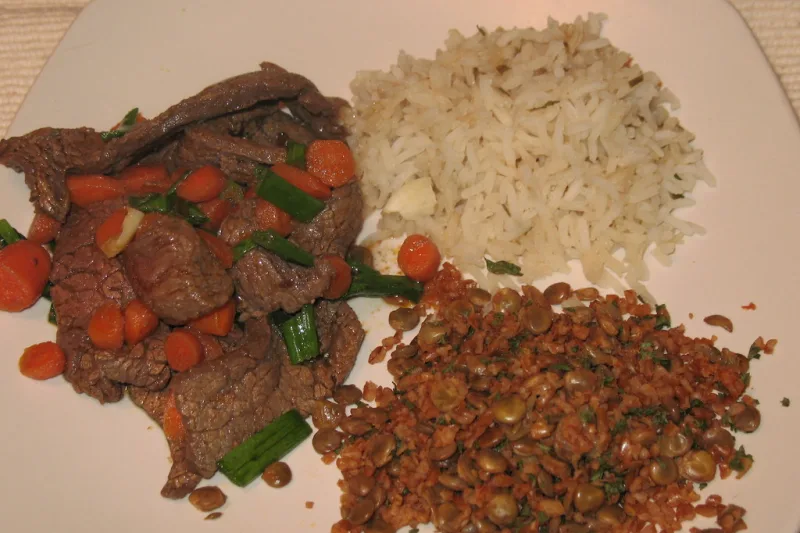
Sauté one onion and two cloves of garlic in olive oil. Add a cup of washed brown lentils, a bay leaf and enough water to cover. Simmer for 25 minutes, season with salt, pepper, thyme and a spoonful of balsamic vinegar at the end. Excellent alongside any kind of meat or fish, or as a stand-alone meatless dish.
Green lentil salad
Cook green lentils for 25 minutes so they stay firm. Drain and, while still warm, mix with olive oil, lemon juice, finely chopped red onion, cherry tomatoes, cucumber and plenty of herbs (parsley, dill, mint). A filling salad, perfect for summer days.
Indian yellow lentil dal
Cook one cup of yellow lentils with turmeric and water until soft. Separately, fry onion, garlic, ginger, cumin and coriander in oil (or ghee). Pour this aromatic mixture over the lentils, add coconut milk to taste and simmer for a few minutes. Serve with basmati rice.
How much and when to eat lentils
Lentils can be eaten several times a week without problems, as part of a varied diet. A usual serving is about 150–200 g of cooked lentils (the equivalent of about 60–80 g dried). For those who want to use them as a main protein source, they can be eaten even daily, as long as digestion tolerates them well.
They can be eaten at lunch or dinner. Being filling and rich in lasting energy, a lentil soup or salad at lunch can keep hunger away for hours. People who exercise can use them as an excellent source of post-workout protein, combined with a grain.
How to choose and store lentils
When you buy dried lentils, choose whole seeds, without spots, signs of moisture or odd smells. Quality lentils have a uniform color and seeds that are not excessively crumbled.
Store them in an airtight jar in a cool, dark and dry place. This way, dried lentils last for months, even a year or more. Over time, however, older seeds become harder and need a longer cooking time, so rotate your stock and use the lentils bought longer ago first.
Cooked lentils keep in the fridge for 3–4 days in a closed container, and they freeze very well for several months. This is a wonderful trick: cook a larger batch and always have a healthy base on hand.
Lentils in special diets
For fasting: Lentils are a pillar of fasting diets, providing the protein the body needs when meat and animal products are absent.
For vegetarians and vegans: Combined with grains (rice, wheat, oats), lentils form a complete amino acid profile, successfully replacing animal protein.
For children: Well-cooked, mashed red lentils can be gradually introduced into the diet of young children (after consulting a pediatrician), being easy to digest and nourishing.
For athletes: The combination of protein and complex carbohydrates makes lentils an excellent food for muscle recovery and lasting energy.
Practical tips and common mistakes
Mistake no. 1: Adding salt too early. Salt added at the start of cooking can toughen the skin of the seeds and lengthen the cooking time. Add it toward the end.
Mistake no. 2: Skipping rinsing and sorting. Dried lentils may hide small stones or dust. A good rinse and a quick check will save your teeth and your stomach.
Mistake no. 3: Overcooking the firm varieties. If you want a salad with whole seeds, do not overcook green or black lentils, or they will turn into purée.
Mistake no. 4: Suddenly introducing a large amount. If you are not used to legumes, start with small portions and increase gradually to avoid bloating. Spices such as cumin, coriander and ginger aid digestion.
Mistake no. 5: Adding acid (tomatoes, lemon, vinegar) too early. Acidity slows the softening of the seeds, leaving them hard. Add it after the lentils have softened.
Mistake no. 6: Discarding the cooking water when making soup. If you cook the lentils separately for a soup, keep the liquid — it is full of flavor and nutrients.
Conclusion
Lentils are a humble food in price, but noble in their value. This tiny legume packs an impressive amount of protein, iron, fiber and folate, making it one of the most accessible and healthy food sources on the planet. From grandma’s warm soup on winter days to modern salads and fragrant dals, lentils adapt to any meal and any culinary tradition. Easy to cook, versatile and friendly to the heart, digestion and budget, lentils deserve a place of honor in every household’s pantry. As Grandma Veta said: they are “the poor man’s meat, but the nobleman’s table” — a simple treasure that nourishes both body and soul.
Frequently Asked Questions
Do I need to soak lentils before cooking? Unlike beans or chickpeas, lentils do not require mandatory soaking. However, a good rinse is recommended, and a short 1–2 hour soak can reduce cooking time and make the seeds easier to digest.
Why do I bloat when I eat lentils? Lentils contain oligosaccharides, carbohydrates that some people digest with more difficulty. The solutions are: introducing them gradually, rinsing well, using carminative spices (cumin, coriander, ginger) and cooking them thoroughly. Over time, the body adapts.
Are lentils good for anemia? Lentils are a rich source of plant iron, traditionally recommended for people prone to anemia. For better absorption, combine them with a source of vitamin C, such as lemon, peppers or parsley. In the case of diagnosed anemia, follow your doctor’s instructions.
Can I eat lentils every day? Yes, if your digestion tolerates them well. Lentils can be eaten daily as part of a varied diet, being an excellent source of protein and fiber. Vary the varieties and recipes for a balanced nutrient intake.
Which lentil variety is the healthiest? All varieties are healthy. Black (beluga) and green lentils have the most antioxidants and hold their shape, while red lentils are the easiest to digest and cook the fastest. Variety is the key.
Can lentils be eaten raw? No. Raw lentils contain lectins and inhibitors that can irritate digestion. They must always be cooked thoroughly. Sprouted lentils can be eaten in moderation, but it is best to blanch them lightly as well.
Are lentils fattening? No. On the contrary, thanks to their high protein and fiber content, lentils provide lasting fullness and have relatively few calories relative to their nutritional value. They are an ally for those who want to maintain a healthy weight.
Can I give lentils to young children? Yes, well-cooked and mashed red lentils are a nourishing and easily digestible food for babies, usually after 6–8 months of age. Introduce them gradually and always consult your pediatrician first.