
Onion: Benefits, Uses and How to Consume It for Health
IMPORTANT: The onion is a safe food for almost everyone, but in large amounts it can cause bloating, heartburn and reflux in sensitive people. Those with irritable bowel syndrome (IBS) often struggle to tolerate it, as it is rich in fructans (a FODMAP). Applied directly to the skin, raw onion can cause irritation or stinging, especially on the delicate skin of children. Folk remedies with onion (syrup, poultices) do not replace medical treatment: if a cough, fever or infection lasts more than a few days, consult your doctor. People taking blood thinners should be moderate, since onion has a mild blood-thinning effect.
A Story from Grandmother
I can still recall the smell of my grandmother Maria’s kitchen in winter, when the wind whistled outside and the soup simmered on the stove. Every time one of us grandchildren started to cough, she would fetch a large yellow onion from the pantry, slice it thickly, and place it in a jar with some sugar and a little honey. “Let it make its own juice overnight,” she would say, “and in the morning you take a teaspoon.” By the next day, a sweet-and-sour syrup had collected in the jar, with a pungent smell that we took while making faces—yet, strangely, it soothed our dry cough.
The same grandmother Maria, on feverish nights, would set halved onions on the nightstand “to draw the illness out of the room.” And whenever someone had an earache, she gently warmed an onion leaf and placed it, wrapped in a clean cloth, over the ear. She knew nothing about quercetin or sulfur compounds, but she knew, from a lifetime of experience, that the humble onion from the pantry was one of the most reliable remedies in the house. Today, many of her intuitions are being studied seriously by scientists.
What the Onion Is
The onion (Allium cepa) is one of the oldest plants cultivated by humans, used for thousands of years both as food and as medicine. It belongs to the Amaryllidaceae family, alongside garlic, leek, spring onion and shallot, all recognized for their strong aroma and medicinal properties. The bulb we eat is in fact a modified underground stem, made of overlapping fleshy leaves in which the plant stores its reserves of food.
Probably originating in Central Asia, the onion spread across the world and became an indispensable ingredient in cooking and folk medicine. From the ancient Egyptians, who used it in rituals and as food for the workers who raised the pyramids, to home cooks who cannot imagine a soup without it, the onion has earned a special place. It is valued for its flavor, its affordable price, its ability to keep for months, and—not least—for the wealth of beneficial substances hidden beneath its layers.
Table of Contents
- Composition and active compounds
- Health benefits
- Traditional uses in folk medicine
- How to prepare it: step-by-step recipes
- How to choose and store onions
- Types of onion and their differences
- Onion in the everyday diet
- Practical tips and common mistakes
- Conclusion
- Frequently Asked Questions
Composition and Active Compounds
Beneath its pungent aroma, the onion hides a true natural pharmacy. It is low in calories but rich in bioactive compounds that give it therapeutic value.
The best known of these is quercetin, an antioxidant flavonoid found mainly in the outer layers and in red onions. Quercetin is intensively studied for its anti-inflammatory effects and its role in supporting the immune system. Studies suggest it may help regulate the allergic response and protect blood vessels.
Next, the onion is full of sulfur compounds—the very substances that make our eyes water when we cut it. When onion cells are broken, an enzyme called alliinase converts inactive precursors into volatile sulfur compounds, including the tear-inducing factor. These compounds are responsible for much of the onion’s antibacterial and antifungal properties.
The onion also contains: vitamin C, which supports immunity; B-complex vitamins, especially B6 and folate; potassium, important for blood pressure and fluid balance; fiber, including inulin and fructo-oligosaccharides, which feed the good bacteria in the gut (prebiotics); as well as modest amounts of manganese, calcium and iron. The anthocyanins in red onion, the pigments that give it its purplish-red color, are additional antioxidants.
Health Benefits
Supports Immunity and Fights Microbes
The onion’s reputation as a cold remedy is no accident. Its sulfur compounds and quercetin give it antibacterial and antiviral properties recognized by folk tradition and investigated by modern research. Studies suggest that onion extracts may inhibit the growth of some common bacteria. Vitamin C and antioxidants help strengthen the body’s natural defenses, which is why the onion features in so many cold-season remedies.
Helps Calm Coughs and the Airways
Onion syrup with honey is probably the best-known folk remedy for cough. The onion’s volatile compounds have a mild expectorant effect, helping to thin secretions, while honey soothes an irritated throat. Tradition holds that the steam from boiled onion can ease breathing during colds with a stuffy nose.
Supports Heart Health
The onion, like its relative garlic, is associated with cardiovascular benefits. Potassium helps maintain normal blood pressure, while its sulfur compounds and quercetin have a mild blood-thinning and vessel-protecting effect. Studies suggest that regular onion consumption, as part of a balanced diet, may help maintain healthy cholesterol levels.
Balances Blood Sugar
Some preliminary research indicates that certain compounds in onion may have a favorable effect on blood sugar levels. Folk tradition has always used raw onion as part of a diet for people with blood sugar problems, although onion is by no means a substitute for treatment prescribed by a doctor.
Feeds the Good Gut Bacteria
The inulin and fructo-oligosaccharides in onion are prebiotic fibers: we do not digest them, but they serve as food for the beneficial bacteria in the colon. A healthy gut flora is linked to better digestion, a stronger immune system, and even a better mood.
Antioxidant and Anti-inflammatory Action
The abundance of flavonoids and anthocyanins makes the onion an antioxidant food that helps neutralize free radicals. Quercetin in particular is studied for its ability to reduce the background inflammation associated with many chronic conditions.
Traditional Uses in Folk Medicine
In the villages, the onion was always more than a cooking ingredient. Here are some of its traditional uses, passed down from generation to generation:
- For cough and colds: onion syrup with sugar or honey.
- For earache: a warm onion leaf applied externally, never inserted into the ear canal.
- For boils and abscesses: a poultice of baked onion, applied lukewarm, to help “ripen” and burst the boil.
- For insect bites: a slice of raw onion rubbed on the spot to calm the itching.
- For corns and warts: repeated applications of onion macerated in vinegar.
- For tired feet: warm baths with boiled onion skins.
It must be stressed that these uses are part of folk wisdom and do not represent clinically verified medical treatments. They may offer relief in mild cases, but they do not replace a doctor’s consultation when one is truly needed.
How to Prepare It: Step-by-Step Recipes
Onion Syrup with Honey for Cough
This is grandmother’s classic remedy. You will need:
- 1 large onion, yellow or red
- 2-3 tablespoons of honey (or sugar, if you have no honey)
Step 1: Peel the onion and slice it thinly or cut it into small cubes. Step 2: Layer the slices in a clean jar, sprinkling honey between the layers. Step 3: Cover the jar and leave it at room temperature for 8-12 hours (overnight). The onion will “release” a sweet syrup. Step 4: Strain the liquid. Take a teaspoon 3-4 times a day.
The syrup keeps in the fridge for 2-3 days. Do not give honey to children under 1 year—for them use the sugar version, and only on a doctor’s recommendation.
Onion-Skin Tea (Decoction)
Dried onion skins, which we usually throw away, are especially rich in quercetin.
Step 1: Wash the skins from 2-3 onions thoroughly. Step 2: Put them in a liter of water and simmer over low heat for 10-15 minutes. Step 3: Let it steep for another 10 minutes, then strain.
Drink a warm cup, sweetened with honey if you like. Tradition recommends it during the cold season.
Baked-Onion Poultice
For boils or abscesses, folk tradition used a warm poultice.
Step 1: Bake a whole onion in the oven or on the stovetop until it softens. Step 2: Let it cool until it is lukewarm and bearable on the skin. Step 3: Mash it lightly, wrap the paste in a clean gauze and apply to the affected area.
Caution: never apply hot onion directly to the skin, and do not use poultices on open wounds without a doctor’s advice.
Raw Onion in the Diet
The simplest “remedy” remains eating raw onion in salads. To reduce its sharpness, soak the onion slices for 10 minutes in cold water with a little vinegar or salt—they will become milder and easier to digest.
How to Choose and Store Onions
A good onion should be firm to the touch, with a dry, rustling outer skin, no soft spots, no mold and no smell of rot. Avoid onions that have started to sprout a green shoot, as these have lost some of their quality and may taste bitter.
For storage, the onion prefers a cool, dark, well-ventilated place, never a closed plastic bag, where it gets damp and moldy. A dry pantry or a hanging net are ideal. Do not keep onions next to potatoes: both release gases and moisture that speed up each other’s spoilage. A cut onion keeps in the fridge, in a closed container, for a maximum of 1-2 days, as it easily absorbs odors and loses its freshness.
Types of Onion and Their Differences
- Yellow onion: the most common, with a balanced flavor, good for cooking, soups and stews. It turns sweet when caramelized.
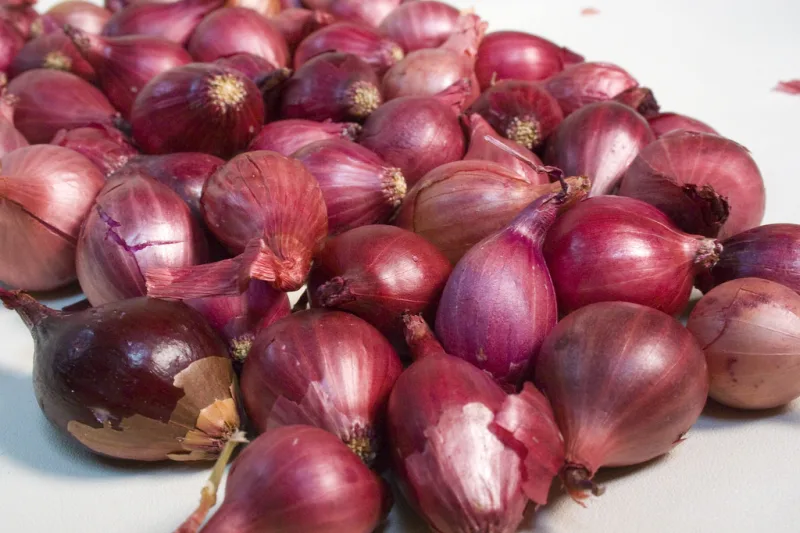
- Red onion: milder and slightly sweet, ideal raw in salads. It contains the most anthocyanins and quercetin.
- White onion: a sharper aroma with a clean taste, often used in Mexican cooking.
- Spring onion (green onion): young, with an edible green stalk, perfect fresh in spring.
- Shallot: small, fine, with a delicate aroma, prized in refined cooking.
Each type has its place, but in terms of beneficial substances, red and yellow onions are generally the richest.
Onion in the Everyday Diet
Beyond its role as a remedy, the onion is a pillar of a healthy diet. Added daily to food, it brings flavor without unnecessary calories and contributes antioxidants and prebiotic fiber. You can gently sauté it in a little olive oil as the base for soups and stews, bake it whole alongside vegetables in the oven, or eat it raw in salads.
A cook’s trick: the longer and slower the onion is cooked, the sweeter it becomes and the more it loses its sharpness, turning almost into a natural sauce. On the other hand, raw onion preserves the most active sulfur compounds, so it is “stronger” from a therapeutic point of view. The ideal balance is to eat onion both raw and cooked, to benefit from both forms.
Practical Tips and Common Mistakes
Mistake no. 1: Throwing away the onion skins. The dry outer skins are the richest source of quercetin. Save them clean and use them for a decoction, or to color and flavor soups.
Mistake no. 2: Cutting the onion long before using it. The beneficial compounds begin to degrade on contact with air. Cut the onion as close as possible to the time of use, especially if you eat it raw.
Mistake no. 3: Cooking it over too high a heat. Burnt onion becomes bitter and loses its properties. To sauté it, use low to medium heat and patience—that is how it becomes sweet and aromatic.
Mistake no. 4: Applying raw onion directly to irritated skin or wounds. Onion juice can sting and worsen irritation. For poultices, use baked, lukewarm onion, and never on open wounds.
Mistake no. 5: Storing it in a plastic bag in the fridge. Whole onions spoil quickly in moisture and plastic. Their place is a dry, cool pantry, not the refrigerator.
Mistake no. 6: Relying on onion alone in serious illness. Onion syrup can help a mild cough, but a persistent respiratory infection, high fever or acute pain calls for a doctor’s consultation.
Conclusion
The onion is one of the most humble and, at the same time, most valuable foods in our kitchen. Beneath its rustling skin hide quercetin, sulfur compounds, vitamins and prebiotic fibers that support immunity, the heart, digestion and the body’s defense against microbes. Folk tradition long ago sensed its value, turning it into cough syrup, poultices and countless other home remedies. Today, science confirms much of this old wisdom. Eaten regularly, both raw and cooked, and used with measure and common sense, the onion remains a trustworthy ally of health—always at hand, always cheap, always useful.
Frequently Asked Questions
Why do our eyes water when we cut an onion? When we cut an onion, the broken cells release an enzyme that converts sulfur compounds into a volatile, irritating gas. This reaches the eyes and, on contact with tear fluid, forms a mildly acidic substance that causes stinging and tears. Chilling the onion in the fridge before cutting and using a sharp knife reduce the effect.
Is raw or cooked onion healthier? Both have benefits. Raw onion preserves the most active sulfur compounds and more vitamin C, so it is “stronger” therapeutically. Cooked onion is milder, easier to digest and retains a good share of its antioxidants. Ideally, eat it in both forms.
Does onion syrup really help with a cough? Folk tradition has recommended it for generations, and the honey in it has a proven soothing effect on the throat. Onion syrup can bring relief in a mild cough, but it does not cure infections and does not replace medical treatment in a serious condition.
Who should avoid onions? People with irritable bowel syndrome or FODMAP intolerance tolerate them poorly. Those with acid reflux or gastritis may feel a burning sensation after raw onion. People taking blood thinners should eat them in moderation. In all these cases, it is wise to talk to your doctor.
Is it true that an onion placed in a room “draws out” illness? This is an old folk belief, but there is no scientific evidence that a cut onion absorbs germs from the air or cures any disease. Its strong smell may give a sense of “cleanliness,” but the effect is symbolic, not therapeutic.
Can I give onion syrup to children? Young children can be given the sugar version, in small amounts and only with a doctor’s approval. Honey must NOT be given to children under 1 year, due to the risk of infant botulism. For any cough in a small child, the first step is a pediatric consultation.
How often can I eat onion? For most people, onion can be eaten daily, in normal cooking amounts. The important thing is to listen to your own body’s signals: if it causes bloating or discomfort, reduce the amount or choose cooked onion, which is easier to tolerate.
Are onion skins actually good for anything? Yes. The dry skins are the richest part of the onion in quercetin. Washed, they can be used for a decoction or added to soups for flavor and color, then removed at the end. Traditionally, they were also used to dye Easter eggs in warm reddish-brown tones.