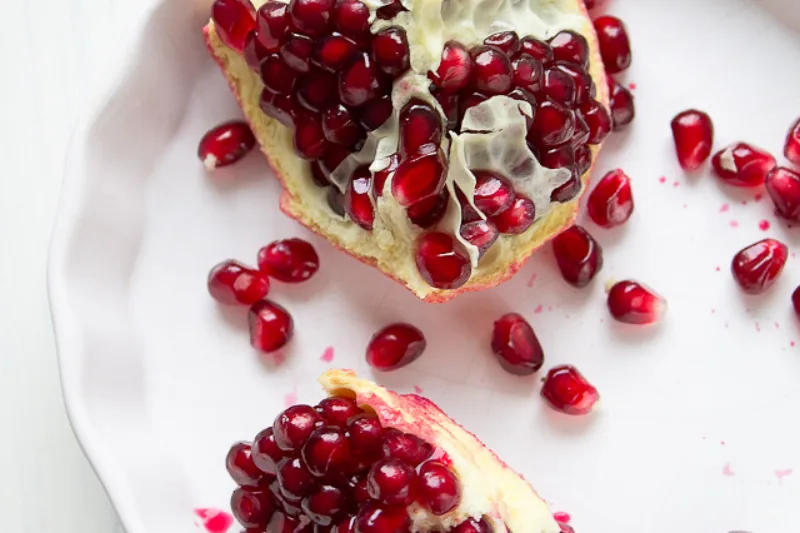

Pomegranate: Heart Benefits, Antioxidants and How to Eat It Right
IMPORTANT: Pomegranate is a safe and healthy fruit for most people, but concentrated pomegranate juice can interact with certain medications, especially those metabolized by the liver (cholesterol-lowering statins, some blood pressure medicines, and blood thinners such as warfarin). If you are on long-term treatment, talk to your doctor before drinking large amounts of pomegranate juice. People with diabetes should be cautious with sweetened juice, and those with rare fruit allergies should introduce pomegranate gradually. Pomegranate does not replace medical treatment: if you have high blood pressure, elevated cholesterol or heart problems, continue your prescribed medication and use pomegranate only as a supporting food within a balanced diet.
Grandma Veta, who spent almost her whole life in a village at the foot of the hills, always talked about the pomegranates she brought back from the autumn market, when the carts came up from the south loaded with fruit. She kept them on the windowsill, in the sun, until the skin turned a deep amber, and she used to say that “the pomegranate is the fruit with a thousand beads, and every bead is a drop of health.” On cold November evenings she would split the fruit with a knife, scoop out the ruby seeds into a clay bowl, press them through a sieve, and give the juice to anyone with a cold or “a weak heart,” as she put it.
She knew nothing about polyphenols or modern studies, but folk instinct did not mislead her: today the pomegranate is one of the most studied fruits for its effects on the heart and on oxidative stress. In this article we will explore what the pomegranate really is, what it contains, why it is so prized, how to eat it correctly and what precautions are worth keeping in mind.
The pomegranate (Punica granatum) is the fruit of a shrub native to the Middle East and southwest Asia, cultivated for thousands of years and mentioned in ancient texts, legends and the art of many civilizations. Its thick, sun-baked-leather skin hides hundreds of seeds (called arils) wrapped in juicy, sweet-tart, intensely red pulp. It is precisely this core, rich in active compounds, that makes the pomegranate prized not only for its taste but also for its remarkable nutritional profile.
Table of Contents
- What the pomegranate is and where it comes from
- Nutritional value and active compounds
- Health benefits
- Traditional uses of pomegranate
- How to eat pomegranate: methods and recipes
- How much to eat and how to choose it
- How to store pomegranate
- Lifestyle: fitting pomegranate into a balanced diet
- Practical tips and common mistakes
- Conclusion
- Frequently Asked Questions
What the pomegranate is and where it comes from
The pomegranate is a fruit with an extraordinarily long history. The pomegranate shrub grows in warm, dry climates, is drought-resistant and capable of bearing fruit for many years. Native to the region stretching from Iran to northern India, the fruit spread over the millennia throughout the Mediterranean basin, North Africa and later to every continent with a suitable climate.
In the traditions of many peoples, the pomegranate was a symbol of fertility, abundance and life, precisely because of the great number of seeds it contains. It is not a native fruit in many northern regions, but it arrived early through trade with the south, becoming associated mainly with autumn and winter holidays, when it appeared in markets and on festive tables.
Botanically, what we eat are the arils: each seed is wrapped in a translucent sac full of juice. The white pulp inside (the dividing walls and the pith surrounding the seed clusters) is bitter and usually not eaten, though it too contains active compounds. The peel has also traditionally been used as a decoction, but requires caution, which we will discuss in the precautions section.
Nutritional value and active compounds
The pomegranate is a relatively moderate-calorie fruit, yet very rich in biologically active compounds. The pulp and juice are mostly water, with natural sugars (fructose and glucose), dietary fiber mainly from the seeds themselves, and an impressive range of vitamins and minerals.
Among the important nutrients are vitamin C, vitamin K, B-complex vitamins (especially folate), potassium and a notable amount of fiber if the whole seeds are eaten rather than just the juice. But what truly drew researchers’ attention are the polyphenols.
Polyphenols and punicalagins
Pomegranate is one of the richest dietary sources of polyphenols, compounds with powerful antioxidant action. The most studied are the punicalagins, hydrolyzable tannins found especially in the peel and in juice pressed from the whole fruit. These, together with ellagic acid, anthocyanins (the red pigments) and other phenolic compounds, give the pomegranate its characteristic color and much of its beneficial potential.
Antioxidants help neutralize free radicals, unstable molecules that naturally arise in the body and that, in excess, contribute to oxidative stress — a process linked to cellular aging and many chronic conditions. Studies suggest that, thanks to its high polyphenol concentration, the pomegranate has an antioxidant capacity superior to that of many other fruits and even some beverages considered “rich in antioxidants.”
Fiber and micronutrients
If we eat the whole seeds, we also benefit from their fiber, useful for intestinal transit and for the feeling of fullness. Potassium contributes to electrolyte balance and to the normal function of muscles and the heart, while vitamin C supports the immune system and collagen synthesis. Folate is particularly important during growth and pregnancy, under medical supervision.
Health benefits
The pomegranate’s reputation as the “fruit of the heart” is no accident. Here are the main areas where folk tradition and modern research converge.
Support for heart and blood vessel health
The most discussed benefit of pomegranate concerns the cardiovascular system. Pomegranate polyphenols may support the elasticity and health of blood vessel walls and help maintain normal blood flow. Studies suggest that regular consumption of pomegranate juice could contribute to keeping blood pressure within normal limits and to supporting a balanced lipid profile, especially regarding the oxidation of “bad” cholesterol (LDL). LDL oxidation is an important step in the formation of deposits on artery walls, and the antioxidants in pomegranate appear to slow this process. It is important to stress that we are talking about dietary support, not a substitute for medical treatment.
Strong antioxidant action
Thanks to its high polyphenol content, pomegranate helps the body cope with oxidative stress. In folk tradition, this translates into the belief that pomegranate “rejuvenates” and “gives strength.” Antioxidants do not work miracles overnight, but within a diet rich in colorful fruits and vegetables, the pomegranate makes its contribution to protecting cells.
Supporting the immune system
Vitamin C and phenolic compounds make pomegranate a cold-season ally. Traditionally, pomegranate juice was given to those with colds or who were run-down, as a drink that “gets the blood moving.” Today we know that vitamin C contributes to the normal functioning of the immune system, and its pleasant taste encourages those without appetite to stay hydrated.
Anti-inflammatory effect
Chronic low-grade inflammation is involved in many modern health problems. Compounds in pomegranate have been studied for their potential to calm inflammatory processes. Folk tradition also used pomegranate to “soothe” the stomach and an irritated throat, either as juice or as a diluted gargle.
Digestive support
Whole seeds provide fiber that aids intestinal transit. In addition, certain compounds in pomegranate may support a healthy gut environment by feeding beneficial bacteria in the intestinal flora. Tradition used peel decoction for digestive upsets, but this must be used with great caution because of the concentrated tannins.
Skin health and anti-aging effect
Antioxidants and vitamin C contribute to collagen synthesis and to protecting the skin against oxidative stress. Oil extracted from pomegranate seeds is prized in cosmetics for its moisturizing properties and for supporting skin elasticity. Many women traditionally used pomegranate juice as a facial tonic for a bright complexion.
Traditional uses of pomegranate
In the folk medicine of regions where pomegranate grows abundantly, every part of the fruit had a use. Fresh juice was considered a general tonic, given to the anemic and the tired. A decoction from the dried peel was used as a remedy for diarrhea and intestinal upsets, thanks to its astringent tannins. The shrub’s red flowers were sometimes used in infusions, and the dried, ground seeds went into spices and sauces in Eastern cuisine.
In many northern regions, the pomegranate was mainly a festive fruit, present on winter tables, but also a small “remedy” for strengthening the body in the cold season. The ruby beads scattered over salads or desserts were not just decoration but also a source of freshness and vitamins during a period poor in fresh fruit.
How to eat pomegranate: methods and recipes
Pomegranate can be eaten in many ways, and each method preserves something different from the fruit. The healthiest is eating the whole seeds, because that way we benefit from the fiber as well, not just the juice.
How to open a pomegranate without splashing the juice
- Wash the pomegranate and cut off the crown (the end with the dried flower) with a knife, without cutting deeply into the seeds.
- Make a few shallow cuts in the peel, from top to bottom, following the fruit’s natural ribs.
- Submerge the cut pomegranate in a bowl of cold water and break it apart underwater. The seeds sink to the bottom while the bitter white pith floats to the surface.
- Strain the seeds and remove the membrane pieces. You will have clean arils, ready to eat.
Fresh pomegranate juice
- Remove the seeds from 2-3 large pomegranates.
- Put them through a juicer or gently press them through a fine sieve with a wooden spoon.
- For a quick version, you can briefly blend the seeds (on low speed, so as not to crush the hard kernels), then strain.
- Drink the juice fresh and unsweetened to benefit from all the active compounds.
Fresh juice is the most valuable, since store-bought juices often contain added sugar and lower concentrations of polyphenols.
Autumn salad with pomegranate
Scatter pomegranate seeds over a green salad with bitter leaves, salty cheese, walnuts and a light vinaigrette. The contrast between the tart pomegranate, the salt and the bitterness creates a balanced dish full of antioxidants.
Topping for desserts and breakfast
Pomegranate seeds are wonderful sprinkled over plain yogurt with honey, over puddings, over oatmeal or over cakes. They add color, texture and a burst of freshness.
Syrup or dressing from pomegranate juice
Reduce fresh pomegranate juice over low heat, with no sugar or very little honey, until it thickens slightly. You get an intense syrup, perfect for dressings, marinades or for flavoring water.
How much to eat and how to choose it
For balanced consumption, one medium pomegranate a day or a small glass of fresh juice (about 150-200 ml) is a reasonable amount for a healthy adult. Since the juice is concentrated and relatively rich in natural sugars, it is not recommended in large quantities, especially in the evening or for people monitoring their blood sugar.
When choosing a pomegranate, look for a fruit that is heavy for its size — the weight indicates a rich juice content. The skin should be firm, smooth to slightly rough, with no soft spots, mold or deep cracks. The color can range from pink to deep red or even brownish, without this being a sign of lower quality; sometimes the more “angular,” less perfectly round pomegranates are the ripest and fullest.
How to store pomegranate
A whole pomegranate keeps well at room temperature for several days, and up to a few weeks in the refrigerator, in the fruit and vegetable drawer. The thick peel protects it very well. Once opened, the seeds keep in a closed container in the fridge for 3-4 days. For longer periods, the seeds can be frozen: spread them on a tray, freeze them, then transfer them to a bag. This way you will have “rubies” ready to use for smoothies and desserts all year round.
Lifestyle: fitting pomegranate into a balanced diet
The pomegranate is not a standalone miracle remedy but a valuable piece in a healthy dietary mosaic. Its benefits are felt best when it is part of a lifestyle in which we eat varied meals with plenty of colorful fruits and vegetables, move daily, hydrate properly and rest enough.
In autumn and winter, when pomegranates are abundant, it is the ideal time to include them on the menu: a glass of fresh juice at breakfast, seeds scattered over dishes, or simply a pomegranate savored bead by bead, as a small relaxation ritual. Combining it with other antioxidant-rich foods — berries, green tea, olive oil, walnuts — enhances the benefits and adds variety to the taste.
For active people, pomegranate juice can be a refreshing drink after exertion, thanks to the potassium and antioxidants that support recovery. The important thing is to always prefer fresh, unsweetened juice over commercial versions loaded with sugar.
Practical Tips and Common Mistakes
Mistake no. 1: Relying solely on store-bought juice. Many “pomegranate” juices in shops contain added sugar, diluted concentrate, or blends with other cheap fruits. Read the label and choose 100% pomegranate juice with no additives, or ideally press it at home.
Mistake no. 2: Throwing away the fiber. If you only drink strained juice, you lose the valuable fiber in the seeds. For complete benefits, eat the whole seeds too, at least a few times a week.
Mistake no. 3: Using the peel without caution. Peel decoction contains strong tannins and, in large amounts, can be toxic. Do not improvise concentrated “remedies” from the peel without professional guidance.
Mistake no. 4: Ignoring drug interactions. Pomegranate juice can influence how the body processes certain medications. If you take statins, blood thinners or blood pressure medicines, ask your doctor.
Mistake no. 5: Staining clothes and surfaces. Pomegranate juice stains strongly. Wear an apron and open the fruit underwater to avoid splashes. Stains are easier to remove while fresh.
Mistake no. 6: Expecting quick miracles. Pomegranate supports health over the long term, as part of a balanced diet. A glass of juice will not “clean” the heart overnight; consistency and balance are what count.
Mistake no. 7: Overeating “because it’s healthy.” Even good foods, in excess, can unbalance calorie and sugar intake. Moderation remains the golden rule.
Conclusion
The pomegranate is rightly one of the most prized fruits of autumn and winter. Rich in polyphenols, punicalagins and vitamin C, it supports heart health, fights oxidative stress and brings a burst of freshness to the cold-season menu. The wisdom of grandparents, who saw in the pomegranate “the fruit with a thousand beads of health,” meets today the growing interest of researchers in this remarkable fruit. Consumed in moderation, preferably with the seeds or as fresh unsweetened juice, the pomegranate can make its contribution to a healthier life — as long as it remains part of a varied diet and a balanced lifestyle, not a substitute for medical care.
Frequently Asked Questions
Is it okay to eat the hard kernels inside pomegranate seeds? Yes, the hard kernels are edible and provide fiber. Some people chew and swallow them, while others prefer to suck only the juicy pulp. Both options are acceptable; eating the whole seeds adds extra fiber that benefits digestion.
How much pomegranate juice can I drink per day? For a healthy adult, a small glass of about 150-200 ml of fresh juice per day is a reasonable amount. Being rich in natural sugars, it is not recommended in large quantities, especially for people with diabetes.
Does pomegranate really help the heart? Studies suggest that pomegranate polyphenols may support cardiovascular health by helping maintain normal blood pressure and protecting cholesterol from oxidation. Still, pomegranate is a supporting food, not a treatment; it does not replace medication or a doctor’s advice.
Can pomegranate be eaten during pregnancy? Pomegranate as fresh fruit or in moderate amounts of juice is generally considered safe and provides useful vitamins. However, concentrated supplements or peel extracts should be avoided, and any significant consumption should be discussed with your doctor.
What is the difference between fresh juice and store-bought juice? Fresh, unsweetened juice retains all the active compounds and contains no added sugar. Many commercial juices are diluted, sweetened or blended with other fruits, having lower nutritional value.
How do I remove the seeds from a pomegranate more easily? Cut off the crown, score the peel vertically and break the fruit apart underwater in a bowl. The seeds sink while the white membrane floats, making it easy to remove. This also avoids the splashes that stain.
Can I eat pomegranate every day? Yes, in moderate amounts, pomegranate can be part of a daily diet. However, vary your fruit sources and do not rely on a single food alone, for a balanced intake of nutrients.
Does pomegranate peel have any safe use? Traditionally, the peel was used in astringent decoctions, but it contains concentrated tannins that can be harmful in excess. Preparing concentrated peel remedies at home without the guidance of a specialist is not recommended.