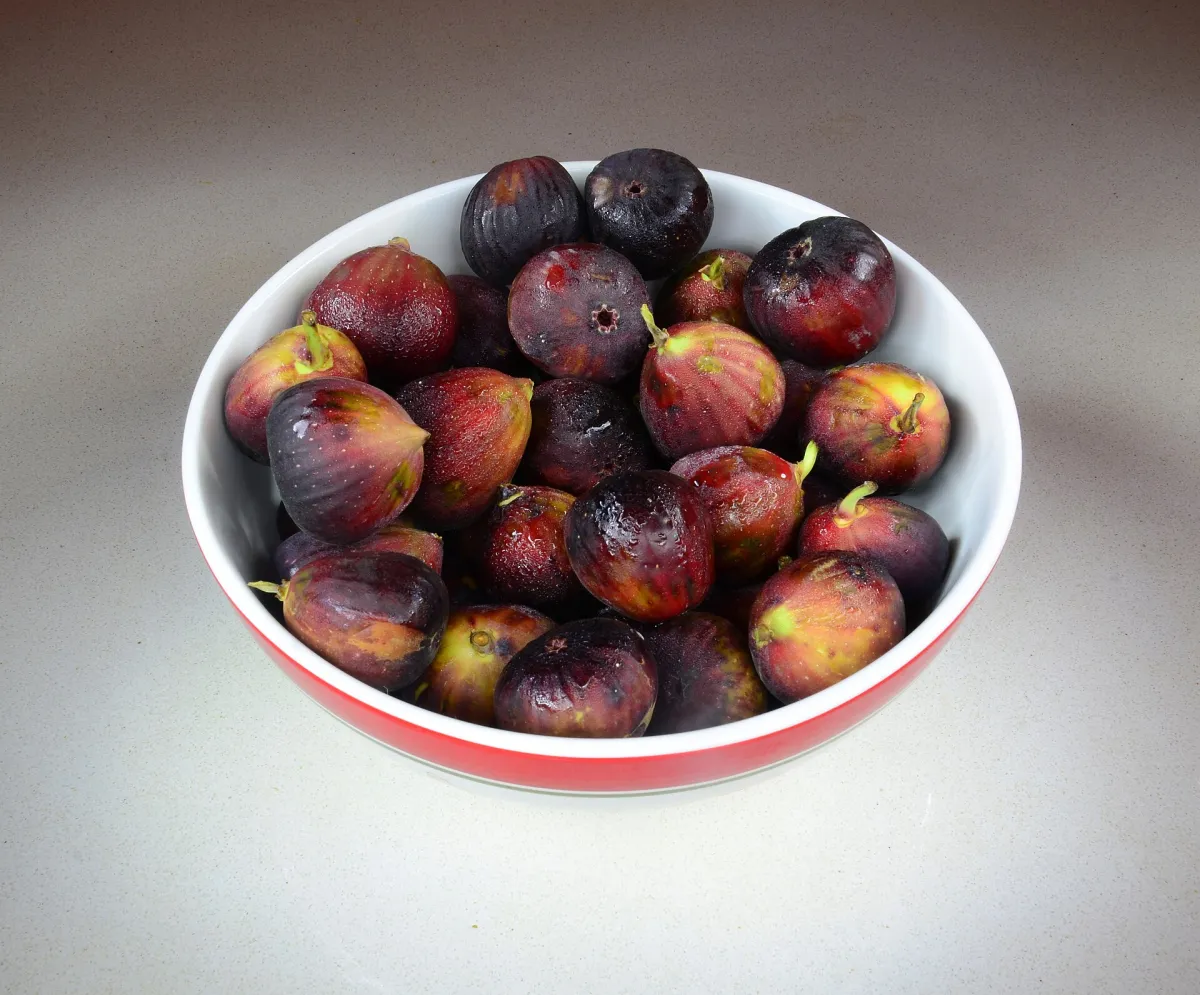
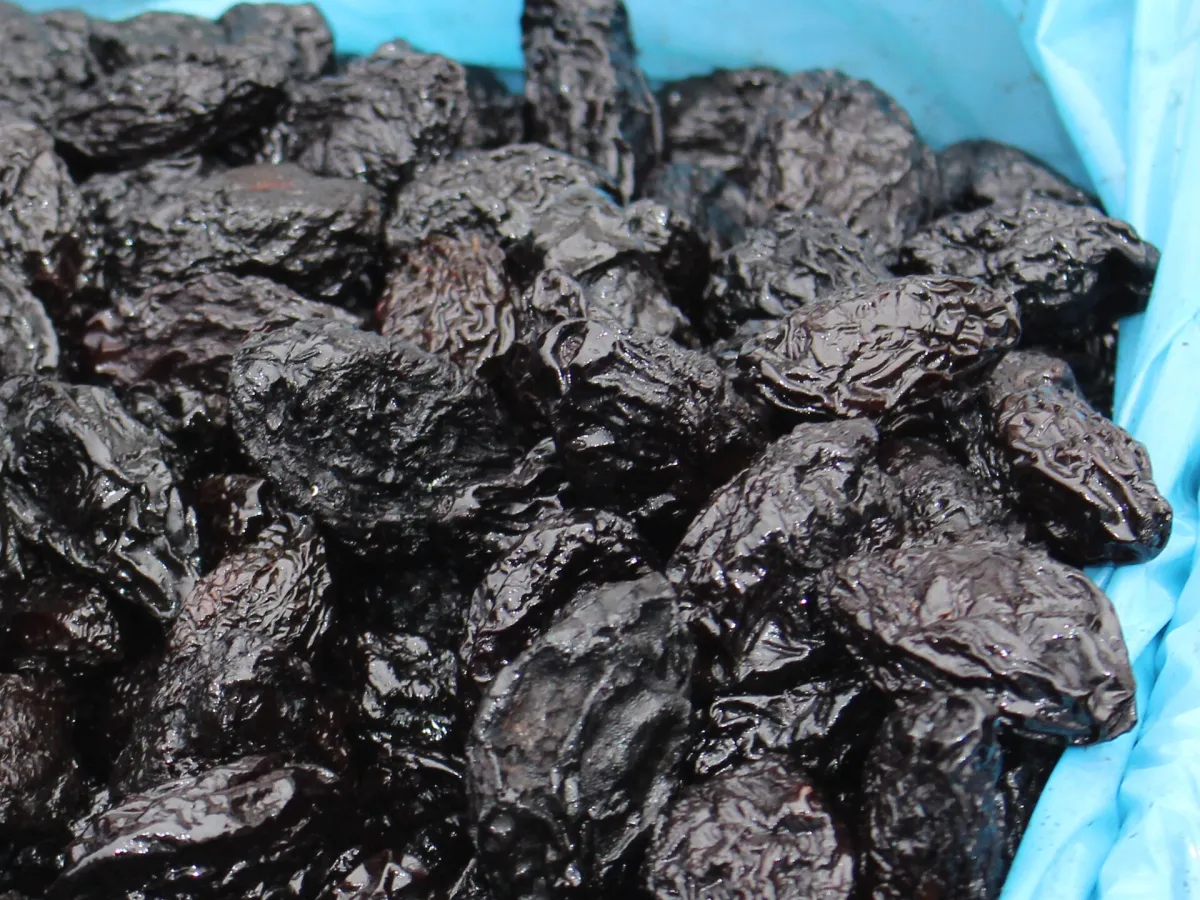
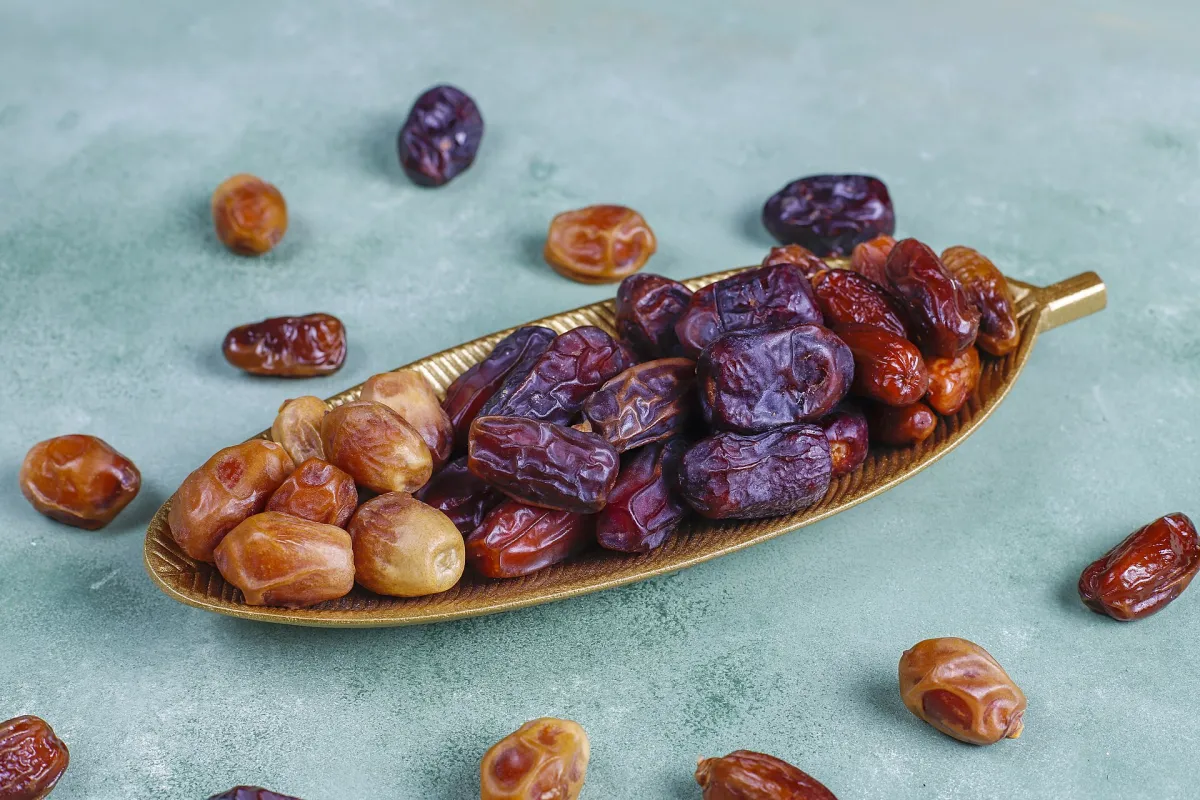
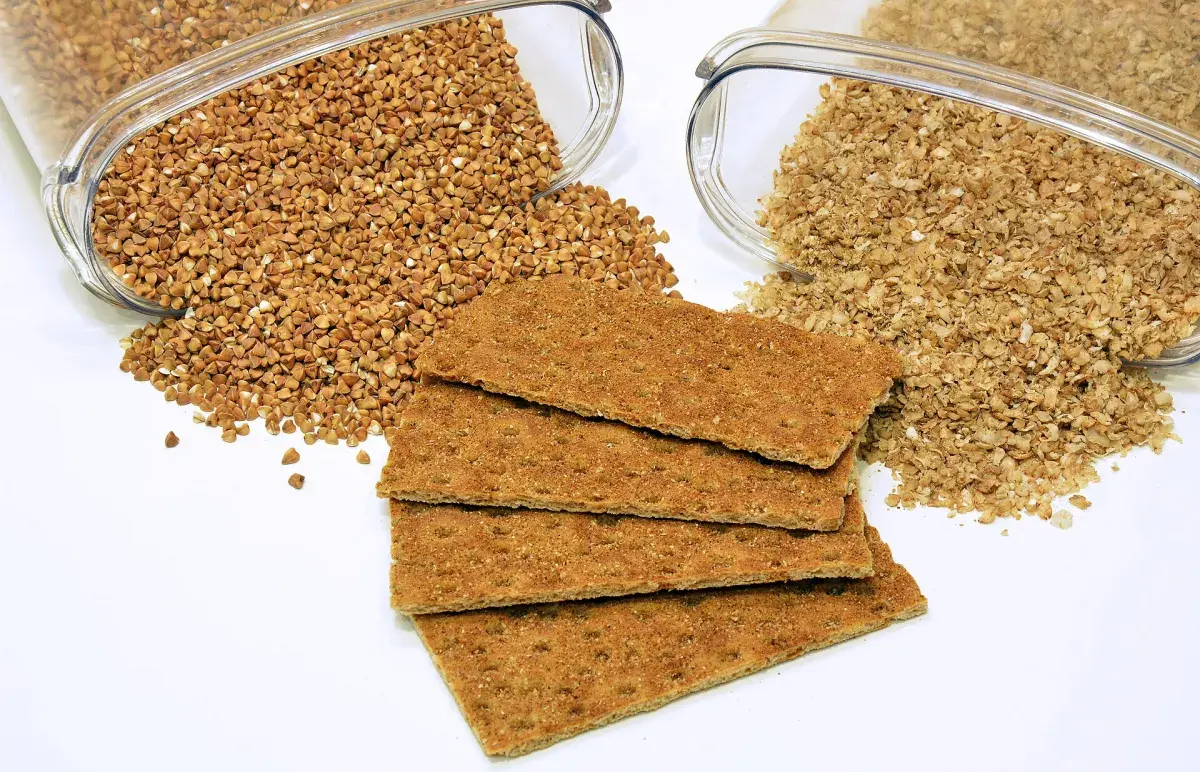
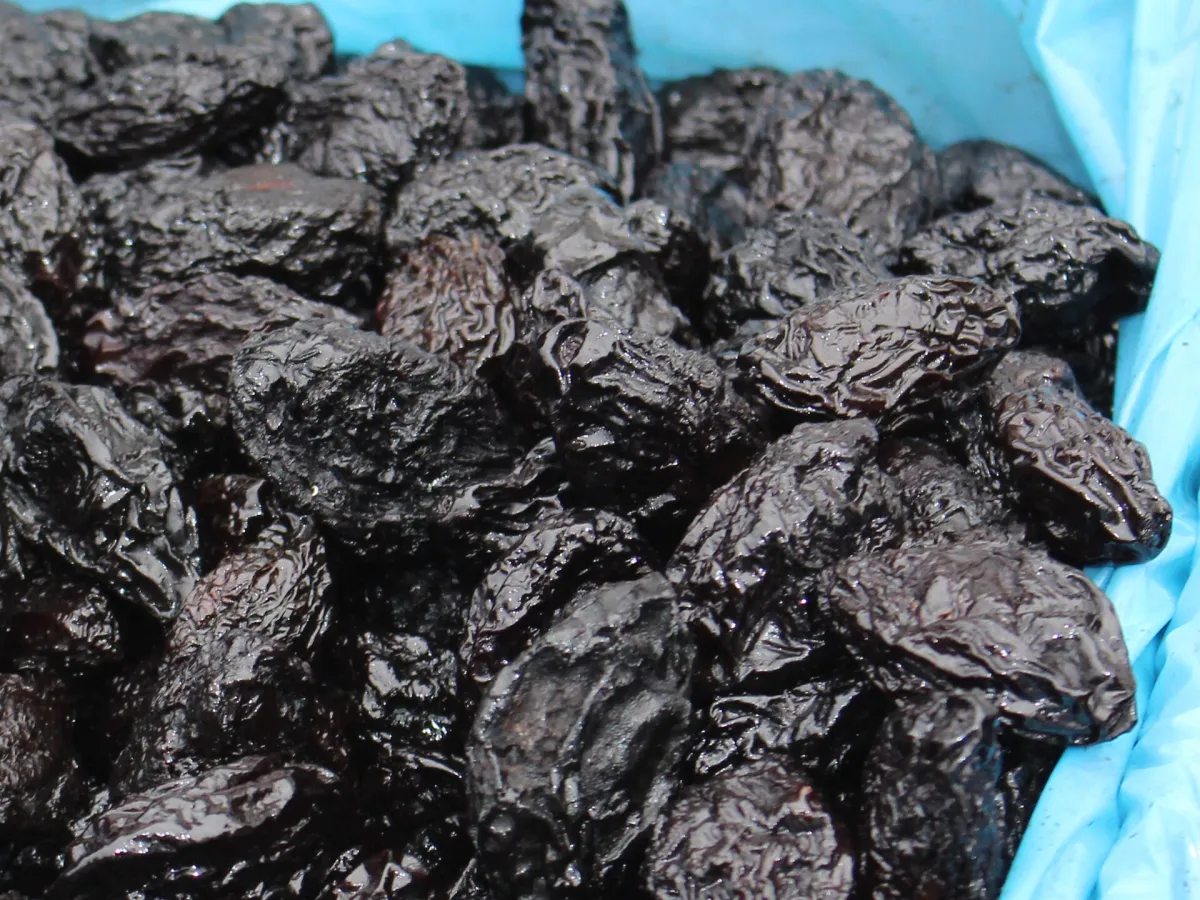
 Photo: Emőke Dénes, CC BY-SA 4.0, via Wikimedia Commons
Prunes relieve constipation because they deliver three things at once: fiber, sorbitol (a sugar alcohol that pulls water into the bowel) and phenolic compounds that appear to stimulate gut movement. In a controlled clinical trial, 50 g of prunes (about 5 to 6 fruits) twice a day worked as well as, or better than, psyllium fiber. Newer research also suggests that a handful of prunes a day may help preserve bone density in women after menopause.
In Romanian villages, smoked or oven-dried plums were the classic winter fix for a “lazy belly”: a few were left to soak overnight in a mug of water, then eaten in the morning together with the liquid. The habit has a real scientific basis, but it also has a few traps. Too many prunes at once means bloating and cramps, and people with diabetes or irritable bowel syndrome need to watch the amount. Below you will find what the research says, how many to eat and how to use them well.
Key takeaways
- Prunes have a gentle laxative effect confirmed in clinical studies: fiber plus sorbitol plus chlorogenic acid.
- The usual amount for regularity is 50 to 100 g a day (5 to 10 prunes), split into one or two servings, with plenty of water.
- Studies in postmenopausal women suggest 50 to 100 g a day may slow bone loss.
- A 50 g serving has roughly 120 kcal and almost 20 g of natural sugars, which matters for diabetes and weight loss.
- Too many cause gas, bloating and loose stools; people with IBS who react to FODMAPs may be especially sensitive.
What prunes are
Prunes are dried plums from European plum varieties (Prunus domestica), dehydrated until about 30 to 32% water remains. Not every plum dries well: drying cultivars have a high sugar content and dry without fermenting. In Romania, traditional varieties such as Vânăt românesc, Tuleu gras, Stanley and Anna Späth have long been used. You will find two main types in shops:
- Naturally dried prunes (sun-dried or dried in hot-air dryers), pitted or with stones, dark brown to black and slightly sticky.
- Smoked prunes, typical of Transylvania and Moldova, dried over hardwood smoke. They taste intense, but also carry smoke compounds (polycyclic aromatic hydrocarbons), so they are best as an occasional treat rather than a daily habit.
Some commercial prunes are treated with potassium sorbate or sulfur dioxide to keep them soft. This is harmless for most people, but anyone with sulfite-sensitive asthma should check the label (E220 to E228).
Nutrition facts
Values are approximate, for pitted prunes, based on standard nutrition databases (USDA FoodData Central).
| Nutrient | Per 100 g | Per 50 g serving (5-6 prunes) |
|---|---|---|
| Energy | ~240 kcal | ~120 kcal |
| Total carbohydrates | ~64 g | ~32 g |
| of which sugars | ~38 g | ~19 g |
| Fiber | ~7 g | ~3.5 g |
| Sorbitol | ~12-15 g | ~6-7 g |
| Potassium | ~730 mg | ~365 mg |
| Vitamin K | ~60 µg | ~30 µg |
| Boron | ~2-3 mg | ~1-1.5 mg |
Two features set prunes apart from other dried fruit: sorbitol, which is far more abundant than in raisins or dried apricots, and the combination of vitamin K and boron, both involved in bone metabolism.
Benefits: what studies show and what is tradition
Constipation: the best-documented effect
For a food, the evidence here is strong. Sorbitol is poorly absorbed in the small intestine, so it reaches the colon and draws water in, softening the stool. Fiber, especially soluble pectin, adds bulk, and chlorogenic acid and other polyphenols seem to stimulate bowel movements. In a randomized trial published in 2011, adults with mild to moderate chronic constipation received either 50 g of prunes twice daily or psyllium with an equivalent fiber content. Prunes produced more spontaneous bowel movements and better stool consistency. The European Food Safety Authority (EFSA) has given a favorable opinion on the claim that dried plums contribute to normal bowel function at an intake of about 100 g per day.
If slow transit is a regular issue, read our guide to constipation, which covers the other measures that matter just as much: water, movement and regular meals.
Bone health
This is the most interesting new area. Several studies in postmenopausal women, a period when bone loss speeds up, found that 50 to 100 g of prunes a day for 6 to 12 months helped maintain bone mineral density, particularly at the hip, compared with control groups. The proposed mechanism: polyphenols dampen inflammation and the activity of bone-resorbing cells, while vitamin K, boron and potassium support mineralization. The results are encouraging, but the studies are still fairly small, so prunes are an addition to calcium, vitamin D, exercise and any prescribed treatment, not a replacement. Practical details are in our article on osteoporosis.
Heart and blood pressure
Prunes provide potassium and soluble fiber, both linked to healthier blood pressure and lower LDL cholesterol as part of a balanced diet. Direct studies on prunes and cholesterol are mixed: some show modest LDL reductions, others do not. The honest conclusion is that they help as part of a diet rich in fruit, vegetables and legumes, not as a “treatment”.
Satiety and blood sugar
Although sweet, prunes have a low to moderate glycemic index (roughly 29 to 40 depending on the source), thanks to their fiber and to the fact that part of the sweetness comes from sorbitol and fructose. As a snack, 3 or 4 prunes with a handful of nuts keep you full longer than a biscuit. Still, the total amount of sugar matters, especially with diabetes.
What is tradition only
Folk medicine credits prunes with “cleansing the blood”, “detoxing the liver” or “curing anemia”. There is no evidence for these claims. Prunes contain little iron (under 1 mg per 100 g), so they are not a solution for anemia.
How many prunes to eat a day
| Goal | Typical amount | Notes |
|---|---|---|
| Healthy snack | 3-4 prunes (25-30 g) | Pair with nuts or yogurt |
| Occasional constipation | 5-6 prunes (50 g), once or twice a day | Effect usually within 1-3 days |
| Bone support (after menopause) | 5-10 prunes (50-100 g) daily | Long term, within a balanced diet |
| Children over 1 year with hard stools | 1-2 mashed prunes or 50-100 ml stewed prune liquid | Only after talking to the pediatrician |
Start with 3 or 4 prunes a day and increase gradually over 7 to 10 days. The gut needs time to adapt to sorbitol, otherwise gas and cramps follow.
How to eat them: simple recipes
Overnight soaked prunes (the classic)
- Rinse 5 or 6 prunes well.
- Place them in a mug and cover with 200 ml of boiled water cooled to room temperature.
- Leave covered for 8 to 10 hours (overnight), at room temperature or in the fridge in summer.
- In the morning, eat the prunes and drink the soaking water, on an empty stomach or with breakfast.
Soaking makes prunes easier to chew and transfers some sorbitol and soluble fiber into the water, so the liquid works too.
Sugar-free stewed prunes
Put 100 g of prunes in 1 liter of cold water, add a strip of unwaxed lemon peel and a cinnamon stick. Bring to a boil, then simmer gently for 10 minutes. Turn off the heat and leave covered for another 30 minutes. Do not add sugar: the prunes are sweet enough. Drink 150 to 200 ml a day and keep it in the fridge for up to 3 days.
A “regularity” breakfast
Mix 40 g of rolled oats with 150 g of kefir or yogurt, 3 chopped prunes and a tablespoon of ground flaxseeds. Let it soften for 10 minutes. The combination brings soluble and insoluble fiber, probiotics and fluid.
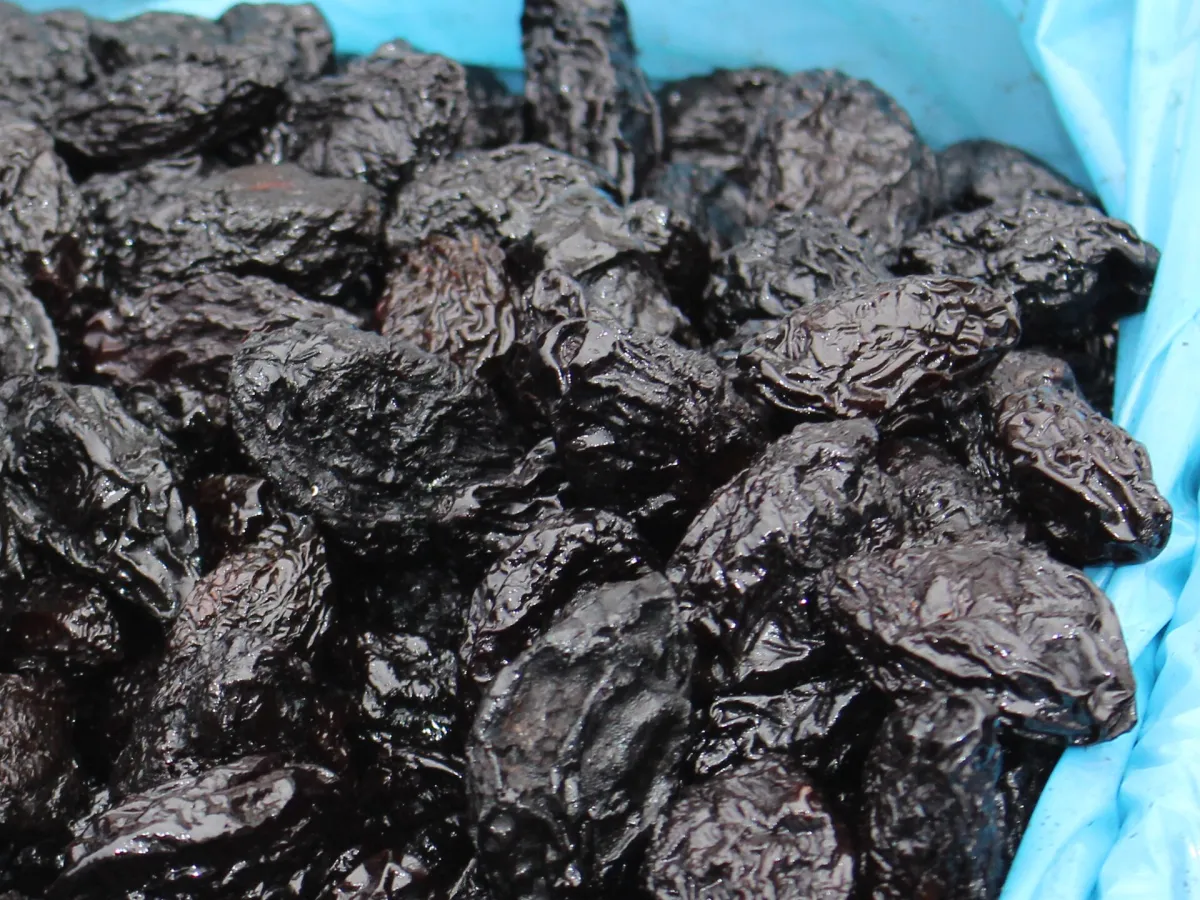
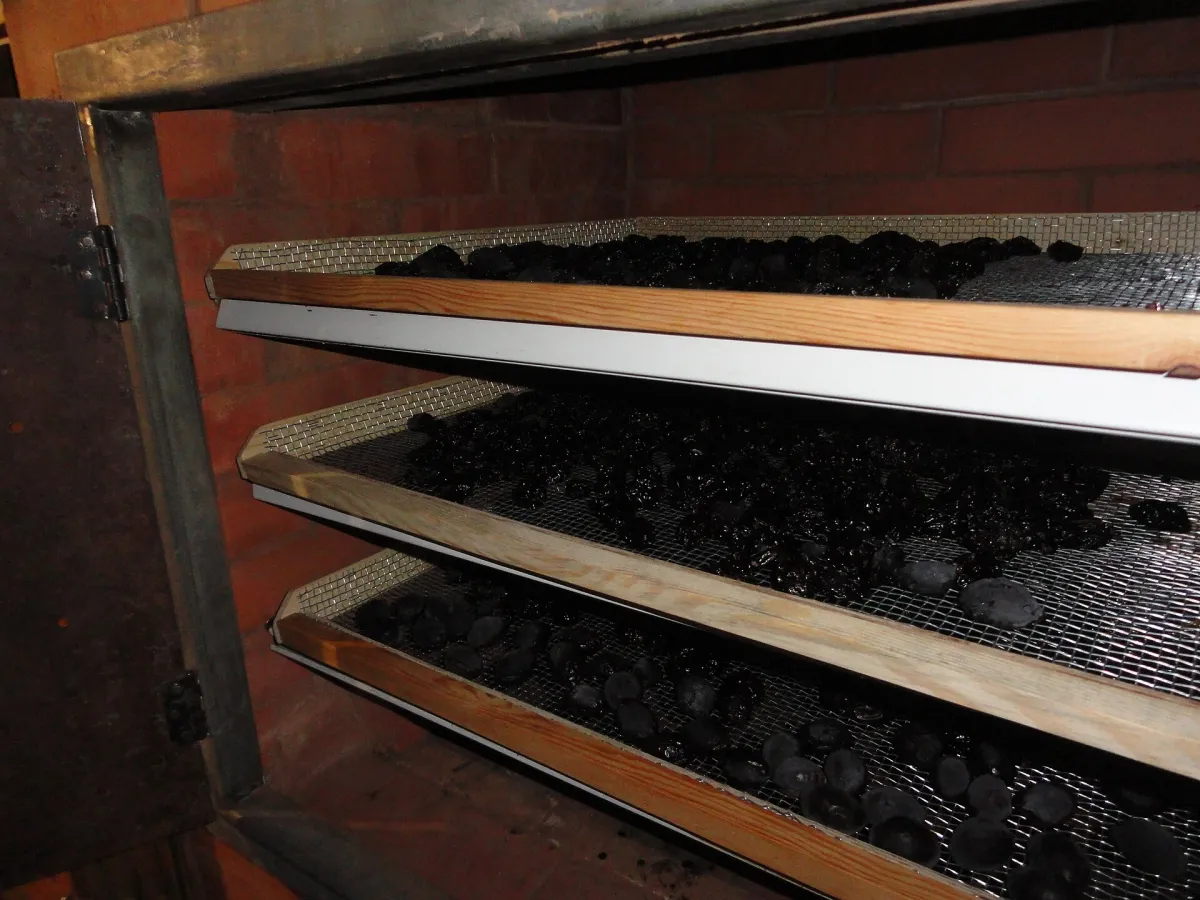 Photo: Андрей Перцев, CC0, via Wikimedia Commons
Prune juice
Commercial prune juice keeps the sorbitol but loses almost all the fiber. It works for regularity (100 to 125 ml in the morning), but it is high in concentrated sugar and not very filling. The whole fruit remains the better choice.
Contraindications, interactions and who should be careful
- Diabetes: prunes are not forbidden, but a 50 g serving has nearly 20 g of sugar. Count them in your carbohydrate total and eat them with protein or healthy fat. See also our guide to type 2 diabetes.
- Irritable bowel syndrome: sorbitol is a polyol (part of the FODMAP group) that can trigger bloating, pain and diarrhea in sensitive people. Test small amounts or avoid them during the restrictive phase of a low-FODMAP diet.
- Diarrhea or a flare of inflammatory bowel disease: prunes make symptoms worse.
- Warfarin-type anticoagulants: prunes are not extremely high in vitamin K, but intake should stay consistent from day to day, not in sudden “cures”.
- Chronic kidney disease: prunes are rich in potassium; if you are on a potassium restriction, ask your nephrologist.
- Sulfite sensitivity: check the label for E220 to E228.
- Young children: whole prunes can be a choking hazard under age 4; offer them mashed or finely chopped.
When to see a doctor
Prunes are suitable for ordinary functional constipation. See a doctor if:
- constipation started suddenly after age 50 or has lasted more than 3 weeks without explanation;
- you notice blood in the stool, tar-black stools or very thin stools;
- you have unintended weight loss, severe abdominal pain or vomiting;
- you have passed neither stool nor gas for several days and your belly is swollen and painful;
- there is a family history of colorectal cancer.
These signs can point to problems that food will not fix and that need investigation.
Common mistakes
Too many prunes at once. Eating 15 to 20 prunes “to be sure” often ends in cramps and diarrhea. A moderate daily amount works better.
Not enough water. Fiber needs fluid. Without at least 1.5 to 2 liters of water a day, the effect drops and some people feel even more bloated.
Confusing juice with fruit. Juice is laxative but not filling, and it brings concentrated sugar.
Smoked prunes every day. They taste wonderful, but smoke compounds are not something you want daily. Alternate with naturally dried prunes.
Sweetened or candied prunes. Some products are glazed with glucose syrup. Look for a label with a single ingredient: prunes.
Expecting an overnight fix for chronic constipation. Prunes help, but within a plan that includes movement, regular meals and hydration. For variety, figs and dates can be rotated with prunes.
Conclusion
Prunes are one of the few food “remedies” that has actually passed clinical testing: they support regularity through their mix of fiber, sorbitol and polyphenols, and regular intake appears to support bone health after menopause. The key is the amount: 50 to 100 g a day, introduced gradually, with enough water. People with diabetes, IBS or kidney disease should portion them carefully, and constipation with warning signs needs a doctor, not just prunes.
Frequently asked questions
How quickly do prunes work for constipation? For most people the effect appears within 12 to 72 hours of the first servings, especially with enough water. If a week of regular intake changes nothing, the problem may have another cause and is worth discussing with a doctor.
Is it better to eat prunes in the morning or at night? Both work. Many people prefer soaked prunes in the morning on an empty stomach, because the gastrocolic reflex (the urge to go after the first meal) is strongest in the morning.
Can I eat prunes if I am trying to lose weight? Yes, in moderation. Three to five prunes a day fit easily into a weight-loss plan and help with fullness. The problem starts when you eat straight from the bag: 100 g is almost 240 kcal.
Are prunes good during pregnancy? Yes. Constipation is common in pregnancy and prunes are a safe option in moderate amounts (3 to 6 a day). If you have gestational diabetes, agree on the amount with your doctor.
Is it safe to give prunes to children? Above age 1, prune puree or a few spoonfuls of unsweetened stewed prune liquid are commonly used for hard stools. For babies and for children with persistent constipation, the pediatrician should decide.
Can I eat prunes if I have diabetes? Yes, in small servings (2 to 4 prunes), counted as part of the meal’s carbohydrates and combined with protein or fat. Check your blood sugar after the meal to see how you personally respond.
What is the difference between prunes and smoked prunes? Their nutritional values are similar, but smoked prunes contain smoke compounds. They are fine occasionally in traditional dishes, while naturally dried prunes are better for daily use.
Do prunes help with hemorrhoids? Indirectly, yes: a soft stool passed without straining reduces pressure on the rectal veins. More in our guide to hemorrhoids.
Sources
- USDA FoodData Central: nutrient profile for “Plums, dried (prunes), uncooked”.
- EFSA Panel on Dietetic Products, Nutrition and Allergies: scientific opinion on health claims for dried plums and normal bowel function (2012).
- Attaluri A. et al., randomized trial of prunes versus psyllium in chronic constipation, Alimentary Pharmacology & Therapeutics, 2011.
- Studies by Hooshmand, Arjmandi and colleagues, and “The Prune Study” (Penn State), on prunes and bone density in postmenopausal women.
- NIH Office of Dietary Supplements: vitamin K fact sheet.
This content is for information only and does not replace advice from a doctor or dietitian. For persistent symptoms or warning signs, see a specialist.