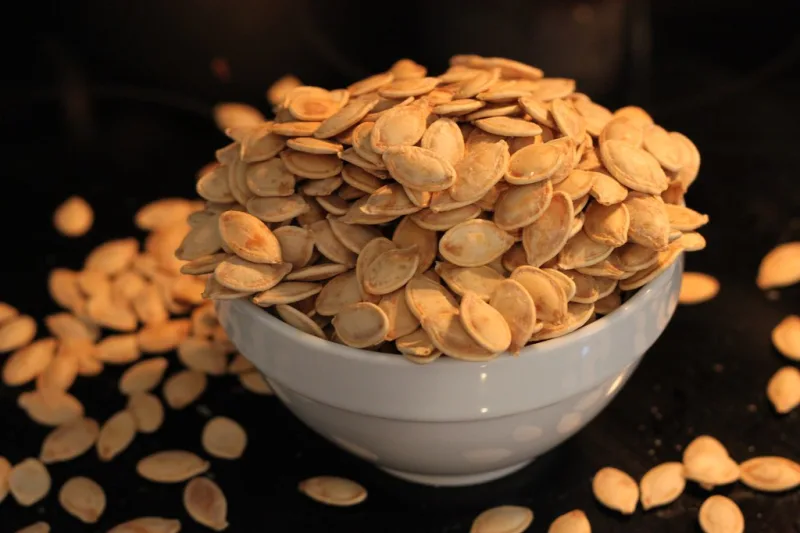

Pumpkin Seeds: Benefits, Zinc, Prostate Health and How to Eat Them
IMPORTANT: Pumpkin seeds are a food, not a medicine. They are generally safe for most people, but a few real precautions apply. They are very calorie-dense and high in fat, so eating too many can cause digestive discomfort, bloating or excessive calorie intake. People taking diuretics or blood pressure medication should talk to their doctor, since the seeds have a mild diuretic effect and contain potassium. Those with seed or nut allergies should be cautious the first time. Salted seeds are not recommended for people with high blood pressure or water retention. For men with genuine prostate problems (difficult urination, pain, blood in the urine), pumpkin seeds do NOT replace a urological consultation — they are only dietary support. Whole seeds pose a choking risk for very young children. During pregnancy and breastfeeding, plain seeds are considered safe in normal dietary amounts.
A story from Grandmother’s kitchen
In the countryside, autumn always smelled of roasting pumpkins. When Grandmother Maria cleaned the huge pumpkins for pie and for the animals, she never threw away the seeds. She washed them carefully free of the orange pulp, spread them on a clean cloth in the sun, on the windowsill, and left them for days until they dried completely. “These are gold, not garbage,” she would say, shaking her head whenever she saw me about to toss them. She kept them in a cloth bag hung in the pantry and, in winter, roasted them gently on the stove in a cast-iron pan until they popped softly and turned golden.
Grandfather, who always complained about waking three times a night to go to the bathroom, received a handful of shelled seeds every evening to chew by the stove. “A man who eats pumpkin seeds sleeps more peacefully,” Grandmother repeated, without knowing the scientific explanation but being right in a surprising way. Only much later did I understand that folk tradition across all of Eastern Europe associated pumpkin seeds with men’s health and the prostate — a connection that modern studies now view with interest.
What are pumpkin seeds
Pumpkin seeds are the flat, olive-green kernels (beneath a fibrous white shell) found inside the core of pumpkins and squash (Cucurbita pepo, Cucurbita maxima and relatives). In stores you’ll find two main forms: whole seeds with a crunchy white shell, and the shelled green kernel (often called “pepitas”), eaten directly. Both are extremely nutritious, but the green kernel is more concentrated in nutrients per gram.
They have been valued for thousands of years — from the Mesoamerican civilizations, where pumpkin was a staple crop, to the Romanian villages where nothing from a pumpkin was wasted. Today, pumpkin seeds are considered a little superfood: a snack dense in protein, good fats, minerals and antioxidants, easy to add to everyday eating.
Table of Contents
- Nutritional value of pumpkin seeds
- Health benefits (zinc, prostate, sleep, heart and more)
- Why they are linked to prostate and men’s health
- How to eat them and practical recipes
- How much to eat per day
- How to choose, roast and store them
- Lifestyle: how to fit seeds into your routine
- Practical Tips and Common Mistakes
- Conclusion
- Frequently Asked Questions
Nutritional value of pumpkin seeds
Pumpkin seeds are small but incredibly nutrient-dense. Here is roughly what they contain:
- Magnesium — pumpkin seeds are among the best dietary sources of magnesium, a mineral involved in more than 300 processes in the body, from muscle and nerve function to sleep and heart rhythm.
- Zinc — a mineral essential for immunity, wound healing, fertility and prostate health.
- Iron — important for carrying oxygen in the blood; pumpkin seeds provide plant (non-heme) iron.
- Plant protein — about a quarter of the kernel’s weight is protein, making them a filling snack.
- Healthy fats — predominantly unsaturated, including omega-6 fatty acids and some plant omega-3.
- Fiber — especially in seeds with the shell, supporting digestion.
- Antioxidants — vitamin E, carotenoids and phenolic compounds that fight oxidative stress.
- Tryptophan — an amino acid that is a precursor of serotonin and melatonin, linked to better sleep.
- Phytosterols — plant compounds studied for their effect on cholesterol and the prostate.
This combination explains why a simple handful of seeds has a disproportionately large impact on your daily mineral intake.
Health benefits
Support for prostate and men’s health
This is why pumpkin seeds are famous in folk medicine. The high zinc content is key — the prostate is one of the tissues with the highest concentration of zinc in the male body. In addition, the phytosterols in the seeds and in pumpkin seed oil have been studied for their effect on the symptoms of benign prostate enlargement (benign prostatic hyperplasia). Studies suggest that pumpkin seed extract and oil may ease mild to moderate urinary symptoms — frequent nighttime urination, weak stream, a feeling of incomplete emptying. They do not cure the condition, but tradition and modern research converge here in a way worth noting. Important: any persistent urinary symptom requires medical evaluation.
Magnesium for heart, muscles and relaxation
The magnesium in pumpkin seeds supports a normal heart rhythm, muscle relaxation and proper nervous-system function. Many people have an insufficient magnesium intake, and a deficit shows up as muscle cramps, fatigue, irritability and restless sleep. A portion of seeds can contribute significantly to the daily requirement.
Better sleep and relaxation
The combination of tryptophan, magnesium and zinc makes pumpkin seeds a very interesting “evening” food. The body converts tryptophan into serotonin and then into melatonin, the sleep hormone. Grandmother’s tradition — a handful of seeds in the evening by the stove — thus takes on a surprising logic.
Heart health
The unsaturated fats, magnesium, phytosterols and antioxidants work together to support the cardiovascular system. Studies suggest that regular intake of oilseeds (including pumpkin) is associated with a better cholesterol profile and more balanced blood pressure.
Immunity and healing
Zinc is essential for a functioning immune system and for tissue healing. A good zinc intake helps the body respond more effectively to infections, especially in the cold season.
Blood sugar and satiety
Rich in protein, good fats and fiber, pumpkin seeds have a low glycemic index and help stabilize blood sugar. As a snack, they keep hunger at bay for a long time and can reduce sugar cravings.
Bone health
Magnesium, phosphorus, manganese and zinc all contribute to maintaining bone density, making the seeds a quiet ally in preventing bone fragility in later life.
Why they are linked to prostate and men’s health
This is worth explaining in a little more detail. The prostate needs zinc to function normally, and men with prostate problems often have low zinc levels in prostate tissue. Pumpkin seeds provide an excellent dietary source of zinc. In addition, pumpkin seed oil contains phytosterols — compounds with a structure similar to cholesterol but of plant origin — which appear to influence local hormone metabolism and inflammation in the prostate area. Folk tradition in Austria, Romania, Ukraine and the Balkans recommended pumpkin seeds to men past a certain age for generations. Modern research has not confirmed a “cure,” but it has confirmed that this is a food with real supportive potential. For women, the same seeds provide iron, magnesium and support during times of blood loss (menstruation) or for bladder health.
How to eat them and practical recipes
The beauty of pumpkin seeds is their versatility. Here are the best ways to use them:
1. Plain roasted seeds (the classic snack)
- Wash the seeds well, free of the orange pulp, and dry them with a towel.
- Spread them on a parchment-lined tray in a single layer.
- Drizzle with a little olive oil and, optionally, a pinch of salt.
- Bake in the oven at about 150–160°C (300–320°F) for 15–25 minutes, stirring once or twice, until lightly golden and popping.
- Let them cool — they become crisp as they cool.
2. Pepitas over salads and soups
Lightly toast the shelled green kernel in a dry pan for 2–3 minutes, then sprinkle over salads, cream soups (especially pumpkin soup!), yogurt or oatmeal, adding a crunchy texture and nutrients.
3. Added to bread, bars and granola
Work the seeds into bread dough, homemade energy bars or granola for an extra boost of protein and minerals.
4. Pumpkin seed butter
Grind the green kernels in a powerful food processor until they become a creamy paste. Spread it on toast as an alternative to peanut butter.
5. Green smoothie
A spoonful of seeds added to a smoothie brings magnesium and protein without changing the taste much.
6. Traditional tea/decoction (for bladder support)
In folk medicine, a decoction was sometimes prepared: a spoonful of lightly crushed seeds, boiled for a few minutes in a cup of water, left to infuse and drunk warm. This preparation was traditionally used as a mild diuretic. It is not a medical treatment but a folk custom.
How much to eat per day
A reasonable portion is about one handful (around 20–30 grams of kernels, or a fistful of seeds with shells) per day. This amount provides a good dose of minerals without excessive calories. For prostate support, tradition recommended regular, daily intake over long periods — dietary effects appear over time, not overnight. Avoid very large portions (over 100 g), which can cause bloating and add many calories.
How to choose, roast and store them
- When buying: choose seeds that look fresh, with no rancid smell. The smell of old oil indicates oxidized fats — a sign they are no longer good.
- Raw vs. roasted: raw seeds preserve the sensitive fats and some vitamins better, while roasting makes them tastier. At too-high temperatures, though, roasting can degrade some nutrients. The ideal compromise: light roasting at a moderate temperature.
- Salted or unsalted: the unsalted version is healthier, especially for those with high blood pressure. Excess salt cancels out some of the benefits.
- Storage: keep the seeds in an airtight container, in a cool, dark place. Their fats can go rancid, so for long periods, storing them in the fridge or freezer is ideal. Shelled seeds spoil faster than those with shells.
Lifestyle: how to fit seeds into your routine
The simplest way to benefit from seeds is to make them part of your daily habits. Keep a jar of roasted seeds on the kitchen table and grab a handful instead of chips. Put a teaspoon of pepitas on your breakfast. Take a small bag of seeds to the office instead of processed snacks. For men who want to support prostate health, Grandfather’s habit — a handful of seeds in the evening — is both enjoyable and beneficial. The key is consistency: a healthy food eaten occasionally matters less than one woven into your routine.
Combine the seeds with a diet rich in vegetables, enough water and physical activity. No “superfood” works in isolation — pumpkin seeds are one piece of a larger puzzle of a balanced life.
Practical Tips and Common Mistakes
Mistake no. 1: Roasting them at too high a temperature. Many people bake seeds at 200°C and burn them, destroying the good fats and giving a bitter taste. Roast gently at 150–160°C and keep an eye on them.
Mistake no. 2: Over-salting them. Lots of salt turns a healthy snack into a problematic one for blood pressure. Use little or none.
Mistake no. 3: Eating them in huge amounts. “If they’re healthy, I’ll eat as many as I want” — false. They are very calorie-dense; a handful is enough.
Mistake no. 4: Storing them wrong so they go rancid. Left in warmth and light, the fats oxidize. Use an airtight jar, a cool place — or the fridge.
Mistake no. 5: Expecting immediate results for the prostate. The seeds are long-term dietary support, not medicine. The benefits build over time.
Mistake no. 6: Giving them whole to small children. Choking risk. For little ones, choose ground kernels or seed butter.
Mistake no. 7: Skipping the medical consultation. If you have real urinary symptoms, see a urologist. Seeds complement, they do not replace, treatment.
Conclusion
Pumpkin seeds are a perfect example of folk wisdom confirmed by science. What Grandmother called “gold” and kept carefully in the pantry is indeed a remarkable food: rich in zinc, magnesium, protein and good fats, with benefits touching prostate, heart, sleep and immune health. They are not a miracle cure, but they are a cheap, tasty, nutrient-dense snack, easy to fit into any routine. Eaten in moderation, gently roasted and stored correctly, pumpkin seeds deserve a permanent place in your kitchen — exactly as they had in Grandmother’s pantry.
Frequently Asked Questions
Are pumpkin seeds better raw or roasted? Both are good. Raw ones preserve the sensitive fats and some vitamins better, while light roasting makes them tastier and more digestible. Avoid roasting at high temperatures, which degrades nutrients.
Do pumpkin seeds really help the prostate? Folk tradition and some studies suggest that the zinc and phytosterols in the seeds may ease mild symptoms of an enlarged prostate. They do not cure the condition and do not replace a urological consultation, but they can be valuable dietary support.
How many pumpkin seeds can I eat per day? A handful, about 20–30 g of kernels, is a reasonable portion for daily consumption. They are calorie-dense, so avoid very large amounts.
Can I eat the seed shells too? Yes, the white shell of whole seeds is edible and adds extra fiber. Some people find it too fibrous; if it bothers you, choose the shelled green kernel.
Are pumpkin seeds good for women? Absolutely. They provide iron (useful especially for women with heavy periods), magnesium for relaxation and sleep, and support for bladder health.
Are pumpkin seeds high in calories? Yes, they are calorie-dense because of their high fat content. That’s why moderation is recommended — one handful a day is ideal.
Do pumpkin seeds help with sleep? They can. They contain tryptophan, magnesium and zinc, nutrients involved in producing serotonin and melatonin, hormones associated with more restful sleep.
Can I eat store-bought pumpkin seeds directly, without roasting? Yes, the green kernels (“pepitas”) sold in stores can be eaten directly. Whole raw seeds from a home pumpkin are better dried and, optionally, lightly roasted first.