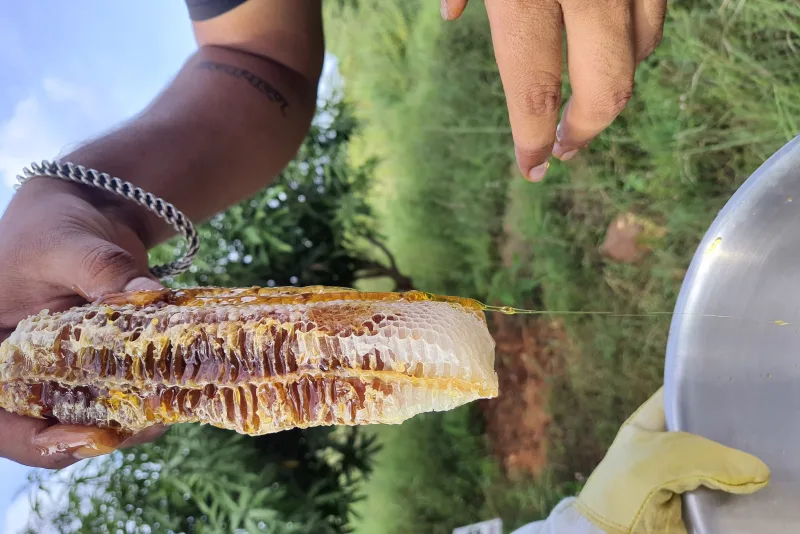

Raw Honey: Benefits, Enzymes and How to Consume It Properly
IMPORTANT: Raw honey, regardless of its quality, must NEVER be given to children under one year of age because of the risk of infant botulism. People with diabetes should consume honey cautiously and count it as a source of sugar. Those allergic to pollen, bee venom, or bee products may react to raw honey, which contains fine pollen particles. Honey is not a substitute for medical treatment, and in cases of illness, serious infection, or persistent symptoms, always consult a doctor.
Grandmother Veta, from the hills of Bistrița, kept a large clay jar of honey from her own hives under the icon in the corner of the room. She never called it simply “honey” but “the gold of the bees.” Every winter morning, before we grandchildren set out to school in the biting cold, she would give us a full teaspoon taken straight from the jar, without heating it, without mixing it with anything. “That is how you let it keep its power,” she would say. “If you boil it, it stays sweet, but whatever is alive in it dies.” Back then we did not understand what she meant. Only later did I realize that grandmother, without ever having read a single textbook, already knew the essential difference between raw honey and processed honey.
Aunt Aurelia, her neighbor, always kept a jar of raw honey with propolis on the windowsill and swore she had not caught a cold “since the old days.” Whenever someone in the village coughed or felt a chill coming on, they received a spoonful of honey with a little onion juice or with warm linden tea. These were simple gestures, repeated from one generation to the next, and raw honey was always at their center, not the honey bought from the shop, liquid and clear as water, but the thick, cloudy kind, sometimes crystallized, with a complex taste that told you it came straight from the flower.
Raw honey is honey in the form closest to how bees produce it in the hive. Unlike commercial honey, it is not pasteurized (heated to high temperatures) and is usually not finely filtered or pressure filtered either. As a result, it keeps intact the enzymes, pollen, antioxidants, and traces of propolis and wax that industrial processing removes or destroys. This preservation of the “life” within the honey is exactly what makes it valued by folk tradition and, increasingly, by researchers.
Table of Contents
- What raw honey is and how it differs from processed honey
- Composition and active compounds
- Health benefits
- Traditional uses in the Romanian village
- How to consume raw honey correctly
- Recipes and traditional combinations
- How to recognize authentic raw honey
- How to store it properly
- Lifestyle and practical advice
- Practical Tips and Common Mistakes
- Conclusion
- Frequently Asked Questions
What raw honey is and how it differs from processed honey
Honey is produced by bees from the nectar of flowers, which they transform through enzymes and the evaporation of water into a dense, sweet, and remarkably stable food. Bees store the honey in the cells of the comb and seal it with wax once the water content has dropped enough to make it resistant to fermentation. “Raw” honey is simply honey extracted from the comb and put into the jar without being subjected to aggressive thermal processes.
The essential difference lies in processing. Industrial honey is often pasteurized, heated to 60-70°C or more, in order to delay crystallization and make it more liquid, clearer, and easier to bottle. Many commercial varieties are also ultrafiltered, a process that removes pollen and fine particles. The problem is that precisely these particles and the heat-sensitive components contain a large part of the biological value of the honey. Heat denatures the enzymes, reduces antioxidant activity, and can raise the level of a compound called HMF (hydroxymethylfurfural), considered an indicator of overheating.
Raw honey, by contrast, is usually cloudier, thicker, and tends to crystallize over time, a sign that it is alive and unaltered. Crystallization is not a defect and does not mean the honey has spoiled; on the contrary, it is proof that it has not been overheated. Many quality raw honeys crystallize within a few months of harvest.
Composition and active compounds
Although it is often perceived as “just sugar,” raw honey is a complex matrix of hundreds of compounds. Its main components are:
- Natural sugars — mainly fructose and glucose, which give it its sweetness and quick energy. These make up most of the mass of the honey.
- Water — in a low proportion (usually below 18-20%), which makes honey resistant to the growth of microorganisms.
- Enzymes — among them diastase, invertase, and glucose oxidase. The latter generates small amounts of hydrogen peroxide, one of the explanations for the antibacterial properties of honey. Enzymes are heat-sensitive and are destroyed by pasteurization.
- Antioxidants — flavonoids and phenolic acids, which contribute to the color and aroma of the honey. In general, darker honeys (forest, honeydew, buckwheat) tend to have a higher antioxidant content.
- Pollen — fine particles that “sign” the floral origin of the honey and bring traces of protein and micronutrients.
- Propolis and traces of wax — in raw honey that is not finely filtered, traces of propolis may remain, with their own traditional virtues.
- Trace minerals and vitamins — potassium, calcium, magnesium, iron, and small amounts of B-complex vitamins and vitamin C.
This combination makes raw honey far more than a sweetener: it is a functional food, with a profile that refined sugar or industrial syrups cannot match.
Health benefits
Supporting the immune system
Folk tradition has always associated honey with “strengthening the body” against colds and the harsh winter. The antioxidants and bioactive compounds in raw honey may help reduce oxidative stress, and studies suggest that part of its beneficial effects are due to components destroyed by pasteurization. Regular, moderate consumption of raw honey has been considered for generations a support for immunity, especially in combination with royal jelly, propolis, or pollen.
Soothing coughs and throat irritation
One of the best-known and best-documented uses of honey is the soothing of coughs. Honey forms a protective layer over the irritated mucous membrane of the throat and has an emollient effect. Tradition uses it for dry cough, especially in the evening, when a teaspoon of raw honey taken on its own or dissolved in warm tea can bring relief. For a sore throat, honey is a gentle and pleasant remedy.
Antibacterial properties and support for wound healing
Honey has a long history of topical use on minor wounds and burns. Its low water content, natural acidity, and enzymatically generated hydrogen peroxide create an environment hostile to bacteria. Tradition used honey poultices on scratches, calluses, or superficial lesions. For more serious wounds, however, proper medical care is needed.
Digestion and gut health
In folk medicine, raw honey was taken in the morning on an empty stomach, often dissolved in warm water with lemon, to “get the stomach moving.” Some components of honey may act as a substrate for beneficial gut bacteria, supporting a healthy microbiome. Honey was also traditionally used for mild digestive discomfort.
Natural energy and physical effort
Thanks to the combination of glucose and fructose, honey provides quick and sustained energy. Peasants took it before hard work in the fields, and today athletes sometimes use it as a natural source of carbohydrates. Unlike refined sugar, honey also brings micronutrients and antioxidants alongside its calories.
Skin and cosmetic use
Raw honey is a prized ingredient in home cosmetics. Its moisturizing and soothing properties make it suitable for face masks, for dry or irritated skin, and for dull hair. Tradition mixed it with yogurt, oatmeal, or olive oil for skin care.
Traditional uses in the Romanian village
In the peasant household, raw honey was almost never missing. It was the remedy “for everything”: for colds, for the throat, for children’s wounds, for restless sleep. In winter it was mixed with onion or black radish juice for coughs. It was added to linden, elderflower, or chamomile tea. It was given to the sick to restore their strength. And, not least, it was used as a staple food, on bread, in pies, in drinks.
Many families also kept a jar of honey with propolis or with pollen, considered a “strengthener” for the cold season. Beekeeping was a respected occupation, and one’s own unprocessed honey was considered superior to any store-bought honey.
How to consume raw honey correctly
The key to correct consumption is not to destroy precisely what makes raw honey valuable. Here are the basic principles:
- Do not overheat it. If you add honey to a tea, let the liquid cool to a pleasant drinking temperature (below about 40°C) before stirring in the honey. Boiling water destroys its enzymes.
- Eat it as it is. A teaspoon of raw honey taken straight, allowed to melt slowly in the mouth, is the simplest and purest form of consumption.
- Use a clean, dry spoon. Moisture and crumbs can introduce contaminants that, over time, can encourage fermentation.
- Moderate the amount. Honey remains a concentrated source of sugars. A reasonable amount for a healthy adult is one to two teaspoons per day, integrated into a balanced diet.
Recipes and traditional combinations
Morning honey and lemon water
Squeeze half a lemon into a glass of warm (not hot) water and add a teaspoon of raw honey. Stir and drink on an empty stomach. It is a traditional, pleasant, and refreshing morning ritual.
Onion and honey cough syrup
Slice an onion thinly and layer it in a jar, alternating with raw honey. Leave to macerate for a few hours until the onion releases its juice. Strain and take a teaspoon of the syrup several times a day. It is one of the best-known cough remedies in the Romanian village.
Honey paste with propolis and walnuts
Mix raw honey with crushed walnut kernels and, optionally, a few drops of propolis tincture. Take a teaspoon in the morning as a “strengthener” during the cold season.
Moisturizing face mask
Combine a teaspoon of raw honey with a little plain yogurt and apply to the face for 10-15 minutes, then rinse with warm water. It leaves the skin soft and hydrated.
Linden tea with honey for the evening
Prepare a linden tea, let it cool until warm, and add a teaspoon of raw honey. It is a calming drink, traditionally associated with better sleep.
How to recognize authentic raw honey
The market is full of fancifully labeled honeys, so it is worth knowing a few signs of authenticity:
- Crystallization. Raw honey crystallizes over time; honey that stays perfectly liquid for months on end has probably been pasteurized or is of poor quality. Crystallization can be gently “undone” by placing the jar in a bowl of warm (not hot) water.
- Cloudy appearance. Raw honey contains pollen and small particles, so it is not perfectly transparent.
- Complex aroma. Real honey has a taste and smell characteristic of the flower it comes from, not just a flat sweetness.
- Trustworthy source. The safest option is to buy directly from a beekeeper or from a reliable local source.
- The label. Look for mentions such as “raw honey,” “unpasteurized,” alongside the floral and local origin.
How to store it properly
Honey is one of the most stable foods in nature; stored correctly, it can keep for years. A few rules:
- Keep it in a clean, well-sealed jar at room temperature, away from direct sunlight.
- Do not keep it in the refrigerator; cold accelerates crystallization.
- Always use a clean, dry spoon to avoid introducing moisture.
- If it has crystallized and you prefer it liquid, warm the jar gently in a warm water bath, never over direct heat and never in a microwave, so as not to destroy the enzymes.
Lifestyle and practical advice
Raw honey fits best into a lifestyle where balance matters more than quantity. Use it as a quality sweetener in place of refined sugar, but without treating it as “unlimited” just because it is natural. A teaspoon in the evening tea, one in the morning yogurt, or one taken on its own at the first sign of a sore throat are simple and sustainable habits.
Combine honey with a diet rich in fruits, vegetables, and aromatic herbs, with good hydration and regular movement. In the cold season, pairing it with propolis, pollen, or herbal teas can naturally complete your immune-support routine. And do not forget: the best honey is the one from a trustworthy beekeeper, harvested close to you.
Practical Tips and Common Mistakes
Mistake no. 1: Adding honey to boiling tea. This is the most common error. Hot water destroys the enzymes and reduces the value of raw honey. Always let the liquid cool first.
Mistake no. 2: Throwing away crystallized honey. Crystallization does not mean spoilage; it is actually a sign of quality. Melt it gently if you want the liquid texture.
Mistake no. 3: Giving honey to children under one year. Never. The risk of infant botulism is real and serious, regardless of the quality of the honey.
Mistake no. 4: Eating too much. “Natural” does not mean “without limits.” Honey remains a concentrated source of sugars and should be consumed in moderation, especially by people with diabetes or those monitoring their blood sugar.
Mistake no. 5: Buying any honey “off the shelf.” Many commercial varieties are pasteurized and ultrafiltered. Look for trustworthy local sources and labels that explicitly indicate raw, unpasteurized honey.
Mistake no. 6: Storing it with a wet spoon. Moisture introduced into the jar can encourage fermentation over time. Always use dry utensils.
Conclusion
Raw honey is perhaps the oldest “food-medicine” in the world, a gift from the bees that folk tradition has always treasured. Unlike pasteurized and ultrafiltered honey, raw honey keeps the enzymes, pollen, and antioxidants that give it its biological value. Consumed in moderation and correctly, without overheating, in reasonable amounts, from a trustworthy source, it can be a pleasant support for immunity, for an irritated throat, for digestion, and for general well-being. As grandmother Veta used to say, it is “the gold of the bees”: it must be respected, kept carefully, and used wisely, not wasted. And whenever you have doubts or serious health problems, honey remains a helper, not a replacement for medical advice.
Frequently Asked Questions
What is the difference between raw honey and ordinary store honey? Raw honey is not pasteurized and usually not ultrafiltered, so it keeps its enzymes, pollen, and antioxidants. Commercial honey is often heated and finely filtered to stay clear and liquid longer, which reduces part of its biological value.
Why does raw honey crystallize? Crystallization is a natural process in which the glucose in honey separates into crystals. It is a sign of authenticity and that the honey has not been overheated. It can be returned to a liquid consistency through gentle warming in a warm water bath.
Can I give raw honey to my child? Never to children under one year of age, because of the risk of infant botulism. For older children, honey can be used in moderation, for example to soothe a cough.
How much raw honey can I eat daily? For a healthy adult, one to two teaspoons per day is a reasonable amount, integrated into a balanced diet. People with diabetes should be especially careful and consult their doctor.
Does raw honey really help with a cough? Yes, it is one of the most appreciated uses of honey. It coats the irritated mucous membrane of the throat and has an emollient effect. A teaspoon taken on its own or in warm tea can soothe a cough, especially in the evening.
How do I recognize authentic raw honey? Look for honey that crystallizes over time, has a slightly cloudy appearance and a complex aroma, and comes from a beekeeper or trustworthy local source. The label should mention “raw” or “unpasteurized.”
Can I use raw honey on my skin? Yes. Thanks to its moisturizing and soothing properties, raw honey is used in face masks and for dry or irritated skin. It is often mixed with yogurt, oats, or olive oil.
Does raw honey go bad? Honey is very stable and, stored correctly (sealed jar, away from moisture and direct light), can keep for years. Crystallization does not mean spoilage. If a smell of fermentation or bubbles appear, the honey has probably been contaminated with moisture.