
Sesame Seeds: Benefits, a Source of Calcium and How to Eat Them
IMPORTANT: Sesame seeds are a safe and nourishing food for most people, but they are one of the officially recognized food allergens. People allergic to sesame must avoid them entirely, including in the form of tahini, oil, or in baked goods. Because they are very high in fat and calories, sesame should be eaten in moderation by those watching their weight. People taking diabetes medication or anticoagulants, or who suffer from kidney stones (because of the oxalate content), should talk to their doctor before consuming large amounts. This information is educational and does not replace the advice of a doctor or a nutritionist.
Grandma Veta, from her village in the Olt valley, had a habit that no one in the family fully understood until they grew old themselves. Every morning, before turning to the chores around the household, she would take a teaspoon of sesame seeds lightly toasted in a pan, chew them slowly, and only then drink her tea. “They are small, but they keep your bones strong,” she used to say, and at over eighty years old she still climbed the hill for firewood with a straight back that astonished the doctors at the local clinic.
No one ever explained to her the chemistry behind the habit, but the folk tradition of many cultures — from the Romanian one, where sesame arrived through merchants and oriental cuisine, to those of the Middle East, India, and Africa — has always treasured these tiny little seeds. Today we know that the grandmothers’ intuition had a real basis: sesame seeds are among the densest plant sources of calcium and of the minerals that support the skeleton.
Sesame (Sesamum indicum) is one of the oldest oilseed plants cultivated by humankind, used for thousands of years both for its seeds and for the precious oil extracted from them. Tiny in size yet concentrated in nutrients, sesame has slipped into countless dishes: from pretzels and rings sprinkled with seeds, to oriental halva, tahini, Japanese gomasio, and the classic sesame-and-honey bar. This diversity of uses says something about its versatility and value.
Table of Contents
- What sesame seeds are and where they come from
- The nutritional value of sesame
- Health benefits
- How to eat sesame seeds
- Simple sesame recipes
- How much sesame to eat per day
- How to choose and store the seeds
- Lifestyle and practical tips
- Practical Tips and Common Mistakes
- Conclusion
- Frequently Asked Questions
What sesame seeds are and where they come from
Sesame seeds come from the annual herbaceous plant Sesamum indicum, which grows in warm regions and produces elongated capsules full of little seeds. When the capsules ripen, they burst open releasing the seeds — hence the magical phrase “Open Sesame!”, which evokes exactly the way the pods pop and reveal their contents.
There are several types of sesame, depending on the color of the seed coat:
- White (or hulled) sesame — the most common, with a delicate, easy-to-digest flavor, used for baking and tahini.
- Unhulled sesame (with the coat) — keeps the seed coat, making it richer in fiber and calcium, but with a slightly bitter taste.
- Black sesame — prized in Asian cuisine, more aromatic and considered especially tonifying in traditional Chinese and Ayurvedic medicine.
- Golden or reddish sesame — local varieties grown in certain regions.
The plant is native to Africa and the Indian subcontinent, and its cultivation spread over the millennia toward the Middle East, Asia, and later to Europe. In the Romanian space, sesame entered through Balkan and Ottoman influences, becoming an essential ingredient in traditional confectionery and baking.
The nutritional value of sesame
Although they are minuscule, sesame seeds hide an impressive concentration of nutrients. A serving of about two tablespoons (around 18-20 grams) provides a significant amount of several essential substances:
- Healthy fats — predominantly monounsaturated and polyunsaturated fats, including linoleic and oleic acid. Sesame is an oilseed, which is why a highly prized oil is extracted from it.
- Plant protein — they contain all the amino acids, making them a useful source in a balanced diet, especially for those who reduce meat.
- Dietary fiber — especially in the unhulled version, it contributes to digestive health.
- Calcium — sesame is one of the richest plant sources of calcium, particularly with the coat on. This is why it has always been associated with strong bones.
- Iron and zinc — minerals important for blood and immunity.
- Magnesium, phosphorus, copper, and manganese — a veritable cocktail of trace elements.
- B-complex vitamins — especially thiamine, niacin, and folate.
- Specific lignans — sesamin and sesamolin, compounds with antioxidant effects that have been intensively studied.
- Phytosterols — plant substances that, according to some studies, may support cholesterol balance.
One important thing must be said, however: the calcium in sesame, especially in the version with the coat, comes accompanied by oxalates and phytates, substances that partly reduce its bioavailability. That is why the hulled version, or toasting and grinding the seeds, helps the body absorb the minerals better.
Health benefits
Support for bone health
Sesame’s reputation as a “friend of the bones” is no accident. Its richness in calcium, magnesium, phosphorus, and zinc makes it an ally of the skeletal system, especially for people who do not consume dairy or who follow a plant-based diet. Folk tradition has always recommended it to the elderly, and modern studies suggest that a balanced intake of minerals supports the maintenance of bone density throughout life. For optimal absorption, hulled sesame or the tahini form, in which the seeds are already ground, is preferable.
Cholesterol balance and heart health
Sesame contains phytosterols and unsaturated fats, and its specific lignans — sesamin and sesamolin — have been studied for their effect on fat metabolism. Studies suggest that moderate consumption of oilseeds, within a balanced diet, may help maintain a healthy lipid profile. The fiber in unhulled seeds adds an extra benefit for the cardiovascular system.
Antioxidant action
Sesamol and sesaminol, formed especially during toasting or oil pressing, are recognized antioxidants. They help neutralize free radicals, the unstable molecules that contribute to cellular aging and oxidative stress. It is precisely the high antioxidant content that explains the remarkable stability of sesame oil, which goes rancid more slowly than other vegetable oils.
Supporting digestion
Thanks to their fiber content, unhulled sesame seeds contribute to regular intestinal transit and to feeding the beneficial gut flora. Tradition has often used them as a gentle remedy against constipation, especially in the form of tahini or sprinkled generously over food.
Protein and energy intake
Sesame is an energy-dense snack, ideal for active people. The combination of protein, good fats, and minerals provides lasting energy, without the sudden blood-sugar spikes caused by sweet snacks. This is why sesame-and-honey bars have always been a favorite snack for children, but also for workers who needed strength.
Support for skin and hair
The richness in zinc, B-group vitamins, and fatty acids makes sesame an ally of beauty. Sesame oil has been used for centuries in Ayurveda for massage and for moisturizing the skin, and the internal consumption of seeds supports, according to tradition, the shine of the hair and the health of the nails.
Hormonal balance and benefits for women
The lignans in sesame are phytoestrogens, plant substances that mildly mimic the action of estrogen. Folk tradition has recommended sesame to women in menopause, and some studies suggest that lignan intake may have beneficial effects on hormonal balance. These effects are mild and do not replace specific medical treatment.
How to eat sesame seeds
The beauty of sesame lies in its versatility. It can be added to practically any dish, sweet or savory. Here are the main ways to consume it:
- Raw, sprinkled — over salads, cream soups, yogurt, or breakfast cereals.
- Lightly toasted — a few minutes in a dry pan over low heat, until golden and releasing its nutty aroma. Toasting intensifies the flavor and helps with nutrient absorption.
- Ground (tahini) — a creamy paste made from ground seeds, the base for hummus and for many sauces.
- In baked goods — sprinkled over bread, pretzels, savory sticks.
- As an oil — sesame oil, especially the one from toasted seeds, is an aromatic condiment added at the end, over food.
- In desserts — halva, honey bars, cakes, and energy balls coated in sesame.
An important trick: to benefit as much as possible from the minerals, grind the seeds or choose the tahini form. Whole seeds can pass undigested through the digestive tract, especially the ones with the coat.
Simple sesame recipes
Homemade tahini
You need one cup of sesame seeds (preferably hulled) and 2-3 tablespoons of neutral oil.
- Lightly toast the seeds in a dry pan, over low heat, stirring continuously for 3-5 minutes, until golden and fragrant. Do not burn them, or they will become bitter.
- Let them cool slightly.
- Put them in the food processor and grind them for a few minutes. At first they will form a powder, then gradually a paste.
- Add the oil, one tablespoon at a time, until you reach a creamy, fluid consistency.
- Store the tahini in the fridge, in a jar, for up to a month.
Gomasio (sesame salt)
A healthy Japanese condiment that reduces the need for excess salt.
- Toast one cup of sesame seeds until golden.
- Mix with one or two teaspoons of sea salt.
- Crush coarsely in a mortar, without turning it into a paste.
- Use it sprinkled over rice, vegetables, or soups.
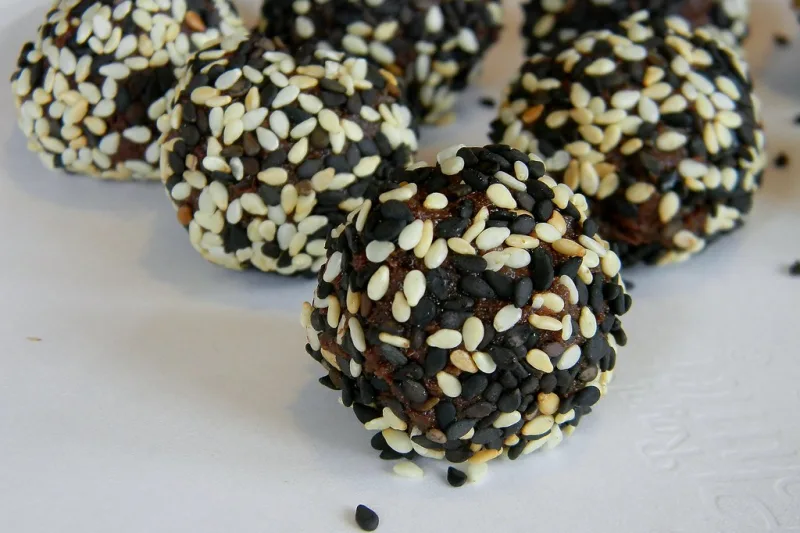
Sesame energy balls
- Mix pitted dates (soaked briefly in warm water) with a tablespoon of tahini and a handful of oats.
- Form small balls with your hands.
- Roll them in white and black sesame seeds until completely coated.
- Refrigerate for an hour, then serve as a snack.
Salad drizzled with sesame oil
Add a few drops of toasted sesame oil, a little rice vinegar, and a teaspoon of toasted seeds over a salad of cabbage and grated carrot. The oriental aroma transforms a plain salad into a special dish.
How much sesame to eat per day
Sesame is nourishing, but also caloric. A reasonable amount for a healthy adult is about one to two tablespoons per day (15-30 grams). This amount provides a good intake of minerals and healthy fats, without a caloric excess. Active people or those who use tahini as a protein source can eat a little more, but always in moderation.
It is preferable to integrate sesame gradually into your diet, especially if you are not used to fiber, in order to avoid digestive discomfort. Spreading it across several small meals, sprinkled over dishes, is usually easier to tolerate than a large amount at once.
How to choose and store the seeds
The quality of the seeds directly influences the flavor and nutritional value:
- Choose whole, uniform seeds, with no traces of mold or rancid smell.
- The smell should be fresh, slightly nutty. A pungent or paint-like odor indicates rancidity.
- Sesame with the coat is richer in calcium and fiber, but more bitter; the hulled one is more delicate and more suitable for baking.
- Storage is done in an airtight container, in a cool, dark place. Because of the fat content, sesame can go rancid if it sits for a long time in heat or light.
- For long periods, the seeds can be kept in the fridge or even in the freezer, where they retain their freshness for a long time.
- Sesame oil keeps well tightly closed, away from light, and has a surprisingly long shelf life thanks to its natural antioxidants.
Lifestyle and practical tips
Sesame is not an isolated “miracle food,” but one piece in a larger puzzle of a balanced diet. To truly benefit from its calcium and minerals, it is useful to combine it with a varied diet, rich in green vegetables, legumes, and sources of vitamin D and K, which help fix calcium in the bones.
Regular physical activity, especially weight-bearing exercise (walking, climbing stairs, light gymnastics), is just as important as mineral intake for bone health. Grandma Veta did not just eat sesame — she climbed the hill every day, and the combination of movement and simple food gave her that straight back.
Sesame fits perfectly into small, repeated habits: a teaspoon sprinkled over breakfast, tahini instead of butter on a slice of bread, sesame oil at the end over warm food. These minor but consistent gestures make the difference in the long run.
Practical Tips and Common Mistakes
Mistake no. 1: Eating whole, unchewed seeds. Whole sesame seeds, especially with the coat, can pass undigested through the body, which means you lose a good part of the minerals. The solution: grind them, use tahini, or at least chew them well.
Mistake no. 2: Over-toasting. Many people burn the seeds in their eagerness to brown them. Burnt sesame becomes bitter and loses its nutritional qualities. Toast over low heat, stirring continuously, only until golden.
Mistake no. 3: Storing in heat and light. Being rich in fats, the seeds go rancid if they sit in transparent jars, in the sun, near the stove. Keep them in an airtight container, in a cool, dark place.
Mistake no. 4: Overdoing the amount. “If it’s healthy, I’ll eat a lot” is a trap. Sesame is caloric, and excess can bring a surplus of calories and digestive discomfort. One or two tablespoons a day are enough.
Mistake no. 5: Ignoring the allergy. Sesame is a recognized allergen. If itching, swelling, or breathing difficulties appear after consumption, stop immediately and consult a doctor. People with known food allergies should introduce sesame cautiously.
Mistake no. 6: Expecting quick miracles. Sesame does not “repair” bones overnight. The benefits come from consistent consumption, within a healthy lifestyle, not from a single generous serving.
Conclusion
Sesame seeds are a perfect example of how small things can hide great value. Rich in plant calcium, minerals, healthy fats, and antioxidants, they have accompanied humankind for thousands of years, from oriental kitchens to the bakeries of Romanian villages. Folk tradition prized them for strong bones and for energy, and modern research largely confirms this wisdom.
The key lies in the way you consume them: ground or in the form of tahini for mineral absorption, lightly toasted for aroma, stored correctly for freshness, and eaten in moderation. Integrated into a varied diet and an active lifestyle, sesame seeds can be a discreet but reliable ally of long-term health. And if you have any condition or are undergoing treatment, a word with your doctor or nutritionist will help you use them safely.
Frequently Asked Questions
Are sesame seeds a good source of calcium? Yes, sesame is one of the richest plant sources of calcium, especially the version with the coat. However, the presence of oxalates and phytates partly reduces absorption, which is why the hulled form or tahini is preferable for a more efficient intake.
What is the difference between white and black sesame? White sesame (usually hulled) has a delicate flavor and is easier to digest, being used for baking and tahini. Black sesame, with the coat, is more aromatic, richer in antioxidants and fiber, and highly prized in traditional Asian cuisine and medicine.
How many sesame seeds can I eat per day? For a healthy adult, one to two tablespoons per day (15-30 g) is a reasonable amount. Since sesame is caloric and rich in fat, you don’t need large quantities to benefit from the nutrients.
What is tahini and what do you eat it with? Tahini is a creamy paste made from ground sesame seeds. It is used as a base for hummus, in sauces and dressings, but also spread on bread or added to desserts. It is an excellent way to consume sesame, because ground seeds release their minerals better.
Is sesame fattening? Sesame is energy-dense because of its fats, but its fats are mostly healthy. Consumed in moderation, within a balanced diet, it is not fattening; the problem only arises with excessive consumption, as with any caloric food.
Can I eat sesame during pregnancy? In normal amounts, as part of the diet, sesame is generally considered safe and nourishing. However, during pregnancy it is advisable to discuss any significant change in diet or the consumption of large amounts with your doctor.
How do I know if sesame has gone bad? Rancid sesame has a pungent, unpleasant smell, similar to paint, and a bitter taste. If you notice these signs, throw it away. Proper storage, in an airtight container in a cool place, prevents rancidity.
Is sesame suitable for a vegetarian or vegan diet? Absolutely. Sesame provides plant protein, calcium, iron, and zinc, making it a valuable ally for those who do not consume animal products. Tahini and sesame oil are especially prized in plant-based cooking.