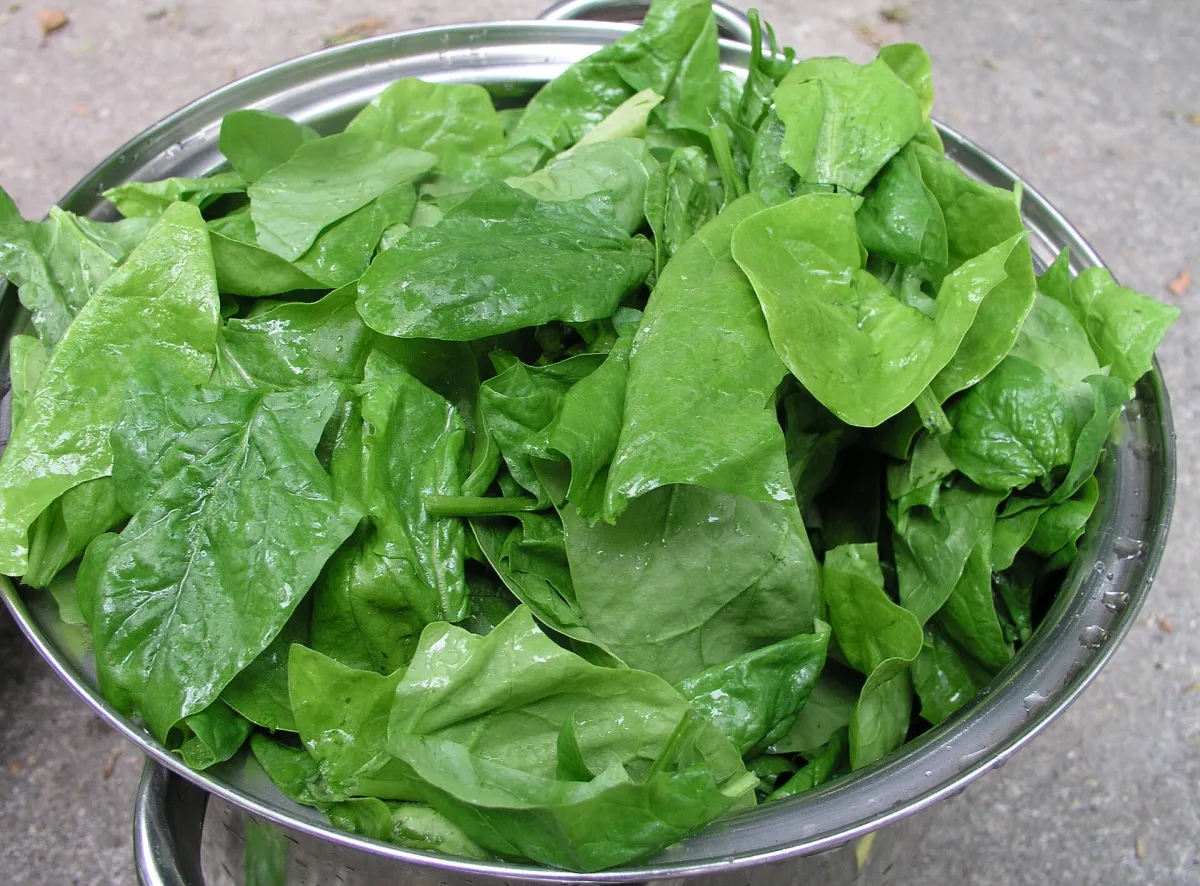
 Photo: Nillerdk, CC BY 3.0, via Wikimedia Commons
Spinach is an exceptionally nutrient-dense leafy green: at only 23 kcal per 100 g it supplies large amounts of vitamin K, plus folate, vitamin A (from beta-carotene), magnesium, potassium, lutein and natural nitrates. Its fame as a “super source of iron” is overstated, however: it does contain iron, but oxalates limit how much you absorb. Cooked well and paired with vitamin C-rich foods, spinach is a good ally for the heart, eyes and bones, with two important precautions: calcium oxalate kidney stones and treatment with warfarin-type blood thinners.
In Romanian cooking, spinach shows up in spring as mâncare de spanac, a garlicky spinach stew served with fried eggs, as well as in pies and green soups. Many children grew up with Popeye and the idea that spinach “makes blood”. Below you can separate myth from fact and learn how to actually get its benefits.
Key takeaways
- 100 g of raw spinach: about 23 kcal, 2.9 g protein, 2.2 g fiber and over 400 µg of vitamin K.
- The iron in spinach (about 2.7 mg per 100 g) is poorly absorbed; vitamin C in the same meal helps.
- Its natural nitrates are linked with healthier blood pressure.
- Oxalates drop with brief boiling and discarding the water, which matters for oxalate stones.
- People on warfarin or acenocoumarol should keep spinach intake consistent, neither avoiding it suddenly nor overdoing it.
What spinach is
Spinach (Spinacia oleracea) belongs to the Amaranthaceae family, related to beets and orache. Native to Persia, it reached Europe in the Middle Ages. It is a cool-season crop (early spring and autumn), because in heat it bolts and the leaves turn bitter. Smooth-leaf varieties suit salads (baby spinach), while crinkled-leaf (savoy) varieties are hardier and good for cooking.
Nutrition facts
Approximate values per 100 g of raw spinach and per cooked serving (USDA FoodData Central). Note that spinach shrinks a lot when cooked: 100 g of boiled spinach comes from roughly 150 to 200 g raw.
| Nutrient | 100 g raw | 100 g boiled, drained | Why it matters |
|---|---|---|---|
| Energy | ~23 kcal | ~23 kcal | Very few calories |
| Vitamin K | ~480 µg | ~490 µg | Clotting, bones |
| Folate (B9) | ~195 µg | ~145 µg | New cells, pregnancy |
| Vitamin A (RAE) | ~470 µg | ~525 µg | Vision, immunity |
| Iron | ~2.7 mg | ~3.6 mg | Low absorption |
| Magnesium | ~79 mg | ~87 mg | Muscles, nerves |
| Potassium | ~560 mg | ~470 mg | Blood pressure |
| Vitamin C | ~28 mg | ~10 mg | Lost in cooking |
| Lutein + zeaxanthin | ~12,000 µg | ~11,000 µg | Eyes |
Cooking reduces vitamin C and some folate, but concentrates other nutrients (through water loss) and makes carotenoids easier to absorb.
The iron myth and the truth about it
Spinach contains iron, but in non-heme form, and the oxalates in the leaves bind it. Absorption studies show only a small percentage (a few percent) of spinach iron actually reaches the body. That does not make spinach useless for iron; it means that:
- it should be paired with vitamin C (raw pepper, lemon, tomatoes, citrus) at the same meal;
- tea and coffee drunk with the meal reduce absorption even further;
- people with iron-deficiency anemia need better-absorbed sources (red meat, liver, fish) or treatment, not just spinach.
Benefits: what the research shows
Blood pressure and circulation
Spinach is one of the vegetables richest in nitrates, which the body converts into nitric oxide, a compound that relaxes blood vessels. Short-term studies with nitrate-rich vegetables (spinach, beetroot, arugula) have shown modest drops in blood pressure. Potassium and magnesium add to the effect. See also our guide to high blood pressure.
Eyes
Spinach is among the richest sources of lutein and zeaxanthin. Observational studies and the AREDS2 program showed the role of these carotenoids in protecting the macula. Their absorption rises sharply when spinach is cooked with a little fat or eaten with eggs. Details in our article on macular degeneration.
Bones
Vitamin K helps activate osteocalcin, a protein that binds calcium into bone. Observational studies link higher vitamin K intake from leafy greens with lower fracture risk, though supplement trials are mixed. Calcium from spinach, however, is poorly absorbed, again because of oxalates, so spinach is not a good calcium source.
Pregnancy and folate
Folate is essential for the development of the baby’s neural tube. Spinach is a good source, but it does not replace the folic acid supplement recommended by doctors before and in early pregnancy.
Fullness and weight
High volume, fiber and very few calories: spinach added to omelets, soups, pasta or smoothies raises the nutritional value of a meal without adding calories.
Raw or cooked?
| Aspect | Raw spinach | Cooked spinach |
|---|---|---|
| Vitamin C, folate | Higher | Losses of 30-60% |
| Oxalates | Higher | Significantly reduced if boiled and water discarded |
| Lutein, beta-carotene | Lower absorption | Better absorption, especially with fat |
| Amount eaten | Small (leaves are bulky) | Larger, so more nutrients per serving |
| Microbial risk | Very careful washing needed | Reduced |
Bottom line: both are good. If you are prone to kidney stones, prefer briefly boiled spinach with the water discarded.
How much to eat
| Situation | Typical serving |
|---|---|
| Healthy adult | 1-2 servings a week or more: 100-150 g cooked or 2 cups raw |
| Calcium oxalate stones | Limited or avoided, as your doctor advises |
| Warfarin / acenocoumarol therapy | A consistent amount week to week, agreed with your doctor |
| Children | Small cooked servings after age 1 |
How to cook it: simple recipes
Briefly boiled spinach (lower oxalates)
- Wash 500 g of spinach in several changes of water until no grit remains at the bottom of the bowl.
- Bring 2 liters of lightly salted water to a boil.
- Add the spinach for 1 to 2 minutes, until wilted.
- Drain, discard the water and rinse briefly in cold water.
- Squeeze gently and use in stews, pies or as a side dish.
Brief boiling with the water discarded can substantially reduce soluble oxalates; steaming reduces them less.
Romanian garlic spinach (4 servings)
Sauté a chopped onion in 2 tablespoons of olive oil for 5 minutes. Add 800 g of briefly boiled, chopped spinach, 2 or 3 crushed garlic cloves, salt and pepper. Thicken with a tablespoon of flour whisked into 100 ml of milk or stock and cook gently for 5 minutes. Serve with a fried or boiled egg and a slice of wholegrain bread. Squeeze some lemon on top for vitamin C and better iron absorption.
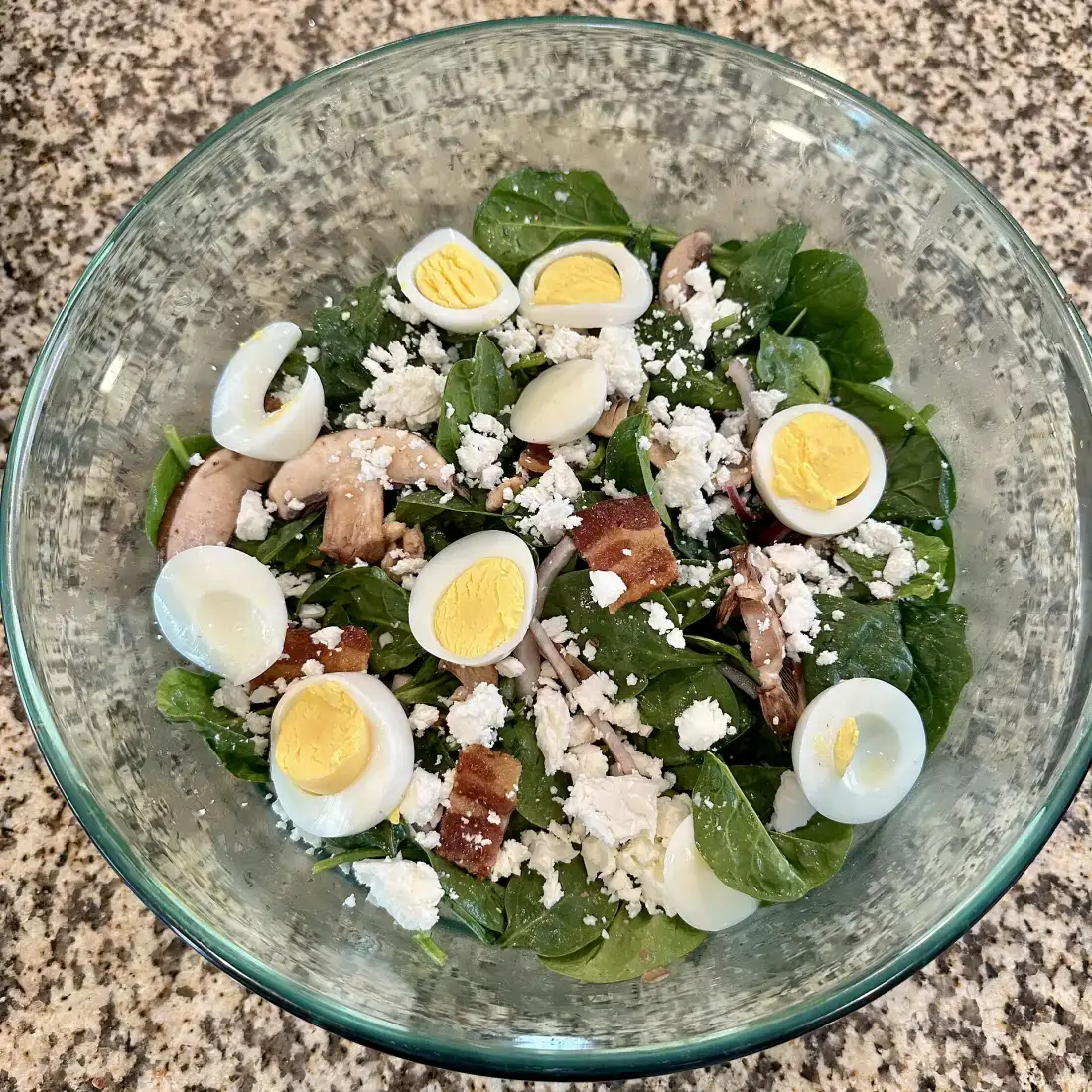 Photo: Valereee, CC0, via Wikimedia Commons
Baby spinach salad
Toss 2 cups of young spinach with a sliced red pepper, a handful of sautéed mushrooms, a boiled egg, a tablespoon of walnuts and an olive oil and lemon dressing. The pepper and lemon bring vitamin C, and the oil helps carotenoid absorption.
Contraindications and precautions
- Calcium oxalate kidney stones: spinach is one of the highest-oxalate foods. People with a history of stones should talk to their doctor; limiting it is often advised. See kidney stone prevention.
- Vitamin K antagonist blood thinners (warfarin, acenocoumarol): you do not need to avoid spinach, but intake must be consistent. Large changes from week to week shift your INR. Newer oral anticoagulants do not have this interaction.
- Gout: spinach has a moderate purine content; studies show purines from vegetables do not significantly raise attack risk.
- Infants: spinach contains nitrates and is not recommended for babies under 6 months. After weaning, serve it freshly cooked, cool leftovers quickly and do not reheat them repeatedly.
- Kidney disease with potassium restriction: watch the portions.
When to see a doctor
- severe, colicky flank pain or blood in the urine (possible kidney stone);
- unusual bleeding, easy bruising or a changed INR if you take blood thinners;
- marked fatigue, pallor, dizziness or breathlessness on exertion (possible anemia, which needs tests, not just spinach);
- in babies: bluish lips or skin, or unusual drowsiness (an emergency).
Common mistakes
Believing spinach treats anemia. It helps a little, but anemia needs a diagnosis and often treatment.
Washing it poorly. Sand and possible soil bacteria stay between the leaves. Wash in several changes of water.
Boiling it too long. 10 to 15 minutes destroy vitamin C and folate and leave it olive-grey.
Reheating it repeatedly. Cooked spinach keeps 1 to 2 days in the fridge and should be reheated only once.
Sudden changes for people on warfarin. Do not cut it out completely or start a “spinach cure” without telling your doctor.
Daily smoothies with big handfuls of raw spinach. For anyone at risk of stones, this is about the most concentrated oxalate source possible.
Conclusion
Spinach deserves its place on the plate, though for different reasons than the cartoons suggest: vitamin K, folate, lutein, nitrates, magnesium and potassium, for very few calories. Its iron is poorly absorbed, so always pair it with vitamin C and do not rely on it to treat anemia. Brief boiling with the water discarded lowers oxalates, and a little fat increases carotenoid absorption. People with kidney stones or on vitamin K antagonist blood thinners should agree on portions with their doctor.
Frequently asked questions
Is spinach high in iron? It has a decent amount (2.7 mg per 100 g raw), but absorption is low because of oxalates. Vitamin C at the same meal improves it.
Is raw or cooked spinach healthier? Each has advantages: raw keeps more vitamin C and folate, cooked has fewer oxalates and more absorbable carotenoids. Alternate them.
Can I eat spinach if I take blood thinners? If you take warfarin or acenocoumarol, yes, but in consistent amounts and with your doctor’s knowledge. Large swings affect your INR.
Does spinach cause kidney stones? Not in healthy people eating normal portions. In people prone to calcium oxalate stones, large and frequent portions raise the risk.
Is it dangerous to reheat spinach? For adults, reheating properly refrigerated spinach once is not a problem. For babies, spinach should be served freshly cooked because of nitrates.
How much spinach can I eat a day? For most healthy adults, 100 to 150 g cooked or 2 cups raw daily is reasonable. Variety among leafy greens matters more than any single vegetable.
Is frozen spinach as good? Yes. It is frozen quickly after harvest following a brief blanching and keeps most of its nutrients. It is a practical winter option.
Sources
- USDA FoodData Central: nutrient profiles for “Spinach, raw” and “Spinach, cooked, boiled, drained”.
- NIH Office of Dietary Supplements: fact sheets on iron, vitamin K and folate.
- EFSA: scientific opinion on nitrate in vegetables (2008) and statement on possible public health risks for infants and young children from nitrate in leafy vegetables (2010).
- National Kidney Foundation: guidance on oxalate and kidney stones.
- AREDS2 studies (National Eye Institute) on lutein and zeaxanthin.
This content is for information only and does not replace medical advice, especially if you take blood thinners or have had kidney stones.