
Turmeric: Benefits, Uses and How to Consume It Correctly
IMPORTANT: Turmeric used as a food and spice is safe for most people. However, large doses of concentrated curcumin extract can interact with blood-thinning medications (such as warfarin or aspirin), with diabetes medications and with drugs that reduce stomach acidity. People with gallstones, bile duct obstruction or an active ulcer should be cautious. Pregnant and breastfeeding women may use turmeric in ordinary culinary amounts, but should avoid concentrated supplements without medical advice. If you have surgery scheduled, stop turmeric supplements at least two weeks beforehand. This article is for informational purposes and does not replace medical advice.
Grandmother Veta, from the village at the foot of the hill, always kept a small jar on the shelf beside the stove, filled with a powder of such an intense yellow that it seemed to hold the sun inside it. She used to say she had received it long ago from a merchant passing through with goods brought from far away, and that ever since she had never cooked without it. Whenever someone in the house caught a cold, whenever grandfather’s knee ached after a day of mowing, or whenever a child complained of a sore tummy, she would stir a teaspoon of the golden powder into a cup of warm milk with honey and a drop of butter. “Drink it slowly while it’s warm,” she would say, “and let it do its work on the inside.”
Only later did I learn that this mysterious powder was turmeric, also known as curcuma or “Indian saffron.” What grandmother simply called “the yellow remedy” is today one of the most studied spices in the world, equally prized in Asian kitchens and on the shelves of natural food shops everywhere. In this article we will explore what turmeric is, why it is so valued, how to use it correctly and what you should know before adding it to your daily diet.
Turmeric is a spice obtained from the rhizome (underground root) of the Curcuma longa plant, a close relative of ginger. Native to southern Asia, particularly India and Indonesia, turmeric has been used for thousands of years both in cooking and in traditional Ayurvedic and Chinese medicine. Its unmistakable golden color comes from a group of compounds called curcuminoids, the most important of which is curcumin. Today India produces and consumes most of the world’s turmeric, and the spice has become a symbol of food considered beneficial to health.
Table of Contents
- What turmeric is and where it comes from
- Composition and active principles
- Health benefits
- Traditional uses
- How to consume turmeric: step-by-step recipes
- How much turmeric to consume per day
- How to choose and store it
- Turmeric in a healthy lifestyle
- Practical tips and common mistakes
- Conclusion
- Frequently Asked Questions
What turmeric is and where it comes from
Turmeric comes from the rhizome of the Curcuma longa plant, a perennial herbaceous plant in the Zingiberaceae family, the same family as ginger. The plant grows in tropical and subtropical regions, needing warm temperatures, high humidity and abundant rain to thrive. Its long, broad leaves are a deep green, and its flowers, when they appear, have a delicate pale-pink hue.
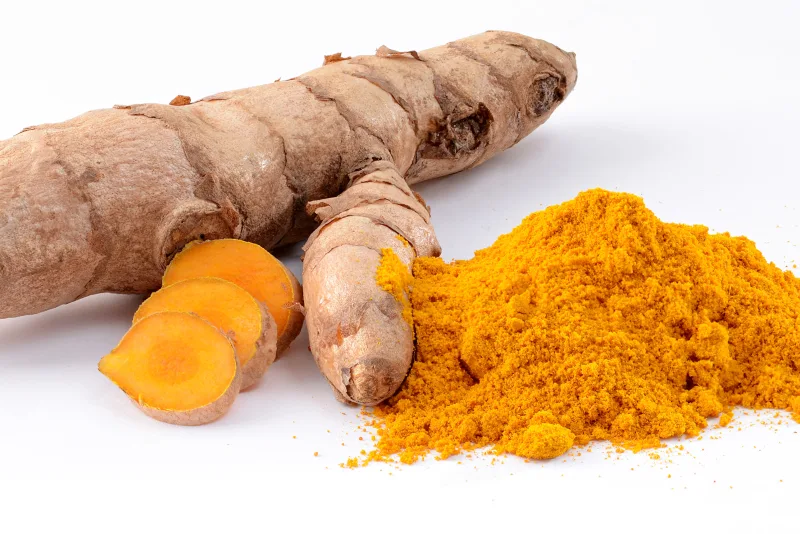
The part used is the rhizome, which is harvested once the plant has matured, usually eight to ten months after planting. Fresh rhizomes have a brownish skin and a vivid orange-gold interior. After harvesting, they are briefly boiled, then dried in the sun or in special ovens, and finally ground to produce the fine powder we all know. This powder has a warm, slightly earthy aroma, with a bitter note and a hint of heat.
In the folk traditions of many cultures, turmeric long ago crossed the boundaries of the kitchen. It has been used as a natural dye for fabrics and foods, as an ingredient in rituals and ceremonies and, above all, as a remedy for a wide range of complaints. In India, turmeric paste was applied to the skin before weddings, both for the glow it gave the complexion and for its reputed protective effect.
Composition and active principles
Turmeric’s value as a functional food comes from the richness of its active compounds. Here is, broadly, what it contains:
- Curcuminoids — the group of pigments responsible for the golden color. Curcumin is the main representative and the compound most research focuses on. Studies suggest it has antioxidant and anti-inflammatory properties.
- Volatile (essential) oils — such as turmerone, which contributes to the characteristic aroma and is believed to have beneficial effects of its own.
- Minerals — turmeric provides useful amounts of manganese, iron, potassium and magnesium.
- Vitamins — especially from the B complex, along with small amounts of vitamin C.
- Fiber — which supports digestive health when the rhizome is consumed in its whole form.
One essential point to remember is that, when consumed on its own, curcumin is absorbed quite poorly by the body. Folk tradition and modern practice have, however, found solutions: combining turmeric with black pepper significantly increases absorption thanks to the piperine in the pepper, and consuming it together with a source of healthy fat (oil, butter, full-fat milk) also helps, since curcumin is fat-soluble.
Health benefits
Support for joints and an anti-inflammatory effect
The best-known benefit attributed to turmeric is its anti-inflammatory effect. Low-grade chronic inflammation is involved in a number of bodily complaints, from joint discomfort to general fatigue. Studies suggest that curcumin may support joint comfort, which is why turmeric is often traditionally recommended to those who feel stiffness or discomfort in their knees, hips or hands after exertion.
A natural antioxidant
Curcumin is prized for its antioxidant capacity. Antioxidants help neutralize free radicals, unstable molecules that, in excess, can damage cells. Moreover, turmeric is believed to support the body’s own antioxidant systems, which amplifies its effect.
Support for digestion
In traditional medicine, turmeric has been used for centuries to support healthy digestion. It was thought to stimulate bile production, thereby helping to digest fats and contributing to a feeling of lightness after meals. Many people reach for a cup of turmeric milk when they feel bloated or heavy in the stomach.
Support for immunity
Turmeric has always held a place of honor in the household “winter” arsenal. Combined with honey, lemon or ginger, it was offered at the first signs of a cold. While it does not cure colds, folk tradition values it for the way it generally supports the body during cold periods.
Skin health
Applied externally as a paste or consumed regularly, turmeric has traditionally been associated with a brighter, clearer complexion. Turmeric paste was used on irritated areas of skin and on minor blemishes.
Support for general well-being
Many traditions regard turmeric as a “tonic” of well-being. Consumed consistently, in moderate amounts, as part of a varied diet, it contributes to a general sense of vitality, especially when integrated into a balanced lifestyle.
Traditional uses
In traditional households, turmeric had a wide range of uses. Here are some of the most widespread:
- Golden milk (also known as “haldi doodh”) — a warm drink of milk, turmeric, honey and spices, offered in the evening for restful sleep and general comfort.
- Skin paste — turmeric mixed with yogurt, honey or rose water was applied to the face for radiance.
- Turmeric gargle — warm water with salt and turmeric, used in folk practice for a sore throat.
- Poultices — turmeric paste applied to aching joints or bruises.
- Everyday spice — added to soups, stews, rice, vegetables and meat dishes, both for color and for flavor.
How to consume turmeric: step-by-step recipes
Golden milk
This is probably the most beloved way to consume turmeric. Here is how to make one serving:
- Gently heat 250 ml of milk (cow’s, goat’s or a plant-based alternative such as coconut or almond milk) over low heat.
- Add half a teaspoon of turmeric powder.
- Add a pinch of freshly ground black pepper — this is essential to help the absorption of curcumin.
- Add, to taste, a pinch of cinnamon and a little grated ginger.
- Let it warm through well, without boiling, stirring continuously, for 5 minutes.
- Take off the heat, let it cool slightly and sweeten with a teaspoon of honey.
- Drink warm, preferably in the evening.
Morning turmeric and lemon water
- Pour 200 ml of warm (not hot) water into a glass.
- Add a quarter teaspoon of turmeric powder.
- Squeeze in the juice of half a lemon.
- Add a touch of honey and a pinch of black pepper.
- Stir well and drink on an empty stomach in the morning.
Turmeric paste (the base for many preparations)
Turmeric paste can be made in advance and kept in the fridge for a few days, making it convenient for golden milk or other drinks:
- Place 4 tablespoons of turmeric powder in a small saucepan.
- Add about 120 ml of water.
- Add a quarter teaspoon of ground black pepper and 3 tablespoons of oil (coconut or olive).
- Heat over low heat, stirring, until a thick, smooth paste forms (5-7 minutes).
- Let it cool and store in a jar with a lid in the fridge.
Turmeric in cooked dishes
The simplest and most natural way to consume turmeric is simply to add it to your food. Half a teaspoon in a lentil soup, in cooked rice, in a vegetable stew or in a chicken sauté gives color, flavor and benefits. To release its oils more effectively, add it to a pan with a little heated oil at the start of cooking, alongside onion and garlic.
How much turmeric to consume per day
For culinary use, a reasonable amount is roughly half a teaspoon to one teaspoon of powder per day, spread across dishes or drinks. This is a dose considered safe for long-term consumption by most people.
In the case of concentrated curcumin supplements, the doses are far higher than dietary ones and should be taken only according to the directions on the packaging or, ideally, after discussing it with a doctor or pharmacist. More does not necessarily mean better — excessive doses can cause digestive discomfort, nausea or diarrhea.
How to choose and store it
When buying turmeric, you have two main options: the fresh rhizome and the powder.
The fresh rhizome resembles ginger, but is thinner, with a vivid orange interior. Choose firm pieces, without soft spots or wrinkles. Store it in the fridge, wrapped in paper, for up to two weeks, or freeze it.
The powder is the most convenient option. Choose a product with a vivid yellow-orange color and a strong aroma. A pale or odorless powder is probably old or of poor quality. Keep it in an airtight jar, away from light and moisture, in a cool place. This way it retains its aroma and properties for several months.
Pay attention to one important detail: turmeric stains strongly. Work surfaces, clothing, hands and even fingernails can turn yellow. Use a spoon and a cutting board you don’t mind staining, and quickly rinse off any spills.
Turmeric in a healthy lifestyle
Turmeric is not a miracle remedy that works in isolation, but an ingredient that shows its value best when it is part of a balanced way of life. To make the most of it, think of it as one piece of a larger puzzle:
- Include it in a diet rich in vegetables, fruit, whole grains and healthy fats.
- Always combine it with black pepper and a little fat to increase its absorption.
- Use it consistently, in small amounts, rather than rarely and in excess.
- Stay well hydrated throughout the day.
- Pair it with regular movement and restful sleep.
Many people like to build a small daily habit around turmeric: the glass of turmeric and lemon water in the morning, or the cup of golden milk in the evening. These simple, repeated rituals are often more effective than spectacular but occasional gestures.
Practical tips and common mistakes
Mistake no. 1: Consuming turmeric without black pepper. Curcumin is poorly absorbed on its own. Without a pinch of black pepper, much of it passes through the body unused. Always add pepper.
Mistake no. 2: Using turmeric without any source of fat. Curcumin is fat-soluble, meaning it dissolves in fats. Plain water with turmeric is less effective than full-fat milk or food cooked with oil.
Mistake no. 3: Exaggerated doses. More turmeric does not mean better results. Large amounts can irritate the stomach and cause digestive discomfort. Stick to moderate quantities.
Mistake no. 4: Expecting immediate effects. Turmeric is not a fast-acting painkiller. Its benefits, when they appear, show themselves over time, through consistent consumption. Patience is key.
Mistake no. 5: Buying a powder of dubious quality. Cheap, poor-quality turmeric can be diluted or adulterated with other colorings. Choose trustworthy sources, with a vivid color and a strong aroma.
Mistake no. 6: Ignoring drug interactions. If you take anticoagulants, diabetes medication or other treatments, do not switch to concentrated supplements without asking your doctor. Culinary amounts are usually safe, but high doses may interfere.
Mistake no. 7: Prolonged cooking at very high temperatures. Curcumin is rather sensitive to prolonged extreme heat. Add turmeric to food without frying it aggressively, just enough to release its aroma.
Conclusion
Turmeric is far more than a spice that colors food gold. It is a food with a history of thousands of years, valued equally for its warm aroma and for the properties attributed to curcumin, its main active compound. Used wisely — combined with black pepper and a source of fat, in moderate and consistent amounts — turmeric can become a pleasant ally of a balanced diet. It is not a miracle cure and does not replace a visit to the doctor when one is needed, but, just like grandmother Veta’s jar of “the yellow remedy,” it can easily find its place on the kitchen shelf. Add it with joy to soups, to rice, to your warm evening milk, and let the color of the sun slowly brighten your everyday table.
Frequently Asked Questions
Is it safe to consume turmeric every day? Yes, for most people, daily consumption of turmeric in culinary amounts (roughly half a teaspoon to one teaspoon of powder) is considered safe over the long term. Large doses of concentrated supplements are a different matter and should be discussed with your doctor.
Why do I need to add black pepper to turmeric? Black pepper contains piperine, a compound that significantly increases the absorption of curcumin in the body. Without it, much of the curcumin goes unused. A simple pinch of pepper makes a big difference.
Can I use turmeric if I am pregnant? Turmeric used as a food and spice, in the usual amounts found in cooking, is generally considered safe during pregnancy. Concentrated supplements, however, should be avoided without medical advice. Always seek the advice of the doctor monitoring your pregnancy.
What is the difference between fresh turmeric and turmeric powder? Both come from the same rhizome. The fresh form has a brighter, more vegetal aroma and is grated like ginger, while the powder is more concentrated, more convenient and keeps longer. You can use either, depending on the recipe.
Does turmeric stain? How do I remove the stains? Yes, turmeric stains strongly because of its pigments. Clean surfaces quickly, and for stains on clothing, wash immediately. Yellow hands usually clear up after a few washes.
Can I take turmeric if I have gallstones? People with gallstones or bile duct obstruction should be cautious, since turmeric can stimulate contraction of the gallbladder. In this case, be sure to talk to your doctor before using it in larger amounts.
How long until I feel the effects of turmeric? Turmeric does not act immediately. The traditionally attributed benefits are usually noticed after weeks of consistent, moderate consumption, as part of a healthy lifestyle.
Can turmeric in food replace supplements? Turmeric in the diet is an excellent way to include it in your daily routine. Supplements offer far more concentrated doses of curcumin, but they are not necessary for everyone. For most people, culinary turmeric, properly combined, is a gentle and pleasant choice.