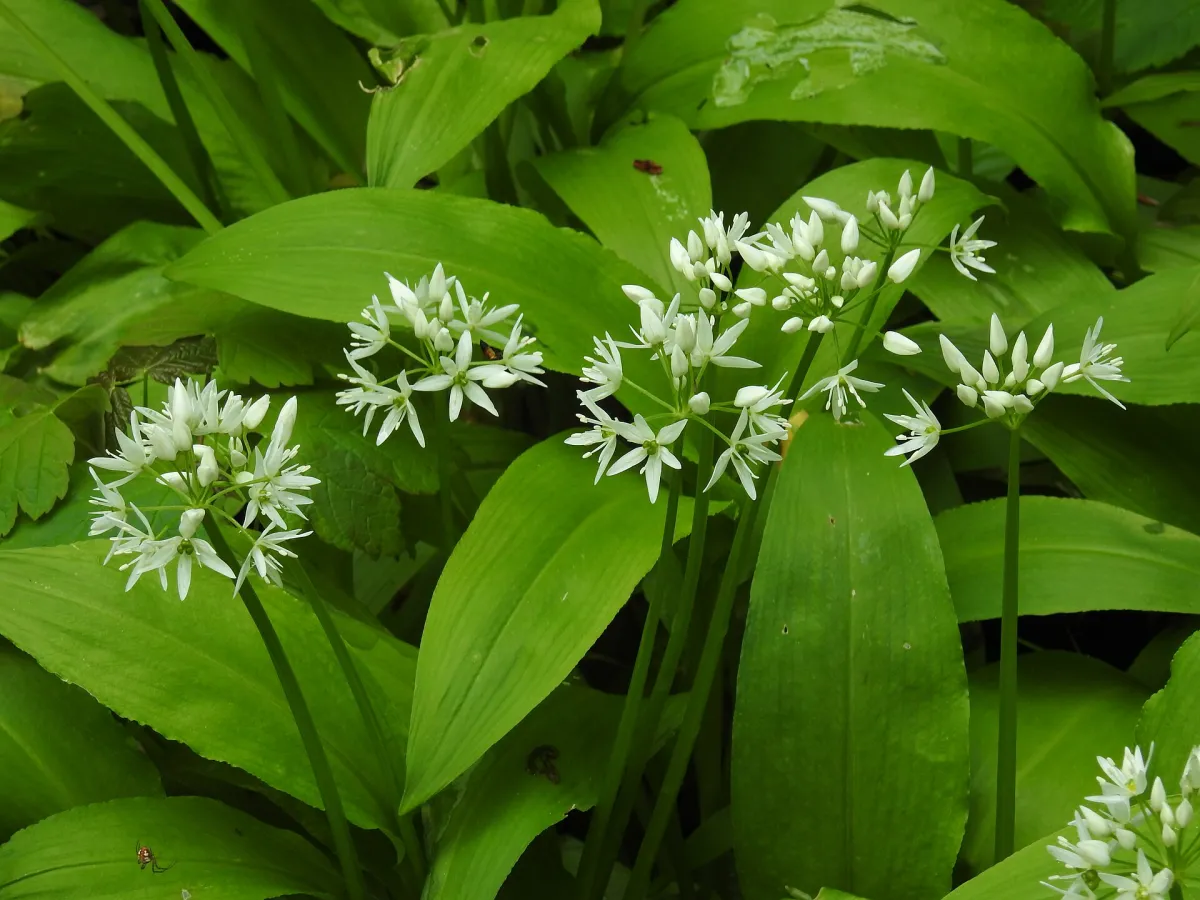
 Photo: Robert Flogaus-Faust, CC BY 4.0, via Wikimedia Commons
Wild garlic (Allium ursinum), also called ramsons or bear’s garlic, is a spring woodland plant with broad leaves and a mild garlic flavour, rich in vitamin C and sulphur compounds related to those in garlic. It is eaten fresh in salads, pesto, omelettes and soups from March to May. The real danger is not wild garlic itself but mistaking it for lily of the valley, autumn crocus or lords-and-ladies, plants that can kill.
Key takeaways:
- Wild garlic provides vitamin C, flavonoids and sulphur compounds; heart and circulation benefits come mainly from animal and lab studies, not human clinical trials.
- Identify it by the soft leaf on its own stalk rising straight from the soil, the matte underside and a clear garlic smell when crushed.
- Lily of the valley, autumn crocus and arum grow in the same woods and have caused serious, sometimes fatal, poisonings.
- A sensible portion is 30-50 g of fresh leaves a day, raw or added at the end of cooking.
- On blood thinners or antiplatelet drugs, occasional food amounts are fine; avoid large daily “cures” and concentrated extracts.
- Pesto in oil keeps in the fridge for a week at most, or freeze it.
What is wild garlic?
Wild garlic is a perennial in the Amaryllidaceae family, a close relative of garlic, onions and leeks. It grows from small, slender bulbs in damp deciduous woodland, especially under beech, hornbeam and ash, along streams and in shady spots with rich soil. Across Europe, including Romania, the UK and Central Europe, it often forms dense green carpets.
The leaves appear in March and are most tender before flowering. In April and May come the white, star-shaped flowers in round clusters, which are edible too. After flowering the leaves turn tough and more pungent, and by June the plant has almost vanished above ground.
Nutrition and active compounds
Its value comes from a mix of nutrients and bioactive compounds rather than one miracle ingredient:
- Sulphur compounds: alliin and related cysteine sulphoxides are converted by the enzyme alliinase, when the leaf is cut or chewed, into thiosulphinates similar to the allicin in garlic. They produce the smell and some of the studied effects.
- Vitamin C: fresh leaves are a good source, which is why wild garlic was prized as the first green food after winter.
- Flavonoids, mainly kaempferol glycosides, with antioxidant activity.
- Minerals: potassium, magnesium, manganese and modest amounts of iron, plus fibre and chlorophyll.
Composition varies with location, soil and harvest time. Vitamin C and sulphur compounds drop quickly with drying and long cooking.
Benefits: tradition versus evidence
Traditional use
In Central and Eastern European folk medicine, wild garlic was used as a spring tonic and “blood cleanser”, to stimulate digestion and appetite, and against intestinal worms. The name bear’s garlic comes from the belief that bears eat it first after hibernation. None of these uses has been confirmed in clinical trials.
What research shows
- Blood pressure and circulation: in rat studies, leaf extracts lowered blood pressure and inhibited angiotensin-converting enzyme. Lab studies show reduced platelet clumping. Similar effects are better documented for garlic, but robust human trials on wild garlic are lacking.
- Cholesterol: data again come from animal studies only.
- Antimicrobial and antioxidant activity: extracts act against some bacteria and fungi in the lab, which does not mean wild garlic on your plate treats an infection.
- As a food: it is a low-calorie green that adds flavour without much salt and brings vitamin C and fibre. That is the most reliable benefit.
So wild garlic deserves a place in a vegetable-rich diet, but it is not a treatment for high cholesterol or high blood pressure. For the better-studied effects of its cousin, read our guide to garlic.
How to identify wild garlic and avoid toxic look-alikes
Almost every spring, European poison centres report poisonings after wild garlic foraging, some fatal. Dangerous plants often grow right among the ramsons, and grabbing leaves by the handful is the main cause.
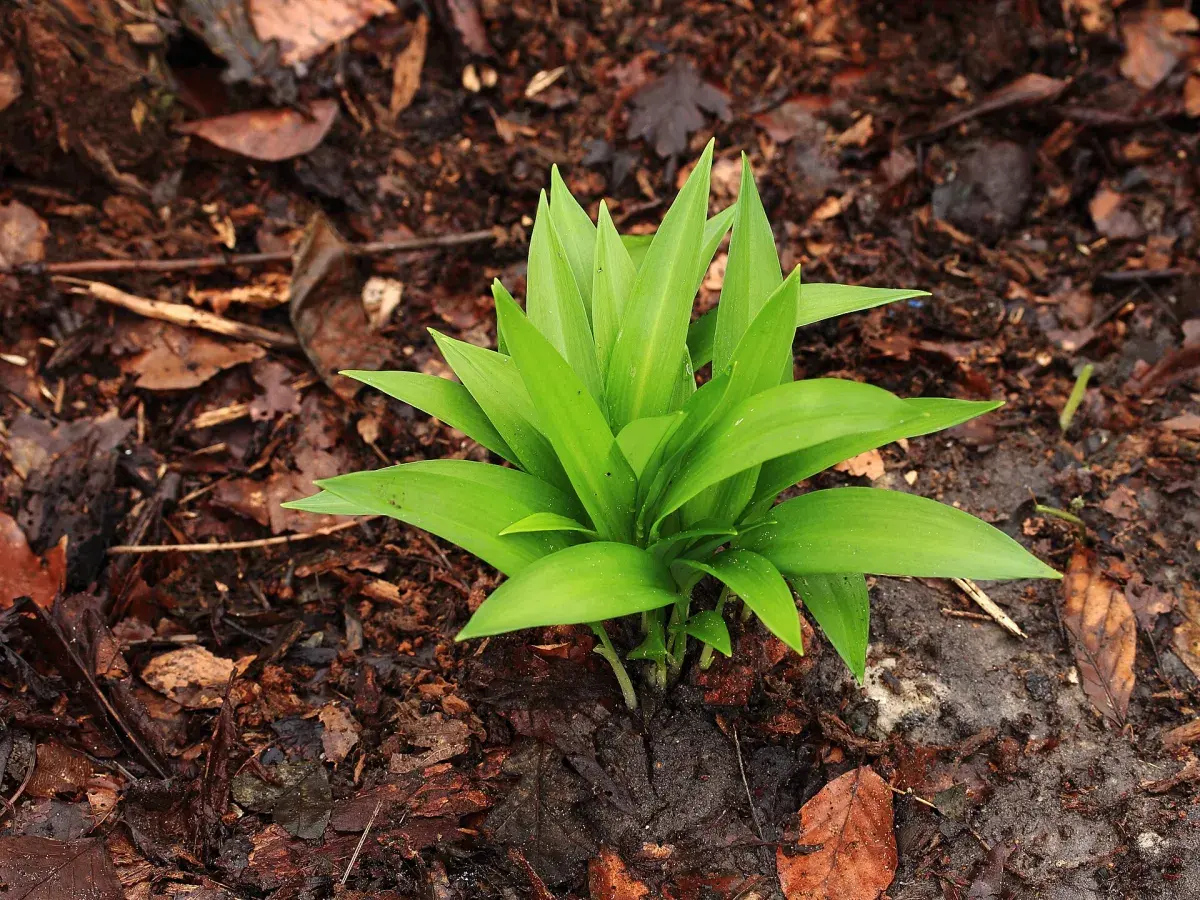 Photo: Dominicus Johannes Bergsma, CC BY-SA 3.0, via Wikimedia Commons
Wild garlic (Allium ursinum)
Each leaf has its own stalk coming straight out of the ground. The leaf is soft, thin and elliptical, glossy on top and matte underneath. Crushed, it smells clearly of garlic.
Lily of the valley (Convallaria majalis)
Usually two, sometimes three leaves emerging from one sheath, wrapped around each other. They are firmer, glossy on both sides and have no garlic smell. They contain cardiac glycosides (convallatoxin): nausea, vomiting, a slow pulse and heart rhythm disturbances.
Autumn crocus (Colchicum autumnale)
The most dangerous mix-up. In spring it produces 3-4 long, stalkless leaves in a tight bunch rising from the soil like a tulip; by May a seed capsule appears in the centre. The purple flowers only show in autumn. It contains colchicine, which has no antidote; vomiting and severe diarrhoea start after a few hours and can be followed by multi-organ failure.
Lords-and-ladies (Arum maculatum)
Young leaves are arrow-shaped, with net-like branching veins rather than the parallel veins of wild garlic, sometimes with dark spots. Calcium oxalate crystals cause immediate burning in the mouth and swelling of the lips and tongue.
In mountain areas, white false hellebore (Veratrum album) also appears: broad, pleated leaves arranged along a stem, highly toxic to the heart.
| Plant | Leaves | Smell | Danger |
|---|---|---|---|
| Wild garlic | One per stalk, from the soil; matte underside; soft | Garlic | Edible |
| Lily of the valley | 2-3 from one sheath, wrapped; glossy both sides | No garlic | Cardiac glycosides, arrhythmia |
| Autumn crocus | 3-4 in a bunch, stalkless, tulip-like | No garlic | Colchicine, potentially fatal |
| Lords-and-ladies | Arrow-shaped, net veins | No garlic | Mouth burning and swelling |
| False hellebore | Broad, pleated, on a stem | No garlic | Toxic to the heart |
Practical foraging rules
- Pick leaf by leaf, cutting the stalk with scissors, never pulling up handfuls.
- The smell test becomes misleading after the first few leaves because your fingers already smell of garlic. Wash your hands or crush each leaf separately.
- Check again at home, one leaf at a time, before washing.
- If in doubt, leave it out. As a beginner, forage with someone experienced or buy from a trusted grower.
- Avoid roadsides, sprayed fields and dog-walking paths, respect protected areas, take a few leaves per plant and never dig up the bulbs.
How to eat it: recipes and preparation
To keep the aroma and vitamin C, use wild garlic raw or add it in the last 1-2 minutes of cooking. Wash it in several changes of cold water and pat dry with a towel.
Wild garlic pesto (about one 250 ml jar)
- 100 g wild garlic leaves
- 40 g walnuts or sunflower seeds, toasted 3-4 minutes in a dry pan
- 40 g Parmesan or another hard aged cheese, grated
- 100-120 ml extra virgin olive oil
- 1 tablespoon lemon juice, about 1/2 teaspoon salt
Roughly chop the well-dried leaves, pulse them with the nuts and half the oil, then add the cheese, lemon, salt and remaining oil. Spoon into a clean jar, cover the surface with a thin layer of oil and keep in the fridge (2-4°C / 36-39°F) for no more than 5-7 days. For long storage, freeze it in ice cube trays without the cheese and stir that in after thawing.
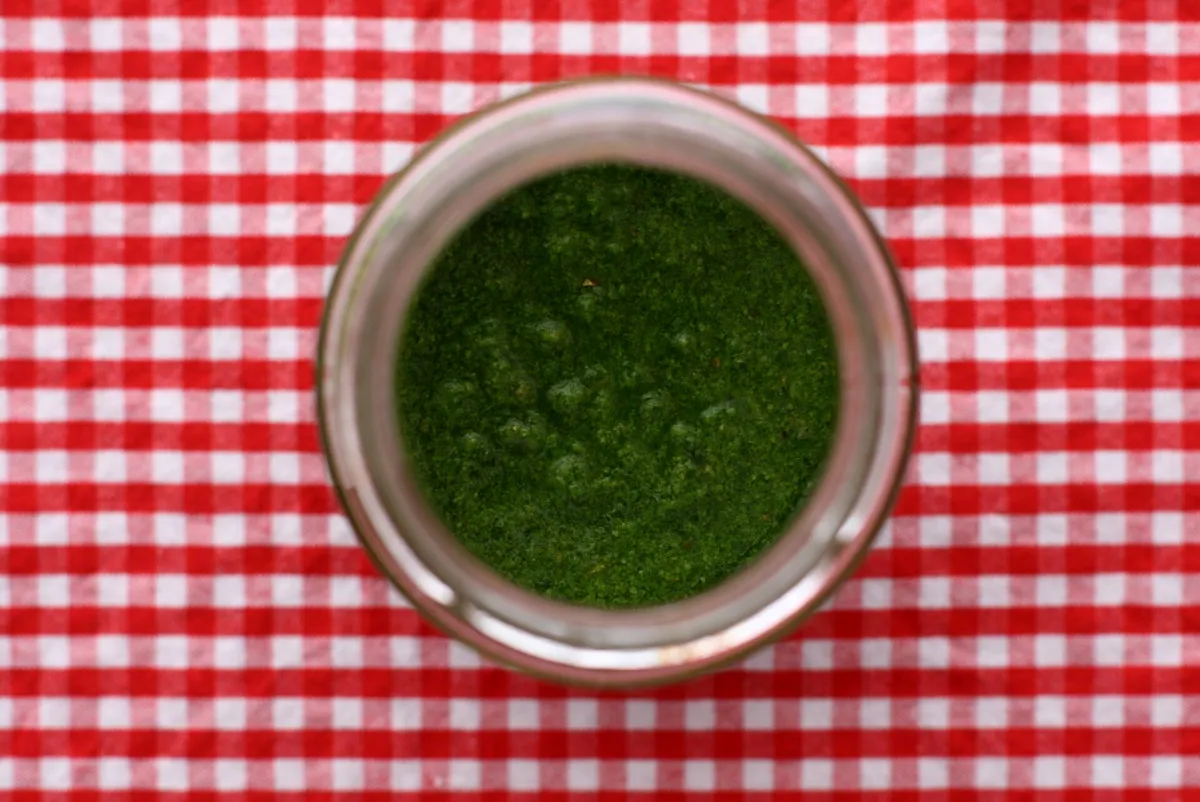 Photo: Katrin Gilger, CC BY-SA 2.0, via Wikimedia Commons
Wild garlic salad with egg and radishes (2 servings)
- 60 g wild garlic cut into 1 cm ribbons
- one small lettuce or 100 g baby spinach
- 6-8 sliced radishes
- 2 eggs boiled for 9-10 minutes, quartered
- dressing: 3 tablespoons yogurt or sour cream, 1 tablespoon oil, 1 teaspoon apple cider vinegar, salt, pepper
Toss the greens, add the dressing just before serving and top with the eggs. It is a fresh take on the traditional Romanian wild garlic salad with sour cream.
More quick ideas
- Wild garlic butter: 100 g soft butter with 30 g finely chopped leaves and a pinch of salt, frozen as a log.
- Creamy soup: simmer potatoes and onion, add 80-100 g wild garlic at the end, then blend.
- Omelette: stir in a handful of chopped leaves when the eggs are almost set.
How much to eat: guide portions
| Situation | Guide amount | Notes |
|---|---|---|
| Healthy adult | 30-50 g fresh leaves/day | Raw or added at the end of cooking |
| Pesto | 1-2 tablespoons/serving | Watch calories from oil and cheese |
| Sensitive stomach, IBS | 10-20 g, briefly cooked | Increase gradually as tolerated |
| On anticoagulants | Small, occasional, consistent portions | No daily cures or extracts |
| Children over 3 | A few leaves in cooked food | Only from plants identified with certainty |
There is no established therapeutic dose. Concentrated juice or tincture “cures” have no evidence behind them and easily irritate the stomach. For a balanced seasonal approach, see our spring detox guide.
How to store wild garlic
- Fresh: wrapped in a damp paper towel in a container in the fridge, 3-5 days.
- Frozen: chopped and packed into ice cube trays with a little oil or water, up to 6 months.
- Dried: loses most of its flavour, so it is rarely worth it.
- In oil: raw herbs kept in oil at room temperature can allow the botulism bacterium to grow. Fridge for short periods only, or freeze.
Side effects, interactions and who should be careful
- Blood thinners and antiplatelets (warfarin, acenocoumarol, apixaban, rivaroxaban, aspirin, clopidogrel): like garlic, wild garlic may have an antiplatelet effect, and as a leafy green it also supplies vitamin K. Normal portions are not a problem, but avoid large daily amounts and extracts, keep intake consistent and tell your doctor. Before surgery, stop large amounts 1-2 weeks ahead.
- Gastritis, reflux, ulcers, IBS: sulphur compounds and fructans can trigger heartburn, bloating and cramps.
- Allergy to garlic or onion: avoid completely.
- Pregnancy and breastfeeding: food amounts are considered safe; skip supplements.
- Pets: like all Allium species, wild garlic is toxic to dogs and cats.
- Hygiene: woodland leaves may carry parasite eggs, including fox tapeworm in parts of Europe. Thorough washing is essential, and cooking removes the risk.
When to seek emergency help
Call emergency services (112 in Europe) if, after eating foraged wild garlic, you notice:
- nausea, vomiting, diarrhoea or abdominal pain, especially if several people who shared the dish are affected;
- intense burning in the mouth, swollen lips or tongue, difficulty swallowing;
- palpitations, a very slow or irregular pulse, dizziness, fainting, confusion or visual disturbances.
Do not wait it out: with autumn crocus, symptoms start hours later and early treatment matters. Bring leftover plant material or food and do not induce vomiting. Our guide to food poisoning covers ordinary stomach upsets, not suspected wild plant poisoning.
Common mistakes
- Picking by the handful, which brings toxic leaves into the basket.
- Trusting the smell test with fingers already coated in garlic scent.
- Harvesting after flowering, when leaves are tough; use the flowers and buds instead.
- Long cooking, which destroys flavour and vitamin C.
- Keeping pesto in the pantry or for weeks in the fridge.
- Buying market bunches without checking every leaf at home.
- Replacing prescribed treatment for blood pressure or cholesterol with wild garlic.
Conclusion
Wild garlic is a tasty seasonal green with vitamin C and garlic-like sulphur compounds, easy to use in pesto, salads and soups. Its heart benefits look promising but remain unproven in humans. The golden rule is safe identification, leaf by leaf, plus caution if you take blood-thinning medication.
Frequently asked questions
When is wild garlic in season? From March to early May, depending on altitude and latitude. Leaves are best before the plant flowers.
Can you eat wild garlic raw? Yes. Raw it has the most flavour and vitamin C, provided it is washed very thoroughly.
Does wild garlic lower blood pressure? Animal studies suggest an effect, but solid human trials are missing. It does not replace treatment for hypertension.
Can I eat wild garlic if I take warfarin or aspirin? Occasional normal portions are generally acceptable. Avoid large daily amounts and extracts, keep intake consistent and inform your doctor.
How do I quickly tell wild garlic from lily of the valley? Wild garlic has one leaf per stalk, a matte underside and a garlic smell. Lily of the valley has 2-3 wrapped leaves from a single sheath, glossy and odourless.
How long does wild garlic pesto keep? In the fridge, covered with oil, 5-7 days. Frozen, several months.
Are wild garlic bulbs edible? They are, but digging them destroys the plant and they look dangerously similar to other bulbs. Stick to leaves and flowers.
Sources and further reading
- Sobolewska D., Podolak I., Makowska-Wąs J., Allium ursinum: botanical, phytochemical and pharmacological overview, Phytochemistry Reviews, 2015.
- European Medicines Agency (HMPC), European Union herbal monograph on Allium sativum L., bulbus.
- NCCIH (National Center for Complementary and Integrative Health), Garlic fact sheet.
- German Federal Institute for Risk Assessment (BfR), warnings on confusing wild garlic with poisonous plants.
- Tox Info Suisse, information on autumn crocus and lily of the valley poisonings mistaken for wild garlic.
Informational content only; it does not replace a consultation with a doctor or pharmacist. If you suspect plant poisoning, call emergency services immediately.