 Photo: Goleisureintl, CC BY 4.0, via Wikimedia Commons
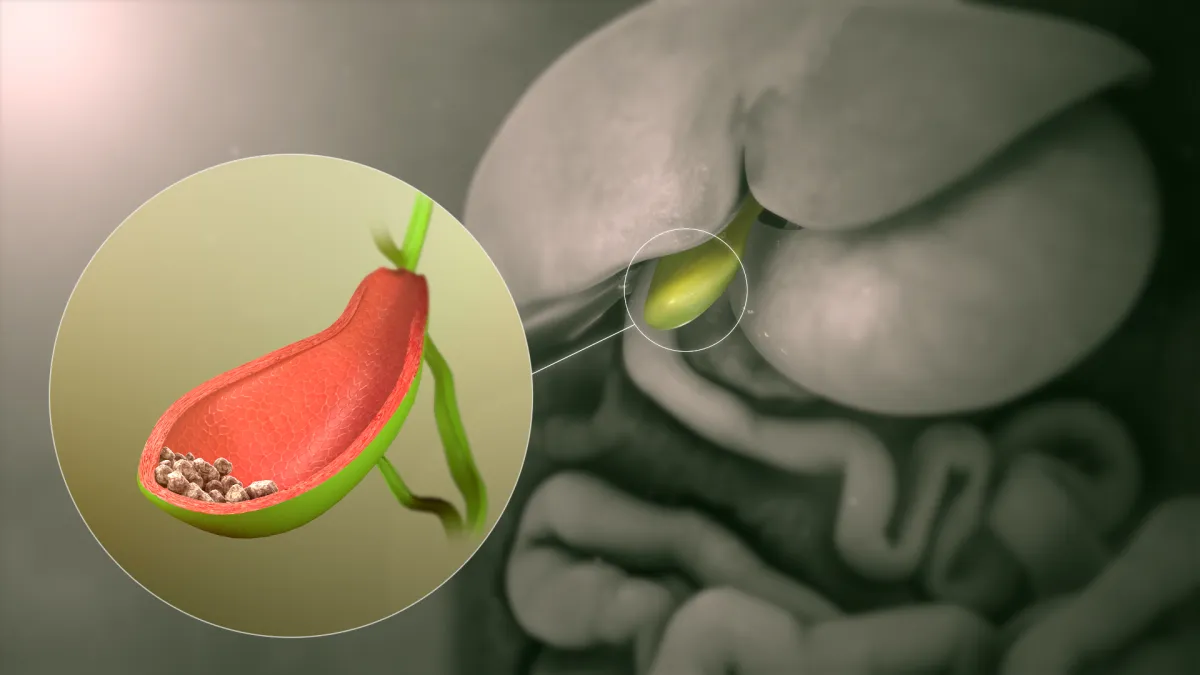
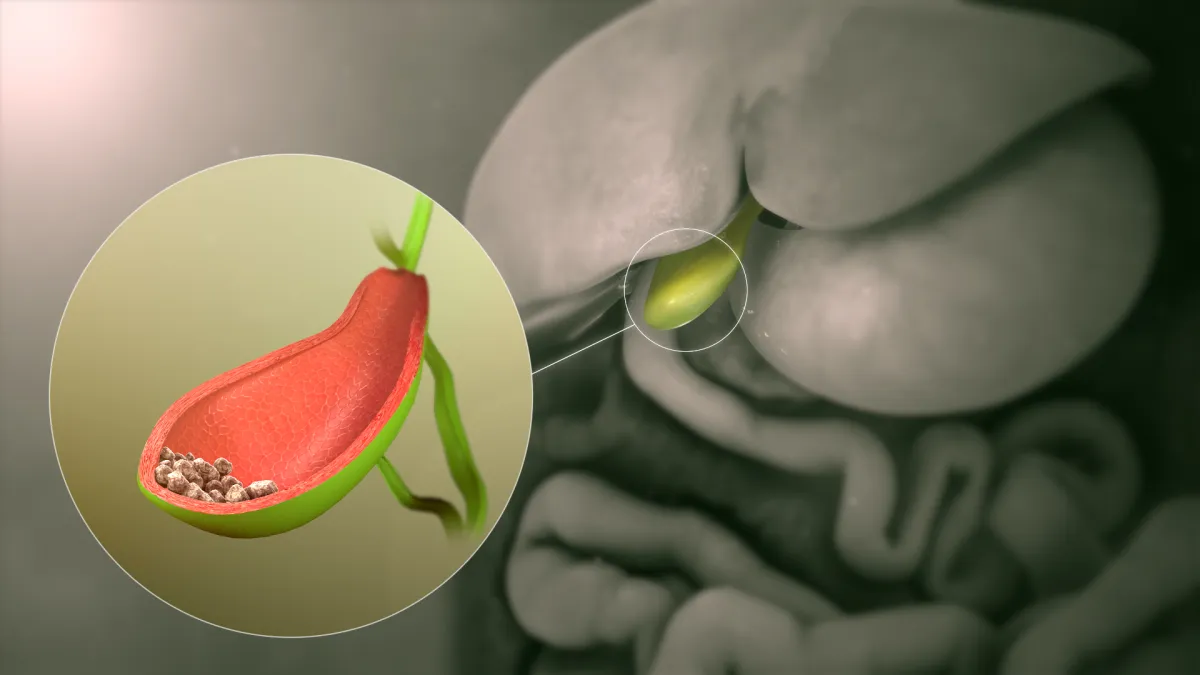
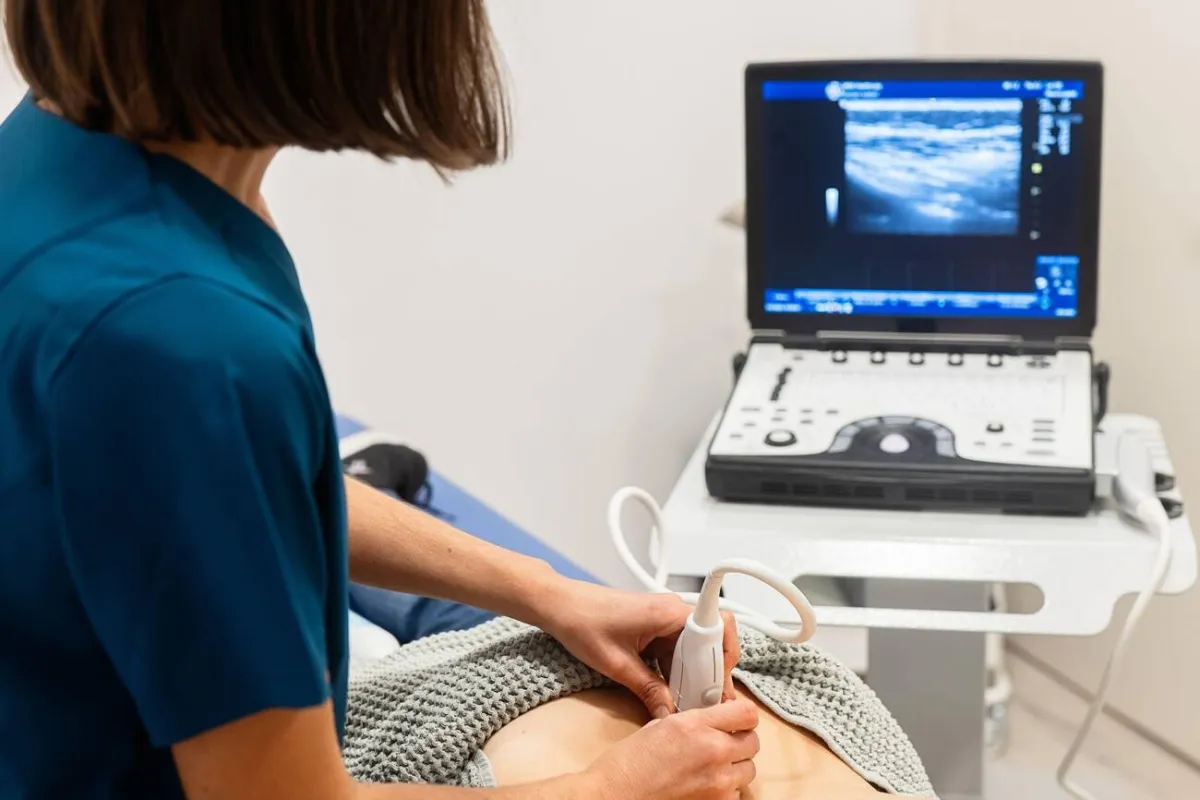
Biliary sludge is thickened bile containing microscopic cholesterol crystals and calcium salts, seen on ultrasound as a layer without an acoustic shadow in the lowest part of the gallbladder. It forms when bile stagnates: in pregnancy, after rapid weight loss, during long fasts or with certain medicines. It often causes no symptoms and may clear on its own once the cause is removed, but sometimes it progresses to stones, colic or pancreatitis.
Key takeaways
- Sludge is an “in-between” stage between normal bile and gallstones.
- Main causes: pregnancy, rapid weight loss, prolonged fasting, intravenous feeding, some medicines.
- Many people have no symptoms, and sludge can disappear within a few months.
- Regular meals with a little fat at each help the gallbladder empty.
- Biliary pain, fever, jaundice or pain boring through to the back need prompt care.
- A follow-up ultrasound at 3-6 months shows how it is evolving.
What biliary sludge is
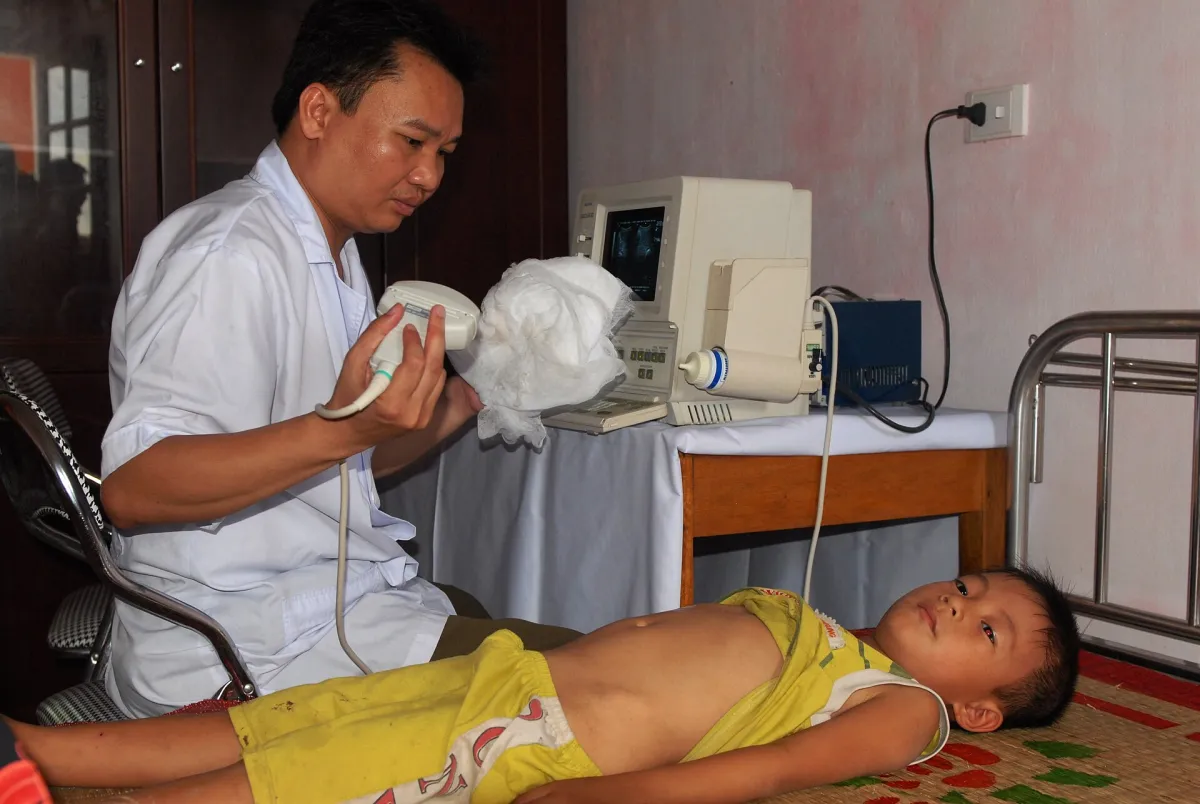
Normal bile is a fluid in which cholesterol is kept dissolved by bile acids and phospholipids. When this balance is upset, or bile sits in the gallbladder for too long, a viscous mixture of mucus, cholesterol monohydrate crystals and calcium bilirubinate forms. On ultrasound, the radiologist sees echogenic material that shifts slowly when the patient changes position and does not cast the shadow typical of stones.
The term microlithiasis is used for very small particles (under 3 mm), which can be hard to tell apart from sludge. Both can cause the same complications as larger stones.
Causes and risk factors
- Pregnancy: estrogen raises cholesterol in bile, and progesterone slows gallbladder emptying. Sludge that forms in pregnancy often disappears after delivery.
- Rapid weight loss: very-low-calorie diets and bariatric surgery.
- Prolonged fasting and very infrequent meals: the gallbladder never gets the signal to contract.
- Total parenteral nutrition and critical illness.
- Medicines: ceftriaxone (an antibiotic that can precipitate in bile), octreotide, some oral contraceptives.
- Organ transplantation, hemolytic diseases (through raised bilirubin).
- Biliary dyskinesia with slow emptying; see biliary dyskinesia.
Symptoms
Most people with sludge have no symptoms and find out by chance. When symptoms occur, they resemble those of gallstones:
- pain in the upper right or upper middle abdomen after fatty meals, lasting from 30 minutes to a few hours;
- nausea, bloating, fat intolerance;
- a bitter taste in the mouth;
- rarely, complications: cholecystitis, acute pancreatitis, cholangitis.
Natural course: does it clear or become a stone?
The course varies. Ultrasound follow-up studies describe three scenarios: sludge disappears completely, comes and goes intermittently, or progresses to stones. When the cause is temporary (pregnancy, an antibiotic, illness-related fasting), the chances of it clearing are high. When risk factors persist (obesity, yo-yo dieting, slow gallbladder emptying), the risk of stones rises.
Biliary sludge in pregnancy and after birth
Pregnancy is one of the most common situations in which an ultrasound finds sludge. Hormones make bile richer in cholesterol and the gallbladder more “sluggish”, especially in the second and third trimesters. In most women, sludge causes no symptoms and disappears in the first months after delivery as hormone levels return to normal.
What you can safely do in pregnancy: small, regular meals, good hydration, daily walks, weight gain within the range your doctor recommends and avoiding very fatty meals. Do not use choleretic herbs or supplements without your obstetrician’s approval. Upper right pain, fever, jaundice or intense itching of the skin (especially on the palms and soles) in pregnancy must be reported straight away, as they can signal cholecystitis or intrahepatic cholestasis of pregnancy, a separate condition that needs close monitoring.
After delivery, a follow-up ultrasound a few months later usually confirms that the sludge has gone. If it persists and there are symptoms, your doctor will discuss the options.
Medical treatment
- Asymptomatic sludge: usually just ultrasound follow-up and correcting risk factors.
- Symptomatic or complicated sludge: your doctor may discuss cholecystectomy, especially after acute pancreatitis with no other cause.
- Ursodeoxycholic acid is sometimes prescribed to thin the bile or as prevention during rapid weight loss (for example after bariatric surgery). Take it only on medical advice.
Table: biliary sludge vs. gallstones
| Feature | Biliary sludge | Gallstones |
|---|---|---|
| Ultrasound appearance | echogenic layer, no shadow, mobile | echogenic structures with acoustic shadow |
| Can clear on its own | yes, often | rarely |
| Symptoms | often none | often none, colic in some |
| Complications | colic, cholecystitis, pancreatitis | the same, more often |
| Role of diet and lifestyle | important, can reverse it | prevention, does not dissolve existing stones |
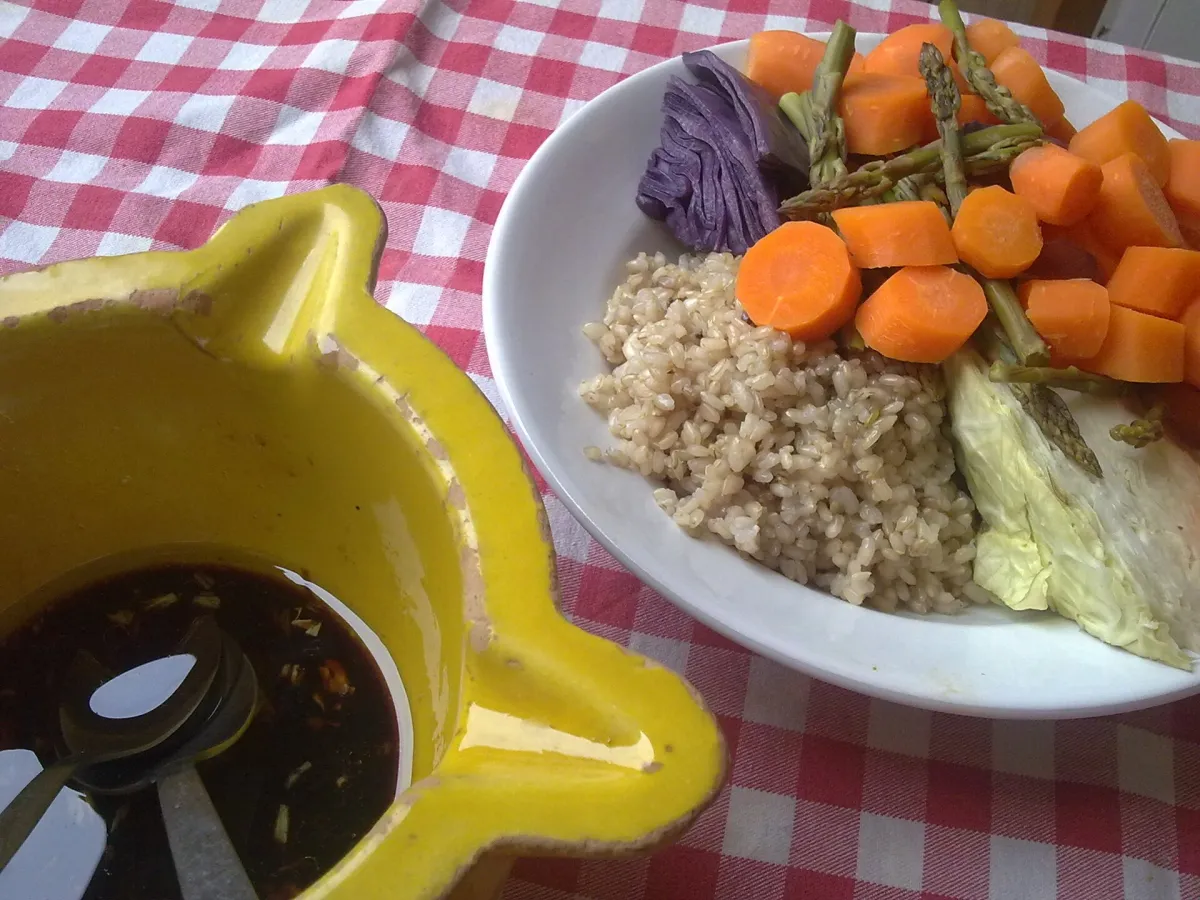 Photo: Lablascovegmenu from London, CC BY 2.0, via Wikimedia Commons
Diet and habits that help
Regular meals
The gallbladder contracts when fat reaches the duodenum. A meal every 4-5 hours with a small amount of healthy fat (a teaspoon of olive oil, a few walnuts, a piece of fish) “empties” it periodically and prevents bile from stagnating. Do not skip breakfast.
Lose weight, but slowly
If you are carrying extra weight, losing it is beneficial, but at about 0.5-1 kg (1-2 lb) a week. Diets under 800 kcal a day and multi-day fasts raise the risk of sludge and stones.
Fiber and whole carbohydrates
Whole grains, legumes, vegetables and fruit are associated with a lower risk of cholesterol stones. Excess refined sugar and white flour have the opposite effect. Oat porridge is a suitable breakfast.
Daily movement
Moderate physical activity of at least 30 minutes a day improves cholesterol metabolism and is associated with fewer symptomatic gallbladder problems.
Sample day
- 8:00 oat porridge with a teaspoon of ground flaxseed and a grated apple;
- 12:30 vegetable soup and 120 g of baked fish with vegetables, drizzled with a teaspoon of olive oil;
- 16:00 low-fat yogurt with a few walnuts;
- 19:00 green bean and boiled potato salad with a boiled egg and olive oil.
Herbs: what makes sense and what does not
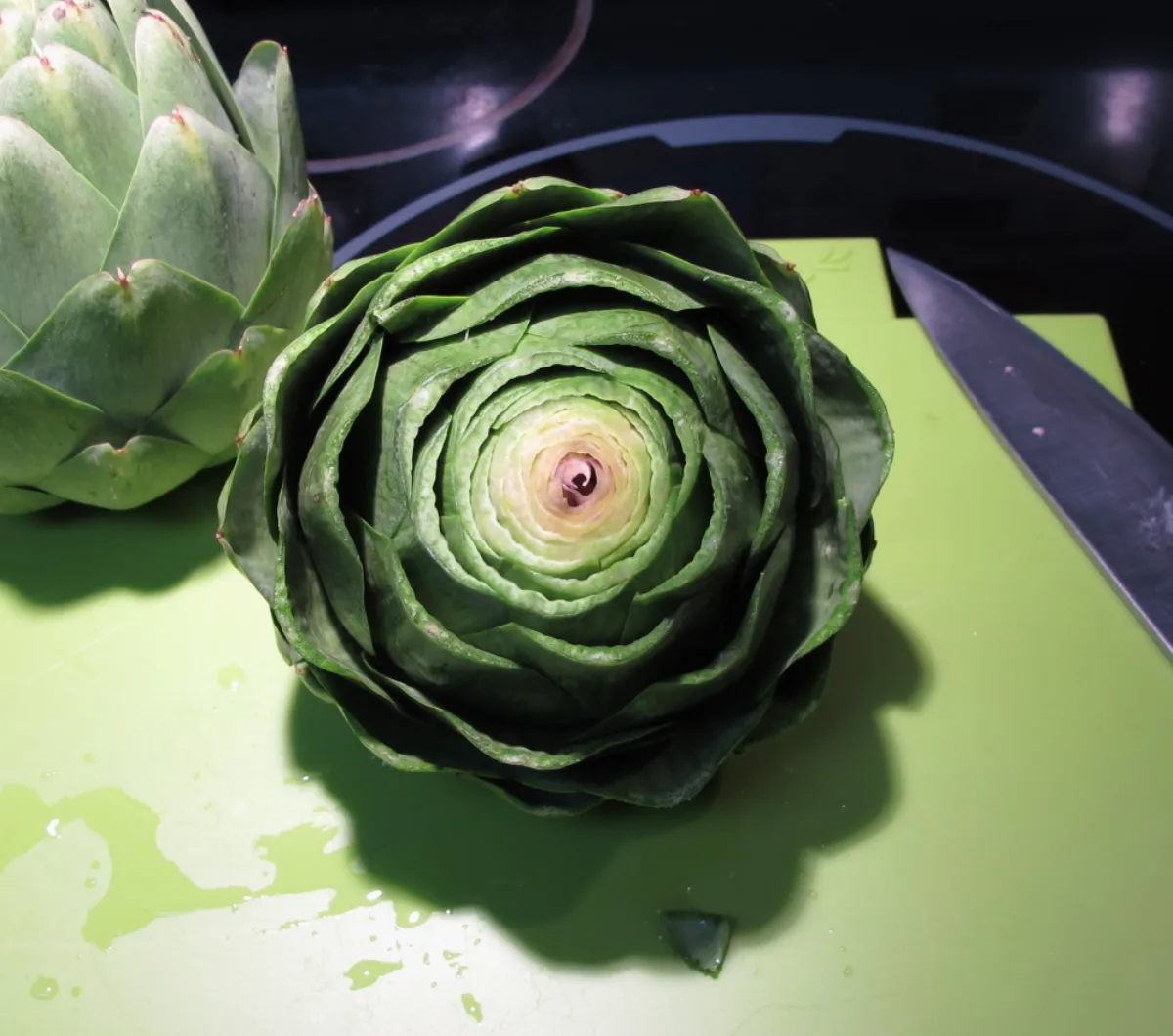
Choleretic herbs (artichoke, dandelion, milk thistle) are traditionally used to “thin” bile. There is no evidence that they dissolve sludge, and in people with microlithiasis strong gallbladder stimulation can move particles and trigger colic or pancreatitis. If you want to use them, talk to your doctor and choose gentle doses, for example one cup of milk thistle tea a day, which acts more on the liver than on gallbladder contraction.
Antispasmodic teas (chamomile, peppermint) are safe for digestive comfort.
Contraindications and precautions
- No “gallbladder flushes” with large amounts of oil and lemon juice.
- No multi-day fasts.
- High-dose turmeric supplements and strong cholagogue herbs only with your doctor’s approval.
- In pregnancy, any herb or supplement only with your obstetrician’s approval.
When to see a doctor
- severe pain in the upper right or upper middle abdomen lasting more than 30 minutes;
- pain boring through to the back, with vomiting (possible pancreatitis);
- fever, chills;
- jaundice, dark urine, pale stools.
Common mistakes
- Panicking at the word “sludge”. In many people it is temporary and harmless.
- Ignoring it completely. Without changing habits, it can turn into stones.
- Crash diets “to get rid of it”. That is exactly what encourages it.
- Aggressive courses of cholagogue herbs. They can mobilise small particles.
- Skipping the follow-up ultrasound. Only imaging shows whether the sludge has cleared.
Conclusion
Biliary sludge is a signal that bile is sitting too long in the gallbladder or has an unbalanced composition. The good news is that it can often be reversed: regular meals, slow weight loss, fiber, exercise and avoiding long fasts. Ultrasound follow-up and attention to warning signs make the difference between a benign finding and an avoidable complication.
Frequently asked questions
Does biliary sludge go away on its own? Often yes, especially when the cause is temporary (pregnancy, a medicine, a period of fasting). A follow-up ultrasound shows the trend.
What does “thick bile” on an ultrasound mean? Usually the same as sludge: concentrated bile with suspended particles stagnating in the gallbladder.
What should I avoid eating with biliary sludge? Limit fried food, cured meats, cream, refined sweets and large meals. Avoid long fasts and skipped meals.
Is surgery needed for biliary sludge? Only if it causes repeated symptoms or complications such as pancreatitis. Sludge without symptoms is monitored.
Is sludge in pregnancy dangerous? Usually not, and it often disappears after delivery. Pain, fever or jaundice in pregnancy must still be reported to your doctor straight away.
Does artichoke tea dissolve sludge? There is no evidence that it does. It may stimulate gallbladder contraction, which is not risk-free in people with small particles.
How often should the ultrasound be repeated? Usually at 3-6 months, or sooner if symptoms appear, as your doctor advises.
Sources
- EASL Clinical Practice Guidelines on the prevention, diagnosis and treatment of gallstones (2016), sections on sludge and rapid weight loss.
- NIDDK: “Gallstones” (National Institute of Diabetes and Digestive and Kidney Diseases).
- PubMed reviews on the natural history of biliary sludge and ceftriaxone-associated sludge.
- EMA/HMPC community herbal monograph on Silybi mariani fructus.
Informational content. It does not replace assessment by a gastroenterologist.