 Photo: Emőke Dénes, CC BY-SA 4.0, via Wikimedia Commons
Black radish (Raphanus sativus var. niger) is one of the best-known folk remedies for the liver and gallbladder. Its juice stimulates bile secretion and eases the digestion of fats, an effect recognised traditionally and by the German Commission E monograph for biliary-type digestive complaints. It is used in short courses, starting with a tablespoon a day, and is contraindicated for people with gallstones, gastritis or an active ulcer.
Key takeaways
- Black radish is choleretic: it increases the production and flow of bile.
- Its pungency comes from glucosinolates and isothiocyanates, compounds studied for their effects on the liver’s detoxification enzymes.
- A juice course starts at 1 tablespoon a day and increases gradually over 3-6 weeks.
- Gallstones, gastritis, ulcers and biliary colic are contraindications.
- In moderate amounts, in salads, it is a healthy food for anyone who tolerates it.
What black radish is
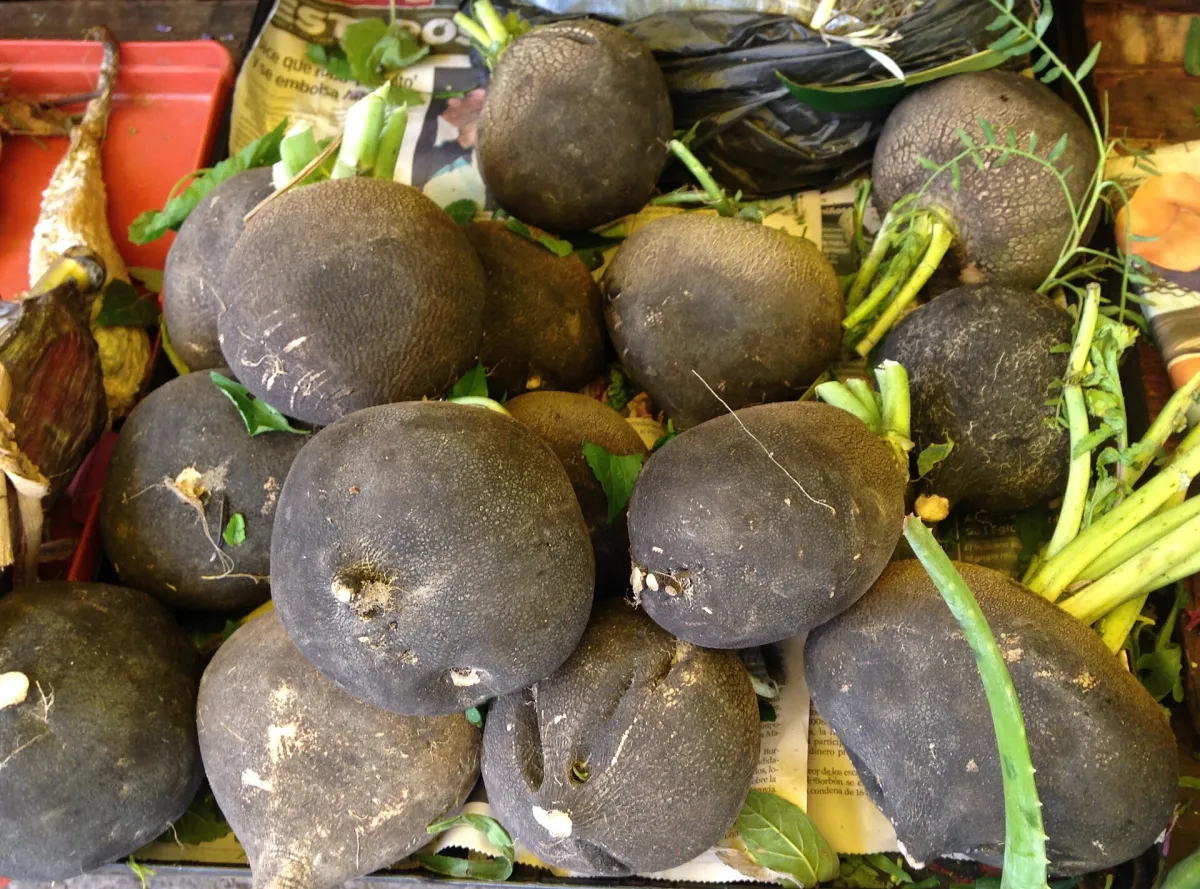
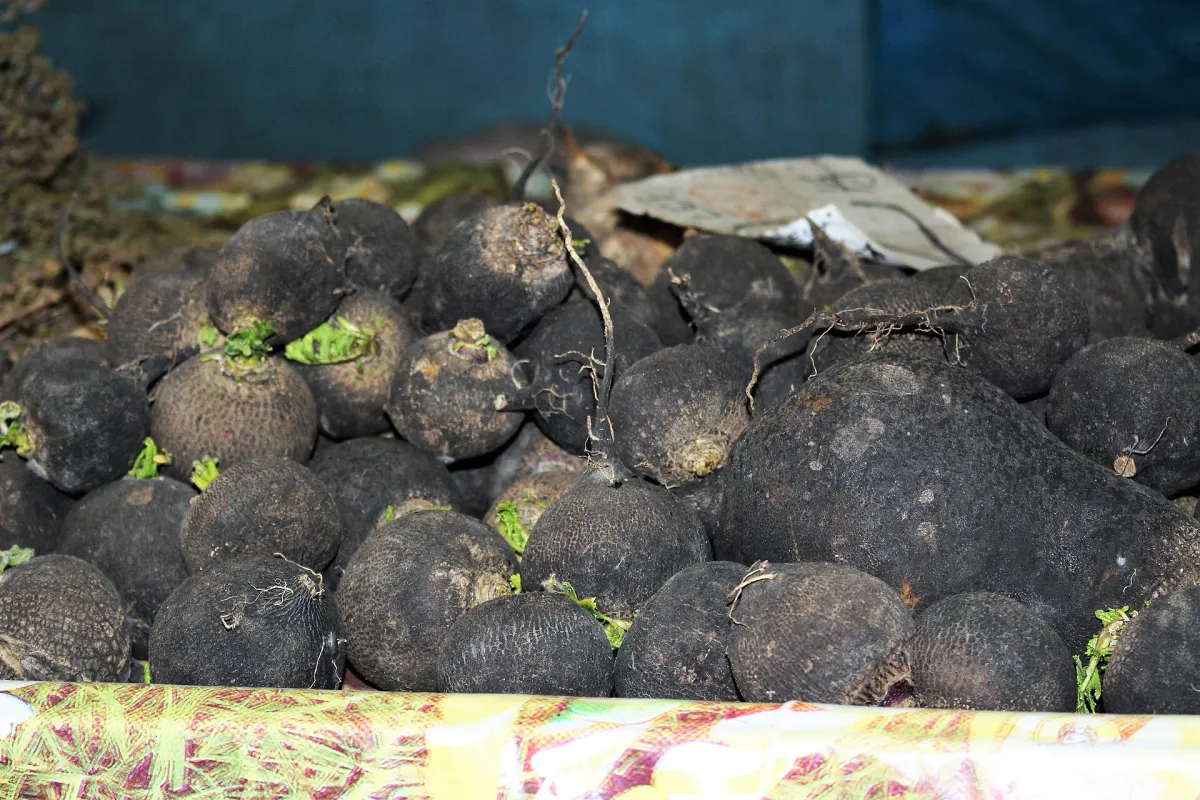
Black radish is a winter variety of radish with a rough black skin and dense, very pungent white flesh. There are round and long varieties. It is harvested in autumn and keeps well in a cellar or fridge, which made it a winter food and remedy in Eastern European villages, used to “cleanse the liver” after heavy holiday meals and, as a honey syrup, for coughs.
Active compounds
- Glucosinolates (especially glucoraphasatin), converted when cut and chewed into isothiocyanates, which give the pungent taste.
- Sulfur compounds responsible for the characteristic smell.
- Fiber, vitamin C, potassium, folate.
- Enzymes and phenolic compounds with antioxidant activity.
Isothiocyanates from cruciferous vegetables are studied for their ability to stimulate phase II liver enzymes involved in neutralising and eliminating certain substances. The data come mostly from laboratory and animal studies; in humans, the effect of black radish as a food is probably modest but consistent with other crucifers.
Benefits: tradition and evidence
Bile stimulation and fat digestion
This is the main effect. The German Commission E approved radish root for dyspeptic complaints, especially those associated with bile duct dysfunction. In practice, people with heaviness after fatty meals, bloating and a bitter taste in the mouth often report improvement, particularly in sluggish biliary dyskinesia.
Liver support
Animal studies have shown protective effects of black radish extracts on livers exposed to toxins, and a small study in healthy people suggested an influence on detoxification enzymes. There are no studies showing that black radish treats fatty liver or hepatitis. It is dietary support, not a medicine.
Bowel transit
Fiber and the choleretic effect may help sluggish transit. Bile also has a mild laxative effect.
Cough (traditional use)
Black radish syrup with honey is a folk remedy for coughs. The evidence is traditional; it must not be given to babies under 1 year because of the honey.
How to prepare it
Black radish juice
- Scrub 2-3 black radishes well; you can leave the skin on if they are home-grown or organic.
- Cut them into pieces and run them through a juicer, or grate finely and squeeze through cheesecloth.
- One kilogram of radishes yields roughly 300-400 ml of juice.
- Keep the juice in the fridge in a closed jar for no more than 2-3 days.
- Drink it after meals, diluted with a little water if it is too sharp.
Gradual course (adapted traditional scheme)
| Week | Daily dose | When |
|---|---|---|
| 1 | 1 tablespoon (15 ml) | after lunch |
| 2 | 2 tablespoons (30 ml) | after lunch |
| 3 | 3-4 tablespoons (50 ml) | split, after lunch and dinner |
| 4 | up to 100 ml, if well tolerated | split, after meals |
| 5-6 | gradual reduction until stopping | after meals |
If upper right pain, cramps or diarrhea appear, stop the course. After a course, a break of at least 1-2 months is advisable. Some folk schemes go up to much larger amounts; this is unnecessary and increases the risk of stomach irritation.
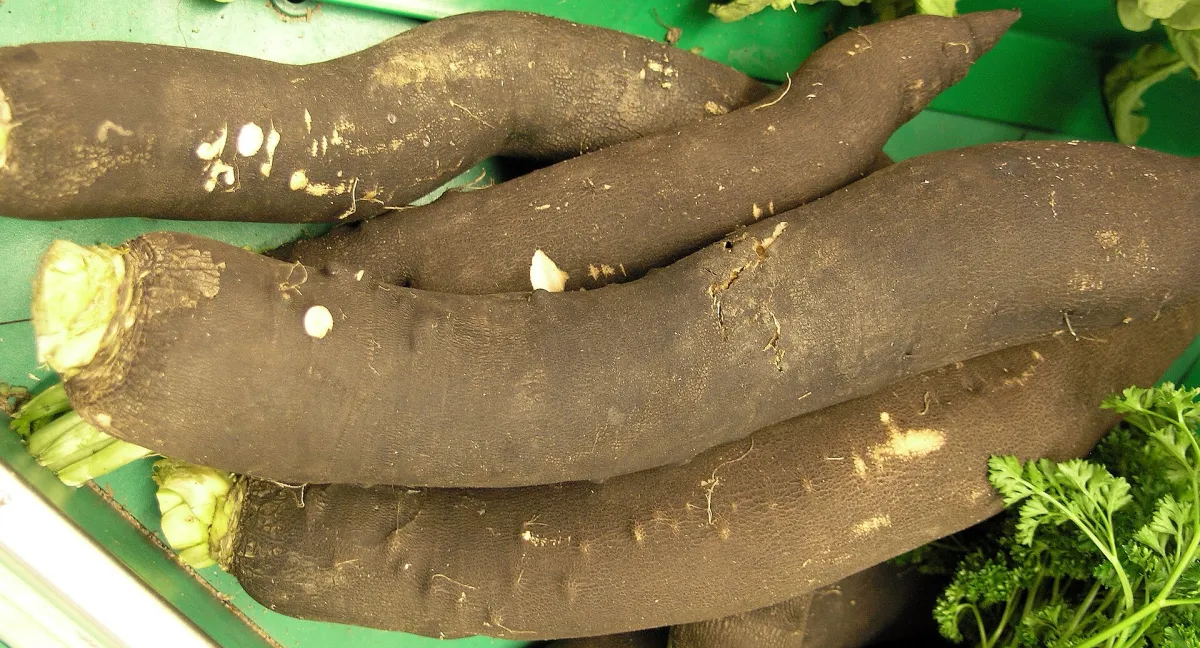 Photo: goldlocki, CC BY-SA 3.0, via Wikimedia Commons
Black radish salad
Grate a medium black radish, salt it lightly and leave for 10 minutes, then squeeze out the excess sharp juice. Mix with a grated carrot, a tablespoon of cold-pressed sunflower or olive oil, a few drops of apple cider vinegar and parsley. It is the classic side dish for roast meat, where it does exactly its job: helping the digestion of fat.
Honey syrup
Cut the top off a black radish, hollow out a cavity, fill it with honey and leave it overnight. In the morning, take a teaspoon of the syrup that has formed 3 times a day. It is a traditional cough remedy, not a liver remedy.
How to choose and store black radish
Choose radishes that feel heavy for their size and firm to the touch, without soft spots or deep cracks. Very large ones are sometimes woody or hollow in the middle, while medium-sized ones have the juiciest flesh. Store them unwashed in a paper bag or damp sand in a cool cellar, or in the vegetable drawer of the fridge, where they keep for several weeks. Wash them just before use. The sharpness softens if you leave the grated radish in the air for 10-15 minutes or mix it with carrot and apple. For juice, prefer fresh radishes from the cold season: they contain more volatile compounds than those stored until spring.
Useful combinations
- With artichoke leaf or dandelion tea for a fuller bitter-choleretic effect, but not all at once at first: introduce one at a time.
- With carrot and apple in juice, for a milder taste.
- With gentle digestive teas, like those in our guide to teas for digestion.
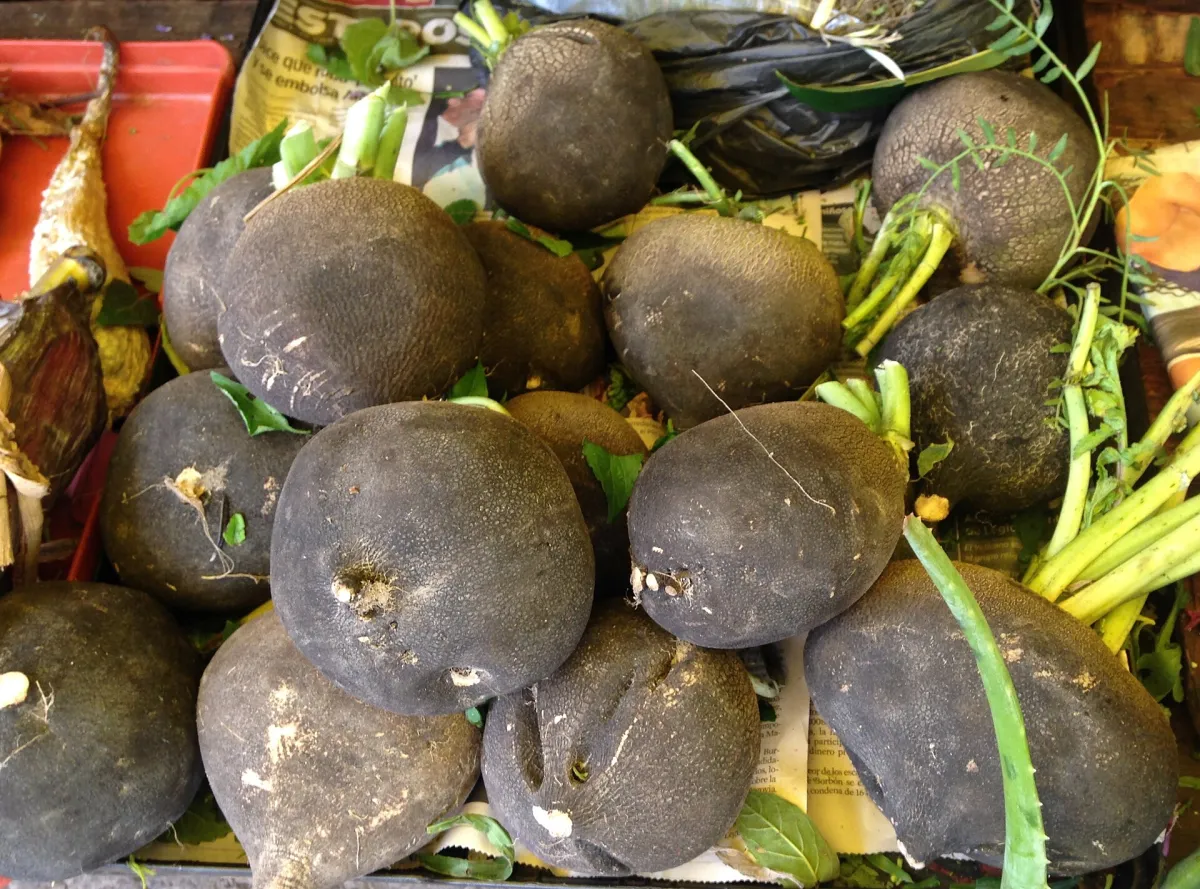 Photo: San Juan del Sur, CC BY-SA 4.0, via Wikimedia Commons
Contraindications and precautions
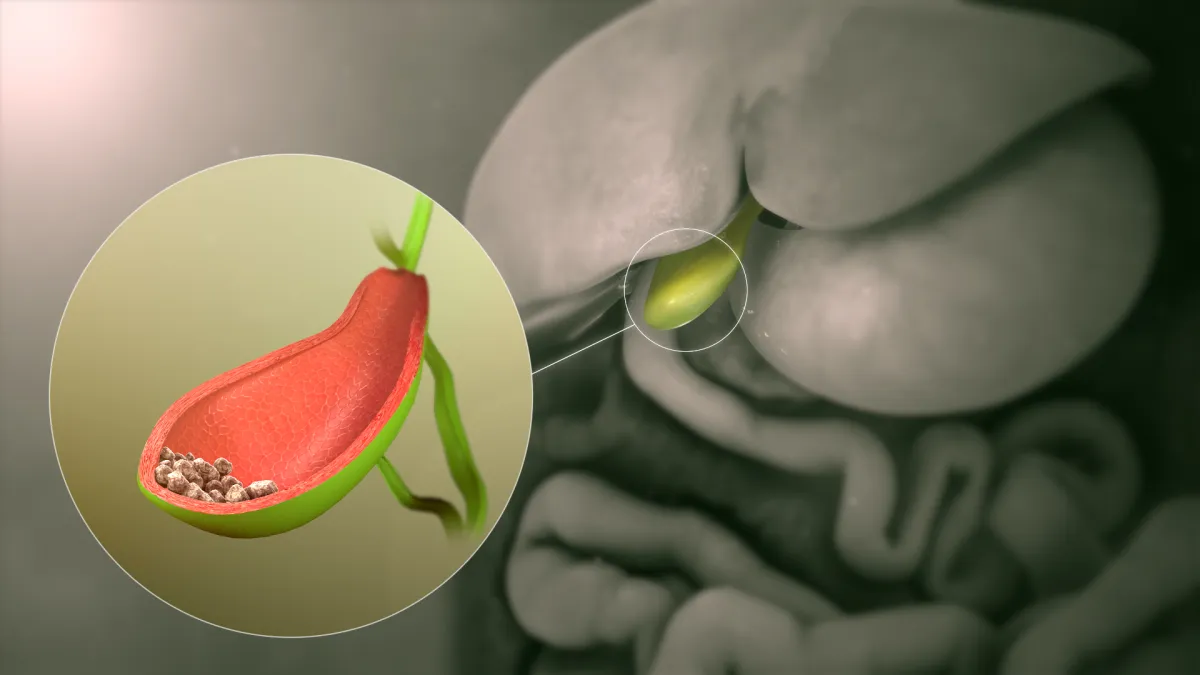
- Gallstones: strong bile stimulation can move a stone and trigger colic; see gallstones.
- Bile duct obstruction, jaundice, acute cholecystitis.
- Gastritis, ulcers, severe reflux: the sharp juice irritates the lining.
- IBS with diarrhea and post-cholecystectomy syndrome: it may worsen loose stools.
- Hypothyroidism: large daily amounts of raw crucifers could theoretically interfere with the thyroid; normal food amounts are not a problem.
- Pregnancy and breastfeeding: juice courses only with your doctor’s approval; radish as a food is fine.
- Young children: do not give concentrated juice.
Common mistakes
- Full glasses of juice from day one. They cause cramps, heartburn and diarrhea.
- A “blind” course without an ultrasound. If you have stones, you may trigger colic.
- Juice on an empty stomach. It is more irritating; drink it after meals.
- Keeping juice for a week. It oxidises and loses its volatile compounds.
- Month after month without a break. Choleretic remedies are used in cycles.
Conclusion
Black radish is a traditional remedy with a reasonable basis: it stimulates bile, helps fat digestion and provides the sulfur compounds typical of crucifers. Used as a food or in short, gradual courses after meals, it can ease biliary-type digestive discomfort. An ultrasound before a course, small starting doses and respecting the contraindications make the difference between a useful remedy and an avoidable attack of colic.
For nutrition facts, kitchen recipes and everyday ways to eat black radish, see Black radish: benefits and how to eat it.
Frequently asked questions
How much black radish juice can I drink a day? Start with one tablespoon a day and increase gradually. For most adults, 50-100 ml a day, split after meals, is enough; larger amounts are not needed.
Does black radish cleanse the liver? The liver does not need “cleansing”. Black radish stimulates bile and aids digestion; animal studies suggest protective effects, but it does not treat liver disease.
Can I take black radish if I have gallstones? Not as juice or a course. It can move stones and trigger biliary colic.
Does black radish raise blood pressure? There is no evidence for this. It contains potassium, which generally supports normal blood pressure.
Should I drink black radish juice before or after meals? After meals. On an empty stomach it is more irritating to the stomach lining.
How long does a black radish course last? Usually 3-6 weeks, with a gradual increase and then decrease in dose, followed by a break of at least 1-2 months.
Is black radish honey syrup good for the liver? The honey syrup is a traditional cough remedy. For the liver and bile, the juice or the radish as a food are used.
Can I eat black radish every day? Yes, as a food in normal amounts: a small salad or a few slices with a meal. The limits and breaks apply only to concentrated juice courses, not to radish eaten as a vegetable.
Sources
- German Commission E: monograph on Raphani sativi radix (radish root).
- PubMed reviews on glucosinolates and isothiocyanates from cruciferous vegetables and phase II liver enzymes.
- Experimental studies on the effects of Raphanus sativus var. niger extracts on the liver (PubMed).
- EASL Clinical Practice Guidelines on gallstones (2016), for gallstone-related contraindications.
Informational content. It does not replace medical advice; get an ultrasound before any choleretic course.