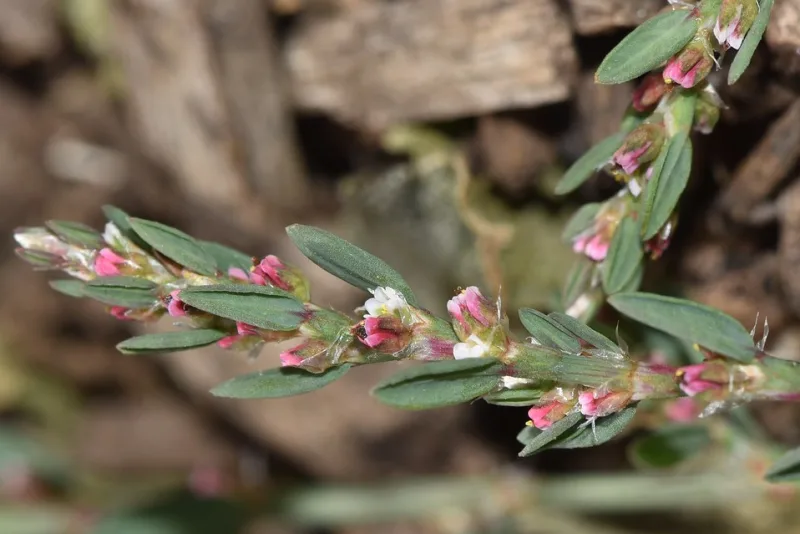
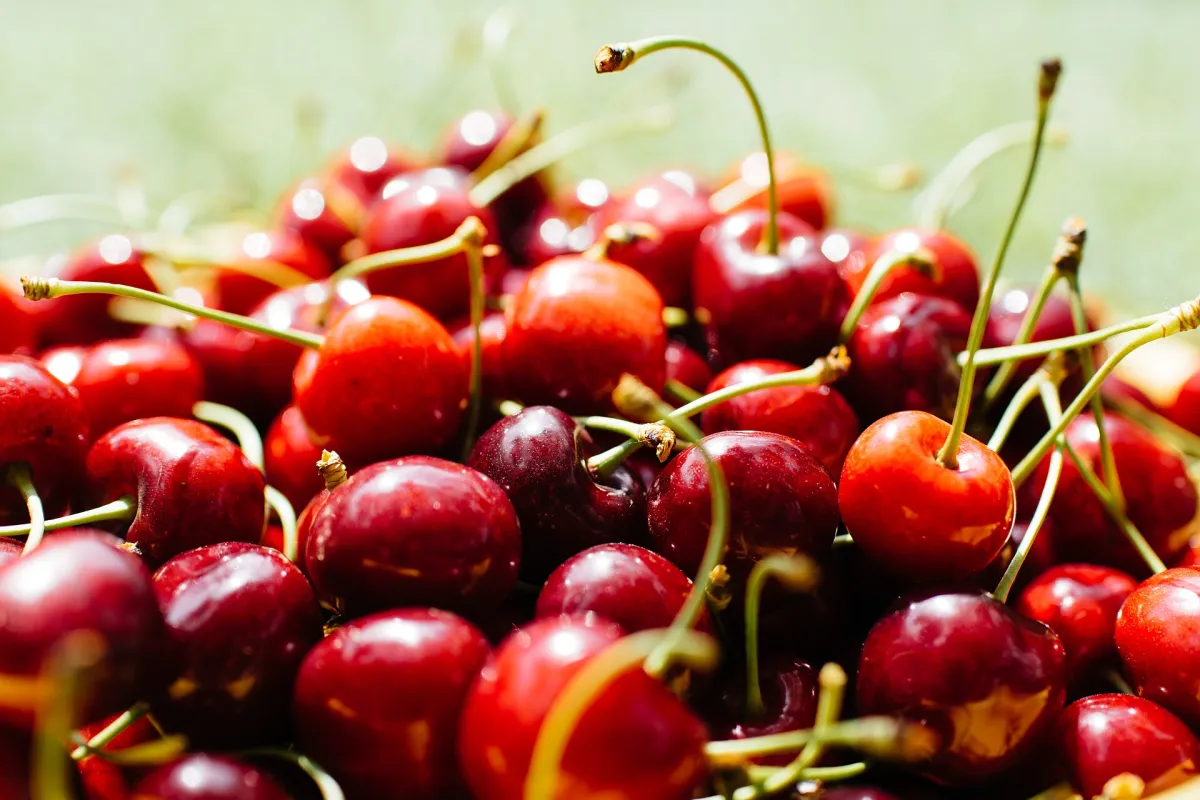
 Photo: Rodion Kutsaev, CC0, via Wikimedia Commons
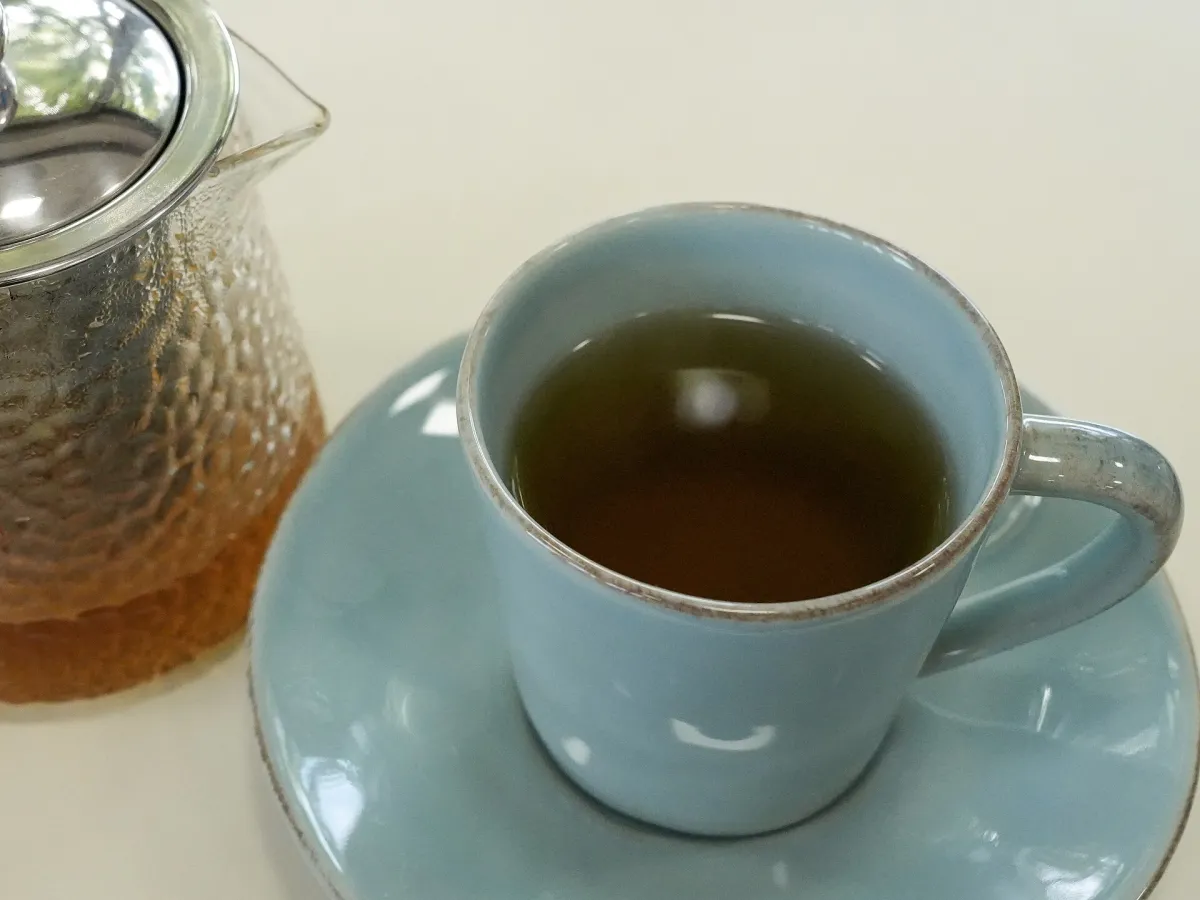
Cherry stem tea is a gentle diuretic traditionally used to shed excess water, to “flush” the kidneys when there is fine gravel and as support in mild urinary infections. It is made as a decoction: 1-2 tablespoons of dried stems in 250 ml of water, simmered for 10-15 minutes, 2-3 cups a day, in courses of 1-2 weeks. The effect is real but modest, and it rests mainly on tradition rather than large clinical trials.
Key takeaways
- Cherry (and sour cherry) stems contain flavonoids, potassium salts and tannins with a mild diuretic effect.
- They are traditionally used for water retention, kidney gravel and as an add-on in cystitis.
- The right form is a decoction, because the stems are woody.
- Do not use them in kidney or heart failure, with prescribed diuretics or with lithium.
- Collect only from unsprayed trees and dry the stems in the shade.
What cherry stems are
The stalks of sweet cherries (Prunus avium) and sour cherries (Prunus cerasus) are collected in summer, when the fruit is eaten or preserved, and dried for winter. The remedy is widespread in Central and Eastern Europe; herbal texts list it under the Latin name Cerasorum stipites. In many Romanian homes, a bag of cherry stems sits next to corn silk and horsetail in the “kidney drawer”.
Cherry stems, corn silk or horsetail?
All three are gentle diuretics, but their profiles differ. Corn silk is the gentlest and also has a soothing, emollient effect on the urinary lining, which is why it is preferred in mild cystitis. Horsetail is richer in minerals (silica) and is recognised in Europe as a traditional remedy for flushing the urinary tract, but it is not meant for long-term use. Cherry stems have the advantage of being on hand in any household, taste pleasant and blend well. Many families use them in rotation, one course of each, or mix them in equal parts. Details on the other two herbs are in our guides to corn silk and horsetail.
Composition
- Flavonoids (quercetin derivatives and other polyphenols), thought to be responsible for the diuretic effect.
- Potassium salts, which encourage water excretion through the kidneys.
- Tannins, with a mild astringent effect.
- Phenolic acids with antioxidant activity.
Unlike cherry pits and leaves, which contain cyanogenic compounds, the stems contain negligible amounts and are considered safe in traditional use. Use only the stems, not the pits or leaves.
Benefits: tradition versus what we know
Water retention
This is the most popular use: swollen legs in the evening after a day on your feet, the feeling of “holding water” before a period. Gentle diuretics slightly increase urine volume. If swelling is frequent, read our guide to water retention, because it sometimes has causes that need investigating (heart, kidneys, veins, thyroid).
Gravel and small stones
More urine helps clear fine crystals. The tea does not dissolve stones, but it is part of a hydration strategy. See kidney gravel for the measures with the best evidence (water, citrate, little salt).
Support in mild cystitis
Peeing more often “rinses” the bladder. Tradition pairs it with corn silk or bearberry. It does not replace treatment of an infection with fever.
What it does not do
It does not “detox” the body in any medical sense, does not melt fat and does not treat high blood pressure or kidney failure. Weight lost after a few days of tea is water, not fat.
How to collect and dry the stems
- Choose cherries or sour cherries from unsprayed trees, or trees treated only with organic products, after the waiting period.
- Pull the stems off right after picking, while they are green.
- Rinse briefly and drain well.
- Spread them thinly on paper or muslin in the shade, somewhere airy, for 7-10 days, until brittle.
- Store in glass jars or paper bags, away from light and moisture, for up to a year.
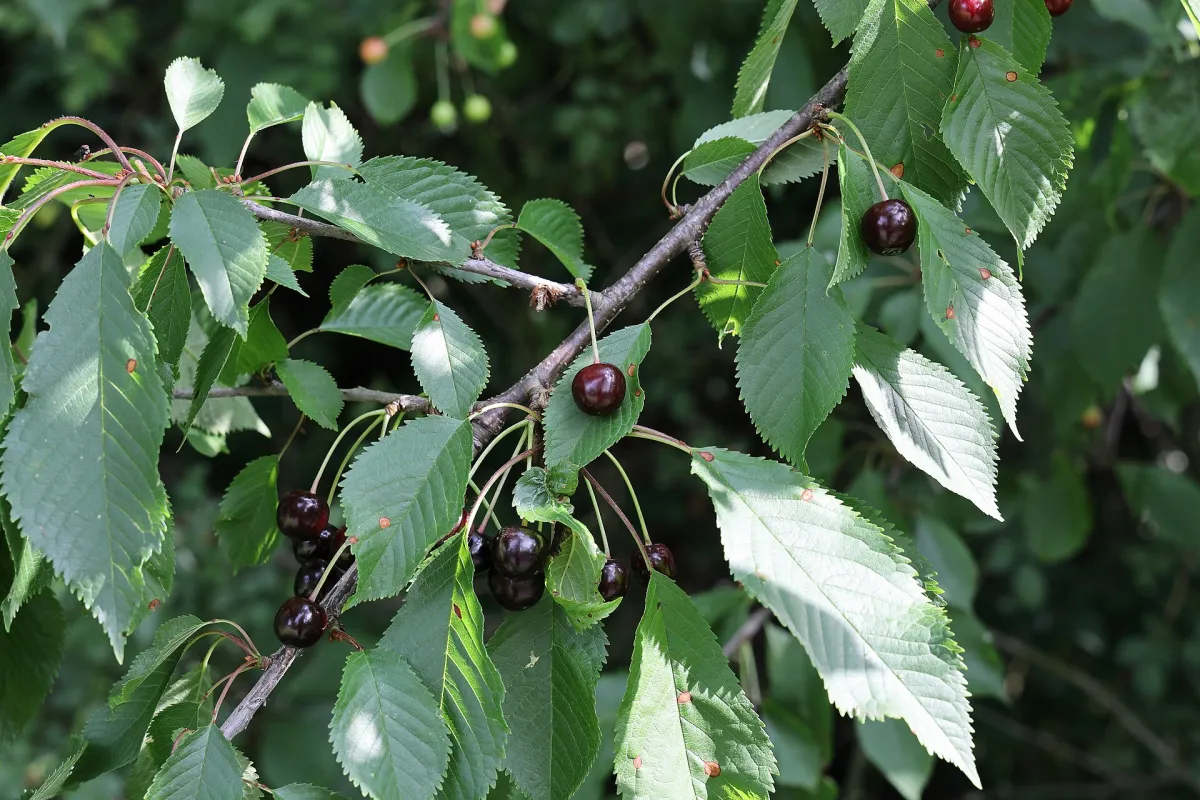 Photo: T. Kebert, CC BY-SA 4.0, via Wikimedia Commons
How to make the tea
Classic decoction
- Put 1-2 tablespoons of dried stems (about 5-10 g) into a small pan.
- Add 250 ml of cold water. Optionally, soak them for 1-2 hours first for better extraction.
- Bring to the boil and simmer gently for 10-15 minutes.
- Remove from the heat, cover and leave for another 10 minutes.
- Strain. The taste is slightly astringent, pleasant, with a woody note.
Variations
- With corn silk: 1 tbsp stems + 1 tbsp corn silk in 300 ml water; simmer the stems, add the corn silk at the end to steep.
- With birch leaves: same method, leaves added after boiling.
- With fresh stems: double the amount and simmer for 15 minutes.
Doses and courses
| Situation | Amount | Frequency | Course length |
|---|---|---|---|
| Occasional water retention | 1 tbsp / 250 ml | 2 cups a day, before 5 pm | 5-7 days |
| Helping clear fine gravel | 1-2 tbsp / 250 ml | 2-3 cups a day | 1-2 weeks, then a break |
| Add-on in mild cystitis | 1 tbsp / 250 ml | 3 cups a day | 3-5 days, alongside treatment |
Drink the last cup a few hours before bed so you are not up at night. Take breaks of at least a week between courses.
Contraindications and interactions
- Kidney failure or advanced chronic kidney disease: herbal diuretics and potassium can be dangerous. See chronic kidney disease.
- Heart failure and swelling of cardiac origin: these need medical treatment, not teas.
- Prescribed diuretics (furosemide, hydrochlorothiazide, spironolactone): effects can add up, with a risk of dehydration or potassium imbalance.
- Lithium: diuretics can change blood lithium levels.
- Low blood pressure: losing water can worsen dizziness.
- Pregnancy and breastfeeding: safety data are lacking; avoid without medical approval.
- Children: only on a doctor’s advice.
When to see a doctor
- swelling that appears suddenly, in one leg only, or with pain and redness;
- swelling with breathlessness or a night-time cough;
- flank pain, fever or blood in the urine (see kidney pain);
- swelling that does not improve after a week.
Common mistakes
Using stems from recently sprayed trees. Pesticide residues concentrate as the stems dry.
Drinking the tea late in the evening. The diuretic effect ruins your sleep.
Taking it continuously for months. Diuretic remedies are meant for short courses.
Believing you are losing weight. You lose water, which comes back with the first salty meal.
Combining it with a diuretic pill without asking your doctor. You risk dehydration and electrolyte imbalance.
Conclusion
Cherry stems are a simple, cheap and pleasant remedy, carefully kept in many Romanian households. As a decoction, in short courses, they can help shed excess water and support hydration with kidney gravel or mild cystitis. The scientific evidence is limited, and the tea does not replace treatment for heart or kidney disease. Used in moderation, from clean stems and with the contraindications respected, it remains a gentle ally for healthy kidneys. For other options and how they compare, see teas for kidney health.
Frequently asked questions
Do sour cherry stems work the same as sweet cherry stems? Yes, they are traditionally used the same way and have a similar composition. You can mix them.
How quickly does cherry stem tea work? The diuretic effect shows within a few hours, as more frequent urination.
Can I drink cherry stem tea if I have high blood pressure? It can be part of your fluid intake, but it does not treat hypertension. If you take diuretics for blood pressure, ask your doctor first.
Does cherry stem tea help with weight loss? Not in terms of fat loss. It lowers weight temporarily by removing water.
Can I use fresh cherry stems? Yes, but use about twice the amount and simmer a little longer. Dried stems are more practical and keep well.
Is it good for a urinary infection? It can help as an add-on by increasing urine volume. An infection with fever, flank pain or blood in the urine needs a doctor.
How long do dried stems keep? Up to a year in closed jars, in a dark, dry place. Throw them out if they smell musty or have lost their colour.
Sources and further reading
- Central European herbal medicine literature describing Cerasorum stipites (cherry stems) as a traditional diuretic.
- European Medicines Agency (EMA), HMPC principles on the traditional use of diuretic herbs (“to increase the amount of urine in minor urinary complaints”).
- NCCIH (National Center for Complementary and Integrative Health), general information on the safety of herbal supplements.
- Phytochemical studies on the polyphenol composition of sweet cherry (Prunus avium) stems, published in the specialist literature.
Informational content only; it does not replace medical advice. If you have heart or kidney disease or take diuretics, talk to your doctor before using diuretic teas.