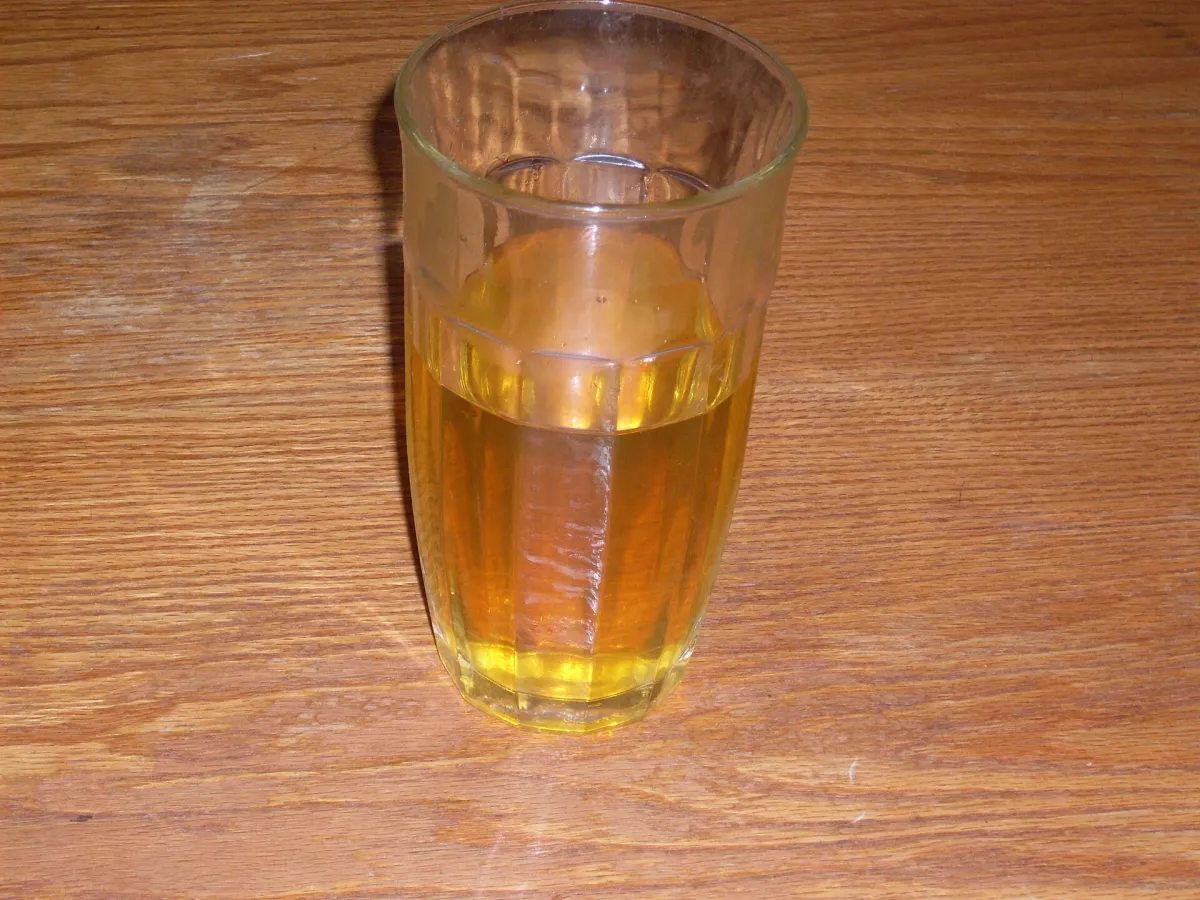
 Photo: Katarighe., CC BY-SA 3.0, via Wikimedia Commons
Foamy urine is, most of the time, harmless: a strong stream, a very full bladder, concentrated morning urine or cleaning products left in the toilet bowl can all create bubbles that vanish within seconds. Fine, dense white foam that lingers for minutes and appears day after day, however, can signal protein in the urine (proteinuria), an early sign that the kidney’s filter is letting through what it should hold back. A urinalysis and an albumin/creatinine ratio settle the question quickly and cheaply.
Key takeaways
- Large bubbles that disappear in under a minute are almost always normal.
- Fine, persistent foam resembling whipped egg white deserves a lab check.
- The most common causes of proteinuria are diabetes and high blood pressure.
- No tea “lowers protein in urine”; blood pressure, blood sugar, salt and weight are what count.
- Foam with puffy eyes or swollen legs needs a doctor within a few days.
Why urine foams
Foam forms when air mixes with a liquid that contains surface-active substances, molecules that stabilise bubbles. In urine, that role can be played by proteins (especially albumin) and by other components of concentrated urine. The rest is physics: how hard and from how high the stream falls and what is already in the toilet bowl.
Harmless causes (no disease)
- A forceful stream after holding urine for a long time: bubbles form mechanically and disappear quickly.
- Concentrated urine in the morning or after heavy sweating when you have drunk little.
- Cleaning products left in the toilet bowl, which foam on contact with any liquid.
- In men, traces of semen after ejaculation can make urine slightly foamy; with retrograde ejaculation (after some prostate surgery or medicines) this is more noticeable.
- Intense exercise or fever can cause transient proteinuria that clears in 1-2 days.
Kidney-related causes
- Diabetes: excess glucose gradually damages the kidney filter; albumin in the urine is one of the first signs of diabetic kidney disease.
- Untreated high blood pressure.
- Glomerulonephritis and nephrotic syndrome, in which protein loss is large and swelling appears.
- Chronic kidney disease of any cause; see chronic kidney disease.
- Pre-eclampsia in the second half of pregnancy, with high blood pressure and protein in the urine: an obstetric emergency.
A simple home check
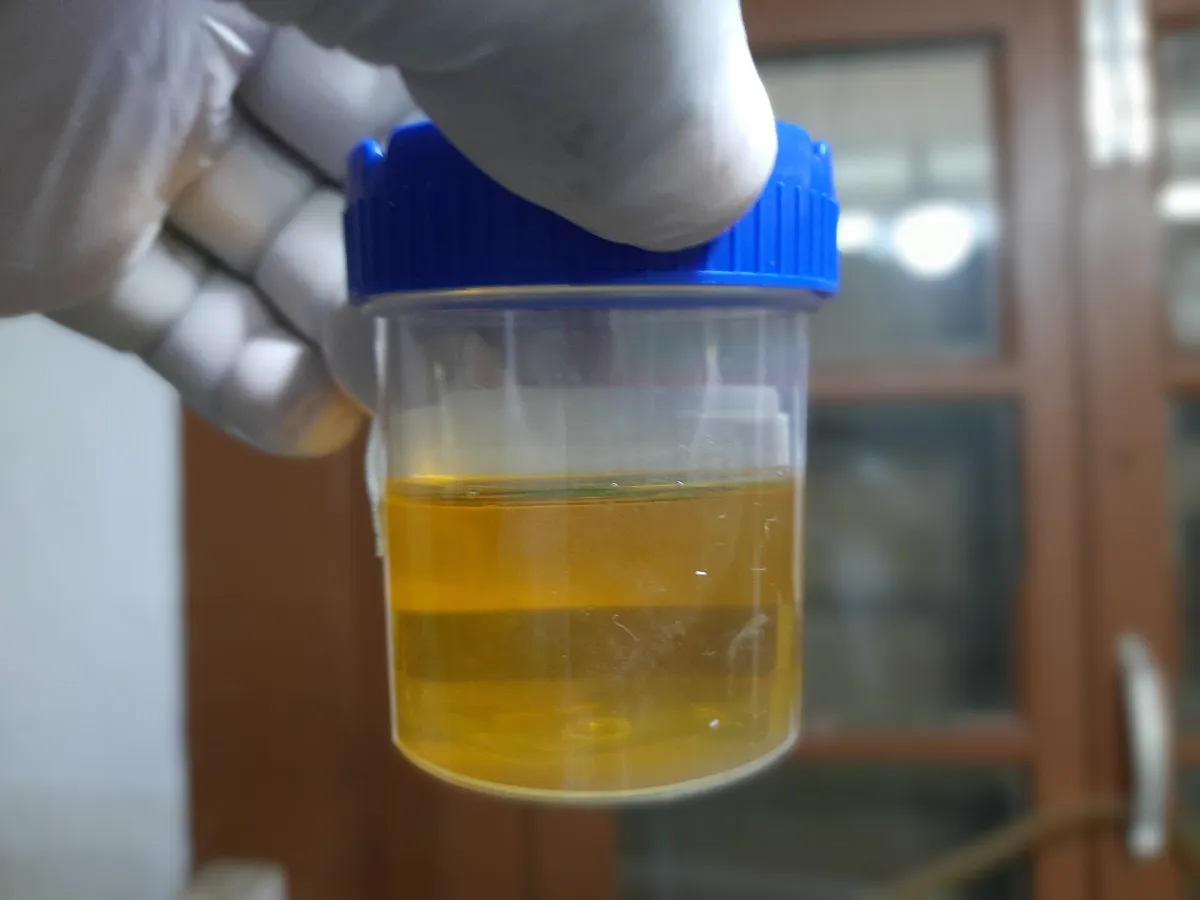
- Urinate into a clean, clear container (not into the toilet bowl).
- Use midstream urine after drinking normally the day before.
- Leave the container on a table and watch the foam.
- Large bubbles that disappear in under a minute: most likely normal.
- Fine white foam that lasts more than 5 minutes, on several days: book some tests.
This check does not make a diagnosis, but it helps you decide whether testing is worthwhile. Some pharmacies also sell urine dipsticks that detect protein; a positive result must be confirmed by a lab.
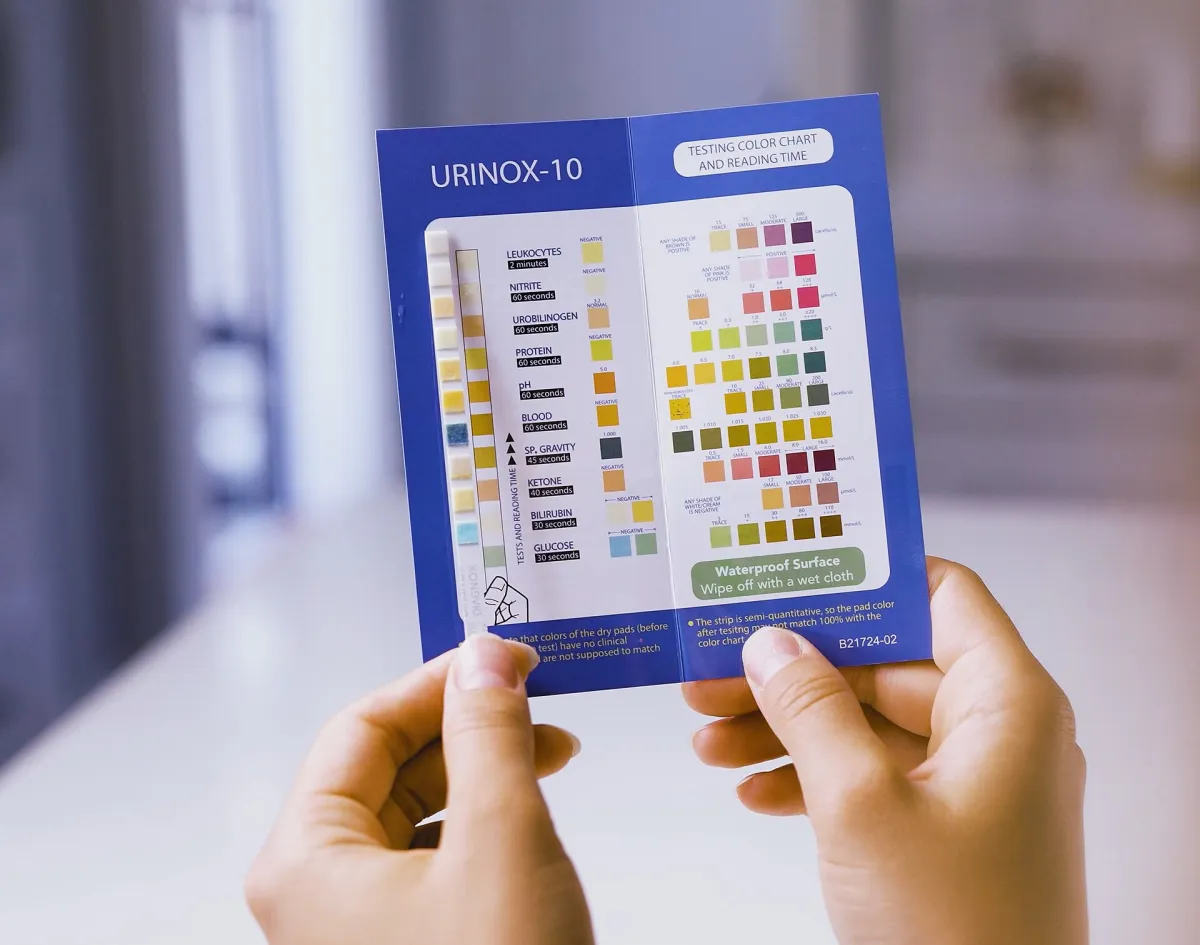 Photo: Hxa098020, CC BY-SA 4.0, via Wikimedia Commons
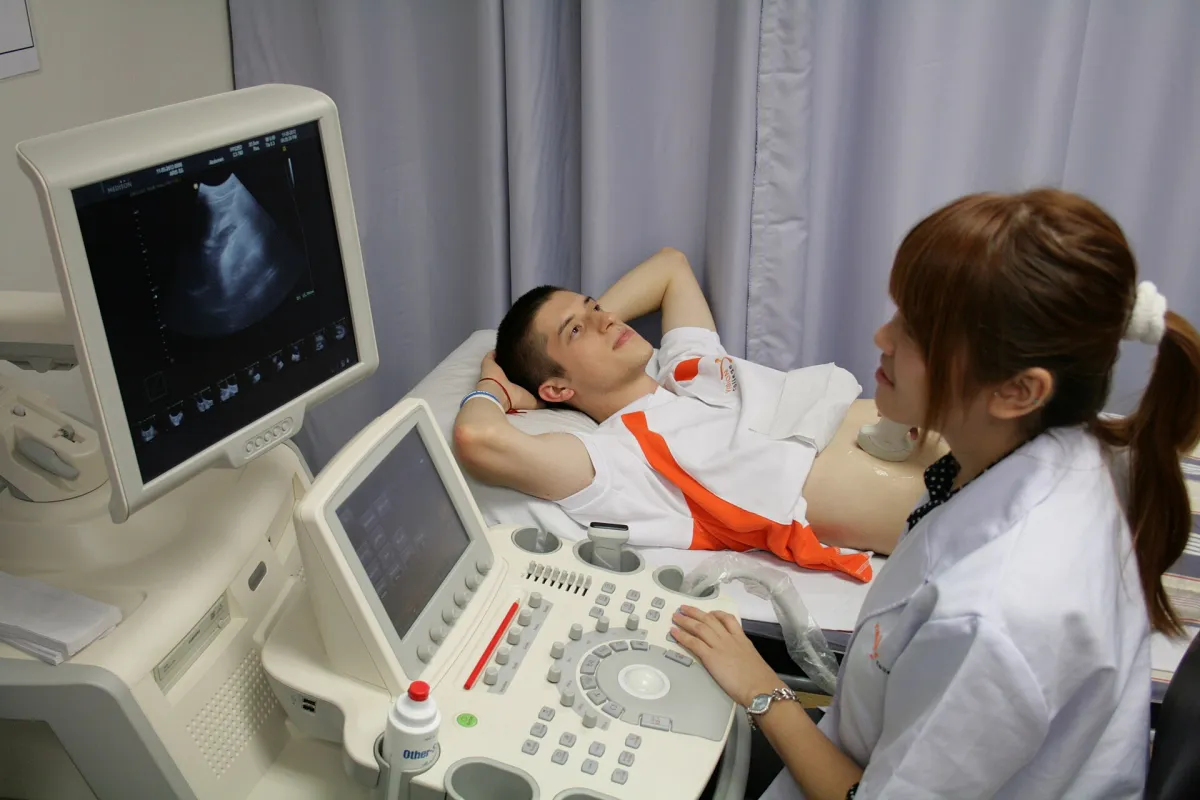
Which tests to ask for
| Test | What it measures | Typical normal result | When it is useful |
|---|---|---|---|
| Urinalysis (dipstick + sediment) | Protein, glucose, blood, white cells | Protein negative or trace | First step, inexpensive |
| Urine albumin/creatinine ratio (ACR) | Subtle albumin loss | below 30 mg/g | Diabetes, hypertension, persistent foam |
| Urine protein/creatinine ratio (PCR) | All proteins in urine | below 150 mg/g | Larger losses, monitoring |
| 24-hour urine protein | Total daily amount | below 150 mg/24 h | When requested by a nephrologist |
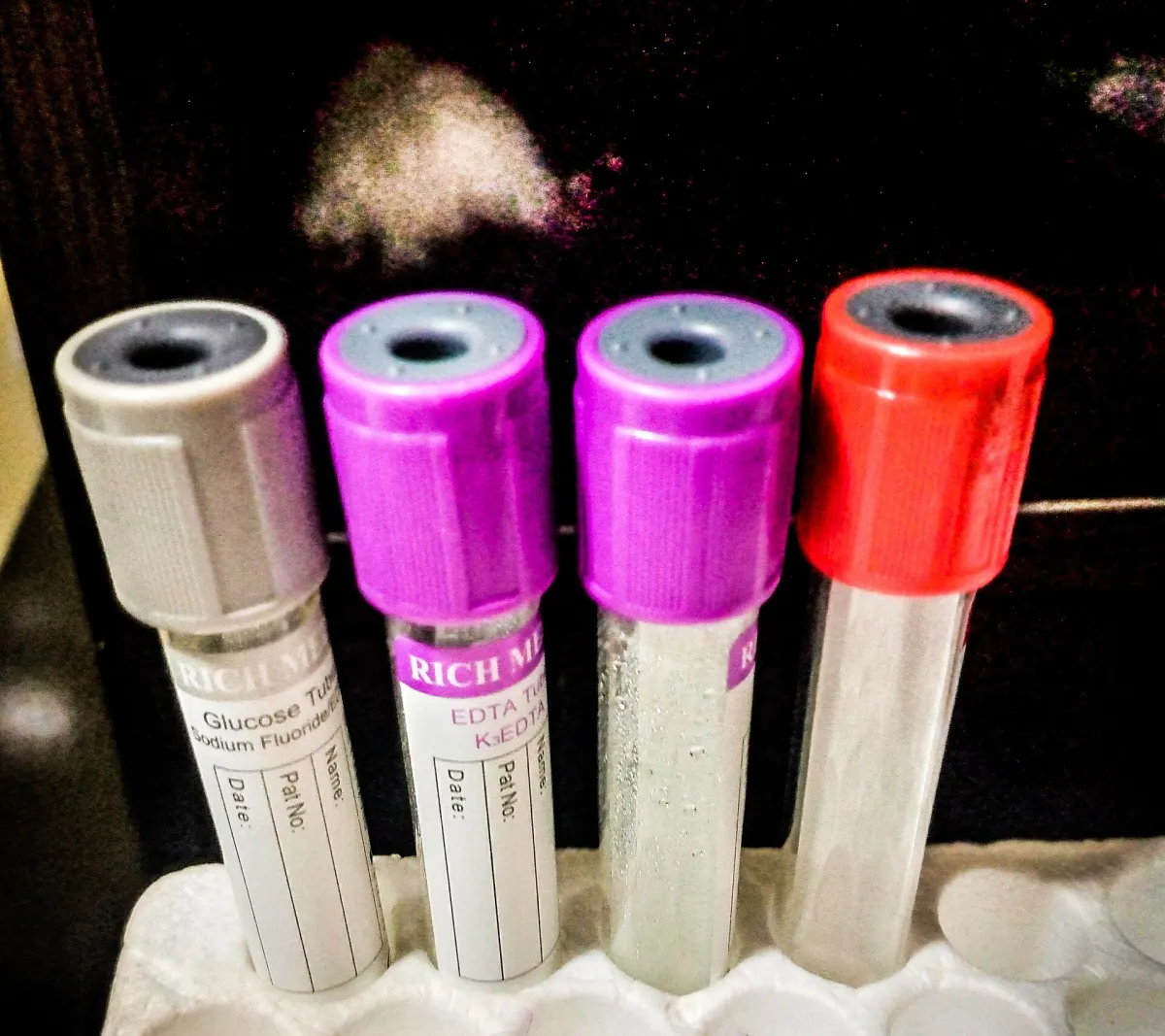
| Blood creatinine + eGFR | Filtering function | eGFR above 90 | Always alongside the tests above |
A single positive result does not mean disease: guidelines require confirmation in at least two of three samples over 3 months. For help with creatinine results see high creatinine.
Who should check urine albumin, even without foam
Albumin starts appearing in the urine long before anything is visible; obvious foam usually means losses are already large. That is why guidelines recommend checking the albumin/creatinine ratio regularly, at least once a year, in:
- people with diabetes (type 2 from diagnosis, type 1 after 5 years);
- people with high blood pressure;
- people with cardiovascular disease or obesity;
- anyone with a first-degree relative who has chronic kidney disease or is on dialysis;
- people who have had pre-eclampsia or acute kidney injury in the past.
The test is inexpensive, uses an ordinary urine sample and can detect a problem years before it affects creatinine.
What you can do naturally to protect your kidneys
Proteinuria is not treated with home remedies, but several habits have proven effects on it, alongside prescribed treatment.
Keep blood pressure under control
High pressure strains the glomerular filter and increases albumin loss. The usual target for people with proteinuria is below 130/80 mmHg. Some blood pressure medicines (ACE inhibitors, ARBs) reduce proteinuria directly, which is why doctors often choose them.
Less salt
Salt partly cancels the effect of these medicines and increases proteinuria. Under 5 g a day means cooking with herbs instead of salt and cutting back on cured meats, salty cheese, pickles and industrial bread.
Blood sugar
For people with diabetes, glucose control is the foundation of preventing kidney disease. Daily movement, regular meals and less refined sugar make a big difference.
Weight and smoking
Losing weight if you are overweight reduces proteinuria, while smoking worsens it and speeds up the loss of kidney function.
Moderate dietary protein
Excess protein (high-protein diets, shakes) raises filtration pressure. Discuss a target of about 0.8 g/kg/day with your doctor if you have proteinuria. Swapping some meat for plant protein is usually beneficial; see kidney-friendly foods.
Sensible hydration
Concentrated urine foams more easily. 1.5-2.5 litres of fluid a day, as needed, is enough for most healthy adults.
About teas and supplements
There are no solid studies showing that any herb lowers proteinuria. What is more, in people with reduced kidney function some herbs raise potassium or interact with blood pressure medicines. Discuss any supplement with your nephrologist.
When to see a doctor
- persistent foam for several days, on repeated checks;
- puffy eyelids in the morning or swollen ankles in the evening (see water retention);
- rapid, unexplained weight gain;
- dark urine or blood in the urine;
- you are pregnant and have foamy urine, headaches, visual disturbances or high blood pressure: emergency.
Common mistakes
Panicking over every bubble. Most are mechanical and disappear at once.
Doing the “test” in a toilet bowl with cleaner in it. The result is meaningless.
Ignoring foam if you have diabetes or high blood pressure. For you, albumin in the urine is the first sign of kidney damage, which is still partly reversible.
Drinking much more water to “dissolve” the protein. You dilute the foam; you do not repair the filter.
Looking for a miracle tea. Blood pressure, blood sugar and salt make the difference.
Conclusion
Foamy urine is usually a harmless physical phenomenon. Fine, persistent, recurring foam deserves checking, though, because protein in the urine is one of the earliest and most useful signals of kidney trouble. The home check points the way, a urinalysis and albumin/creatinine ratio confirm it, and controlled blood pressure, less salt, good blood sugar, a healthy weight and not smoking protect the kidneys better than any remedy.
Frequently asked questions
Is it normal to have foamy urine in the morning? Yes, morning urine is more concentrated and foams more easily. If the foam disappears within seconds and you have no other symptoms, there is no cause for concern.
How long does foam have to last to be worrying? There is no exact threshold, but foam that stays for more than a few minutes and recurs on several days justifies a urinalysis.
Can foamy urine in men come from the prostate? Indirectly. Traces of semen after ejaculation and retrograde ejaculation (after some prostate surgery or medicines) can make urine foamy without kidney disease.
Can protein in the urine be cured? It depends on the cause. Transient proteinuria (exercise, fever) goes away on its own. Proteinuria from diabetes or hypertension can fall substantially with treatment and the right habits; glomerular diseases need specialist treatment.
Does a high-protein diet cause foamy urine? It can slightly increase filtered protein and urine concentration. In healthy kidneys it usually does not cause significant proteinuria, but in already damaged kidneys it may speed up decline.
Which tea is good for protein in the urine? There is no proven tea. Herbal teas can be part of your fluid intake, but treating proteinuria relies on controlling blood pressure, blood sugar and salt.
Is foamy urine in pregnancy dangerous? It can be a sign of pre-eclampsia, especially after week 20 and together with high blood pressure, headaches or sudden swelling. Tell your doctor immediately.
Sources and further reading
- KDIGO, guideline for the evaluation and management of chronic kidney disease (albuminuria categories).
- National Kidney Foundation, information on proteinuria and the albumin/creatinine ratio.
- NIDDK, information on albuminuria and diabetic kidney disease.
- American Diabetes Association, Standards of Care on annual urine albumin screening.
Informational content only; it does not replace medical advice. For persistent foam, swelling or high blood pressure, see a doctor.