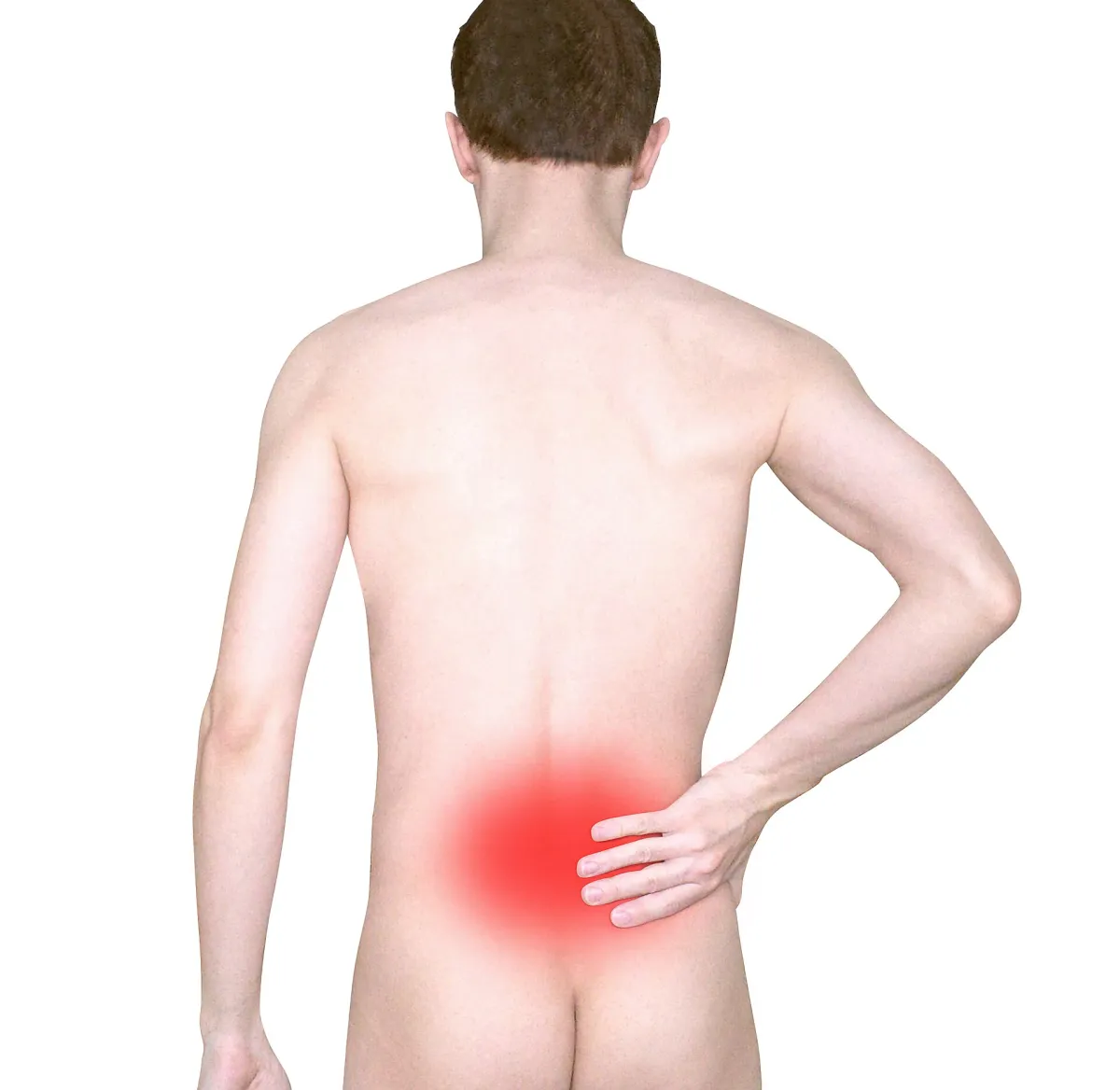
 Photo: Robystarm07, CC BY-SA 4.0, via Wikimedia Commons
Kidney pain is usually felt on one side, in the flank, just below the ribs and slightly towards the back, and it barely changes when you move or shift position. The most common causes are kidney stones (renal colic) and a kidney infection, which often comes with fever. If the pain gets worse when you bend and eases when you rest, it is far more likely to come from muscles or the spine than from the kidneys.
Key takeaways
- The kidneys sit high, under the lowest ribs, not in the low back just above the buttocks where back pain usually lives.
- Renal colic comes in waves, is extremely intense and can spread to the groin or genitals.
- Flank pain with fever, chills or vomiting may be pyelonephritis and needs a same-day assessment.
- Local heat, sensible hydration and rest help at home, but they do not replace a diagnosis.
- Emergency signs: unable to pass urine, fever above 38 °C with flank pain, unbearable pain, pregnancy or a single kidney.
Where the kidneys actually hurt
Many people say “my kidneys hurt” when the pain is right down in the low back after a day of digging or sitting at a desk. The kidneys, however, sit higher and deeper: on either side of the spine, between the last thoracic and third lumbar vertebrae, partly shielded by the 11th and 12th ribs. The right kidney sits a little lower because of the liver.
True kidney pain appears when the kidney’s capsule is stretched (by inflammation or by urine backing up behind a blockage) or when the ureter spasms around a stone. That is why it is deep, dull or colicky, and you cannot “point to it with one finger” the way you can with a muscle knot.
Kidney pain or back pain?
| Feature | Kidney pain | Muscle or spine pain |
|---|---|---|
| Location | Flank, under the ribs, usually one side | Low back, often both sides or the middle |
| Spread | Towards the abdomen, groin, genitals | Into the buttocks or back of the thigh (sciatica) |
| Link with movement | Hardly any; in colic no position feels right | Worse bending, lifting, twisting; better at rest |
| Other symptoms | Fever, chills, nausea, blood in urine, burning | Stiffness, palpable muscle spasm, numbness |
| Onset | Sudden (stone) or over 1-2 days (infection) | After exertion, poor posture or no clear trigger |
If the table points you to the “back” column, our guide to back pain has suitable exercises and remedies.
The most common causes
Kidney stones (renal colic)
A stone travelling down the ureter causes one of the most severe pains known: it comes in waves, makes you restless without finding a comfortable position and can bring nausea, vomiting and reddish urine. Stones under 5 mm often pass on their own within days or weeks. For prevention and traditional remedies see kidney stones, and if your tests only show fine crystals read our article on kidney gravel.
Kidney infection (pyelonephritis)
An untreated urinary tract infection can climb up to the kidney. Typical signs: fever, chills, a dull ache in one flank, feeling generally unwell, sometimes burning when you pee. Pyelonephritis needs antibiotics, and natural remedies play only a supporting role; details in our article on pyelonephritis.
Other causes
- Hydronephrosis: urine backs up into the kidney because of a blockage (stone, enlarged prostate, pregnancy).
- Large kidney cysts or polycystic kidney disease.
- Injury to the lower back (blows, falls).
- Less often: blood clots, renal infarction or tumours, which need imaging.
What you can do at home (safely)
The measures below suit tolerable pain without fever in an adult with no existing kidney disease, while you wait to be seen or once a doctor has ruled out anything serious.
Local heat
A hot water bottle or warm (not scalding) compress on the flank relaxes the smooth muscle of the ureter and eases the cramping. A clinical trial in patients with renal colic being transported to hospital found that local active warming reduced pain and nausea compared with no warming. Apply for 15-20 minutes, with a towel between your skin and the heat source, several times a day.
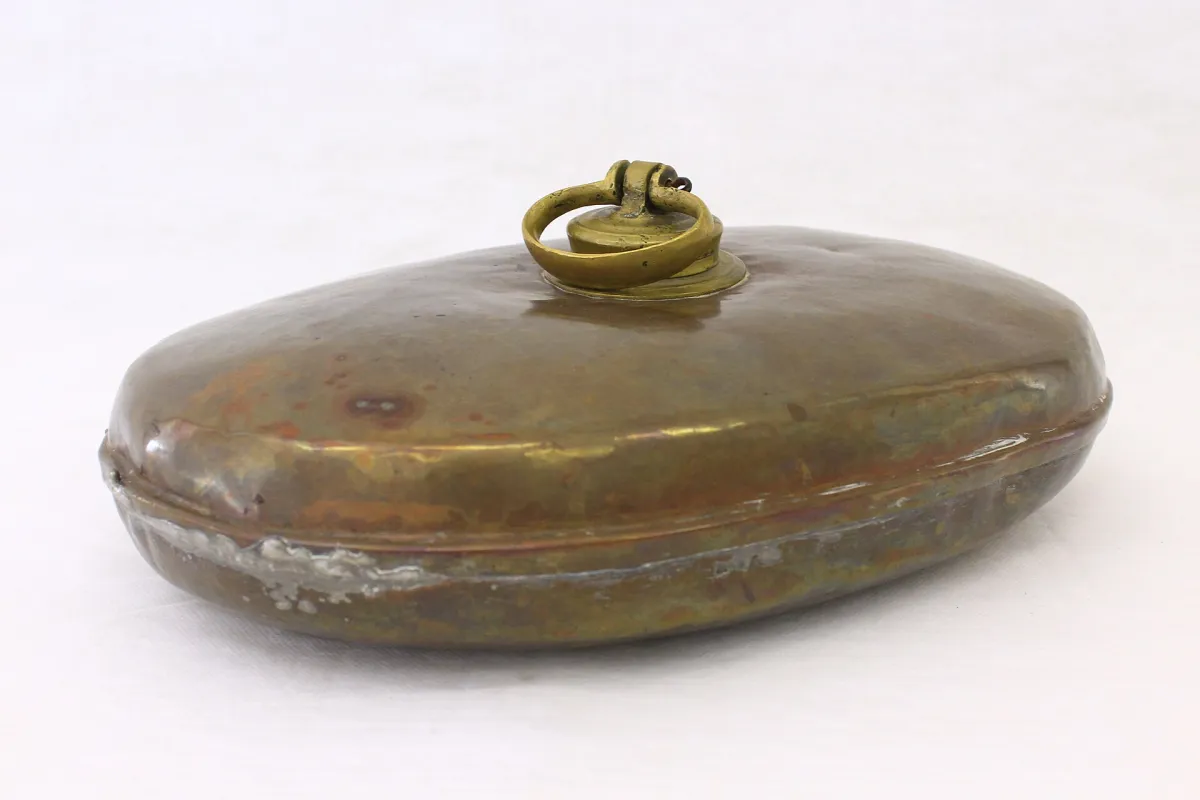 Photo: Conrado Secassi, CC BY-SA 4.0, via Wikimedia Commons
A warm bath
Water at 37-38 °C for 15-20 minutes can help you relax during colic. Skip it if you have a fever, feel dizzy or have very low blood pressure.
Moderate hydration
Drink steadily, about 2-2.5 litres a day in small portions. Do not gulp huge amounts at once in the middle of colic: if the ureter is blocked, more urine means more pressure inside the kidney and more pain.
Gentle herbal teas, once you know the cause
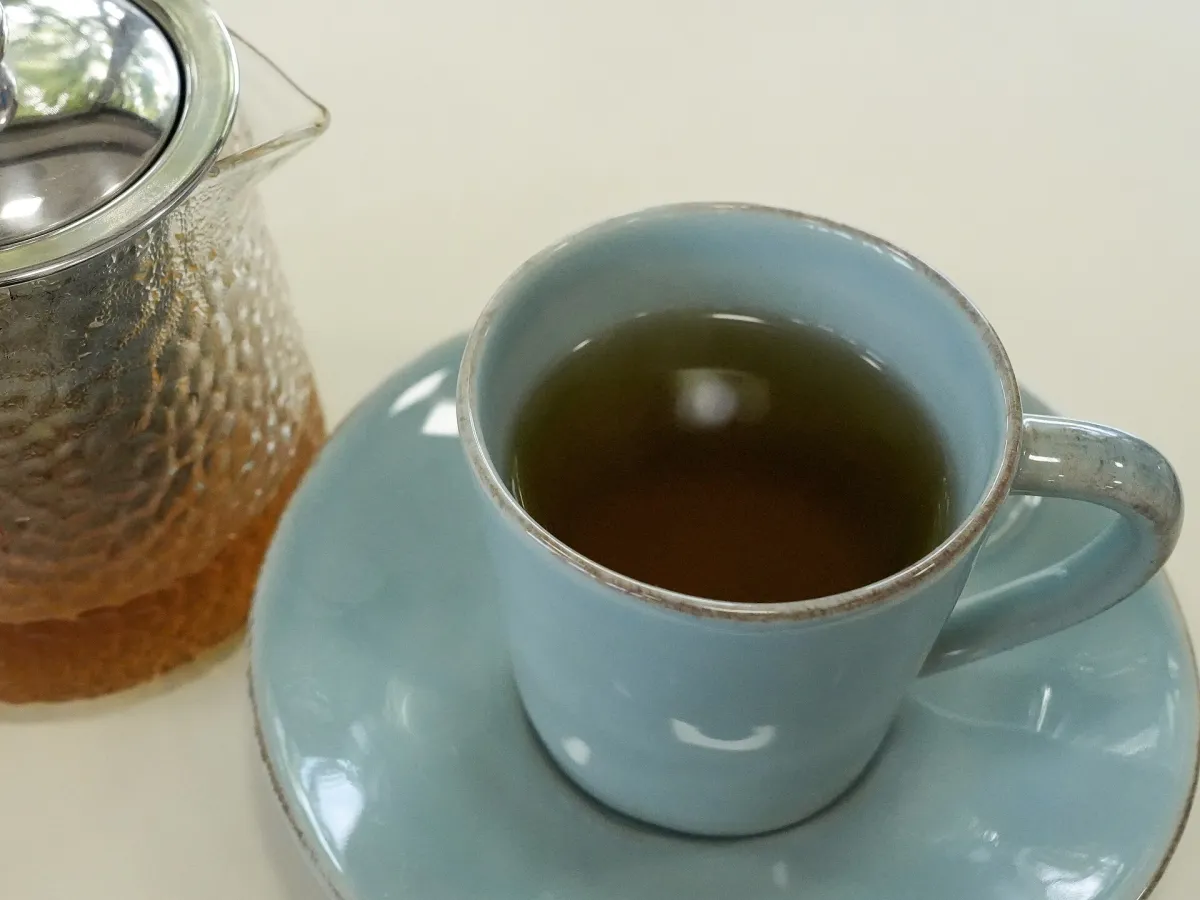
For small, diagnosed stones without infection, traditional diuretic teas (corn silk, cherry stems, horsetail) can support hydration. Doses and differences are covered in teas for kidney health. They do not treat an infection and do not “dissolve” large stones.
Painkillers: with care
Paracetamol (acetaminophen) is a reasonable option for mild pain. Anti-inflammatories (ibuprofen, diclofenac) work well in renal colic but can harm the kidneys in people who are dehydrated, older or have kidney disease; use them only briefly and on a doctor’s or pharmacist’s advice.
Practical guide to home measures
| Measure | How | How much | Caution |
|---|---|---|---|
| Hot water bottle on the flank | 40-45 °C, wrapped in a towel | 15-20 min, 3-4 times a day | Not directly on skin, do not sleep with it |
| Warm bath | 37-38 °C | 15-20 min | Not with fever or dizziness |
| Water and fluids | Portions of 150-200 ml | 2-2.5 L a day | Do not force fluids in acute colic |
| Corn silk tea | 1 tbsp per 250 ml, steep 10 min | 2-3 cups a day, max. 2 weeks | Not in kidney or heart failure |
When to see a doctor or go to A&E
Go to the emergency department straight away if:
- you have a fever above 38 °C, chills and flank pain;
- you cannot pass urine or pass very little;
- the pain is unbearable and does not respond to painkillers;
- you are vomiting repeatedly and cannot keep fluids down;
- you are pregnant, have a single kidney, a transplanted kidney or diabetes;
- you see visible blood in your urine together with pain (see hematuria).
Book a doctor’s appointment within a few days if the pain keeps coming back, if your urine is cloudy or strong-smelling (see cloudy urine) or if you have had stones before.
How your doctor will examine you
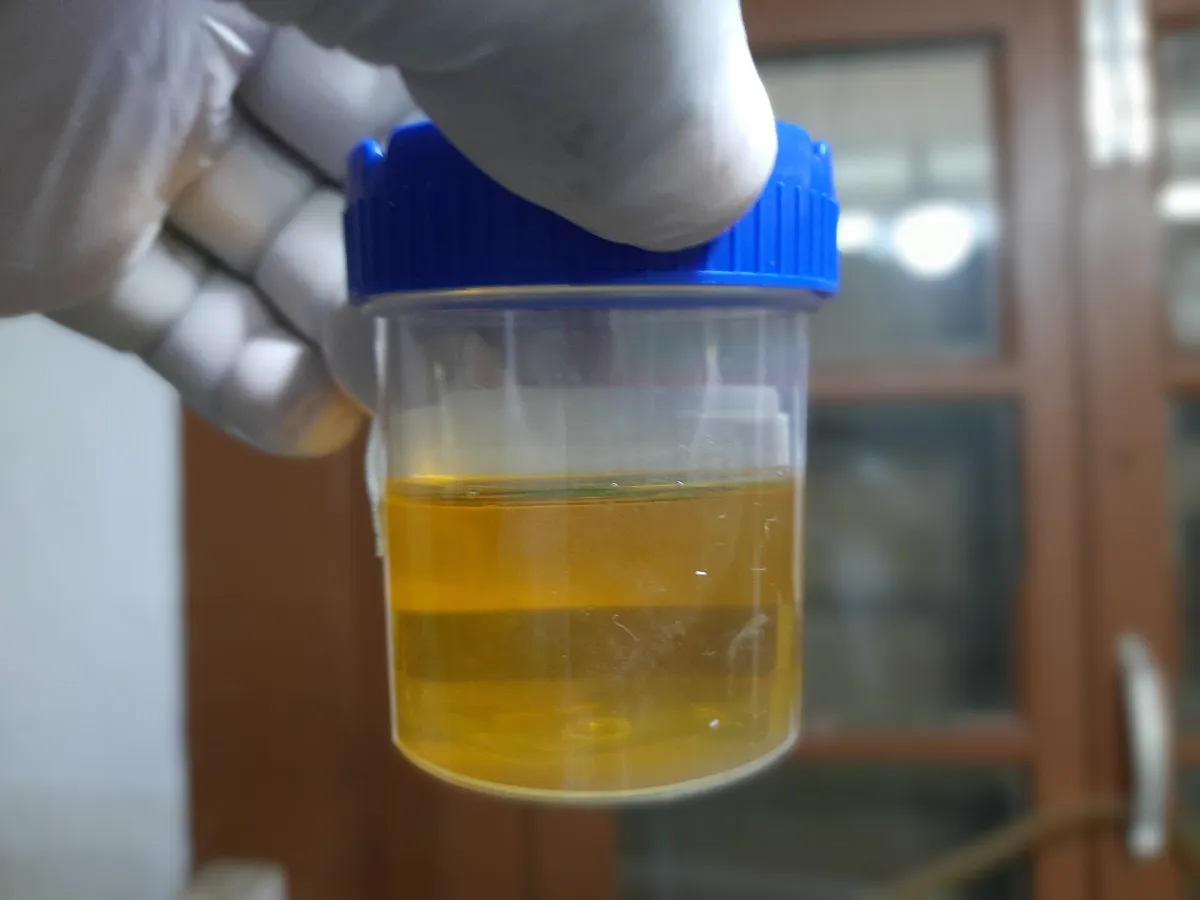
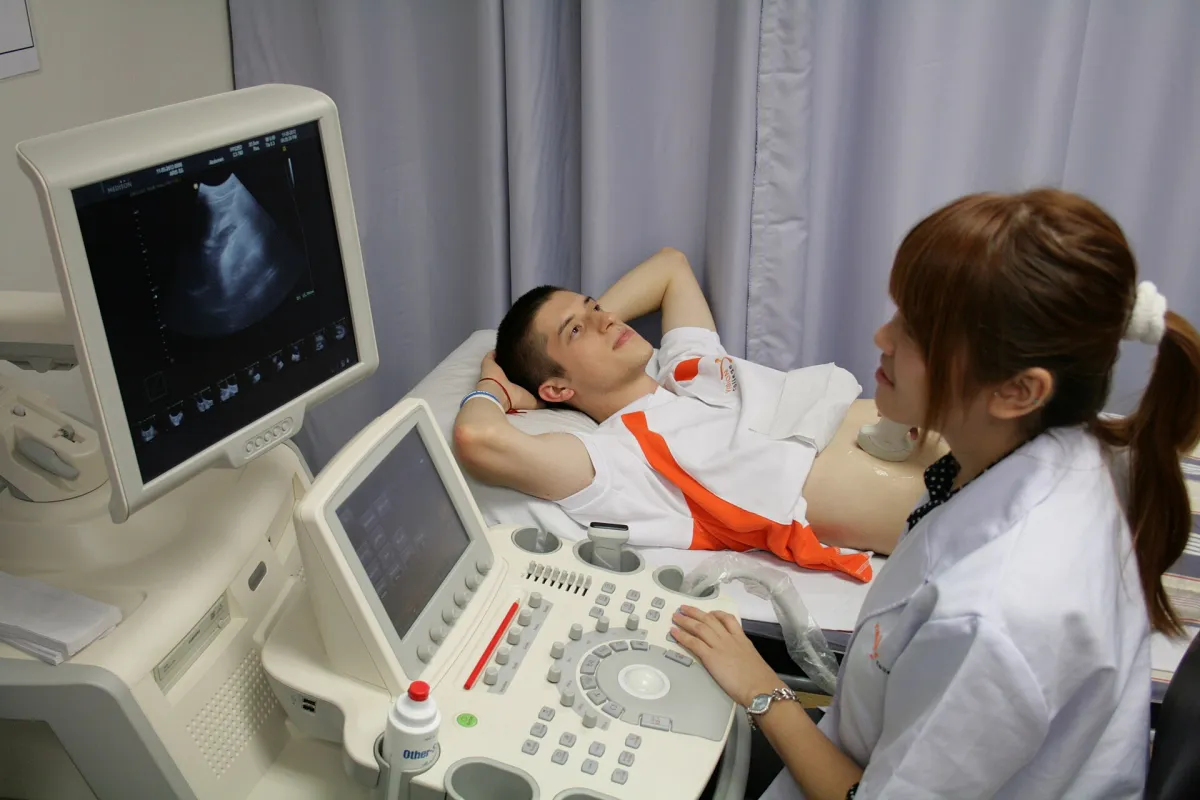
The doctor will gently tap your lower back with the side of the hand (costovertebral angle tenderness): sharp pain on this test suggests a kidney problem. Next come a urinalysis, a urine culture if infection is suspected, blood tests (including creatinine, explained in high creatinine) and an ultrasound, which quickly shows stones and a swollen kidney.
Common mistakes
Blaming every low back ache on the kidneys. Most low back pain is muscular. The wrong treatment delays recovery.
Treating fever with flank pain with herbal teas. Untreated pyelonephritis can lead to sepsis. Herbs do not replace antibiotics.
Drinking 4-5 litres of water during colic. It raises pressure in a blocked kidney and worsens the pain.
Taking anti-inflammatories for days without supervision. They can worsen kidney function, especially when you are dehydrated.
Ignoring pain that suddenly vanishes. Sometimes the stone has passed; sometimes the kidney has gone quiet behind the blockage. A follow-up ultrasound settles the question.
Conclusion
Kidney pain has a recognisable pattern: high in the flank, on one side, deep, often with waves of colic or with fever, and not relieved by changing position. Local heat, sensible hydration and rest can ease the discomfort, and diuretic teas can support the passage of small stones once the cause is known. Fever, little or no urine, vomiting or unbearable pain, however, mean going straight to a doctor. Kidneys rarely complain loudly; when they do, they deserve to be heard.
Frequently asked questions
Which side does kidney pain occur on? On the side of the affected kidney: the left or right flank, under the ribs, slightly towards the back. Pain on both sides is less common and occurs mainly with infections or conditions affecting both kidneys.
How do I know if it is my kidney or my back? Back pain gets worse with movement and better with rest; kidney pain does not depend on position, and during colic no position feels comfortable. Fever, nausea or changes in your urine point towards the kidneys.
Can kidney pain go away on its own? Yes, if a small stone passes. Still, kidney pain deserves at least one ultrasound and urinalysis to rule out infection or a blockage.
Does heat help kidney pain? Yes, local heat relaxes the muscles and reduces cramping in renal colic. Avoid it if you have a high fever or irritated skin.
Which tea is good when my kidneys hurt? Corn silk, cherry stem or horsetail teas are traditionally used for small stones, after a diagnosis. With infection or fever they do not replace medical treatment.
Can kidney pain be a sign of infection? Yes. A dull flank ache with fever, chills and feeling unwell is typical of pyelonephritis and needs to be seen the same day.
Is kidney pain normal in pregnancy? It should not be ignored. In pregnancy, urinary infections climb to the kidneys more easily, and the growing uterus can compress the ureters. Tell your obstetrician.
Sources and further reading
- European Association of Urology (EAU), Guidelines on Urolithiasis (management of renal colic).
- NIDDK (National Institute of Diabetes and Digestive and Kidney Diseases), information on kidney stones and kidney infection.
- Kober A. et al., clinical trial on local active warming for prehospital renal colic (Journal of Urology, 2003).
- NHS, pages on kidney stones and kidney infection.
Informational content only; it does not replace medical advice. If you have fever, severe pain or cannot pass urine, seek urgent medical care.