
Aloe Vera: Benefits, Gel for Skin and Internal Uses
IMPORTANT: The clear gel inside the aloe vera leaf is generally safe for external use, but the yellow layer just beneath the rind (the latex, rich in aloin) is a strong laxative and can be irritating. For internal use, rely only on standardized, decolorized products (aloin-free) and do not exceed the recommended amounts. Taken internally, aloe vera is contraindicated during pregnancy and breastfeeding, in young children, and in cases of inflammatory bowel disease, intestinal obstruction, severe kidney disease, and acute hemorrhoids. The latex can interact with diuretics, heart medications (digoxin), and antidiabetic drugs. Before applying the gel to large areas of skin, do a patch test on a small spot. Aloe vera is not a substitute for medical treatment; for severe burns, deep wounds, or persistent digestive problems, consult a doctor.
Old Auntie Veta, who lived at the edge of the village, kept a large pot on her kitchen windowsill with a fleshy green plant whose pointed leaves had toothed edges. To us children, who played barefoot all summer and scraped our knees around the yard, it was “the miracle plant.” Whenever someone burned themselves on the stove or got a blister from the sun, Auntie Veta would snap off a leaf, slice it open with a knife, and smear the cool, sticky gel from inside onto the spot. “Don’t worry, it pulls the fire out,” she would say — and the stinging really did ease within minutes.
Only later did I understand that this “miracle plant” was aloe vera, one of the oldest and most prized medicinal plants in the world. Auntie Veta had never read a study, but she had inherited a custom thousands of years old: people in ancient Egypt, in Greece, in the Arab world, and all the way to Romanian villages used aloe vera for burned skin, wounds, hair, and upset stomachs. Today we find it in creams, shampoos, drinks, and masks, yet its true value shows best when we use it simply, straight from the leaf.
Aloe vera (Aloe barbadensis) is a succulent plant of the Asphodelaceae family, native to the Arabian Peninsula and the arid regions of Africa, but now cultivated worldwide — including in our homes as a houseplant. Its thick, fleshy leaves store water in the form of a translucent gel, and this gel is the most precious part of the plant. Aloe vera is valued for its soothing, hydrating, and regenerating effects on the skin, as well as for its traditional internal uses related to digestion.
Table of Contents
- What aloe vera is and where it grows
- Composition and active compounds
- Health benefits
- Traditional uses
- How to prepare and use aloe vera gel
- Aloe vera for hair and skin: practical routines
- Dosage and how to use it
- How to grow and harvest it at home
- Practical tips and common mistakes
- Conclusion
- Frequently Asked Questions
What aloe vera is and where it grows
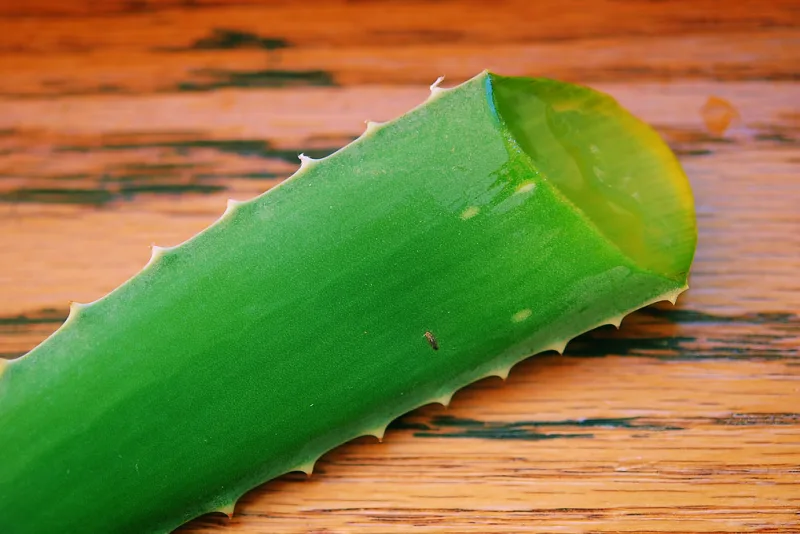
Aloe vera is a perennial plant with little or no visible stem, whose thick leaves grow from a basal rosette. The leaves can reach 40–60 cm in length, are grayish-green, with small whitish “teeth” along the edges and sometimes light spots on the surface, especially on young plants. Inside, the leaf has three layers: the green outer rind, an intermediate yellow layer (the latex, which contains aloin), and the central core, made of the transparent, mucilaginous gel.
The plant is extremely drought-resistant, adapted to arid environments. In favorable conditions, in summer, it can flower, sending up a tall stalk with tubular yellow or orange flowers that are quite decorative. In our climate, aloe vera is grown mostly in pots, being a popular houseplant precisely because it needs no complicated care and “manages” even when watered rarely.
There are hundreds of aloe species, but the one used for medicinal and cosmetic purposes is mainly Aloe barbadensis miller. The name “vera” means “true” in Latin, which emphasizes its status as the reference species.
Composition and active compounds
Aloe vera gel is made up of over 98–99% water, but the rest, though small in volume, is surprisingly rich. Studies suggest that aloe’s composition includes:
- Polysaccharides (among them acemannan), responsible for the hydrating, soothing, and skin-regenerating effects;
- Vitamins: herbal tradition mentions the presence of vitamins A, C, E (with antioxidant roles) and some B-complex vitamins;
- Minerals: calcium, magnesium, zinc, potassium, manganese, and others;
- Enzymes that contribute to the local soothing effect;
- Amino acids;
- Phenolic compounds and anthraquinones (such as aloin), concentrated mainly in the yellow latex beneath the rind, with a laxative effect.
This combination explains why aloe vera has the reputation of an “all-purpose” plant: the gel soothes and hydrates the skin, while the latex, used with great caution, has a traditional laxative effect.
Health benefits
Soothing and skin regeneration
The best-known and most appreciated use of aloe vera gel is applying it to the skin. Thanks to its mucilaginous texture and cooling effect, the gel quickly calms the sensation of stinging and heat. Folk tradition recommends it for mild sunburn, irritation, insect bites, and dry skin. The polysaccharides form a thin, hydrating layer that helps the skin feel smoother and more comfortable.
Hydration without a greasy feel
Unlike oils and some creams, aloe vera gel hydrates without leaving a greasy film, making it suitable even for oily or combination skin. That is why it is so valued as a light hydrating gel, especially in summer or after sun exposure.
Support for small cuts and scratches
In folk medicine, the fresh gel was applied to superficial scratches, scrapes, and irritated skin. The fresh sensation and mild protective effect explain why it was considered a handy “first aid” in many households. For deep, infected, or non-healing wounds, however, medical attention is essential.
Supporting digestion (with caution)
Traditionally, aloe vera juice (from the gel, without latex) was used to calm an upset stomach and the sensation of heartburn. The latex, by contrast, has a strong laxative effect and should not be used carelessly. Studies suggest that products based on decolorized, standardized gel may be better tolerated, but internal use should be done in moderation and, ideally, after talking to a doctor.
Mouth and gum care
In some traditions, diluted aloe vera gel was used as a mouth rinse for the sensation of irritated gums. The local soothing effect is appreciated, but it does not replace proper oral hygiene and dental visits.
Antioxidants and general comfort
The presence of antioxidant vitamins (A, C, E) and phenolic compounds means that aloe vera is regarded in folk tradition as a “tonic” plant, supporting a general sense of well-being, mainly through its hydration and nutrient contribution.
Traditional uses
Over the centuries, aloe vera was called the “plant of immortality” in ancient Egypt and the “first-aid plant” in many cultures. Here are some of its traditional uses:
- On sunburn and on skin reddened after sunbathing;
- On mild burns from the stove or hot water (after first cooling the area with cold water);
- On insect bites and irritated skin;
- As a hydrating mask for the face and hands;
- For hair and scalp, as a hydrating and soothing treatment;
- Internally, as a juice (from decolorized gel), for digestive comfort;
- As a laxative (from the latex), a traditional use that is now discouraged because of the risks.
How to prepare and use aloe vera gel
Fresh gel, straight from the leaf
- Choose an outer leaf, thick and healthy, from a mature plant (at least 2–3 years old).
- Cut the leaf as close to the base as possible, with a clean knife.
- Stand the leaf upright, cut end down, in a glass for 10–15 minutes, so the yellow latex drains out (it is irritating and laxative; you want to remove it).
- Wash the leaf, trim the toothed edges, then peel off the green rind from one side.
- With a spoon, scoop out the transparent gel from inside, avoiding the yellow layer near the rind.
- Use the gel immediately on the skin, or store it in the refrigerator.
Gel for a few days of storage
Fresh gel oxidizes quickly. To keep it for 5–7 days, place it in a clean, airtight jar in the refrigerator. You can add a few drops of lemon juice or a touch of vitamin E (from a capsule) to slow oxidation. If it changes smell or color, throw it out.
Frozen gel cubes (for sunburn)
Pour the fresh gel into ice cube trays and freeze. The cold cubes are perfect for soothing sunburned skin: the cooling effect combines with hydration. Use them right away, perhaps wrapped in a thin cloth so they are not too cold directly on the skin.
Hydrating face mask
Mix 2 tablespoons of fresh aloe vera gel with a teaspoon of honey. Apply to clean skin, leave for 15–20 minutes, then rinse with lukewarm water. This mask is valued for its fresh, hydrating feel, especially on dry or irritated skin.
Internal juice (with caution)
For internal use, many people prefer standardized commercial products, decolorized (aloin-free), precisely for safety. If you do prepare it at home, use only the transparent gel, perfectly cleaned of the yellow layer, mixed with water or fruit juice (for example, 1–2 tablespoons of gel in a glass of water). Start with small amounts and watch how your body reacts. Do not use the latex.
Aloe vera for hair and skin: practical routines
For scalp and hair
- Scalp mask: apply fresh gel to the scalp, massage gently, leave for 20–30 minutes, then rinse. Traditionally, it is valued for the feeling of a calmed scalp and for hydration.
- After washing: a small amount of gel, distributed along the lengths, can give hair a smoother look without a greasy feel.
For skin
- Day moisturizer: a thin layer of gel, applied in the morning to clean skin, provides light hydration.
- After-sun: cold gel from the fridge is one of the most pleasant remedies after a day in the sun.
- On rough elbows and heels: the gel, perhaps combined with a little vegetable oil, helps the skin feel softer.
Dosage and how to use it
- External: the gel can be applied several times a day, as needed, to clean skin. Start with a patch test on a small area.
- Internal: if you choose aloe vera juice (decolorized, standardized), strictly follow the dose indicated by the manufacturer. Generally, small amounts are used for short periods. The latex, as a laxative, is not recommended for regular use because of the risks.
- Duration: for internal use, avoid prolonged, uninterrupted use. For external use on burns or irritation, use until the area calms down.
How to grow and harvest it at home
Aloe vera is an ideal plant for beginners. It needs:
- Light: a bright spot, ideally near a window, but sheltered from the harsh midday sun in summer.
- Soil: cactus and succulent substrate, well-drained. Excess water is its main enemy.
- Watering: rarely, only when the soil has dried out deep down. In winter, watering is reduced considerably.
- Pot: with drainage holes, so excess water can run off.
Harvest only the outer, mature leaves, letting the plant continue to grow from the center. Never take more than a third of the leaves at once.
Practical tips and common mistakes
Mistake no. 1: Using the yellow latex on the skin or internally. The yellow layer beneath the rind is irritating and laxative. Always let the leaf drain and clean the gel of any trace of yellow.
Mistake no. 2: Applying the gel to severe burns or open, deep wounds. Aloe vera is for mild sunburn and superficial irritation. Severe burns, deep or infected wounds require medical care.
Mistake no. 3: Consuming it internally without restraint. Aloe vera juice, especially the one with latex, can cause cramps, diarrhea, and imbalances. Use only standardized products and small amounts.
Mistake no. 4: Overwatering the plant. Aloe vera dies more often from too much water than from too little. Let the soil dry out between waterings.
Mistake no. 5: Keeping fresh gel for too long. The gel oxidizes quickly. Use it fresh or keep it in the fridge for only a few days.
Mistake no. 6: Skipping the patch test. Even though it is gentle, the gel can cause reactions in sensitive people. Test first on a small area of skin.
Conclusion
Aloe vera is one of those simple yet precious plants that deserves a spot on the windowsill in every home. Its transparent, cool, mucilaginous gel calms sun-burned skin, hydrates without a greasy feel, and brings relief to the small everyday irritations. Used wisely, it is a little “green pharmacist” within reach. Still, we must always distinguish between the transparent gel (gentle, safe externally) and the yellow latex (a strong laxative, to be avoided carelessly). For internal use, caution and standardized products are the key, and for serious skin or stomach problems, a doctor’s advice remains irreplaceable. As Auntie Veta used to say, aloe vera “pulls the fire out” — but we do it best when we respect it and use it correctly.
Frequently Asked Questions
Can I apply aloe vera gel directly from the leaf onto my skin? Yes, but first let the leaf drain off the yellow latex, then scoop out the transparent gel and do a patch test on a small area. For mild sunburn and irritation it is one of the most pleasant solutions.
Does aloe vera help with sunburn? Traditionally, yes. The cool gel soothes the stinging sensation and hydrates the reddened skin. For maximum effect, keep the gel in the fridge. Severe burns, however, require medical attention.
Is it safe to drink aloe vera juice? With caution. Choose standardized, decolorized products (aloin-free), follow the dose on the label, and do not use it long-term. The latex (the yellow beneath the rind) has a strong laxative effect and can cause problems. Avoid internal use during pregnancy, breastfeeding, and certain illnesses.
Who should not take aloe vera internally? Pregnant and breastfeeding women, young children, people with inflammatory bowel disease, intestinal obstruction, severe kidney disease, or those taking certain medications (diuretics, digoxin, antidiabetics). In these cases, consult a doctor.
How do I store fresh aloe vera gel? In the refrigerator, in an airtight jar, for 5–7 days. You can add a few drops of lemon juice to slow oxidation. For longer storage, freeze it as cubes.
Is aloe vera good for hair? Yes, the gel is valued as a hydrating treatment for the scalp and hair. Applied as a mask and rinsed off, it leaves the scalp feeling calmed and the hair smoother, without a greasy effect.
How often can I use aloe vera gel on my face? Externally, the gel can be used daily as a light moisturizer if your skin tolerates it well. Start with less frequent applications and watch how your complexion reacts.
Why does aloe vera gel turn brown? The gel oxidizes quickly when exposed to air. If it turns brown and changes smell, stop using it. That is why it is recommended to use it fresh or store it properly in the fridge.