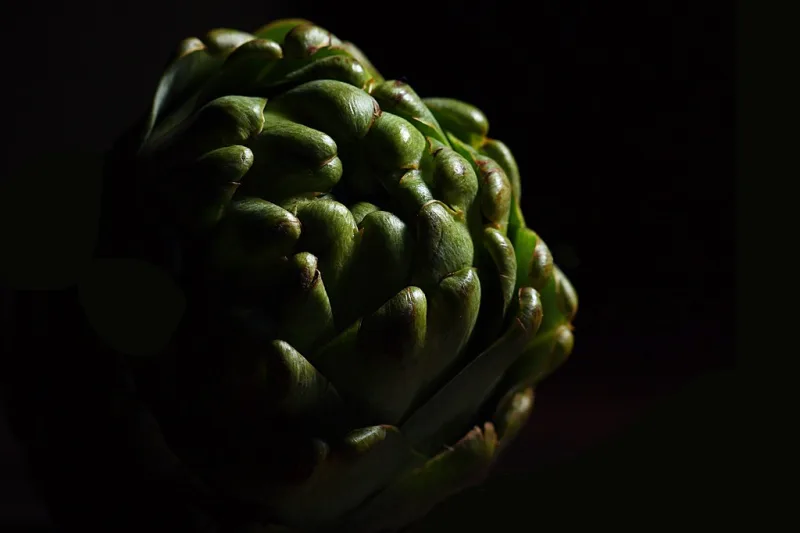

Artichoke Leaf: Benefits for the Liver and Bile, Uses and How to Prepare It
IMPORTANT: The artichoke (Cynara scolymus) is one of the most powerful choleretic and cholagogue plants — meaning it stimulates both the production and the flow of bile. For exactly this reason it is CONTRAINDICATED for people with bile duct obstruction, large gallstones, or an active gallbladder colic, because it can trigger painful contractions of the gallbladder. People allergic to plants in the Asteraceae family (chamomile, calendula, wormwood, ragweed) may develop reactions. Pregnant and breastfeeding women should avoid it unless their doctor advises otherwise. Artichoke does not replace treatment for serious liver conditions (hepatitis, cirrhosis) — in these cases it should be used ONLY as an adjuvant and only with the approval of a hepatologist. If you are taking medication for cholesterol, blood sugar, or anticoagulants, talk to your doctor before using artichoke regularly.
I still remember Aunt Veronica, a slender woman who lived at the edge of the village and who, all her life, had what she called a “lazy liver.” After every richer meal — a stew, a grilled sausage, cabbage rolls with sour cream — she would feel a heaviness on her right side and a bitterness in her mouth that nothing seemed to clear. The doctor in town had told her she had “biliary dyskinesia” and gave her some drops, but Aunt Veronica trusted her garden more than the pharmacy. So every spring, when the large, deeply lobed artichoke leaves unfurled like grayish-green fans, she would pick them, dry them in the shade in her attic, and brew the bitter tea she drank with a grimace, but with faith.
“It’s bitter, like life, my dear,” she would tell me when I made a face at the taste, “but this bitterness washes your liver better than any medicine.” And she was right, in a way I only came to understand much later, while reading about cynarin and the modern studies. Aunt Veronica knew no chemical formulas, but she knew, from her elders, that the bitterness of artichoke awakens a sleepy liver and a sluggish gallbladder. This article is, in a way, a continuation of her lesson.
The artichoke is an imposing plant, related to the thistle, native to the Mediterranean basin, where the Greeks and Romans ate it both as a delicacy vegetable and as a remedy for the stomach and liver. What we eat at the table — the fleshy head — is actually the unopened flower bud. But for medicinal purposes, the truly precious part is the large basal leaves, which contain the highest concentration of active compounds. The artichoke has been prized for centuries as “the liver plant” and remains today one of the most studied liver-supporting herbs.
Table of Contents
- What the artichoke is and where it grows
- Composition and active compounds
- Health benefits
- Traditional uses
- How to prepare it: tea, tincture, juice and extract
- Dosage and administration
- Artichoke in the kitchen
- Practical tips and common mistakes
- Conclusion
- Frequently Asked Questions
What the artichoke is and where it grows
The artichoke (Cynara scolymus) is a perennial herbaceous plant in the Asteraceae (Compositae) family, the same family as the sunflower, chamomile, and wormwood. It grows vigorously, sometimes reaching 1.5–2 meters in height, with large, deeply lobed leaves that are grayish-green on top and almost silvery and downy underneath. The flowers, when the plant is allowed to bloom, are a spectacular bluish-purple, similar to those of a thistle.
Native to the Mediterranean region and North Africa, the artichoke has been cultivated since antiquity. The Romans considered it a delicacy reserved for the wealthy, and in the Middle Ages it was believed to have aphrodisiac and blood-strengthening properties. It is grown in gardens and specialized crops, especially in regions with mild winters, since it does not tolerate harsh frost well. In southern plains it adapts more easily, while in cold mountain areas it needs winter protection.
For medicinal use, the leaves are harvested in the first year of growth, before flowering, when the content of active compounds is at its peak. They are dried quickly, in the shade, in a thin layer, protected from direct sun, which degrades their bitter compounds. A properly dried leaf keeps its grayish-green hue and its characteristic, intensely bitter taste.
Composition and active compounds
The power of the artichoke lies in a cocktail of bitter compounds and antioxidants that work in synergy. The best known is cynarin (1,5-dicaffeoylquinic acid), a polyphenolic compound responsible for much of the effect on the liver and bile. Alongside it we find:
- Caffeoylquinic acids (including chlorogenic acid) — powerful antioxidants that protect liver cells from oxidative stress.
- Flavonoids, especially luteolin and its derivatives (cynaroside, scolymoside) — with anti-inflammatory and antioxidant effects.
- Sesquiterpene lactones, particularly cynaropicrin, responsible for the intensely bitter taste and for stimulating digestive secretions.
- Inulin — a prebiotic fiber (mainly in the root and head) that feeds the beneficial bacteria in the gut.
- Phytosterols, mineral salts (potassium, magnesium, calcium) and B-complex vitamins.
Folk tradition long ago intuited that “the bitter heals”: the bitter compounds in artichoke act on the bitter taste receptors on the tongue and in the digestive tract, reflexively triggering a richer secretion of saliva, gastric juice, and, above all, bile. Modern studies suggest that this combination explains why artichoke helps both digestion and the liver.
Health benefits
Supporting and protecting the liver
This is the artichoke’s star benefit. Cynarin and the caffeoylquinic acids appear to support the regeneration of liver cells and to protect them against daily assaults — from heavy meals to alcohol and the effects of certain medications. Herbal tradition calls it “the liver’s broom,” and studies suggest that artichoke leaf extract may support liver function and has an antioxidant effect at the level of the liver. For those who feel that heaviness in the upper right side after copious meals, artichoke is often the first choice in phytotherapy.
Stimulating bile and easing digestion
The artichoke is choleretic (it increases bile production) and cholagogue (it promotes the release of bile from the gallbladder). Bile that flows well means easier digestion of fats, less bloating, less nausea after fatty foods, and more regular bowel transit. This is precisely why artichoke is traditionally used in biliary dyskinesia (that “laziness” of the gallbladder) and in difficult digestion. People who complain of fullness, belching, and discomfort after meals often notice an improvement.
Balancing cholesterol
One of the most promising directions of research concerns the artichoke’s effect on cholesterol. Studies suggest that artichoke leaf extract may contribute to a modest reduction in “bad” cholesterol (LDL) and total cholesterol, possibly by influencing how the liver processes fats and by promoting the elimination of cholesterol through the bile. It is not a substitute for medication, but it can be a valuable adjuvant within a healthy lifestyle.
Support for blood sugar and metabolism
The inulin in artichoke is a prebiotic fiber that can help slow the absorption of sugars and nourish beneficial gut flora. Tradition and some observations suggest a mild blood-sugar-balancing effect, which is why artichoke often appears in “metabolic” formulas. People with diabetes should nevertheless monitor their blood sugar carefully, since the effect may add to that of their medication.
Detoxifying and mild diuretic effect
By stimulating bile and liver function, the artichoke supports the body’s natural processes for eliminating waste. It also has a mild diuretic effect, helping the kidneys flush out excess water and toxins. In folk tradition, artichoke tea was recommended in spring as a “cleansing cure” after the winter months of heavy food and less movement.
Antioxidant and anti-inflammatory
Its wealth of polyphenols and flavonoids makes the artichoke a good ally against oxidative stress, which underlies premature aging and many chronic conditions. Luteolin has studied anti-inflammatory effects, contributing to the plant’s overall protective profile.
Traditional uses
In folk medicine, the artichoke was more of a “town” and garden plant than one gathered from the fields, since it does not grow wild in temperate climates. Even so, where it was cultivated, homemakers and herbalists used it skillfully:
- The bitter spring tea, drunk in the morning on an empty stomach, as a “remedy for the liver and gall.”
- The ten-to-fourteen-day detox cure, often combined with dandelion and chicory, for “cleansing the blood.”
- A remedy for yellowish skin and a tired complexion, which was said to “come from the liver.”
- A digestive adjuvant after holidays and large meals, when the stomach “no longer pulls its weight.”
The old folk said that artichoke “opens the appetite” in those who are weakened and soothes nausea in those who have eaten too richly — an intuition that fits perfectly with its action on the digestive secretions.
How to prepare it: tea, tincture, juice and extract
Artichoke leaf tea (infusion)
This is the most accessible form, but also the most bitter. Brace yourself for an intense taste — the bitterness itself is the “medicine.”
- Place one teaspoon of dried, crushed leaves (about 2 grams) in a cup.
- Pour over them 250 ml of boiling water.
- Cover the cup and let it steep for 10–15 minutes.
- Strain and drink the tea warm and unsweetened (sugar partly cancels the effect of the bitterness on digestion).
For a stronger effect on the bile, drink the tea 20–30 minutes before a meal. For liver protection, it can also be drunk after meals.
Decoction (for a more concentrated effect)
If you want a stronger extract, you can make a decoction: place two teaspoons of leaves in 300 ml of cold water, bring to a boil and let it simmer gently for 5 minutes, then cover and let it steep for another 10 minutes. The decoction is even more bitter, but also richer in active compounds.
Artichoke tincture
A tincture is practical and keeps for a long time. Here is a homemade recipe:
- Fill a clean jar halfway with dried, crushed artichoke leaves.
- Pour over them food-grade alcohol of 40–50 proof (for example, a good vodka) until the plant is fully covered, plus two fingers’ depth above it.
- Close the jar and let it macerate for 2–3 weeks in a dark, cool place, shaking it daily.
- Strain through cheesecloth, squeeze the plant well, and store the tincture in dark glass bottles.
Usual dosage: 20–30 drops, diluted in a little water, 2–3 times a day, before meals.
Juice from the fresh plant
Where you have access to fresh leaves, the pressed juice is very concentrated. Take it in small amounts (a teaspoon diluted in water), but the taste is very intense and not everyone tolerates it.
Standardized extract (capsules, tablets)
Commercially, you can find artichoke extracts standardized to cynarin or caffeoylquinic acids, in the form of capsules or tablets. These provide a consistent dose and bypass the bitter taste. Take them according to the instructions on the package or the advice of your doctor/pharmacist.
Dosage and administration
- Tea: 1–3 cups a day, in cures of 2–4 weeks, with breaks.
- Tincture: 20–30 drops, 2–3 times a day, before meals.
- Standardized extract: as recommended by the manufacturer (often 300–600 mg, 1–3 times a day).
The golden rule of phytotherapy applies here too: cures, not permanent consumption. A cure of 2–4 weeks, followed by a break of 1–2 weeks, is wiser than uninterrupted use for months on end. Start with small doses to see how your body reacts, especially if you have a sensitive gallbladder.
Artichoke in the kitchen
Beyond being a remedy, the artichoke is a refined and tasty vegetable. The young heads are boiled or roasted, and the fleshy bases of the bracts (the little leaves) and the “heart” in the middle are eaten, often with a dressing of olive oil, lemon, and garlic. This way, you get inulin, fiber, and some of the polyphenols straight from the plate.
A few simple ideas:
- Boiled artichoke with an olive oil, lemon, and parsley sauce — a Mediterranean classic.
- Roasted artichoke hearts, alongside vegetables and cheese.
- Added to salads or pasta, for an extra touch of flavor and fiber.
A note of caution, though: the powerful “medicinal” effect on the liver and bile comes primarily from the leaves, not from the head we eat. The vegetable nevertheless remains a healthy and delicious choice.
Practical tips and common mistakes
Mistake no. 1: Sweetening the tea with sugar or honey. The bitterness of artichoke is NOT a flaw, but the “engine” of the remedy. The bitter compounds reflexively stimulate digestive secretions. If you sweeten it, you cancel much of the effect. Learn to drink the tea as it is; over time, the taste becomes surprisingly pleasant.
Mistake no. 2: Using it when gallstones are present. Artichoke causes the gallbladder to contract. If you have gallstones, this contraction can push a stone toward the bile duct and trigger a painful colic or even a dangerous obstruction. Never use artichoke without your doctor’s approval if you have gallstones.
Mistake no. 3: Using it indefinitely. “More” does not mean “better.” Powerful bitter herbs are used in cures, with breaks. Permanent use can overburden the biliary system.
Mistake no. 4: Drying the leaves in the sun. Direct light degrades the bitter and antioxidant compounds. Always dry the leaves in the shade, in an airy place, in a thin layer.
Mistake no. 5: Unrealistic expectations in serious illness. The artichoke is a wonderful adjuvant, but it does not cure hepatitis, cirrhosis, or severe high cholesterol on its own. Use it as support, not as a replacement for medical treatment.
Mistake no. 6: Ignoring allergies. If you are allergic to chamomile, calendula, wormwood, or ragweed, you have an increased risk of reacting to artichoke as well, since it belongs to the same botanical family.
A lifestyle that supports the liver
The artichoke works best when you integrate it into a liver-friendly lifestyle:
- Stay well hydrated — water helps eliminate the waste the liver processes.
- Reduce alcohol and fried foods — these are the main “enemies” of liver cells.
- Eat bitter and green — alongside artichoke, dandelion, chicory, arugula, and black radish support the liver and bile.
- Move every day — light physical activity stimulates fat metabolism.
- Smaller, more frequent meals — ease the work of the gallbladder.
Aunt Veronica, whom I told you about at the beginning, did not take only the tea: she ate moderately, worked in her garden all day, and drank spring water. The artichoke was just one piece of a larger whole.
Conclusion
The artichoke is, rightly, “the liver plant.” Through its cynarin, caffeoylquinic acids, and characteristic bitterness, it stimulates bile, eases the digestion of fats, supports the liver, and may help balance cholesterol. It is a plant that elegantly blends herbal tradition — that “the bitter heals” which our grandmothers knew — with modern research that confirms its potential. Used wisely, in cures and with respect for its contraindications (especially regarding gallstones), the artichoke can be a trustworthy ally for easy digestion and a healthy liver. As always in phytotherapy, wisdom lies in moderation, in patience, and in consulting a doctor when needed.
Frequently Asked Questions
How long can I drink artichoke tea without a break? The general recommendation is a cure of 2–4 weeks, followed by a break of 1–2 weeks. Permanent use, for months on end, is not advisable, as it can overburden the biliary system. Powerful bitter herbs are used cyclically, not continuously.
Does artichoke help with weight loss? Not directly. It does not “burn” fat. However, by supporting digestion, the liver, and fat metabolism, plus providing fiber (inulin) that promotes satiety, it can be a support within a weight-loss plan based on balanced eating and exercise.
Can I take artichoke if I have gallstones? Not without your doctor’s approval. Artichoke contracts the gallbladder and can move a stone, triggering a painful colic or an obstruction. In the presence of gallstones, it is an important contraindication.
Why must I drink the tea bitter and unsweetened? Because the bitterness is the very active mechanism. The bitter taste receptors reflexively trigger the secretion of bile and digestive juices. If you sweeten it, you significantly reduce this beneficial effect on digestion.
The leaves or the head — which part has the medicinal effect? The large basal leaves contain the highest concentration of cynarin and bitter compounds, so they are the medicinal part. The head we eat is healthy and tasty, but has a gentler effect.
Can I give artichoke tea to children? It is not recommended for children without a doctor’s approval. Powerful bitter herbs and their effect on the bile are not suitable for the bodies of young children. For children, use only on the recommendation of a pediatrician.
Does artichoke interact with medications? Yes, it can. If you take medication for cholesterol, blood sugar, or anticoagulants, the effects may overlap. Also, by stimulating bile it can influence the absorption of some medications. Always talk to your doctor or pharmacist if you are undergoing treatment.
How do I recognize good-quality dried artichoke? Properly dried leaves keep their grayish-green hue (not brown), have an intensely bitter taste, and a faintly herbaceous smell. Faded, brownish leaves without a bitter taste have lost much of their active compounds.