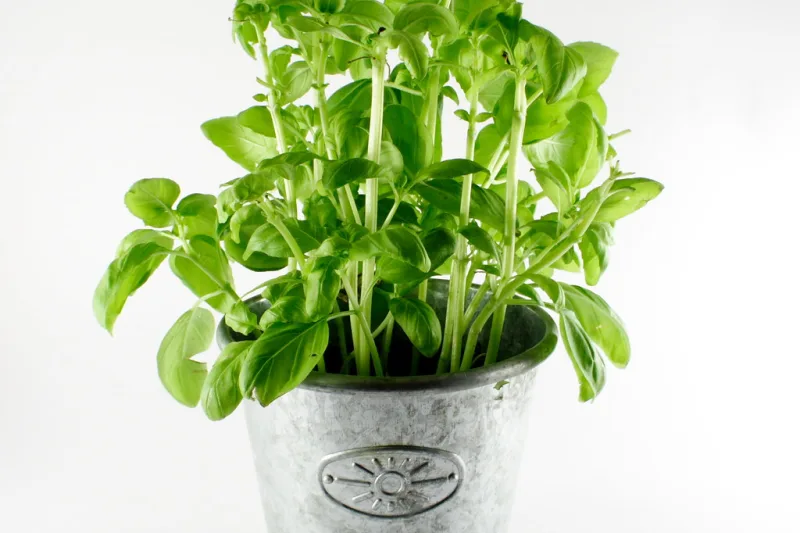

Basil: Benefits, Uses and How to Prepare It Correctly
IMPORTANT: Basil is generally safe when used as a food or seasoning. However, basil essential oil and concentrated extracts must be used with great caution. Pregnant women should avoid large medicinal amounts, as folk tradition attributes uterine-stimulating effects to basil. People taking anticoagulant medications (such as warfarin) should be careful, since basil may influence blood clotting. Essential oil should never be applied undiluted to the skin or taken internally without the advice of a specialist. Consult your doctor if you are undergoing chronic treatment or if symptoms persist.
I still remember Aunt Floarea, my grandmother’s neighbor in the village up the hill, who kept an entire bed of basil in front of her house — so fragrant that the scent would intoxicate you as you passed the gate. She always said that basil “keeps the house clean and the soul serene.” Whenever someone in the family had an upset stomach after a heavy meal, or felt anxious and couldn’t sleep, Aunt Floarea would pick a few leaves, drop them into a cup of boiled water, and let the aromatic steam fill the kitchen. “Sip it slowly and you’ll see how everything settles down,” she would say — and most of the time, that’s exactly what happened.
Beyond its culinary and household role, basil has always been a plant rich in meaning. It was a constant presence at church services and at the blessing of water, but also in the natural pharmacy of the elders, who used it for digestion, for soothing the nerves, and for strengthening the body. And beyond its symbolism, basil truly possesses a range of properties that explain why it has been so cherished across the centuries.
Basil (Ocimum basilicum) is an aromatic plant from the Lamiaceae family, the same family as mint, sage and thyme. Native to the warm regions of Asia and Africa, basil has been cultivated for thousands of years both for its aroma and for its medicinal properties. Today we find it in almost every garden and on every kitchen windowsill, yet few people realize how much value is hidden in its velvety, fragrant leaves.
Table of Contents
- What basil is and where it grows
- Composition and active principles
- Health benefits
- Traditional uses of basil
- How to prepare basil (step-by-step recipes)
- Dosage and method of administration
- Basil in the kitchen and everyday life
- Practical tips and common mistakes
- Conclusion
- Frequently Asked Questions
What basil is and where it grows
Basil is an annual herbaceous plant that usually reaches between 30 and 60 centimeters in height. It has square stems, characteristic of the Lamiaceae family, oval, glossy leaves of an intense green, and small white or slightly lilac flowers arranged in spikes. The leaves give off that unmistakable sweet-peppery, slightly minty fragrance that varies depending on the variety.
There are numerous varieties of basil, each with its own particularities. Genovese basil, with its large leaves, is the star of Italian cuisine. Small-leaved basil, typical of gardens, has a concentrated aroma and is preferred for teas and bouquets. Holy basil, or tulsi (Ocimum tenuiflorum), is a related species highly valued in Ayurvedic medicine for its adaptogenic properties. There are also varieties with hints of lemon, cinnamon or anise that enrich the culinary palette.
The plant loves heat and light. It grows beautifully in full sun, in rich, loose, well-drained soil, and cannot tolerate cold — the first autumn frost wilts it immediately. For this reason, basil is planted in late spring, after the danger of frost has passed, and harvested throughout the summer. Harvesting the leaves before flowering preserves the most intense aroma and the greatest amount of volatile oils.
Composition and active principles
Basil’s value comes from a remarkable combination of active compounds. The most important is the essential oil, present in the leaves and flowers, which contains substances such as linalool, eugenol, estragole (methylchavicol), cineole and citral. These components are responsible both for the plant’s aroma and for many of its beneficial effects.
In addition to volatile oils, basil is rich in antioxidants of the polyphenol and flavonoid type, as well as in phenolic acids. The leaves also contain vitamins — especially vitamin K, vitamin A in the form of beta-carotene, and vitamin C — along with minerals such as magnesium, potassium, calcium and iron. Here too we find mild tannins, mucilage and a notable amount of chlorophyll.
This composition explains why basil is considered in folk tradition a “tonic” plant, capable of supporting digestion, calming the nervous system and bolstering the body’s natural defenses. Studies suggest that basil’s essential oils have antimicrobial and antioxidant properties, which confirms, at least in part, the wisdom of the elders who used it for a multitude of purposes.
Health benefits
Supports digestion and soothes the stomach
The best-known benefit of basil, passed down from generation to generation, is its effect on digestion. The volatile oils in the leaves have a mildly carminative action, meaning they help reduce bloating and that heavy feeling after rich meals. A warm cup of basil tea, taken after eating, can ease mild cramps, stimulate the appetite and reduce digestive discomfort. Folk tradition also recommended basil for mild nausea, especially the kind that arises on a nervous background.
A calming effect on the nervous system
Linalool, one of basil’s main compounds, is known for its relaxing properties. The aroma of basil has a soothing effect, and a cup of tea in the evening can help you unwind after a busy day. The elders said that basil “chased away dark thoughts” and brought peace to the home. Studies suggest that plants rich in linalool may help reduce nervous tension and improve sleep quality, which makes basil a gentle ally against mild restlessness.
Supports immunity
Thanks to its content of antioxidants and antimicrobial compounds, basil has long been used to strengthen the body during the cold season. Vitamin C and flavonoids help neutralize free radicals, while the essential oils can create a less hospitable environment for certain bacteria. In folk tradition, basil was part of the winter teas meant to prevent colds and ease breathing.
Antioxidant and anti-inflammatory properties
The polyphenols and eugenol in basil have recognized antioxidant properties. These compounds help protect cells against oxidative stress, a process associated with aging and with numerous imbalances in the body. Tradition used poultices of basil leaves to soothe mild skin irritations and to encourage comfort in inflamed areas.
Supports oral health
Basil’s powerful aroma and antimicrobial properties make it useful for mouth hygiene. A gargle with basil infusion can freshen the breath and soothe sensitive gums. Many traditional remedies used chewed leaves to combat unpleasant breath.
Helps with breathing
The cineole present in the essential oil has a mild expectorant and decongestant effect. Basil inhalations or warm tea were used to ease breathing during colds and to calm an irritating cough, especially when accompanied by a dry-throat sensation.
Traditional uses of basil
In the household, basil had a multitude of uses. It was placed in dried bouquets around the home to perfume the rooms and ward off insects, it was used in the blessing of water and in various customs tied to the holidays. On the medicinal side, the dried leaves and flowers were part of tea blends for digestion, nerves and colds.
Women used basil water to rinse their hair, believing it gave shine and a pleasant scent. Poultices of fresh crushed leaves were applied to insect bites or irritated skin. In some regions, basil was also added to the bath for its relaxing and aromatic effect.
How to prepare basil (step-by-step recipes)
Basil tea (infusion)
Basil tea is the simplest and most widespread way to enjoy the plant’s properties.
- Place one teaspoon of dried basil leaves (or one tablespoon of chopped fresh leaves) in a cup.
- Pour 200-250 ml of hot but not boiling water over them (around 90°C), to preserve the volatile oils.
- Cover the cup with a saucer so the aromas are not lost with the steam.
- Let it steep for 7-10 minutes.
- Strain and drink the tea warm, optionally sweetened with a little honey once it has cooled slightly.
This tea can be drunk after main meals, to support digestion, or in the evening, for its calming effect.
Basil tincture
The tincture is a concentrated form that is easy to store and dose.
- Fill a clean jar halfway with finely chopped fresh basil leaves.
- Pour 40-50% food-grade alcohol over them until the plant is completely covered.
- Close the jar and keep it in the dark, shaking it daily, for 2-3 weeks.
- Strain through cheesecloth and store the tincture in dark glass bottles.
The tincture is generally taken in small amounts, a few drops diluted in water, and only after consulting a specialist, especially if you are taking other medications.
Basil leaf poultice
- Wash a few fresh basil leaves thoroughly.
- Crush them in a mortar until you obtain a green, fragrant paste.
- Apply the paste to the irritated area or the insect bite.
- Cover with clean gauze and let it act for 15-20 minutes.
- Rinse with lukewarm water.
Aromatic water and inhalations
For inhalations, place a handful of basil leaves in a bowl of hot water, bring your face to a safe distance, cover your head with a towel, and breathe in the steam for a few minutes. This method helps decongest the airways. For a refreshing aromatic water, leave a few leaves in cold water in the refrigerator for a few hours.
Dosage and method of administration
As a general rule, basil consumed as a food or seasoning requires no special restrictions. For mild medicinal use, one to two cups of tea per day are sufficient for most adults. A basil tea regimen is usually done in short periods of one or two weeks, followed by a break.
The tincture and the essential oil are concentrated forms and must be dosed with great care. The essential oil should never be swallowed without professional supervision and must always be diluted in a carrier oil (for example, almond or coconut oil) before being applied to the skin. Always start with small amounts to observe how your body reacts.
Basil in the kitchen and everyday life
Beyond its medicinal use, basil is a culinary treasure. Fresh leaves are added to salads, tomato sauces, pasta, pizza and soups, giving dishes a vibrant, appetizing aroma. The most famous basil-based preparation is pesto, the Italian sauce made from fresh leaves, olive oil, pine nuts, garlic and Parmesan.
An important tip: basil loses its aroma during prolonged cooking, so it is always added at the end. Fresh leaves have the richest aroma, but dried ones are also valuable, especially in tea and seasoning blends.
For a balanced lifestyle, basil fits beautifully into a diet based on fresh vegetables, aromatic herbs and proper hydration. A glass of water with a few basil leaves and a slice of lemon can be a pleasant alternative to sugary drinks. At the same time, growing basil on the kitchen windowsill brings not only fresh leaves within easy reach but also a pleasant fragrance and a small moment of relaxation in caring for the plant.
Practical Tips and Common Mistakes
Mistake no. 1: Boiling the basil. Many people boil basil leaves, thereby destroying the delicate volatile oils. The correct approach is to pour hot but not boiling water over the leaves and cover the container, preserving the aromas.
Mistake no. 2: Harvesting after flowering. Leaves harvested after the plant has flowered have a weaker and sometimes slightly bitter aroma. Harvest the young leaves, before the flowers appear, for the best quality.
Mistake no. 3: Using undiluted essential oil. Basil essential oil is very concentrated and can irritate the skin. It should never be applied directly or swallowed without the advice of a specialist.
Mistake no. 4: Storing fresh leaves incorrectly. Fresh basil leaves wilt quickly in the refrigerator. They are best kept with their stems in a glass of water at room temperature, like a bouquet of flowers.
Mistake no. 5: Excessive consumption during pregnancy. Although basil as a food is safe, large medicinal amounts should be avoided during pregnancy as a precaution. Always talk to your doctor.
Mistake no. 6: Ignoring the quality of the plant. Dried basil that has lost its color and aroma no longer has the same value. Use deep green, fragrant leaves for optimal results.
Conclusion
Basil is one of the most precious and beloved aromatic plants, a gift of nature that combines beauty, aroma and health benefits. From the fragrant bed in front of Aunt Floarea’s house to the modern kitchen windowsill of today, basil has accompanied households with its perfume and beneficial properties. It supports digestion, calms the nerves, bolsters immunity and freshens the breath, while also being an irreplaceable seasoning in the culinary arts. Used in moderation and with respect for its properties, basil remains a gentle remedy and a delicious companion in everyday life.
Frequently Asked Questions
Can I drink basil tea every day? For most healthy adults, one to two cups of basil tea per day, over short periods, are safe. Breaks between regimens are recommended, along with consulting your doctor if you are undergoing chronic treatment.
Does basil help with digestion? Yes, folk tradition and its carminative properties recommend basil for reducing bloating and digestive discomfort. A warm cup of tea after a meal can soothe an overloaded stomach.
What is the difference between common basil and holy basil (tulsi)? Common basil (Ocimum basilicum) is used mainly for cooking and digestion, while holy basil, or tulsi (Ocimum tenuiflorum), is a related species valued in Ayurvedic medicine for its adaptogenic properties and for supporting balance in the face of stress.
Can I use basil if I am pregnant? Basil consumed as a food, in the usual amounts found in cooking, is generally considered safe. Large medicinal amounts, tinctures and essential oil should, however, be avoided during pregnancy as a precaution. Always consult your doctor.
How do I keep fresh basil for longer? Fresh leaves are best kept with their stems in a glass of water at room temperature. For long-term storage, the leaves can be dried in the shade or frozen in ice cubes with a little olive oil.
Does basil have calming effects? Yes, thanks to its linalool content, basil has a mildly relaxing effect. A warm cup of tea in the evening can help you unwind after a tiring day and improve sleep quality.
Can I use dried basil instead of fresh? Yes, dried basil is valuable especially for teas and seasoning blends. The aroma is more concentrated but less fresh than that of the green leaves. Use about one third of the amount when replacing fresh basil with dried in recipes.
Can basil essential oil be applied to the skin? Only when diluted in a carrier oil and after a patch test on a small area of skin. Undiluted essential oil can cause irritation. People with sensitive skin and pregnant women should be especially cautious and seek the advice of a specialist.