
Calendula: Benefits, Uses and How to Prepare It
IMPORTANT: Calendula is generally considered a gentle and safe plant for external use, but people allergic to plants in the Asteraceae family (daisies, chamomile, ragweed, chrysanthemums) may develop skin reactions. Taken internally, calendula is not recommended during pregnancy and breastfeeding, as folk tradition attributes to it effects that may stimulate the uterus. If you are taking sedatives, blood pressure medication or anticoagulants, talk to your doctor before drinking calendula tea or tincture. Never apply calendula to deep, infected wounds or wounds requiring medical care without a specialist’s advice. This article is for informational purposes only and does not replace medical advice.
Aunt Veronica, a woman I remember from the summers spent at my grandparents’, kept an entire bed of bright orange calendula in front of her house, dense as a glowing carpet. Every July she would pick the flowers in the morning, once the dew had dried, and lay them out to dry on old newspapers in the attic. Rubbing her work-worn hands together, she always used to say: “This little flower knows how to close a wound better than many medicines.” Whenever a child in the village scraped a knee or burned a finger on the stove, Aunt Veronica would bring out the jar of yellow-orange salve and dab the spot with a grandmother’s tenderness. By the next day, the pain had eased and the skin was beginning to heal.
Many years later I understood that Aunt Veronica was not working magic — she was simply using a plant that humankind has treasured for centuries. Calendula, also known as pot marigold, has accompanied European households since the Middle Ages, ever-present in monastery gardens and in the home remedy chest of any family that respected its traditions. Today, as we rediscover the value of natural remedies, calendula is returning to the spotlight as one of the most versatile and safe healing plants.
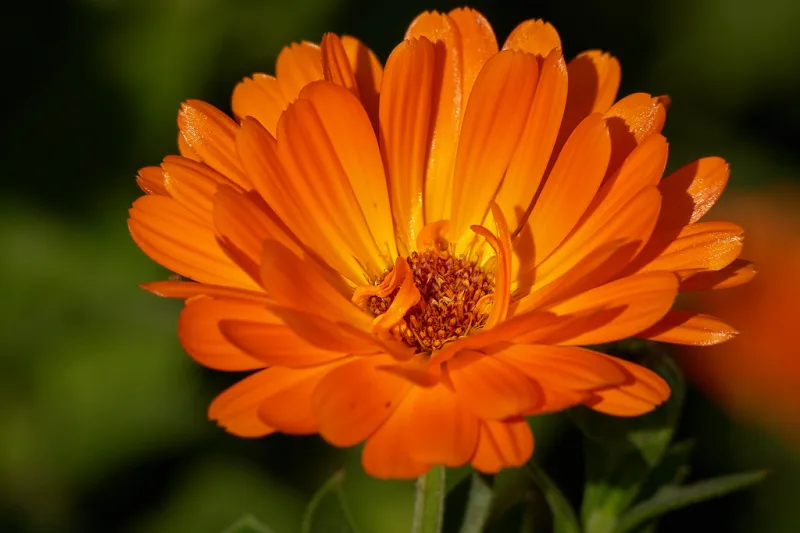
Calendula (Calendula officinalis) is an annual plant of the Asteraceae family, instantly recognizable by its orange or bright yellow flowers, which seem to gather all the warmth of the summer sun in their petals. The name “calendula” comes from the Latin “calendae,” referring to the fact that the plant blooms in nearly every month of the year in mild climates. Its presence in gardens is not merely ornamental but deeply practical.
Table of Contents
- What calendula is and where it grows
- Composition and active compounds
- Health benefits
- Traditional uses in folk medicine
- How to prepare calendula: step-by-step recipes
- Dosage and how to use it
- Calendula in your care routine
- Practical tips and common mistakes
- Conclusion
- Frequently Asked Questions
What calendula is and where it grows
Calendula officinalis originates from the Mediterranean region and southern Europe but has adapted remarkably well to temperate climates. It grows undemanding in almost any garden, even reseeding itself from year to year, sprouting in spring from the seeds that fell the previous autumn. It reaches a height of 30–60 centimeters, has branching stems, elongated, slightly sticky leaves, and flower heads 4–7 centimeters wide.
What we popularly call the “flower” is in fact an inflorescence made up of many small florets arranged around a central disc. The color ranges from lemon yellow to deep, almost coppery orange. The petals are the most medicinally valuable part, although sometimes the entire flower head is used.
Calendula prefers direct sunlight and well-drained soil but tolerates more modest conditions too. It blooms from May–June until late autumn, sometimes until the first frosts, which makes it one of the most generous plants to harvest. The more often you pick the flowers, the more the plant produces — a gift that renews itself.
For medicinal use, the fully open flowers are harvested on sunny days, once the dew has evaporated. The ideal moment is around midday, when the content of active compounds is highest. The flowers are dried in the shade, in an airy place, spread out in a thin layer, and then stored in glass jars or paper bags, protected from light and moisture.
Composition and active compounds
The vivid color of calendula is no accident — it betrays the wealth of beneficial compounds the flowers contain. Studies suggest that this modest plant hides an entire pharmacy:
- Carotenoids and flavonoids — the pigments that give the orange color (such as beta-carotene, lutein and lycopene) also have antioxidant properties, helping to protect cells.
- Triterpenes and saponins — considered responsible for the anti-inflammatory and wound-healing effects.
- Volatile oils — which give the slightly balsamic aroma and contribute to the antiseptic action.
- Mucilage — substances that coat and soothe irritated tissues, both on the skin and in the digestive mucosa.
- Polysaccharides — associated in herbal tradition with supporting the body’s natural defenses.
- Phenolic acids — compounds with an antioxidant role.
This combination explains why calendula is prized above all for the skin: it seems to act simultaneously as an anti-inflammatory, a soothing agent and a stimulant of tissue regeneration.
Health benefits
Support for skin healing
Calendula’s best-known use is skin care. Folk tradition and some modern research suggest that calendula extracts may help calm irritation, support the natural healing of superficial scratches and maintain skin elasticity. Calendula salves and oils have been used for generations on dry, cracked or irritated skin.
Soothing minor inflammation
Thanks to the triterpenes, calendula is associated with gentle anti-inflammatory effects. Compresses made with calendula infusion are a traditional remedy for reddened patches of skin, for irritation caused by cold or wind, and for the mild discomfort of sensitive skin.
Support for the mouth and throat
Gargling with a calendula infusion is an old remedy for a sore throat and sensitive gums. The mucilage and the gentle antiseptic effect make this plant a pleasant ally when the mouth’s mucous membranes need relief.
Digestive support
Taken internally, calendula tea is used in folk medicine to soothe digestive discomfort and the feeling of an irritated stomach. Tradition attributes to it a mild choleretic effect — that is, stimulating the flow of bile — which is why some old recipes combine calendula with artichoke or milk thistle.
Care for blemish-prone skin
Floral water and calendula-based toners are appreciated by those with oily or blemish-prone skin. The soothing, slightly astringent effect helps maintain balanced skin without drying it out excessively.
Comfort in baby care
Many traditional creams for delicate baby skin contain calendula, precisely because of its gentleness. Tradition recommends it for areas irritated by diapers, but always with caution and ideally after consulting a pediatrician.
Traditional uses in folk medicine
In rural households, calendula was always the “first aid kit” of the garden. Grandmothers prepared calendula salve in autumn so they would have supplies for winter, when skin cracks from the cold and household labor. Calendula oil was used to massage dry skin and to soothe rough elbows and heels.
Compresses with the infusion were applied to tired or irritated eyes (with great care and hygiene), and gargling with calendula tea accompanied every autumn cold. Women used calendula water as a facial tonic, and dried petals were added to soups and dishes, both for color and as a cheap substitute for saffron — hence the nickname “poor man’s saffron.”
In some regions, calendula was also a plant of the soul: it was said that a flower placed under the pillow brought clear dreams, and bouquets of calendula were a good omen in the home.
How to prepare calendula: step-by-step recipes
Calendula tea (infusion)
Tea is the simplest way to use the plant internally, or for gargling and compresses.
- Place 1–2 teaspoons of dried flowers (or a handful of fresh flowers) in a cup.
- Pour over 250 ml of hot but not boiling water (around 90 °C).
- Cover the cup and let it steep for 10–15 minutes, so the volatile oils are not lost.
- Strain and drink it warm, or use the cooled liquid for gargling or compresses.
Calendula salve
This is the star preparation, the one that healed so many scraped knees in our villages.
- Fill a clean jar with fresh (slightly wilted) or dried calendula flowers.
- Pour over vegetable oil (sunflower, olive or almond) until it completely covers the flowers.
- Let the jar macerate for 3–4 weeks in the sun or in a warm place, shaking it daily. (For a quick version, warm the flowers with the oil in a water bath over very low heat for 2–3 hours.)
- Strain the oil through cheesecloth, squeezing the flowers well.
- For 100 ml of oil, add about 10–15 g of beeswax and heat gently until it melts.
- Pour the warm mixture into clean tins and let it set.
The resulting salve keeps for several months in a cool place and is used on dry, cracked or irritated skin.
Calendula oil
The macerated oil (steps 1–4 above, without the wax) is excellent on its own, for massage or as a base for homemade cosmetics.
Calendula tincture
- Fill a jar with dried calendula flowers.
- Pour over food-grade alcohol of 40–70 proof until it covers the flowers.
- Let it macerate for 2–3 weeks, shaking daily.
- Strain and store in dark glass bottles.
The tincture, diluted in water, is used for gargling or for dabbing the skin.
Dosage and how to use it
For internal use, tradition recommends 1–3 cups of tea per day, in courses of no more than 2–3 weeks, followed by a break. The tincture is usually taken diluted, a few drops in a little water, 2–3 times a day.
For external use, the salve and oil can be applied several times a day to the affected areas. Compresses with the infusion are kept on for 10–15 minutes, repeated as needed.
As with any natural remedy, more does not mean better. Calendula is gentle, but respecting the doses and the breaks between courses is the key to using it wisely.
Calendula in your care routine
Beyond the classic remedies, calendula fits beautifully into a modern natural care routine. Calendula floral water can be used as a tonic in the morning, after cleansing the face. Calendula oil is applied in the evening as a nourishing treatment for dry or mature skin. A few dried flowers added to a warm bath turn a moment of relaxation into a soothing ritual for the skin.
For those who make their own cosmetics, calendula is a wonderful base: it combines perfectly with coconut oil, shea butter or chamomile, for creams and balms easy to make at home. And for the gardener, calendula brings an extra benefit: planted among vegetables, it helps repel certain pests, making it a companion plant in the organic garden.
Practical Tips and Common Mistakes
Mistake no. 1: Picking the flowers on damp days or early in the morning. Flowers picked with dew on them dry slowly and may go moldy. Wait for a sunny day and pick after the dew has dried.
Mistake no. 2: Drying in direct sunlight. Strong sun destroys the pigments and volatile oils. Dry the flowers in the shade, in an airy place.
Mistake no. 3: Macerating the oil with wet flowers. Any trace of water in the oil leads to rancidity and mold. Let fresh flowers wilt slightly before macerating, or use completely dried flowers.
Mistake no. 4: Applying it to deep or infected wounds. Calendula is for superficial irritation and scratches, not for serious wounds. Those require medical care.
Mistake no. 5: Ignoring possible allergies. If you are sensitive to plants in the daisy family, test the salve first on a small patch of skin.
Mistake no. 6: Internal use during pregnancy. Taken internally, calendula is avoided during pregnancy. For external use, consult your doctor first.
Mistake no. 7: Storing it in unsuitable containers. Dried flowers quickly lose their qualities if kept in light or moisture. Glass jars, protected from the sun, are ideal.
Conclusion
Calendula is perhaps the most accessible and gentlest healing plant you can keep on hand. It grows undemanding in any garden, blooms generously all summer long and offers its bright petals for a whole palette of remedies — from the salve that soothes cracked skin to the tea that calms an irritated throat. Aunt Veronica and countless grandmothers in our villages were right: this little flower truly knows how to care. Used with respect, in moderation and with due attention to possible sensitivities, calendula fully deserves its place in every home’s remedy chest.
Frequently Asked Questions
What is the difference between calendula and Tagetes marigolds? They are different plants, although both are popularly called “marigold.” Medicinal calendula is Calendula officinalis, with edible petals and healing properties. Tagetes (French/African marigolds) have a much stronger smell and are used mainly ornamentally and for protecting the garden from pests.
Can I use fresh calendula or only dried? Both versions are good. Fresh flowers are excellent for tea and for oil (let them wilt a little first), while dried ones keep through the winter and are safer for oil macerations.
How long does calendula salve keep? A salve prepared correctly, with oil and beeswax, generally keeps for several months in a cool, dark place. If you notice a rancid smell or color changes, stop using it.
Can calendula petals be eaten? Yes, the petals are edible and can be added to salads, soups and rice, both for color and for a slightly bitter flavor. That is why they are called “poor man’s saffron.”
Is calendula tea safe for children? For external use (compresses, gargling), calendula is generally gentle. For internal use in children, it is recommended that you consult a pediatrician before offering the tea.
Does calendula help oily skin? Tradition values it for its soothing and slightly astringent effect, which may help blemish-prone skin. Calendula floral water is often used as a tonic for this skin type.
When is the best time to harvest calendula? On sunny days, around midday, after the dew has evaporated, when the flowers are fully open. Frequent harvesting encourages the plant to produce even more flowers.
Can I combine calendula with other plants? Yes. Calendula combines beautifully with chamomile for a soothing effect, with artichoke for digestive support, or with lavender in homemade cosmetics. Each combination has its purpose depending on your goal.