
Chamomile: Benefits, Uses and How to Prepare It
IMPORTANT: Although chamomile is one of the gentlest and safest medicinal plants, it is not without precautions. People allergic to plants in the Asteraceae family (daisies, ragweed, marigolds, chrysanthemums) may develop allergic reactions, sometimes serious. Chamomile can potentiate the effect of anticoagulant medications and sedatives, which is why it should not be combined with them without medical advice. During pregnancy it should be used with caution and only with a doctor’s approval, since large amounts could stimulate the uterus. Chamomile is not a substitute for medical treatment: if you have persistent symptoms, high fever, severe abdominal pain or any other worrying sign, consult a doctor.
Grandmother Maria, from the village at the foot of the hill, kept an old glass jar full of little dried flowers on her kitchen windowsill — golden in the middle and white at the edges. It smelled of late summer and freshly mown hay. Whenever a grandchild came in with a tummy ache from too many green plums, or cried in the night with colic, Grandma would put the kettle on, take a handful of flowers from the jar, and prepare what she called “the calming tea.” Within a few minutes, the house filled with a warm, sweet-bitter fragrance, and the child usually fell asleep before the tea had even cooled.
Chamomile (Matricaria chamomilla, also known as Matricaria recutita) is, without a doubt, one of the most beloved and widely used medicinal plants in the entire world, and in folk medicine it holds a special place. The name “chamomile” derives from the Greek words for “earth apple,” a nod to the apple-like scent of its flowers, while its Latin genus name “Matricaria” comes from “matrix” (womb), an allusion to its traditional use in women’s ailments. It is a modest-looking plant, but generous with its blessings: it soothes, calms, heals and relieves, without burdening the body. This very gentleness has made it the first remedy we learn to use from childhood.
Table of Contents
- What chamomile is and where it grows
- Composition and active principles
- Health benefits
- Traditional uses in folk medicine
- How to prepare chamomile (step-by-step recipes)
- Dosage and method of administration
- Chamomile in skin and hair care
- Practical tips and common mistakes
- Conclusion
- Frequently Asked Questions
What chamomile is and where it grows
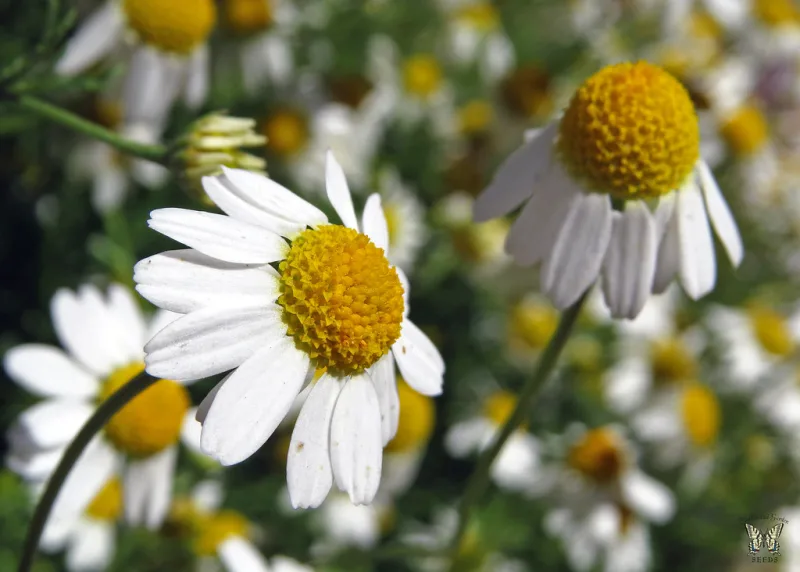
Chamomile is an annual herbaceous plant from the Asteraceae (Compositae) family, the same family as marigolds, yarrow and daisies. It grows wild on uncultivated land, along roadsides, on stubble fields, among cereal crops and in sunny places, being a true “weed” in the eyes of farmers but a treasure for those who know its value. It reaches a height of 20–50 centimeters, has a branched stem and finely divided, almost thread-like leaves that give it a feathery appearance.
What we all recognize are the flowers: small flower heads with white petals (ray florets) folded outward and a domed central disc of a golden-yellow color. This conical, hollow receptacle is the distinctive feature that distinguishes true chamomile from similar-looking plants. If you cut the flower vertically in half and see that the center is hollow, like a tiny tent, then you are dealing with authentic medicinal chamomile.
It blooms from May until late summer, and the best time for harvesting is in full flower, in the morning after the dew has lifted, on a dry and sunny day. At that moment the concentration of volatile oils is at its peak. The flowers are gathered carefully, spread in a thin layer in the shade, in an airy place, and dried away from direct sunlight, which would destroy the active principles. Well-dried chamomile retains its color and aroma and can be used for about a year.
In addition to common chamomile, there is also Roman chamomile (Chamaemelum nobile), a perennial species that is more bitter, used mainly in perfumery and in some digestive preparations. For home use, the most widespread and appreciated remains common chamomile.
Composition and active principles
The effectiveness of chamomile is not mere folk belief but is based on a remarkable chemical composition. The flowers contain a rich essential oil and a series of active compounds that work together, complementing one another.
The main protagonist is the volatile oil, with a characteristic blue color given by chamazulene — a compound that forms during distillation and that has recognized anti-inflammatory properties. The essential oil also contains alpha-bisabolol and its derivatives, considered responsible for much of the plant’s calming, anti-inflammatory and wound-healing effects.
Besides the volatile oil, chamomile contains flavonoids such as apigenin, luteolin and quercetin. Apigenin in particular is intensely studied for its ability to bind to certain receptors in the brain, which would explain the plant’s mild sedative and anxiolytic effect. We also find coumarins, mucilages (substances with an emollient and protective role), phenolic acids and small amounts of tannins with an astringent role.
This combination of substances makes chamomile a plant with complex action: simultaneously calming, anti-inflammatory, antispasmodic, mildly antibacterial and wound-healing. Studies suggest that the overall effect is stronger than the sum of the individual components, which explains why whole extracts (the tea, the tincture) often work better than isolated compounds.
Health benefits
Calming the nervous system and improving sleep
The best-known quality of chamomile is its calming effect. For centuries, people have drunk a cup of warm chamomile tea in the evening, before bed, to quiet their thoughts and fall asleep more easily. Folk tradition has used it against agitation, nervousness and mild insomnia, and modern studies suggest that the flavonoid apigenin may explain this effect through its action on receptors involved in relaxation. Chamomile does not “knock you out” like a sleeping pill; it relaxes gently, preparing the body for rest.
Support for digestion
Chamomile is a trusted friend of the stomach. Thanks to its antispasmodic action, it helps relax the smooth muscles of the digestive tract, soothing cramps, bloating and the feeling of heaviness after heavy meals. Tradition recommends it for indigestion, gastritis, colic, abdominal pain and mild nausea. In infants and small children, weak chamomile tea has always been the remedy for painful colic, although for the little ones it should be given only with caution and, ideally, after consulting a pediatrician.
Anti-inflammatory action
Thanks to chamazulene and bisabolol, chamomile has a valued anti-inflammatory action both internally and externally. Traditionally, it is used to soothe inflammation of the mucous membranes — sore throat, inflamed gums, tired eyes — but also for irritated, reddened or slightly injured skin.
Support for immunity and colds
In the cold season, chamomile tea is a classic remedy. Steam inhalations with chamomile help decongest the airways, and gargling with a lukewarm infusion soothes an irritated throat. Studies suggest that plants rich in phenolic compounds, such as chamomile, may support the body’s natural defense mechanisms.
Female balance
In folk medicine, chamomile has been used to ease menstrual pain, thanks to its antispasmodic effect on the uterine muscles. A cup of warm tea, drunk on uncomfortable days, was a habit passed from mother to daughter.
Skin and mucous membrane care
Applied externally, in the form of compresses, baths or rinses, chamomile soothes irritation, speeds the healing of small wounds and softens sensitive skin. It is gentle even on babies’ skin.
Traditional uses in folk medicine
In the peasant household, chamomile was indispensable. It was used as a tea for stomach aches and to calm restless children. Women rinsed their hair with chamomile infusion to give it shine and golden highlights. For eyes that were tired or reddened from work, cooled chamomile-water compresses were applied. Sitz baths with chamomile were recommended for irritation and intimate hygiene. Gargling with chamomile was done at the first signs of a sore throat, and steaming inhalations helped with colds and a stuffy nose. In some regions, chamomile was also part of herbal blends for the “evening tea,” alongside linden and lemon balm.
How to prepare chamomile (step-by-step recipes)
Chamomile tea (infusion)
This is the simplest and most widely used form. Here is how to prepare it correctly:
- Place one heaped teaspoon of dried chamomile flowers (about 2 grams) in a cup.
- Pour 250 ml of hot water over it, but not boiling — ideally around 90–95°C. Water that is too hot destroys some of the volatile oils.
- Cover the cup immediately with a small saucer. This step is essential: the lid prevents the valuable aromatic oils from evaporating along with the steam.
- Let it steep for 5–10 minutes. For a more pronounced calming effect, you can leave it up to 10 minutes.
- Strain and drink warm. If needed, sweeten with a little honey (after the tea has cooled somewhat, so you don’t destroy the enzymes in the honey).
Chamomile inhalation
For colds and a stuffy nose: place 2 tablespoons of flowers in a bowl, pour over 1 liter of hot water, lean over it at a safe distance, cover your head with a towel and inhale the steam for 5–10 minutes. Be careful with steam that is too hot, to avoid scalding.
Compress and gargle
For compresses: prepare a more concentrated infusion (2 teaspoons per 250 ml), let it cool, soak a clean compress and apply it to the affected area. For gargling: use the same lukewarm infusion, gargling several times a day.
Chamomile tincture
For those who want a long-lasting preparation: place 20 grams of dried flowers in a jar, pour over 100 ml of food-grade 70-proof alcohol, seal tightly and leave to macerate for 2 weeks, at room temperature, shaking daily. Strain and store in dark glass bottles. Take 10–20 drops diluted in water, 1–3 times a day.
Chamomile bath
For skin irritation or relaxation: prepare a concentrated infusion from a handful of flowers per 1 liter of water, strain and add it to the bathwater.
Dosage and method of administration
For adults, the usual dose is 2–3 cups of tea per day, drunk between meals for digestion or in the evening for sleep. Chamomile is gentle and can be consumed regularly, but, as with any plant, it is wise to take occasional breaks — for example, a one-week break after 3–4 weeks of continuous use.
For children, the tea is prepared more diluted and given in small amounts, taking age into account and, ideally, with a pediatrician’s approval. For external use, there are no strict quantity restrictions, but it is good to test first on a small patch of skin, especially for sensitive individuals.
Chamomile in skin and hair care
Chamomile is a precious natural cosmetic. Chamomile water, obtained from a cooled infusion, can be used as a toner for sensitive, reddened or irritation-prone skin. It calms, decongests and restores comfort to the skin.
For hair, especially blonde or light brown hair, a final rinse with chamomile infusion brings out natural golden highlights and shine. Use a concentrated infusion, left to cool, with which you rinse the hair after washing, without rinsing it out again with water.
For babies’ skin, baths with a weak chamomile infusion soothe irritation and redness, being a traditional remedy used gently by whole generations.
Practical tips and common mistakes
Mistake no. 1: Not covering the cup while steeping. This is the most common mistake. If you leave the cup uncovered, the valuable volatile oils — the very ones that provide the calming and anti-inflammatory effect — evaporate along with the steam. Always cover the tea while it steeps.
Mistake no. 2: Using boiling water. Water at 100°C destroys some of the delicate active principles. Let the water cool for a few seconds after it has come to a boil.
Mistake no. 3: Steeping for too short a time. A tea steeped for only 1–2 minutes does not have time to extract the active substances. Let it steep for at least 5 minutes, ideally 7–10.
Mistake no. 4: Ignoring allergies. People allergic to plants in the Asteraceae family (ragweed, daisies, chrysanthemums) may also react to chamomile. If you notice itching, rashes or breathing difficulties, stop and consult a doctor.
Mistake no. 5: Using old or poorly stored flowers. Chamomile loses its aroma and potency over time. Store it in closed containers, away from light and moisture, and use it within about a year.
Mistake no. 6: Sweetening with honey in boiling tea. Adding honey to hot liquid destroys some of its properties. Wait for the tea to cool a little first.
Conclusion
Chamomile is, perhaps, the best household friend among all medicinal plants. Gentle, safe and surprisingly effective, it accompanies us from the first colic of infancy to the restless nights of adulthood. It calms the nerves, soothes the stomach, relieves inflammation and softens the skin, all with a discretion that has earned it the respect of countless generations. It is not a spectacular remedy, but a dependable one — exactly like the jar of golden flowers on grandmother’s windowsill. Used correctly, with respect for the small rules of preparation and attention to the rare contraindications, chamomile remains a precious natural support for everyday health and peace of mind.
Frequently Asked Questions
How often can I drink chamomile tea? For adults, 2–3 cups a day is a safe amount for regular consumption. It is wise to take occasional breaks, for example a one-week break after 3–4 weeks of daily use.
Does chamomile really help with sleep? Folk tradition and modern studies suggest a mild calming effect, attributed especially to the flavonoid apigenin. Chamomile is not a strong sleeping pill, but a gentle aid that relaxes and prepares the body for rest. For severe insomnia, consult a doctor.
Can I give chamomile tea to a baby with colic? In folk tradition, weak chamomile tea has been used for infant colic. However, for small children it should be given only diluted, in small amounts and, ideally, after consulting a pediatrician.
Does chamomile have any contraindications? Yes. People allergic to plants in the Asteraceae family may react to it. The plant should be used with caution during pregnancy, and those taking anticoagulants or sedatives should consult a doctor, since chamomile can potentiate their effect.
How do I recognize true chamomile? Medicinal chamomile has a domed central receptacle (the yellow middle) that is hollow inside. If you cut the flower vertically and see a small empty “tent” inside, it is authentic chamomile.
Can I use chamomile externally as well? Yes. In the form of compresses, gargles, baths or rinses, chamomile soothes irritation of the skin and mucous membranes, helps heal small wounds and restores shine to the hair. It is gentle even on sensitive skin.
What is the difference between tea and tincture? The tea is a gentle, water-based infusion, ideal for daily consumption. The tincture is a concentrated alcoholic extract, with longer shelf life, taken in drops. The tincture is stronger and should be dosed carefully.
Can I combine chamomile with other plants? Yes, chamomile combines beautifully with linden, lemon balm and lavender for a calming effect, or with mint and fennel for digestion. These traditional blends enhance the effect of each plant.