
Echinacea: Benefits, Uses and How to Prepare It
IMPORTANT: Echinacea is generally well tolerated, but it is not suitable for everyone. People with autoimmune diseases (lupus, multiple sclerosis, rheumatoid arthritis), those taking immunosuppressants after a transplant, and anyone allergic to plants in the Asteraceae family (daisies, marigolds, ragweed, chrysanthemums) should avoid it or use it only on a doctor’s advice. Continuous use beyond 8-10 weeks without a break is not recommended. During pregnancy and breastfeeding, use it only after consulting your doctor. Echinacea does not replace medical treatment: if fever, pain, or cough persists for more than a few days, see a physician.
Grandma Veronica, from a village at the foot of the Apuseni Mountains, had a rule she repeated every autumn, when the leaves began to fall: “Now we put the body under shelter for winter.” She would take from a cupboard in the pantry a dark little bottle of echinacea tincture, which she had made herself from the roots of the purple flowers growing along the fence. At the first tickle in the throat, at the first sneeze from any grandchild, she dripped a few drops into a glass of warm water and gave it to us to drink. She never claimed it worked miracles; she only said it “helped the body defend itself faster,” and we children were convinced that thanks to that little bottle we got off more lightly than the classmates who were laid low by the flu.
Later I learned that Grandma had invented nothing: echinacea had been used for centuries by the Native American tribes of North America and has become, over the past century, one of the most studied plants for supporting immunity. Today we find it in pharmacies as tablets, drops, and teas, but the essence remains the same: a beautiful, hardy flower that concentrates in its roots and petals a range of compounds that seem to give our defense system a nudge.
Echinacea is the name of a genus of perennial plants in the Asteraceae family, native to the prairies and open woodlands of central and eastern North America. The most widely used medicinal species are Echinacea purpurea, Echinacea angustifolia, and Echinacea pallida. The name comes from the Greek “echinos,” meaning hedgehog, a reference to the flower’s spiky, cone-shaped center. In folk tradition and modern phytotherapy, echinacea is valued above all as an “immune tonic” during the cold season.
Table of Contents
- What echinacea is and where it grows
- Composition and active principles
- Health benefits
- Traditional uses
- How to prepare it: tea, tincture, cold macerate
- Dosage and how to take it
- Precautions and contraindications
- Lifestyle for strong immunity
- Practical tips and common mistakes
- Conclusion
- Frequently Asked Questions
What echinacea is and where it grows
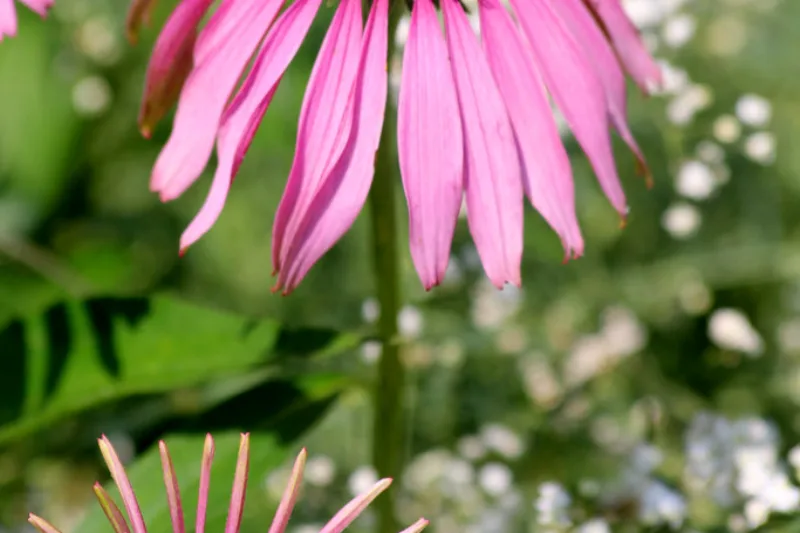
Echinacea is a perennial herbaceous plant that grows between 60 and 120 centimeters tall, with sturdy stems and spectacular flowers resembling large daisies, with petals ranging from pinkish-purple to white and a domed, cone-shaped center of an orange-brown color. It blooms from summer to late autumn and is also a much-loved ornamental plant in gardens, where it attracts bees and butterflies.
In its natural habitat it grows in dry prairies, on sunny slopes, and at the edges of woodlands in the United States. It is a plant resistant to drought and cold, which is why it has acclimatized easily in Europe, including in Romania, where many gardeners grow it both for its beauty and for later harvest. For medicinal purposes, both the aerial parts (leaves, flowers, stems) and the roots are used. The roots are usually harvested in autumn, after at least three or four years of growth, when the concentration of active principles is at its peak.
The most cultivated and researched species is Echinacea purpurea, because it grows well, propagates relatively easily, and contains a rich profile of active compounds. Echinacea angustifolia, with narrower leaves and a more aromatic root, is prized in Native American tradition, while Echinacea pallida has flowers with longer, paler petals. All three share similar properties, but their chemical profiles differ slightly, which explains why various commercial products may produce different perceived effects.
Composition and active principles
Echinacea’s strength comes from a complex mixture of substances that act synergistically. No single compound explains the plant’s effects; it is their combination that matters. Among the most important groups are:
- Alkylamides (especially in E. angustifolia and E. purpurea) — compounds responsible for the tingling, slightly numbing sensation on the tongue when you taste a good tincture. They are considered among the most active substances and appear to interact with the communication system of immune cells.
- Polysaccharides and glycoproteins — large molecules that, especially in the aerial parts of the plant, are associated with stimulating the activity of certain defense cells.
- Caffeic acids and their derivatives, such as cichoric acid (abundant in E. purpurea) and echinacoside (characteristic of E. angustifolia and E. pallida) — compounds with antioxidant properties.
- Volatile oils, flavonoids, and polyphenols — which contribute to the antioxidant effect and to the plant’s characteristic aroma.
Because these substances are distributed differently between the root and the aerial parts, and between species, the quality of an echinacea product depends enormously on the species used, the part of the plant, and the extraction method. An alcoholic tincture, for example, extracts the fat-soluble alkylamides well, while a water-based tea extracts mainly polysaccharides and phenolic acids.
Health benefits
Supporting the immune system
The best-known and most researched role of echinacea is to support the immune system. Studies suggest that certain compounds in the plant may influence the activity of cells involved in the body’s first line of defense, helping the body respond more promptly to external aggressors. Folk tradition and part of modern research recommend it mainly preventively, during periods of increased risk, and at the first sign of a cold, when a quick intervention can make a difference.
Possible reduction in the duration of colds
Many people use echinacea hoping to recover from a cold faster or to have milder symptoms. Studies on this subject have produced varied results, largely because of differences between products and species, but some of them suggest that early use, right at the onset of symptoms, might slightly shorten the episode or reduce the intensity of respiratory symptoms. The important thing is to start as early as possible.
Antioxidant action
The phenolic compounds in echinacea, especially cichoric acid and echinacoside, have antioxidant properties, which means they may help neutralize free radicals, the unstable molecules involved in oxidative stress and cellular aging. This effect contributes to the plant’s overall “protective” profile.
Support for irritated skin
In folk tradition, echinacea preparations, especially in the form of compresses or ointments, have been used to soothe irritated skin, minor superficial wounds, insect bites, and inflamed areas. Its properties are valued in external care, although serious wounds always require proper medical attention.
Support for throat complaints
Gargles or warm echinacea tea are traditionally used to relieve the sensation of a dry, irritated, or sore throat, especially at the start of a viral infection. The slight tingling sensation produced by the alkylamides is felt by many as a sign that the remedy is “working” locally.
Traditional uses
The Native American tribes of North America, especially those of the Great Plains, used echinacea perhaps more than any other medicinal plant. They applied it to snake and insect bites and to wounds, chewed it for toothaches and sore throats, and used it for various ailments. European settlers took up this knowledge, and the plant became extremely popular in the United States in the late nineteenth and early twentieth centuries, being one of the best-selling remedies of the era.
In Europe, echinacea took on new life in the twentieth century, when it was studied systematically and introduced into numerous phytotherapeutic products. Today, in Romanian folk tradition, it is used mainly in the form of tincture and tea during the cold season, as a winter tonic, but also applied externally, in the form of compresses, on irritated skin.
How to prepare it: tea, tincture, cold macerate
Echinacea tea
Tea is the simplest form of preparation and is usually made from the dried aerial parts (flowers, leaves) or from a mixture with chopped root.
- Put one teaspoon (about 1-2 grams) of dried plant into a cup.
- Pour 200-250 ml of boiling water over it.
- Cover the cup and let it infuse for 10-15 minutes. For the root, which is harder, a decoction is preferable: boil the chopped root for 10 minutes, then let it stand, covered, for another 10 minutes.
- Strain and drink the tea warm. You can add a little honey and a slice of lemon, especially if your throat is irritated.
Homemade echinacea tincture
The tincture is the form preferred by many, because it extracts the alkylamides well and keeps for a long time.
- Finely chop dried echinacea root (or use fresh plant, well washed and chopped).
- Fill about a quarter to a third of a clean glass jar with the plant.
- Pour food-grade alcohol of 40-60% (for example, good-quality vodka) over it until the plant is completely covered with a few centimeters to spare.
- Close the jar, label it with the date, and keep it in the dark for 2-4 weeks, shaking it daily.
- Strain through cheesecloth, squeeze the plant well, and store the tincture in dark dropper bottles.
Cold macerate
For those who do not want to use alcohol, a cold macerate from the root can be an alternative: put the chopped root in cold water, leave it overnight at room temperature, and consume it the next day. This preparation extracts a different fraction of compounds than the hot tea and should not be kept more than a day or two in the refrigerator.
Dosage and how to take it
Dosage depends greatly on the type of product. For homemade tincture, a common dose is 20-40 drops diluted in a little water, 2-3 times a day, especially during the first days of a cold. For tea, two to three cups a day is a reasonable amount. For standardized pharmacy products, always follow the directions on the package, since the concentration differs from one product to another.
The golden rule with echinacea is to use it intensively over short periods rather than continuously. Many herbalists recommend cures of no more than 8-10 days at the first sign of illness, or short preventive cycles (for example, a few days of use followed by a break). Continuous use, month after month, does not necessarily bring an extra benefit and may, on the contrary, reduce the body’s response.
Precautions and contraindications
Although it is a friendly plant, echinacea calls for a few real precautions:
- Allergies are the most important. People allergic to plants in the Asteraceae family (ragweed, marigolds, daisies, chrysanthemums) may react, from skin rashes to, rarely, severe reactions.
- Autoimmune diseases. Because echinacea can stimulate immune activity, people with lupus, multiple sclerosis, rheumatoid arthritis, or other autoimmune conditions should avoid it or use it only under medical supervision.
- Immunosuppressants. Those taking medications that suppress immunity (for example, after a transplant) should not use echinacea, as the effects may be opposite to what is desired.
- Pregnancy and breastfeeding. Data are limited; use the plant only on a doctor’s recommendation.
- Young children. In very young children, avoid alcohol-based preparations and consult a doctor before use.
- Drug interactions. Echinacea may influence how the liver metabolizes certain medications; if you are on a chronic treatment, ask your doctor or pharmacist.
Side effects, when they occur, are usually mild: digestive upset, an unpleasant taste, or, rarely, skin rashes.
Lifestyle for strong immunity
Echinacea does not work in isolation. A robust immune system is built through daily habits: sufficient, good-quality sleep (seven to nine hours for most adults), a diet rich in vegetables, fruit, protein sources, and healthy fats, proper hydration, and regular movement. Chronic stress, smoking, and excessive alcohol consumption weaken the body’s defenses, largely canceling out the benefits of any natural tonic.
Beyond echinacea, tradition and nutrition offer other allies of immunity: garlic, ginger, honey, propolis, sea buckthorn rich in vitamin C, and elderberry or rosehip teas. A balanced approach, in which echinacea is just one piece of a larger mosaic of healthy habits, always yields better results than relying on a single miracle solution.
Practical Tips and Common Mistakes
Mistake no. 1: Starting the cure too late. Echinacea performs best at the first sign of a cold, not after the illness has already settled in for several days. Keep a bottle of tincture handy and act quickly.
Mistake no. 2: Continuous use, month after month. Echinacea works best in short, intensive cures. Uninterrupted use brings no extra benefit and may reduce effectiveness.
Mistake no. 3: Ignoring allergies. If you are allergic to ragweed, daisies, or marigolds, test cautiously or avoid the plant. An allergic reaction is not worth risking for a preventive tonic.
Mistake no. 4: Using it in autoimmune diseases without a doctor’s approval. Immune stimulation may be exactly what you do not need in these conditions.
Mistake no. 5: Expecting a “miracle” from a single drop. Echinacea is a helper, not a miracle drug. Combine it with rest, hydration, and good nutrition.
Mistake no. 6: Buying poor-quality products. A good echinacea tincture should produce a slight tingling on the tongue (the sign of alkylamides). Choose reputable producers and check the species listed on the label.
Conclusion
Echinacea is one of the most valued plants for supporting immunity, with a long tradition reaching back to the Native American tribes and a solid presence in modern phytotherapy. Used wisely, in short cures at the first sign of a cold, in the form of tea or tincture, it can be a valuable ally during the cold season. It is not, however, a cure-all, and it should not replace rest, a balanced diet, and, when needed, medical consultation. By observing the precautions, especially regarding allergies and autoimmune diseases, echinacea can find a well-deserved place in any family’s kit of natural remedies.
Frequently Asked Questions
Does echinacea really help against colds? Studies suggest that early use, right from the first symptoms, might slightly shorten the duration or ease the intensity of a cold. Results vary depending on the product and species, but many people find it useful preventively and at the onset of illness.
How long can I take echinacea? Short cures are recommended, usually up to 8-10 days at the first sign of illness, or short preventive cycles. Continuous use, month after month, is not advised.
Can I give echinacea to children? In children, especially very young ones, avoid alcohol-based preparations and consult a doctor before giving any echinacea product. There are more suitable options, but the decision should be made with a specialist.
Is echinacea safe during pregnancy? The available data are limited. Pregnant or breastfeeding women should use echinacea only after consulting their doctor.
What is the difference between tea and tincture? Tea (water-based) extracts mainly polysaccharides and phenolic acids, while tincture (alcohol-based) extracts the fat-soluble alkylamides well and keeps for much longer. The tincture is more concentrated and more practical for quick interventions.
Why does the tincture tingle on the tongue? The tingling and slightly numbing sensation is produced by the alkylamides, considered among the most active compounds of the plant. A quality tincture should produce this effect.
Who should NOT take echinacea? People with autoimmune diseases, those taking immunosuppressants, and those allergic to plants in the Asteraceae family should avoid it or use it only under medical supervision.
Can I use echinacea together with other immunity plants? Yes, it is often combined with rosehips, elderberry, ginger, or propolis. However, if you are on a chronic medication, ask your doctor or pharmacist about possible interactions.